Bridges of Tradition: Navigating the “Bureaucracy of Respect” in an Ancestral Village Return

Editor’s Note: This post has been updated to reflect the final delivery and “ground reality” of our May 2026 visit to the Guangdong region. I have retained my initial planning notes below as a learning resource for others navigating the complex logistics of an ancestral return.
The Final Outcome: Success at the Village
After months of preparation considering Chinese culture and taboos, our 100-year lineage return was a success. We met genuine and considerate relatives, and I am glad we put in the effort to establish this first connection with respect. Ultimately, I upheld the “face” of my father-in-law and our family, presenting gifts in red bags with memento cards for the auspicious visit.
The Final Execution
- Total Budget: We spent approximately 3,200 THB on physical gifts. Including an additional 5,800 THB (1,200 CNY) for ancestral village prayers and hall maintenance, the final expenditure closely aligned with our initial budget of 6,000–8,000 THB. While the contribution amount for the ancestral hall’s prayer is discretionary, our driver noted that he typically contributes 600 CNY annually. Given that we do not return to the village often, we decided on a higher initial contribution with the intent to provide lower amounts in the future; though I considered a larger sum, I ultimately chose to stay within my budget. Essentially, we reallocated the funds originally intended for individual angpows toward the “maintenance” of the ancestral halls.
- The Pivot to Gifts: Due to the difficulty of securing enough small 10 and 20 Yuan notes in Bangkok, we shifted to a strictly gift-based strategy to ensure fair distribution across the 40-relative headcount.
- Standby Angpows: Although we focused on gifts, we prepared a limited number of “just in case” packets: 20 Yuan (8 packets), 60 Yuan (8 packets), and 100 Yuan (6 packets). Because our visit was limited to a single day, we did not require a “Day 2” strategy for these.
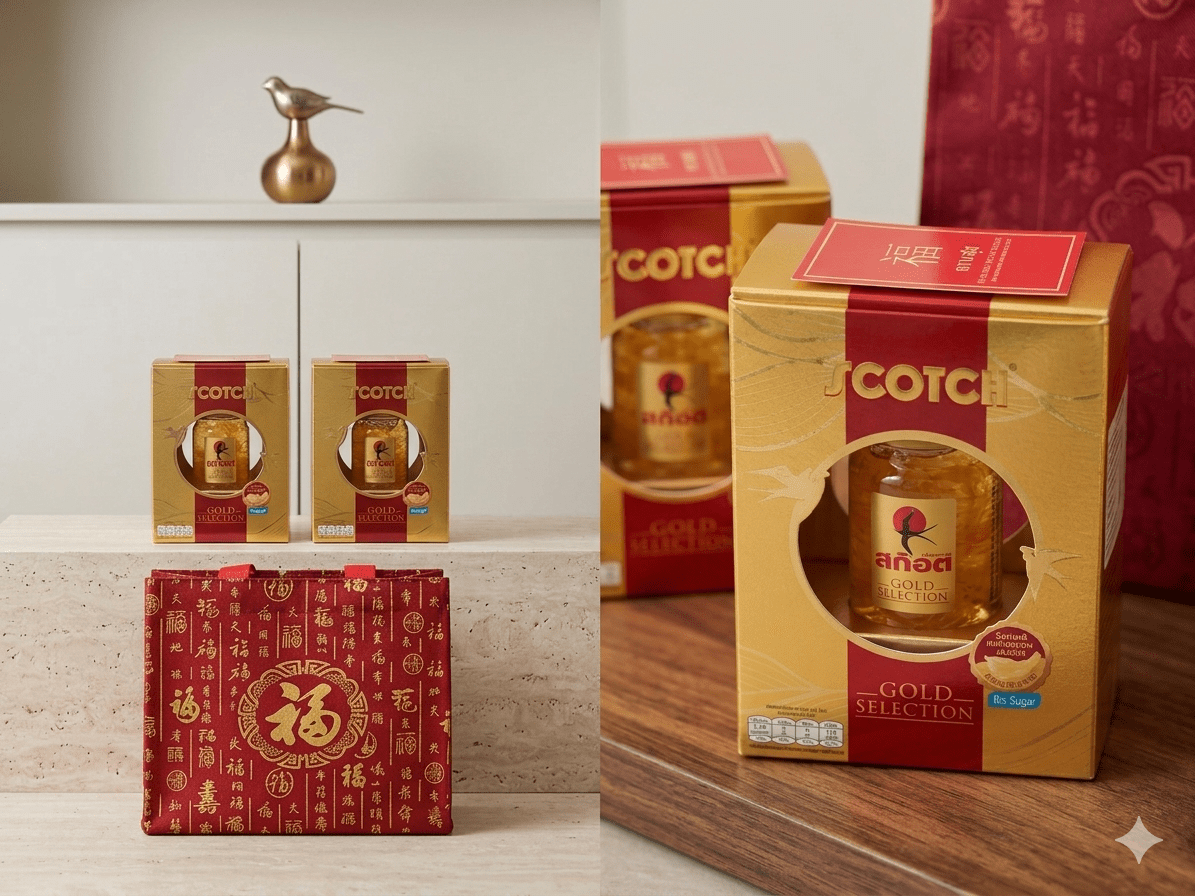
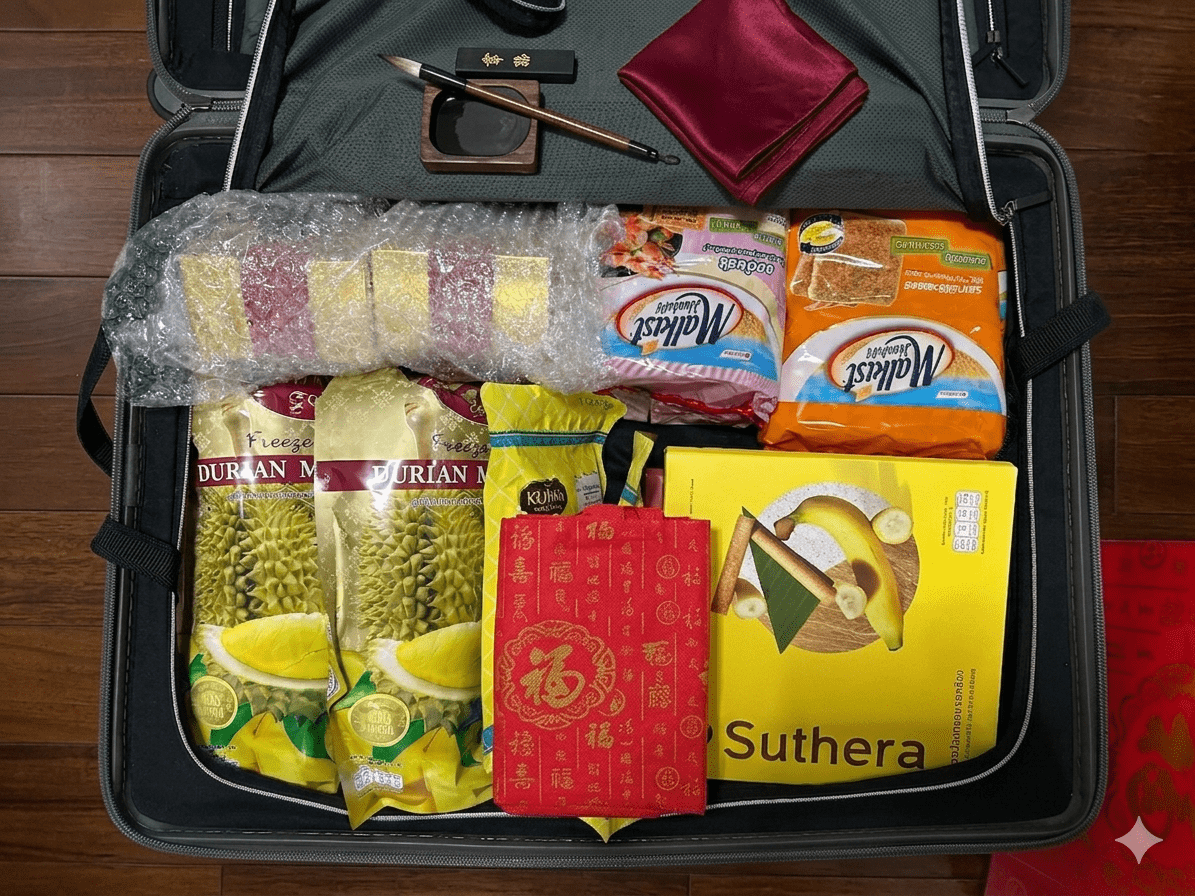
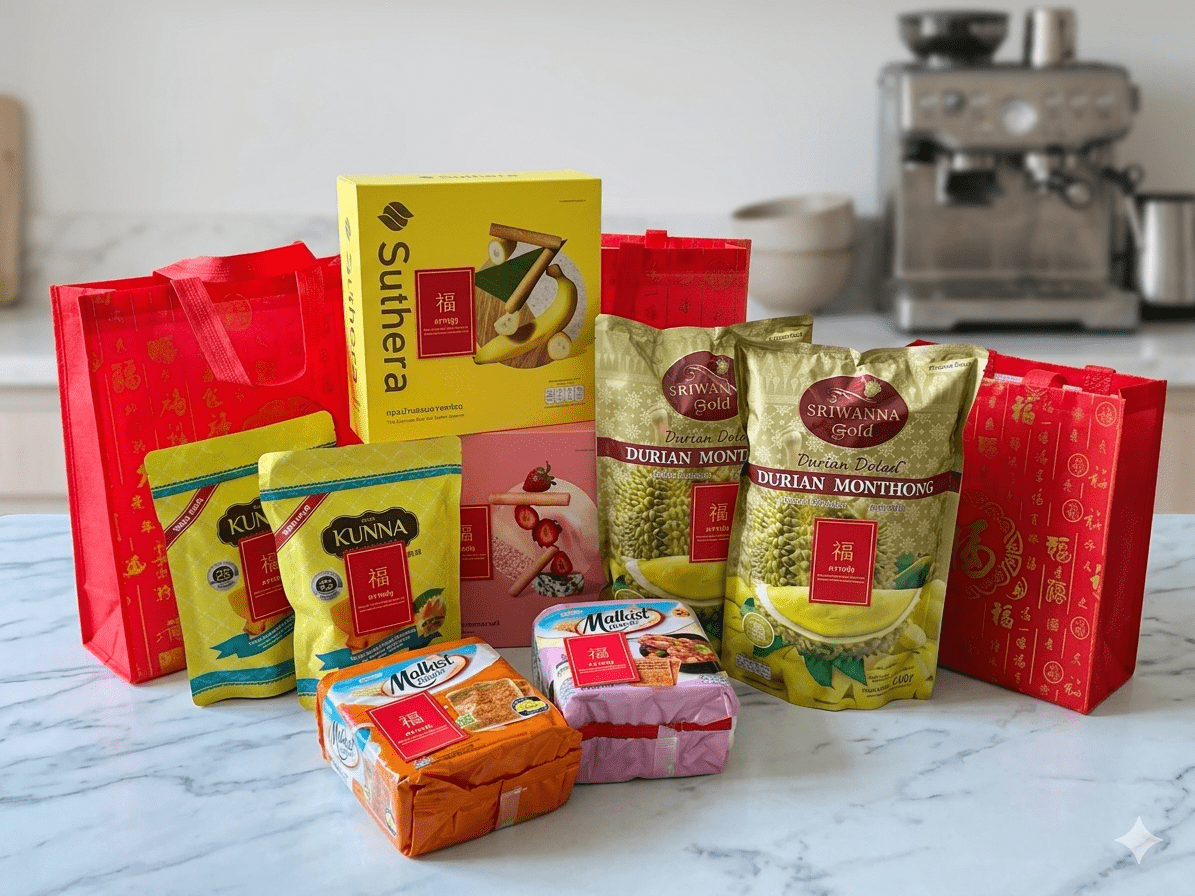
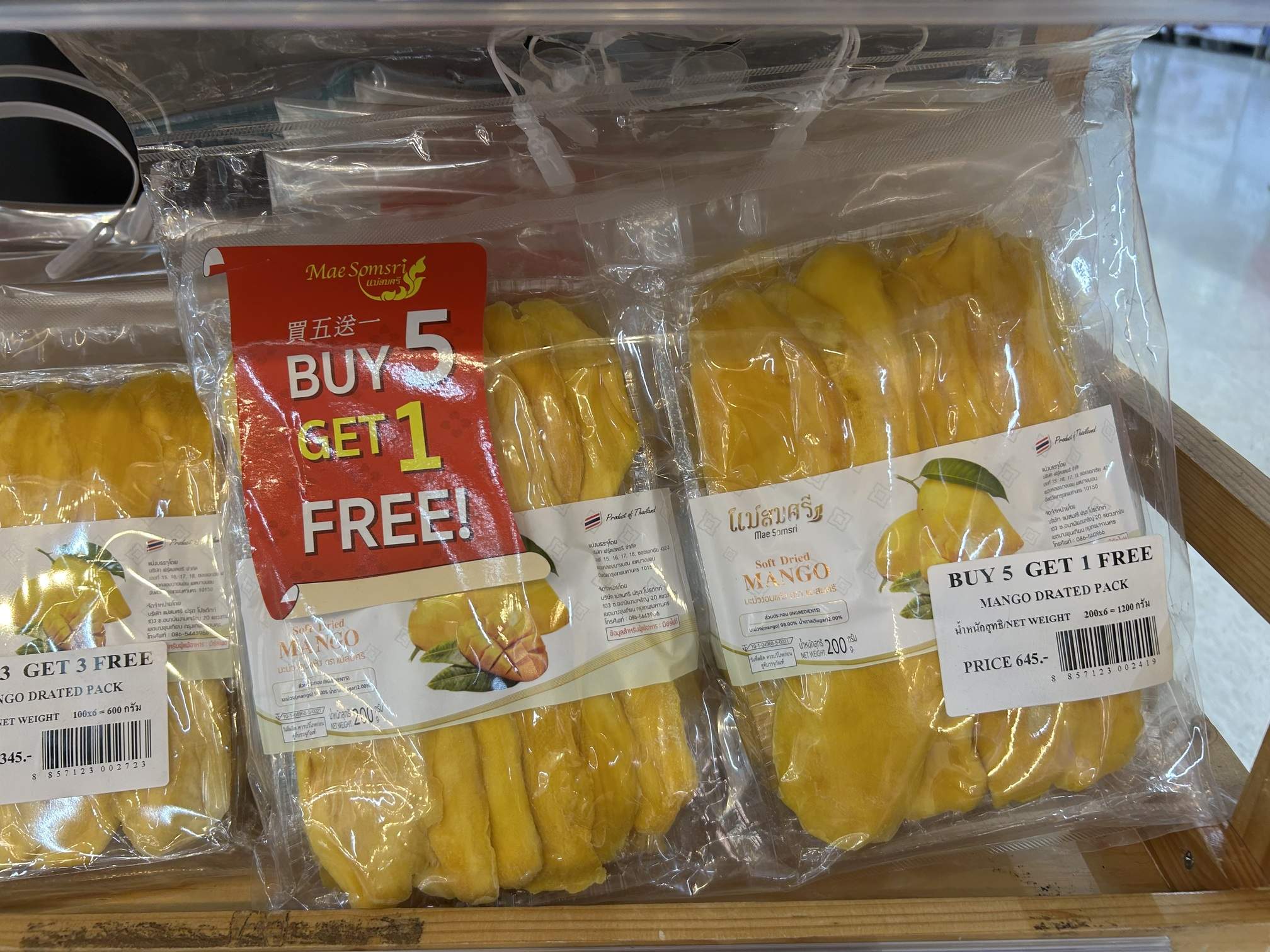
- Main Host (Bridge Uncle): As the sole surviving male cousin of my father-in-law’s generation, he was honored as our primary host with a pair of premium 90ml bird’s nest bottles (approx. 700 THB). His family also received a main gift bag containing 8 items—two each of freeze-dried durian, coconut roll snacks, dried mango, and crackers—to symbolize the auspicious number eight and ensure a prosperous first connection (approx. 1,000 THB value).
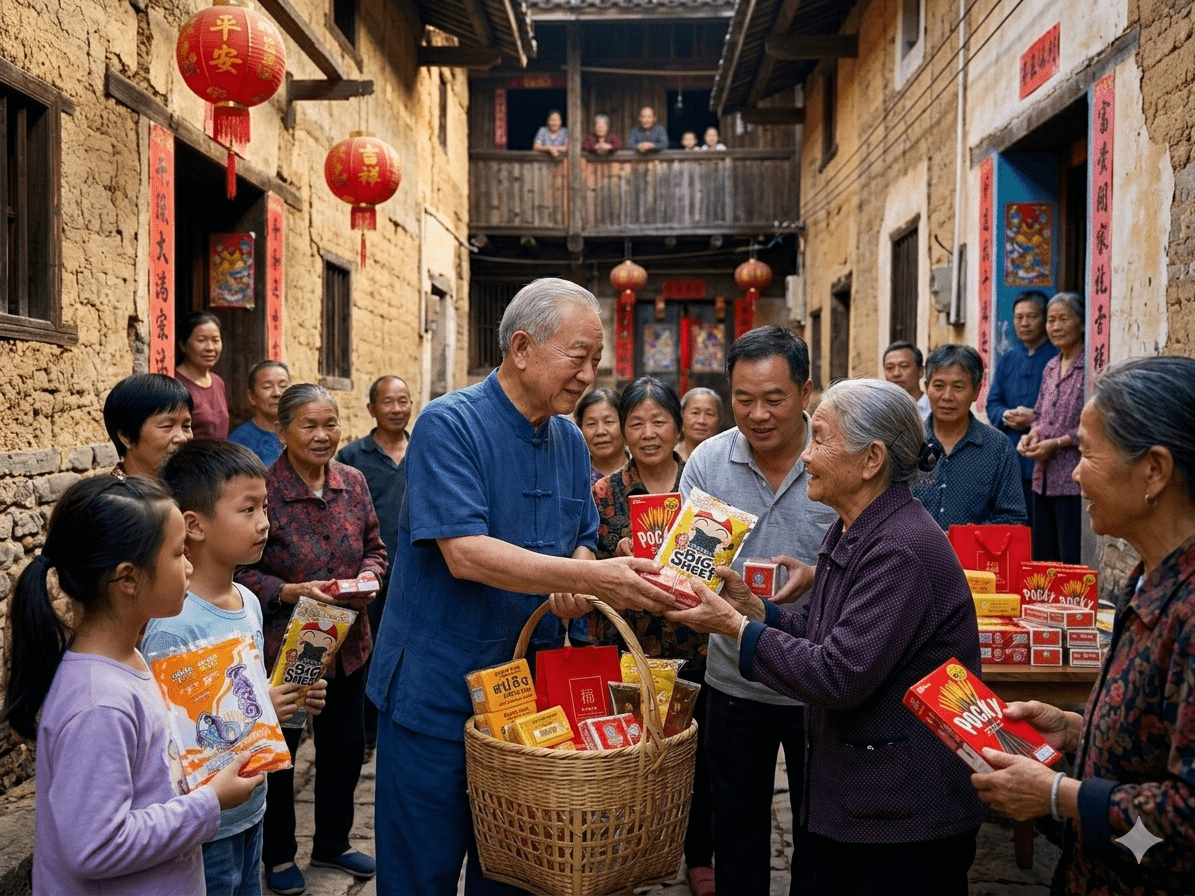
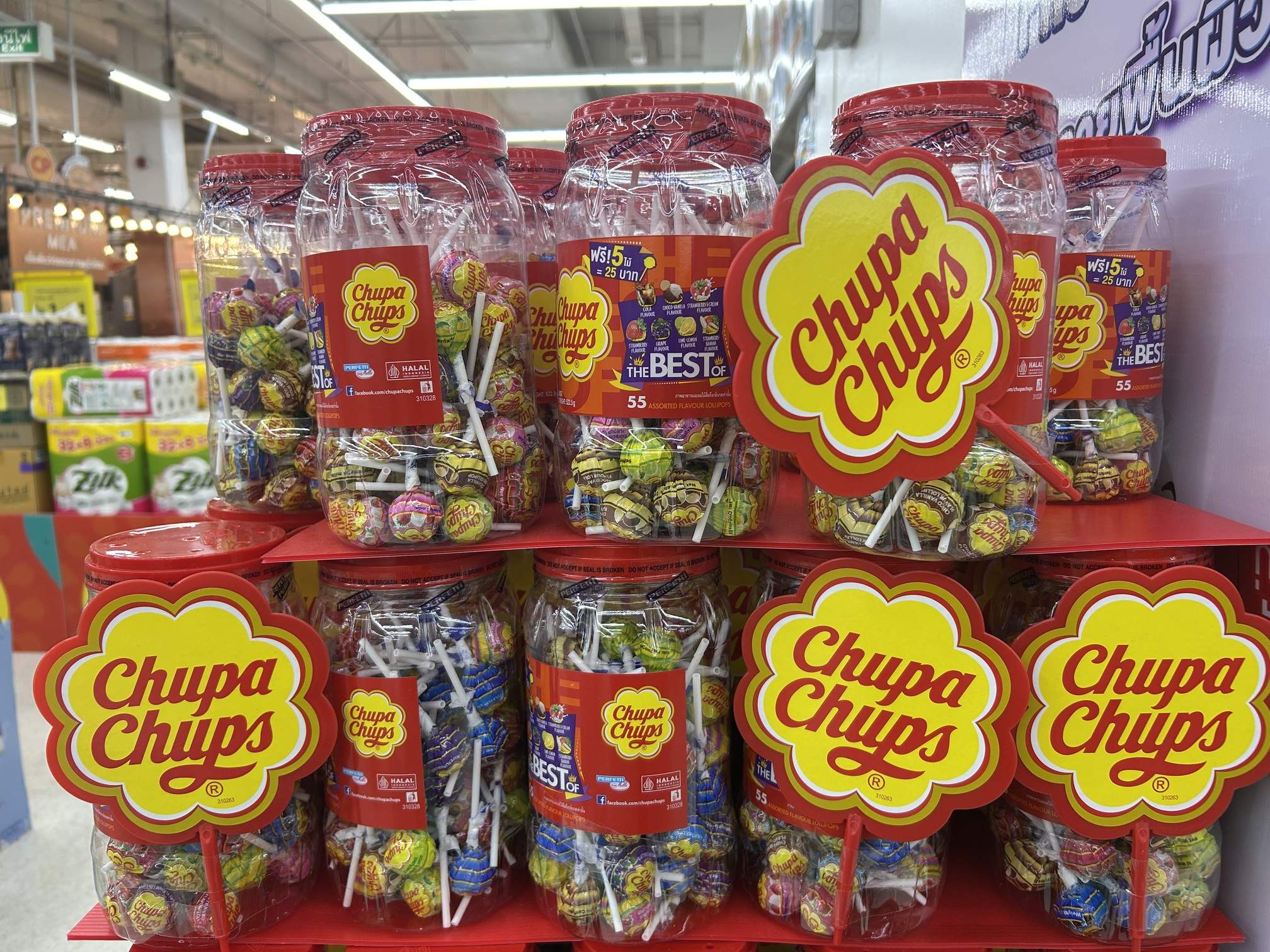
- The “Everyone” Distribution: We prepared small snack sets in pairs (approx. 10 THB per set) so everyone received “luck”. Roti Sai Mai was shared as dessert during lunch.
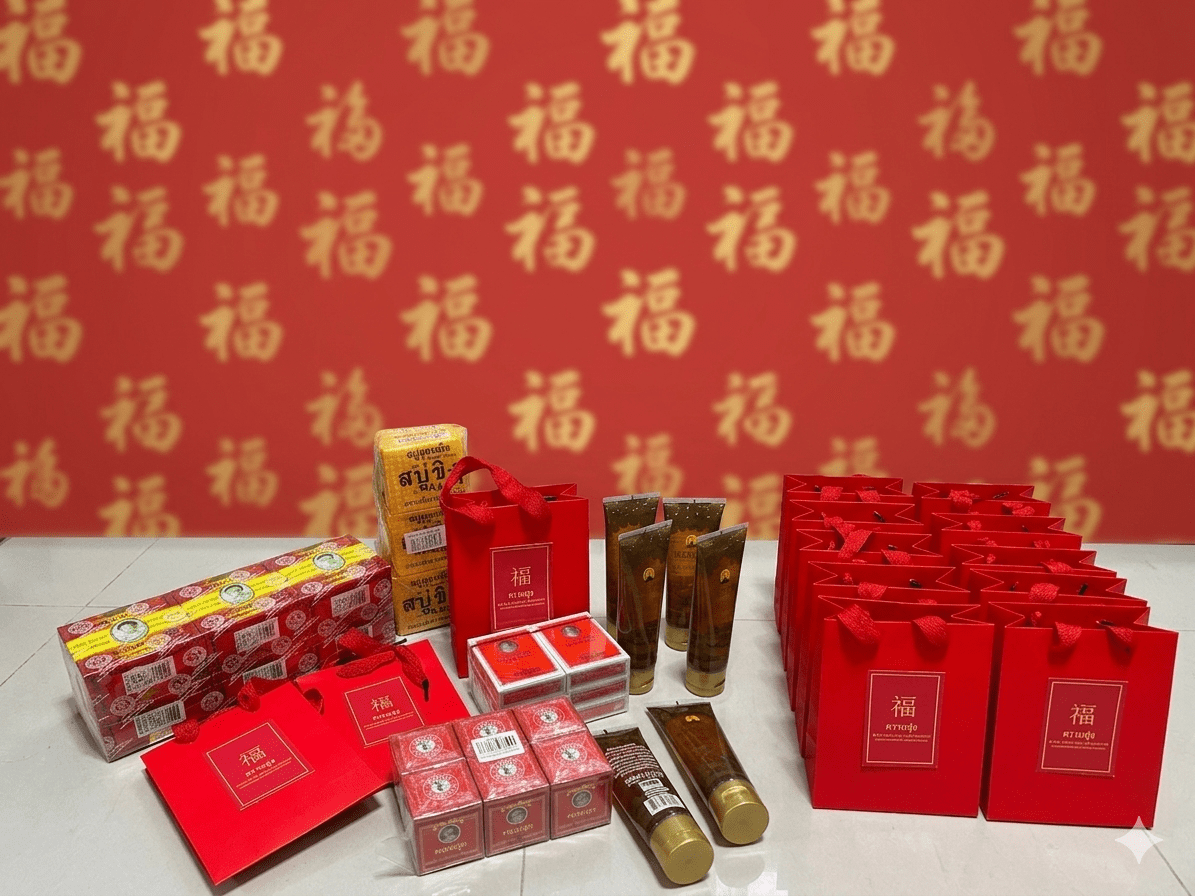
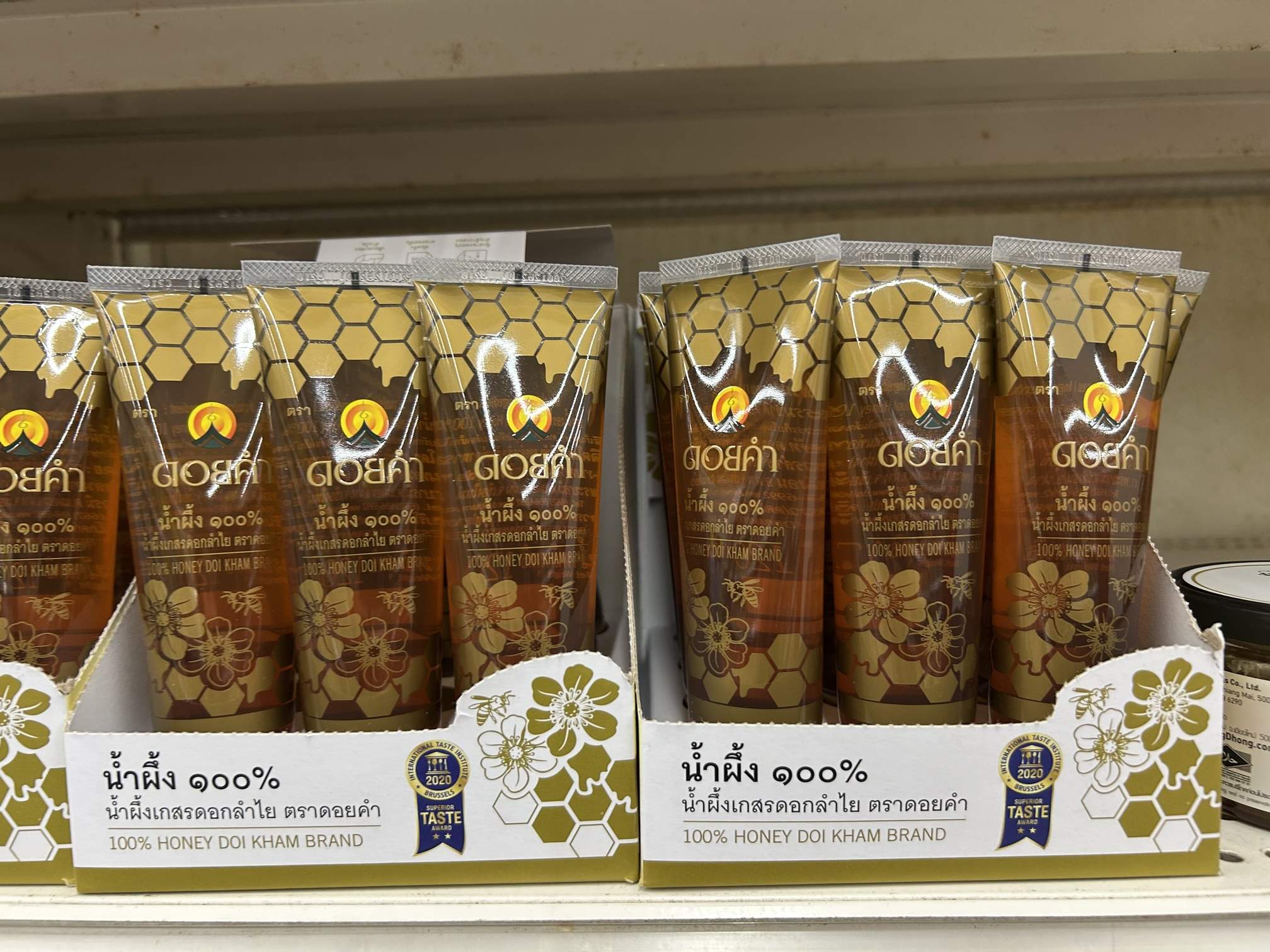
- Useful Gestures: We prepared 15 additional gift sets (60–80 THB each) with honey, medicated oil, and soap. These were given to the Bridge Uncle to distribute to wider family branches. Seeing the happy elders receive these unexpected gift bags towards the end of the visit was a wonderful way to show respect beyond the small snacks.
🚨 THE PLANNING PHASE: The “40-Relative” Reality Check (April 2026)
With only days to go before our 100-year lineage return, the “Bureaucracy of Respect” has thrown a few last-minute curveballs. From an unexpected headcount of approximately 40 relatives to the “odd-number” funeral taboo, here is how I’ve adjusted the plan:
- The Ang Pao Quantity Crisis: My supply of 10 and 20 Yuan notes is only enough for about 10 packets. Because I cannot secure enough small notes in Bangkok for 40 relatives, I am prepared to stick to a “strictly no angpow” arrangement if a fair distribution isn’t possible.
- The Standby Pivot: I have prepared a very limited number of 20, 60, and 100 Yuan packets purely for standby. Since our visit is restricted to Day 1, we will evaluate the social dynamics during lunch to decide if and how these are distributed.
- The Funeral Taboo: I am staying strictly away from odd-numbered totals. While RM 50 is common in Malaysia, in this region, odd amounts like 50 Yuan are reserved for funerals (baak gim). Even numbers symbolize life and health.
- The “Everyone” Rule: To avoid exclusion, I’ve pivoted to a “Thai Snack” strategy for the entire group. I have prepared enough small Thai snack packs to cover the 40-person headcount with extra buffer to ensure no one feels left out.
- Considerate Quantity: These snack packs are valued at 10 THB and use popular bulk items. This ensures a taste of Thailand for everyone without the logistical nightmare of high-volume cash distribution.
- Fresh from Thailand: We are bringing Roti Sai Mai (Thai Cotton Candy) for the crowd. It stays fresh for two days, which is perfect for our visit scheduled the day after we land.
I will update this post after the visit to report on our final “ground reality” experience!
The Original Plan & Context
When people write about returning to their ancestral villages in China, the narrative usually follows two familiar paths: the dramatic search for the family home or the emotional intensity of the reunion. Yet, there is a massive gap in information regarding the preparation—the intricate cultural nuances and the heavy logistical weight of “getting it right.”
As the wife of an only son, I recently felt a weight I’ve never quite experienced: the responsibility of the “Eldest Son’s Wife.” My easygoing father-in-law gave me a free hand, trusting my judgment as a Malaysian-Chinese who supposedly understands the cultural landscape better than the local Thai-Chinese (Khon Thai Chuea Sai Chin).
While navigating this might seem like “small change” compared to my professional career, the stakes feel significantly higher. Everything I do—every gift, every gesture—is performed in my father-in-law’s name. The truth? I’m not traditionally inclined (my friends were shocked I was even doing this!). However, through research and persistence, I’ve managed to untangle the “Bureaucracy of Respect.”
The “Face” Reality Check
In the past, overseas Chinese were expected to bring back wealth to support struggling relatives. Today, the reality is flipped: relatives in China are often quite well-to-do. It’s no longer about financial support; it’s about Relationship-building and “Face” (Mianzi).
In our case, “Face” isn’t about ego—it’s about avoiding unintentional insults. I am budgeting 6,000 – 8,000 THB for Ang Paos and gifts. With the current weakening of the Thai Baht, anything beyond that feels like a splurge.
Our “Bridge Uncle” in China has already insisted we don’t need to bring any gifts at all. However, we believe in bringing a token of respect—the challenge is finding the balance. We want to bring high-quality Thai gifts to share our culture, but we don’t want to “impose” a gift so expensive that our relatives feel a burdensome need to return the favor. It’s about being considerate of their “Face” as much as our own.
The Strategy: A curated selection of Thai snacks that focus on Quality and Quantity. This allows everyone in the village to try a taste of Thailand without making any single individual feel they owe us a reciprocal gift. The biggest challenge is the “Unknown Headcount.” While we know our “Bridge” Uncle’s specific family branch, a village of 1,000 people means everyone is “related” in some way. We’ve been advised to either give Ang Pao to everyone or give strictly in private. To mitigate the risk of unexpected crowds, I’ve been watching ancestral return videos to gauge a realistic headcount and plan our “standby” stock accordingly.
The Ang Pao (Red Packet) Dilemma
For those heading to Guangdong (including our destination, Swatow), the local “Lai See” culture is a breath of fresh air. Unlike other regions, Guangdong focuses on symbolic lucky sums to spread “luck” to everyone, rather than competitive displays of wealth.
The Logistics of Presentation:
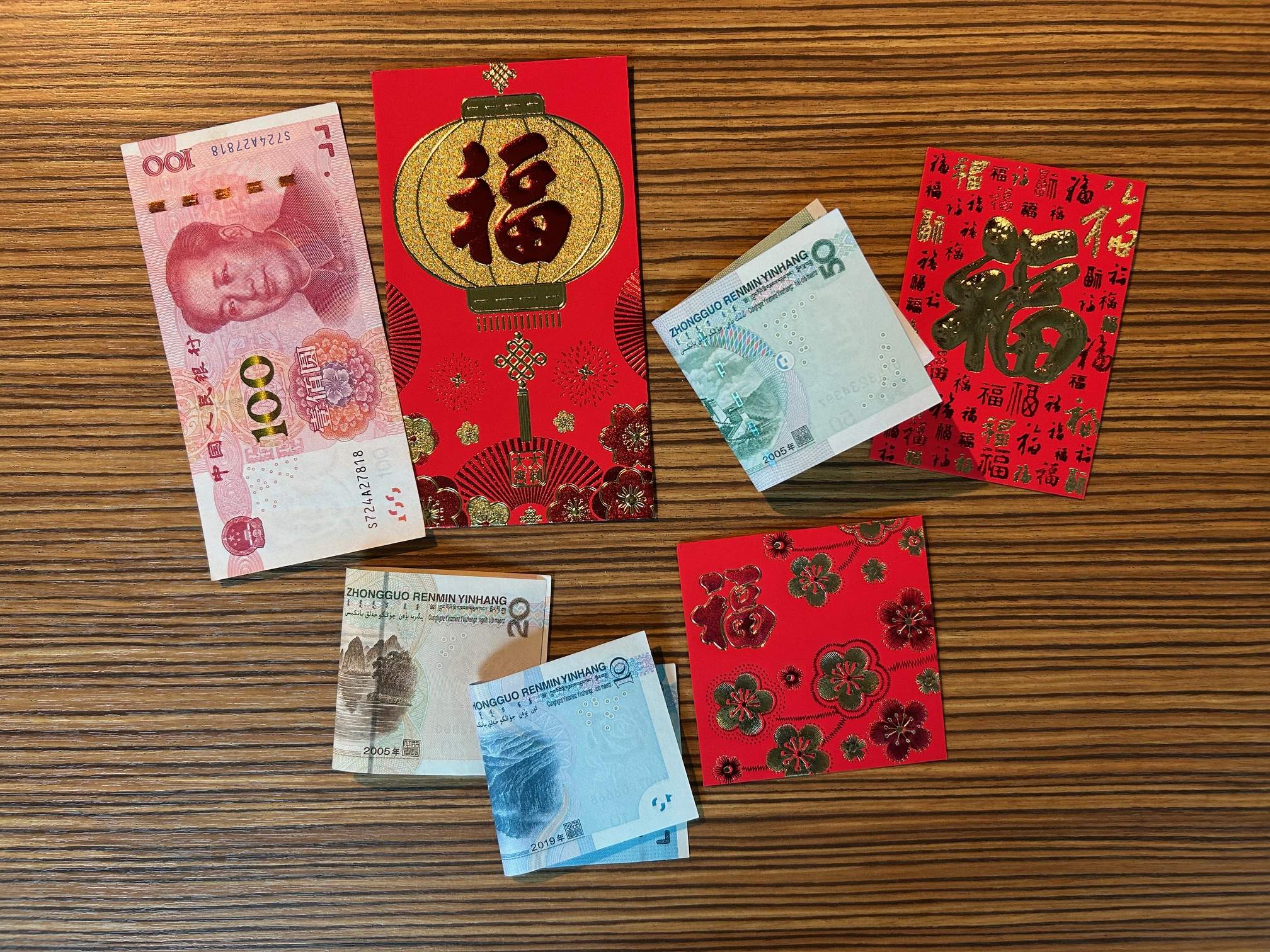

- The “Crisp & Unfolded” Rule: To symbolize a “smooth relationship,” notes should be flat. I opted for standard-sized packets over small “folded” versions to prioritize this, though using different sizes can help you remember which denomination is inside!
- The “囍” (Double Happiness) Warning: I’ve noticed the Shuāngxǐ (囍) character used for CNY gifts recently. Do not use this for an ancestral village return! This symbol represents married joy and unity—it is for weddings only. Stick to the classic 福 (fú) character for general blessings.
- Numerology: Avoid 4 (death). Lean into 6 (smoothness) and 8 (prosperity). Totals like 88 or 168 are ideal. Avoid odd-numbered amounts, given in white envelopes (known as baak gim or 帛金) at Chinese funerals.
- Physical vs. Digital: WeChat Pay is king, but for a 100-year return, physical red packets carry a traditional weight that a digital transfer simply cannot match.
The Money Changer Snag: A Bangkok Treasure Hunt


The Money Changer Snag: Securing small CNY denominations (1, 5, 10, or 20 Yuan) in Bangkok is a logistical marathon. Most major exchanges—SuperRich (Orange/Green), Vasu, and Siam Exchange—primarily stock 100-Yuan notes. A check with Bank of China (Ratchada) confirmed their exchange service is strictly limited to their own account holders.
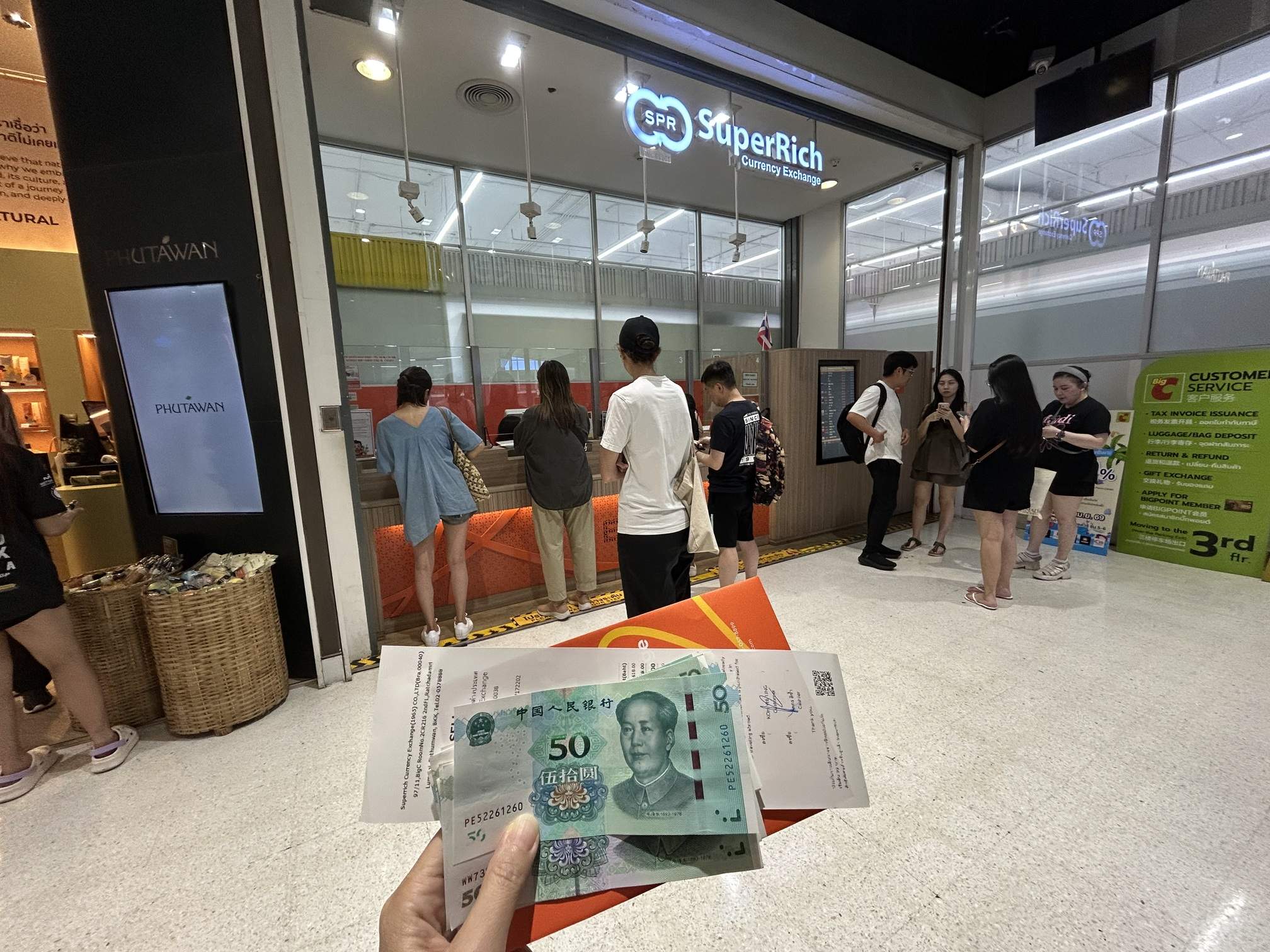
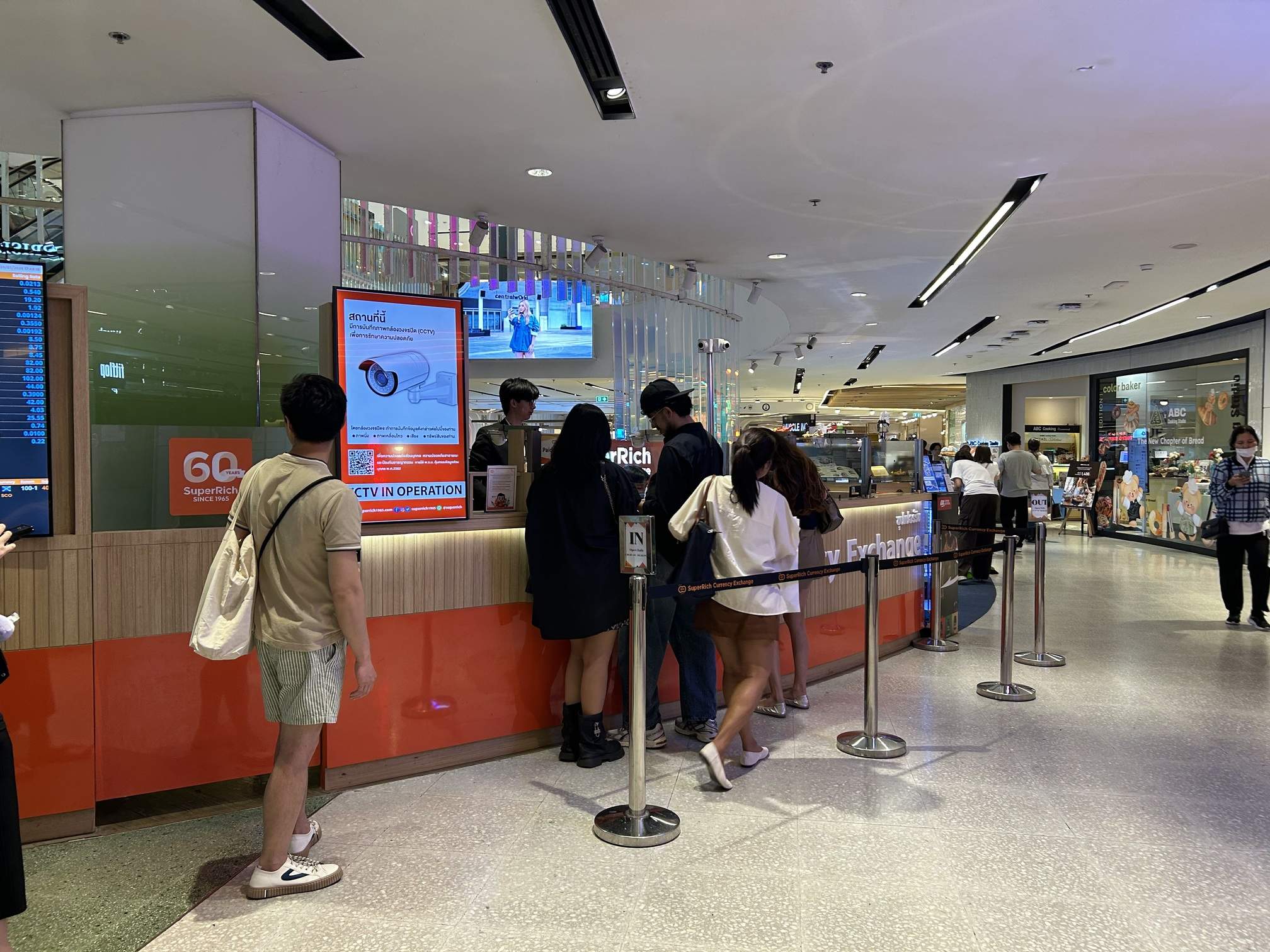
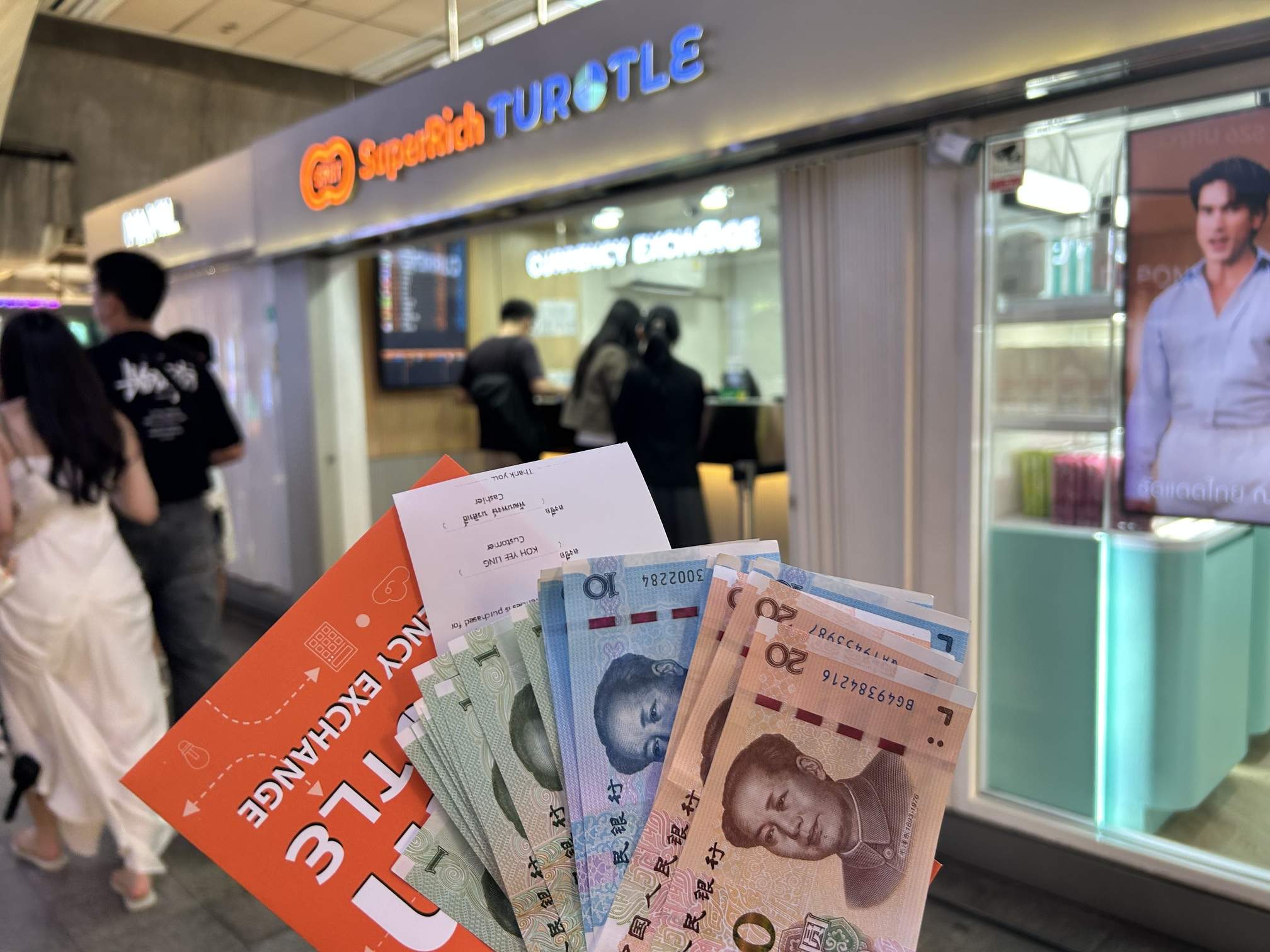
I initially managed to snag some 50s, but finding 1s, 10s, and 20s felt like an unexpected win. Pro-Tip: Follow the tourists, not the residents. Kiosks in tourist-heavy areas rely on “circulated” notes from arriving travelers. Here is my ranking of Bangkok exchanges:
- SuperRich Turtle (Orange) @ BTS Siam: The jackpot! They had relatively new 1, 10, and 20 Yuan notes (secured 27 pieces). The staff was incredibly patient, even letting me check the “crispness” of each note.
- SuperRich (Orange) @ Big C Ratchadamri: Success for 50-Yuan notes (secured 11 pieces).
- SuperRich (Orange) @ MRT Phahon Yothin: Yielded three relatively crisp 50-Yuan notes. (Surprisingly, while CentralPlaza Ladprao was empty, this Metro Mall location was a win!)
- SuperRich (Orange) @ CentralwOrld: Yielded one each of 10 and 50 Yuan notes.
The Irony: Locations with high Chinese populations (like Rama 9) and even MBK had zero small denominations. Bonus: Small notes often have a slightly better exchange rate because they are considered “bulky” and less valuable for bulk transportation by the exchanges.
The Two-Tiered Strategy: Hierarchy meets “Considerate Quantity”
In Guangdong, the philosophy is mò hiam siu—”don’t despise the small.” I’ve structured this hierarchy to ensure the main hosts feel honored, while the wider village gets a taste of Thailand without creating a “debt of obligation.”
| Tier | Recipient | Amount / Gift |
| Tier 1: High Respect | Main Host (Bridge Uncle) | Premium Thai Bird’s Nest (700 THB) |
| Tier 1: High Respect | Ancestral Altar / Village Head | 100–200 CNY (Donation / Ang Pao) |
| Tier 2: Elders | Aunts & Uncles family (Lineage) | Main Gift Bag (1,000 THB)(Premium large items + multi-pack snacks for sharing) |
| Tier 3: Others | Cousins / Kids / Villagers | Small Snack Packs (~20–40 THB) (Considerate Quantity for distribution) |
| Standby / KIV | Lineage & Other Elders | Ang Paos: 88 CNY (Main Uncle) / 60 CNY (Others) |
Final Strategy Check: The “Day 2” Reserve
By keeping the Ang Paos as a KIV (Keep in View) item, we avoid the “Walking ATM” look on Day 1 while staying fully prepared for the social dynamics of the reunion.
The “Sharing” Factor: The gift bag in the Tier 2 bags act as the perfect “buffer” for the family lineage and small snack packs for the cousins, kids and villagers, ensuring everyone feels included in the “smooth relationship” (mò hiam siu).
The Two-Tiered Strategy: Hierarchy meets “Lai See”
The Main Anchor: The Bridge Uncle receives the premium Bird’s Nest and the primary Gift Bag immediately as our host.
The Ang Pao Logic: If we find that the headcount of elders is higher than expected—or if the social situation on Day 2 calls for a more traditional cash gesture—we have the 88 CNY (for the Main Uncle) and 60 CNY (for other elders) ready in crisp, small denominations.
The Gifting Strategy: Pivot to Souvenirs
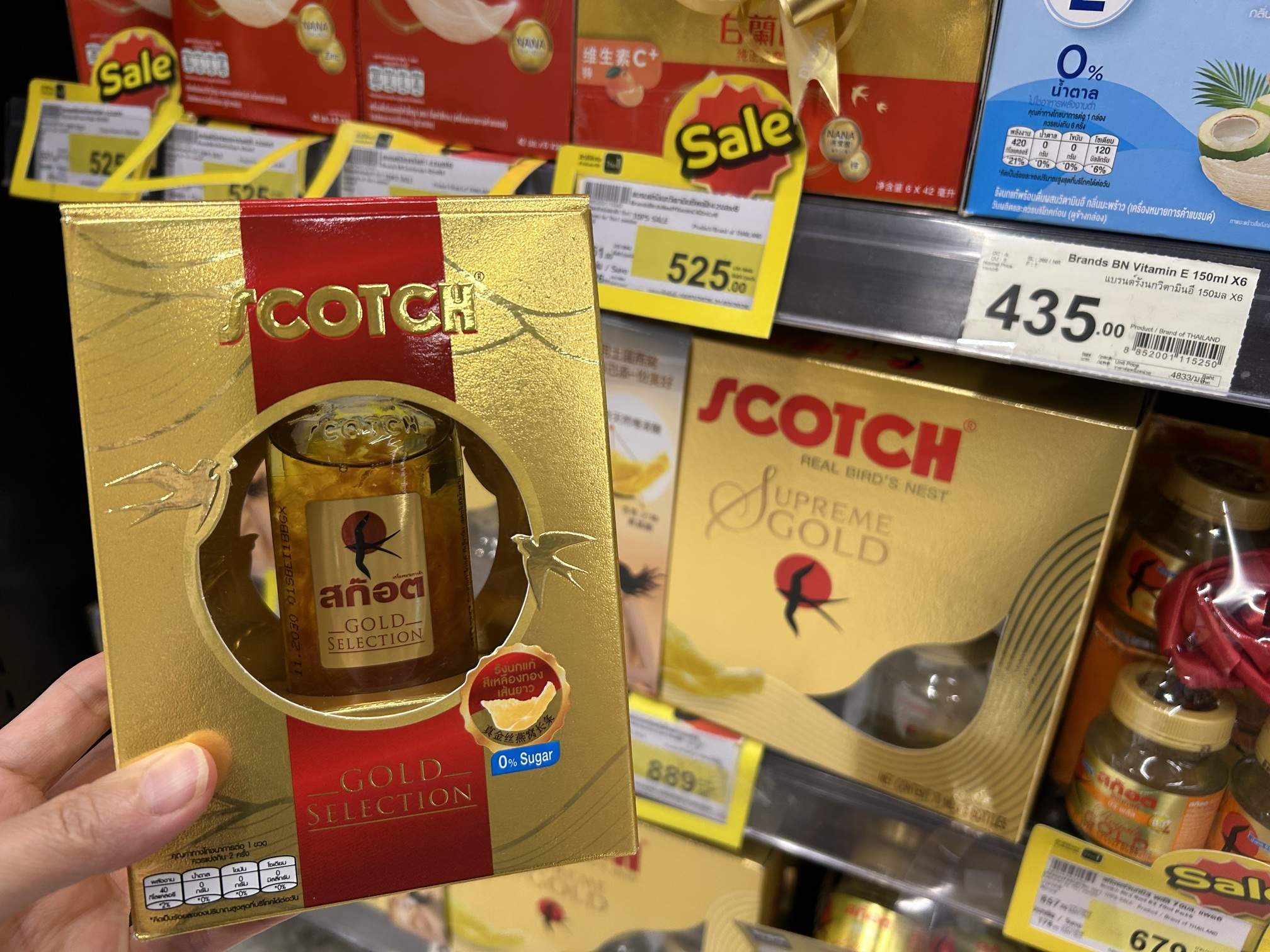
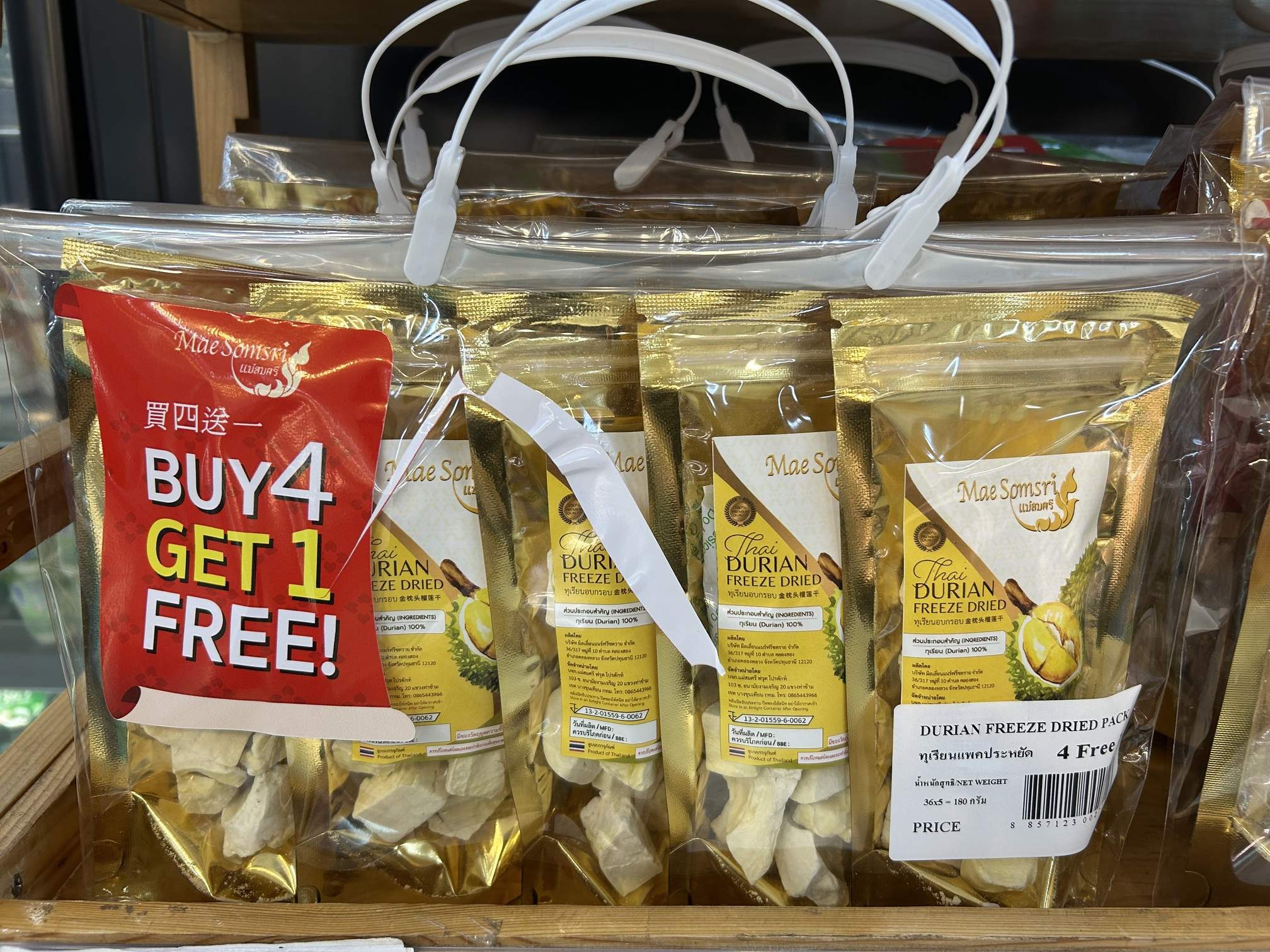


- The Power of Pairs: Always give in pairs (Hǎo shì chéng shuāng). This doubles your gift count, so factor this into your budget early.
- Color Coding: Stick to red, gold, or yellow packaging. Avoid white and black—this meant cutting out popular items like Thai milk tablets or certain coconut snacks.
- Standby Stock: I’m packing Doi Kham honey and dried mango pairs for unexpected “return gifts.” At less than 100 THB per pair, these are more budget-friendly than a 50 CNY Ang Pao.
Logistical Note: Fragile souvenirs eat up luggage space – we have a 30kg allowance to distribute across our check-in bags.
Final Thoughts: The 100-Year Bridge
As we represent the first return of my father-in-law’s lineage in perhaps more than a century, we want our arrival to be remembered not for the amount in the envelope, but for the auspiciousness of the return. Red packets are merely symbolic vessels of luck—and if the logistics of cash fail, thoughtful gifts are a perfect substitute.
If you’re curious about how I began this journey of tracing our lineage before the logistics even started, you can read my previous post on https://www.notyourtypicaltourist.com/thailand/finding-the-chinese-roots-in-china/. I’ll be sure to update you all after the trip on how the “Bureaucracy of Respect” actually played out!