The No-Agent Roadmap: Year 2 Thai Marriage Extension at Chaengwattana
Last year, I officially transitioned my legal stay in Thailand from a corporate Non-Immigrant B (Employment) visa to a Non-Immigrant O (Thai Marriage) visa. That first year was all about learning the ropes, but as any long-term expat will tell you, the second year is where the bureaucracy truly tests your patience.
Having just successfully navigated my Year 2 marriage extension independently at the Government Complex in Chaengwattana, I’ve put together the updated, comprehensive “Bible” of documentation for 2026. If you are handling your own immigration runs without an agent—and want to avoid the unexpected procedural traps, unannounced timelines, and subtle policy shifts that catch most applicants off guard—this step-by-step breakdown is for you.
💡 New to this loop? If you are just starting out on this path, make sure to read my Year 1 Guide first to get your foundational steps, baseline banking requirements, and primary registration paperwork sorted before diving into the Year 2 specifics below.
The Annual Extension Reality Check
It is a common misconception that you simply “renew” a visa. In Thailand:
- Fresh Starts: Every approved extension is a distinct permit with a new reference number and expiration date.
- Paperwork Loop: Even if your situation hasn’t changed, you must provide fresh, updated documents every year.
- The TDAC Rule: When filling out the Thailand Digital Arrival Card (TDAC) or other online forms, always use your most recent extension number.
The “DIY Bible”: Minimizing Immigration Legwork
To avoid multiple trips to Chaengwattana, follow these rules strictly:
- TM.30 (Notification of Residence): Ensure this is updated if you’ve been away for more than 3 months or just before your extension. Download or screencap the confirmation immediately; digital records can occasionally glitch.
- TM.47 (90-Day Reporting): Factors like a new passport or travel can “block” the online system. I recommend an in-person report close to your extension window. This ensures you have a fresh TM.47 slip and avoids last-minute online rejections.
- The New Passport & Re-entry Rules: If you have recently renewed your passport, you must complete your formal stamp transfers—including transferring any active Re-entry Permits—before you submit your main extension application.
💡 The Passport Expiry Strategy: If you know your current passport is due to expire within the next year, always secure your new Re-entry Permit directly at Chaengwattana. Keeping your permits and extensions bundled at the main headquarters ensures a much smoother, headache-free stamp transfer process later on when your new booklet arrives.
⚠️ The 2026 “Must-Know” Update: Khor Ror 2 Enforcement
In 2026, Immigration is strictly enforcing a timeline rule regarding your Marriage Registration (Khor Ror 2). It must be a freshly issued copy from a District Office (Amphur) that is no older than 30 days on your application date.
The Amphur Process:
- No Spouse Required: You do not need your Thai spouse to accompany you for this step.
- Location Hack: You can visit any District Office nationwide. The Laksi District Office is incredibly convenient—just a short walking distance from the MRT Pink Line National Telecom station.
- Requirements: Bring your original passport and a clear photocopy of your bio-page. While not strictly mandatory, having your original marriage certificate (Khor Ror 3) and your original historical Khor Ror 2 on hand is highly helpful.
- Cost & Time: The fee is just 10 THB. The entire process took about 40 minutes total (30 minutes of waiting in line, and 10 minutes of document processing).
Extension Day 1: The Workflow & Queue Strategy
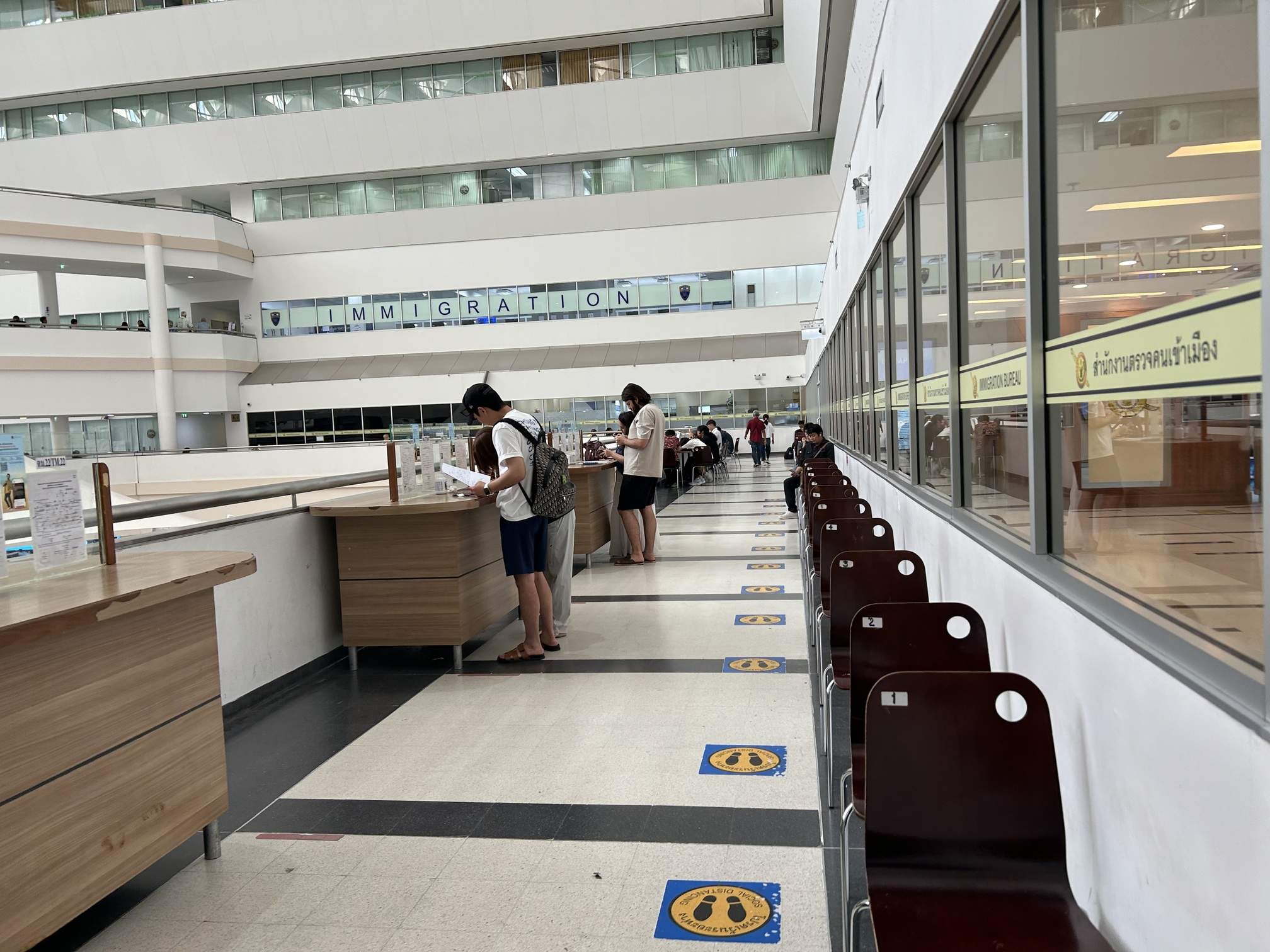
You are legally permitted to apply for your extension up to 45 days before your current stay expires; I submitted mine with 37 days to spare. Because my husband and I had an international flight booked for that exact same afternoon, arriving at Chaengwattana before 08:00 AM to beat the crowd was absolutely vital.
Timeline of the Morning Run:
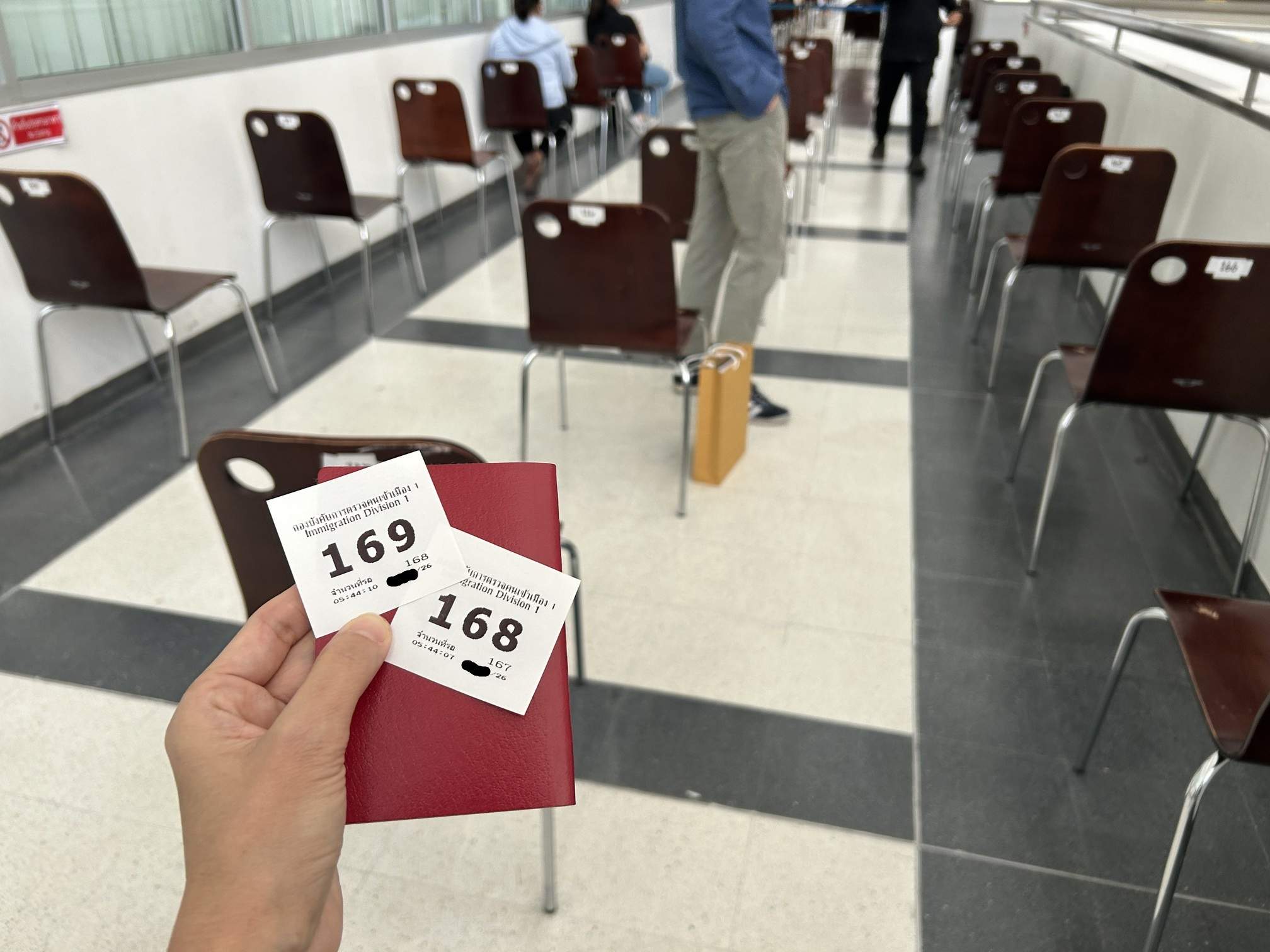
- 07:45 AM — Arrival: The building’s external queue counter actually opens at 06:00 AM. By the time we arrived, we were handed queue numbers 168 and 169.
- 08:15 AM — Main Doors Open: The immigration hall opened its doors to let the initial morning waves inside.
- 08:30 AM — Official Processing Numbers: We exchanged our arrival tickets for official cubicle (L2) processing numbers, revealing 21 queues ahead of us.
- 09:55 AM — Our Number Called: Moved to our designated station.
- 10:07 AM — Finished! The entire application was signed, sealed, and delivered in just 12 minutes.
Process Improvement Note: The preliminary document check and the final officer processing are now consolidated into the exact same cubicle area, making the system significantly more efficient. By 08:40 AM, we already observed the very first applicant of the day receiving their passport back!
💡 Critical Counter Tip:
The specialized counters for 90-Day Reporting and TM.30 operate in strict rounds. If you arrive at the building at 08:15 AM, you will completely miss the first processing window (which runs from 07:45 to 08:00 AM). Aim to be in line for that initial 15-minute morning window to save hours of waiting.
Your Second-Year Document Checklist
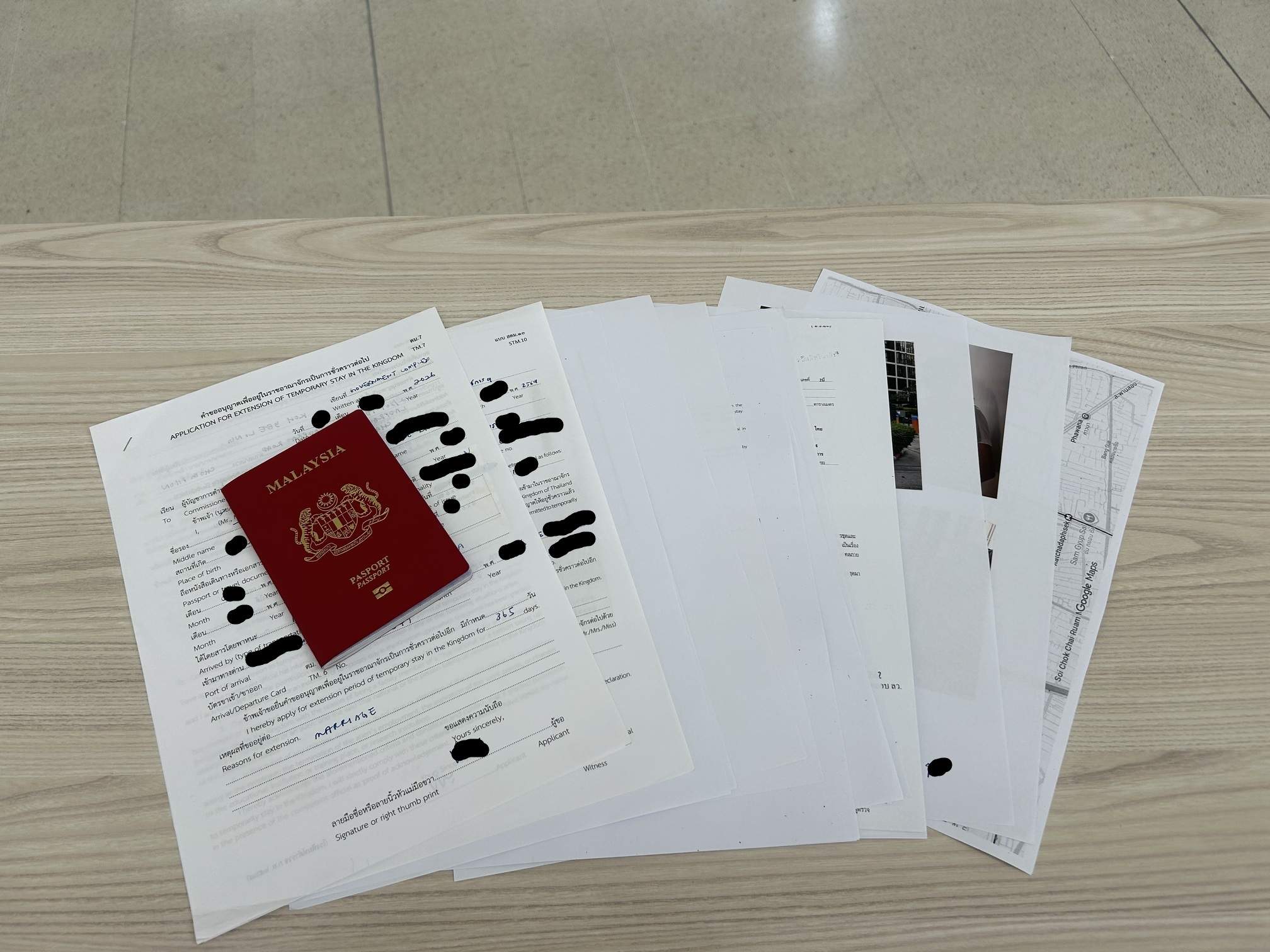
- Payment: 1,900 THB.
- Forms: TM.7 (photo <6 months), STM.10 (Family Affidavit), Overstay Acknowledgement, and STM.11 (Consent Form).
- Signed Passport Copies: Bio-page, latest entry stamp, current extension, TM.47, TM.30 slip, and TDAC confirmation.
- Marriage Documents: Original and copies of your marriage certificate (Khor Ror 3) and your newly updated, Amphur-certified Khor Ror 2 (issued within 30 days).
- Housing Proof: House Deed and Tabian Baan.
- Tip: If the property is under mortgage, a Lease Contract is acceptable if you explain the bank holds the deed.
- Note: If your Thai husband’s name is still in the family home’s Tabian Baan but you live in a condo, provide copies of both.
- The “Photo Set”: Four 4R prints glued to A4 paper.
- 2 Outside: Condo entrance and the pool.
- 2 Inside: In front of your unit (number visible) and in the living room.
- The Map: A printed Google Maps view showing the route from your residence to the nearest major highway or expressway has now become the mandatory processing standard at Chaengwattana.
💡 The Scale Hack: While the officers like to see the broader connectivity to a main highway, details still matter. A fellow Malaysian expat recently shared that she successfully provided a highly zoomed-in version that clearly labeled her specific soi and building location. To play it safe and avoid a trip downstairs to the printer, I recommend printing two versions: one wide shot highlighting the nearest expressway connection, and one close-up shot showing your exact street and neighborhood landmarks.
🚨 Travel Warning: The “Under Consideration” Trap
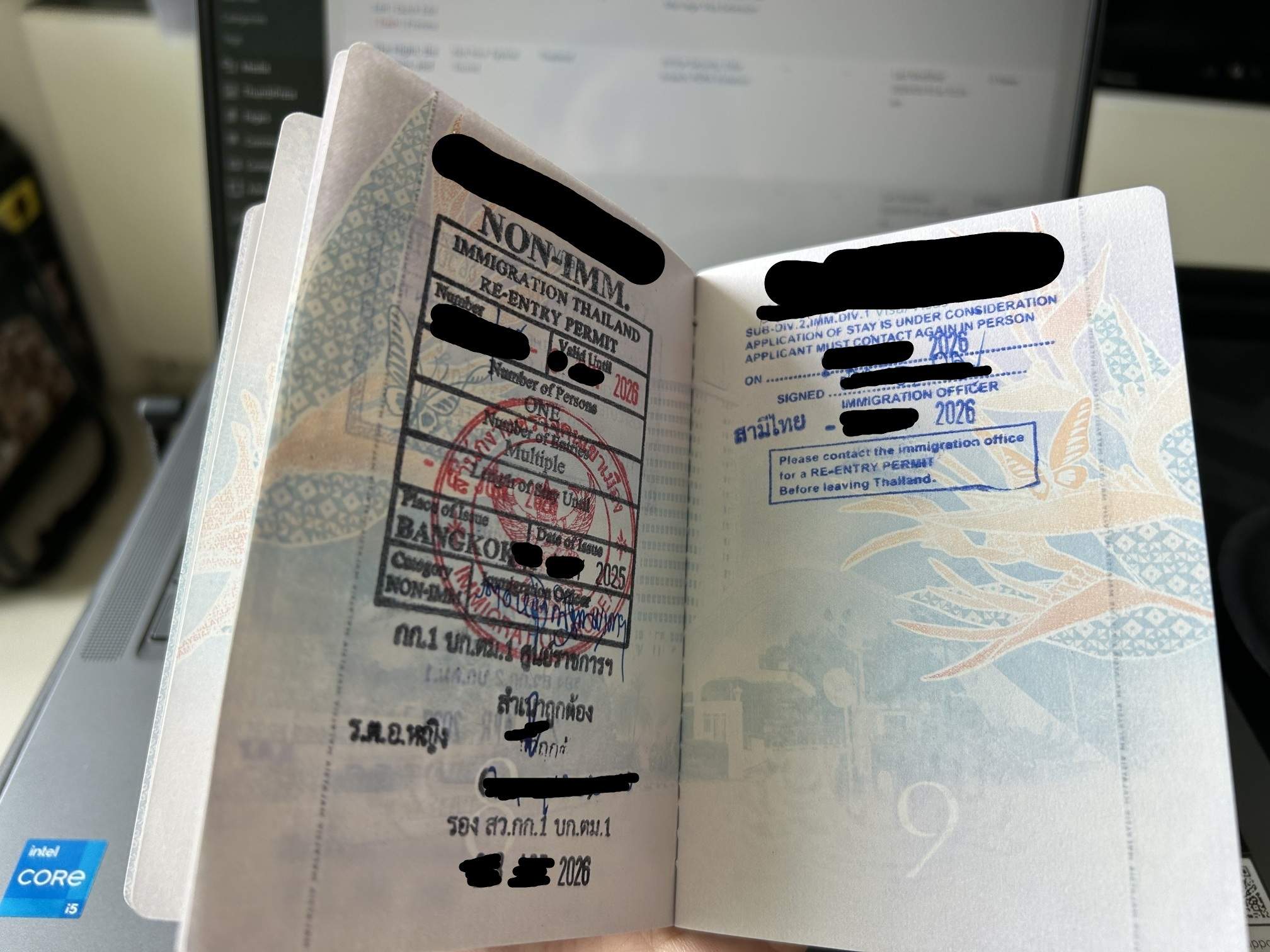
Once your application is successfully accepted on Day 1, your passport receives a three-week “Under Consideration” stamp. Do not make the assumption that your existing multiple-entry permit automatically protects this transitional period.
I traveled out of the country on an international flight that exact same afternoon, assuming my active multiple re-entry permit covered me. It was only when I returned from abroad a week later and looked closely at the ink that a red flag went up. Printed clearly inside the “Under Consideration” stamp was a warning I hadn’t noticed before: “Please contact the immigration office for a re-entry permit before leaving Thailand.”
A frantic deep-dive into community forums revealed chilling warnings: traveling during the consideration period is a high-stakes gamble. Immigration officers may conduct an unannounced home visit while you are away. More critically, opening a brand-new extension application can technically invalidate any previous re-entry permits tied to your old stay dates. To travel safely, you must secure a brand-new re-entry permit that directly links to the specific application number and dates on your “Under Consideration” stamp. If you leave without one, you risk voiding the entire application, forcing you to return on a tourist entry and start the entire paperwork marathon completely from scratch.
We prepared for the absolute worst-case scenario, re-printed a full duplicate stack of our documents, and headed back to Chaengwattana exactly one week after our initial application.
I was incredibly fortunate. When the staff at the preliminary queue counter heard my situation, they went back to consult with the senior processing officers. Because my original permit was a multiple-entry type and hadn’t structurally expired yet, they confirmed it wasn’t a fatal error. However, the grace came with a very strict warning: I had to turn up at the counter exactly on the results date indicated on the stamp, without a single day of delay.
The Safe Way to Travel Under Consideration:
- Secure a Dedicated Permit: Apply for a brand-new re-entry permit stamped specifically to match the unique number and dates of your “Under Consideration” period.
- Watch the Clock: Ensure your inbound flight lands you back on Thai soil well before the final decision date specified on that stamp.
- Keep Officers in the Loop: Always explicitly state your immediate international travel plans to your processing officer on Day 1 so they can log the travel dates directly into your file.
Day 2: Final Collection Day & The Triple Counter Run
On my scheduled results day, I initially timed a complex “Triple Counter Run” to handle my extension collection, a new passport data update, and my 90-day report all in half a day using an 11:40 AM online appointment on the third floor. However, due to the added scrutiny of my international travel during the consideration window, I decided to forgo the online slot. I left my husband on standby at home—ready to make the trip if needed—and headed to Chaengwattana alone early in the morning just in case we had to structurally re-apply.
The Collection & Re-entry Timeline:
- 07:15 AM — Arrival: Walked into the building and secured Queue number 210.
- 08:33 AM — Processing Begins: The official processing numbers were issued. Because there is only a single L1 counter designated for “Results Hearing,” there was no physical queue ahead of me. The officers called all queue numbers immediately to collect passports. Tip: Keep your queue ticket! They collect your document stacks internally, apply the final 1-year extension stamp, and process them in batches.
- 08:50 AM — Passport Received: My number was called verbally – I collected my passport with the approved 1-year extension stamp, handed over my queue ticket, and ran straight down to the basement to photocopy the brand-new stamp page.
- 09:00 AM — Moving to Re-Entry: Entered the queue for the C2 Re-Entry Permit counter with 12 people ahead of me to immediately protect my new stay dates.
- 09:12 AM — Number Called: Handed over my completed TM.8 form with photo attached, a copy of my passport bio-page, copies of the latest extension and arrival stamps, and 3,800 THB for a new 1-year Multiple Re-entry permit.
- 09:38 AM — Mission Accomplished: Received my passport back with the Multiple Re-Entry stamp matching my fresh extension limits. This was hands-down the fastest re-entry processing I have ever experienced at Chaengwattana!
💡 Pro-Tips for Managing the Early Morning Queue
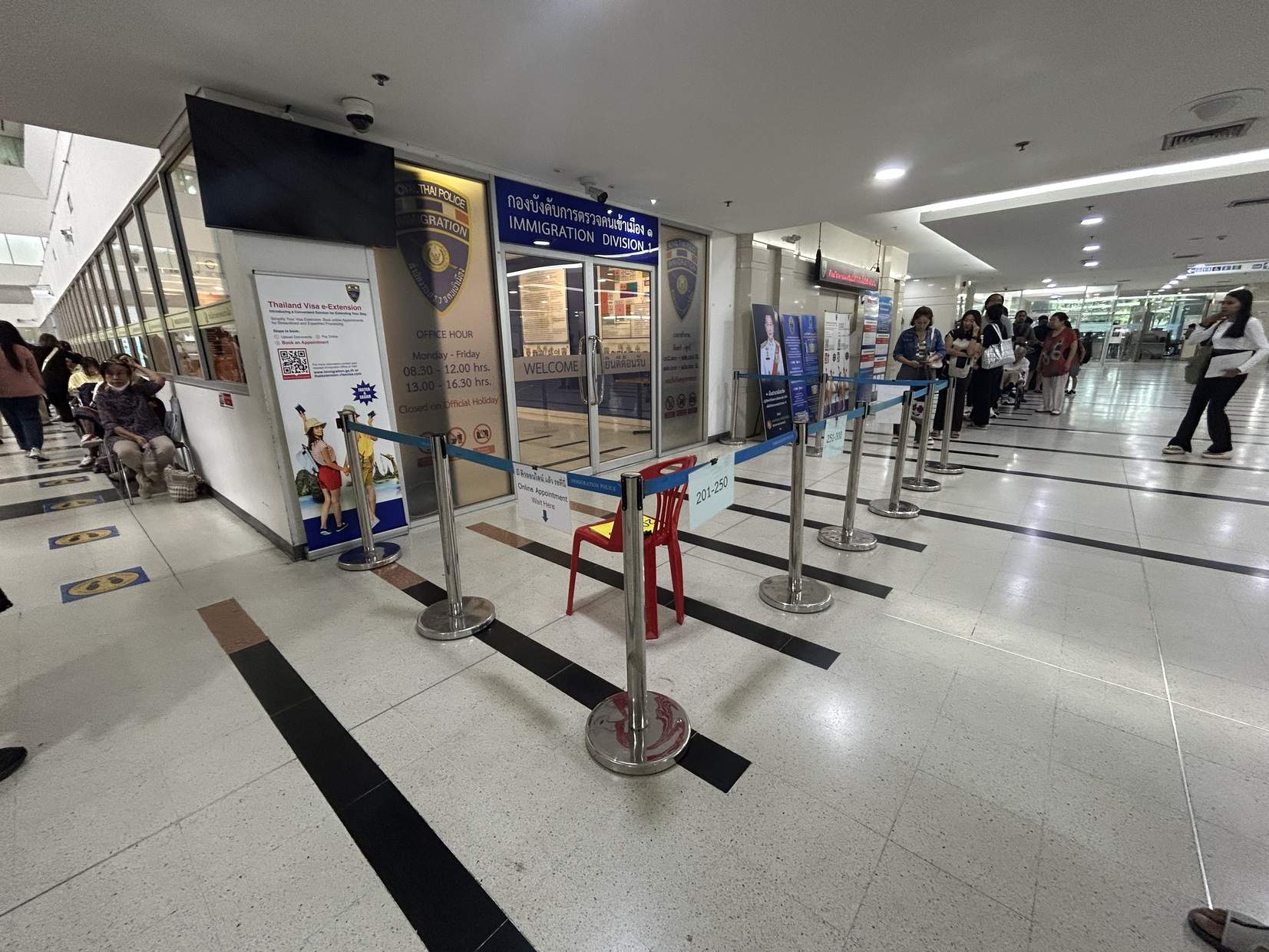
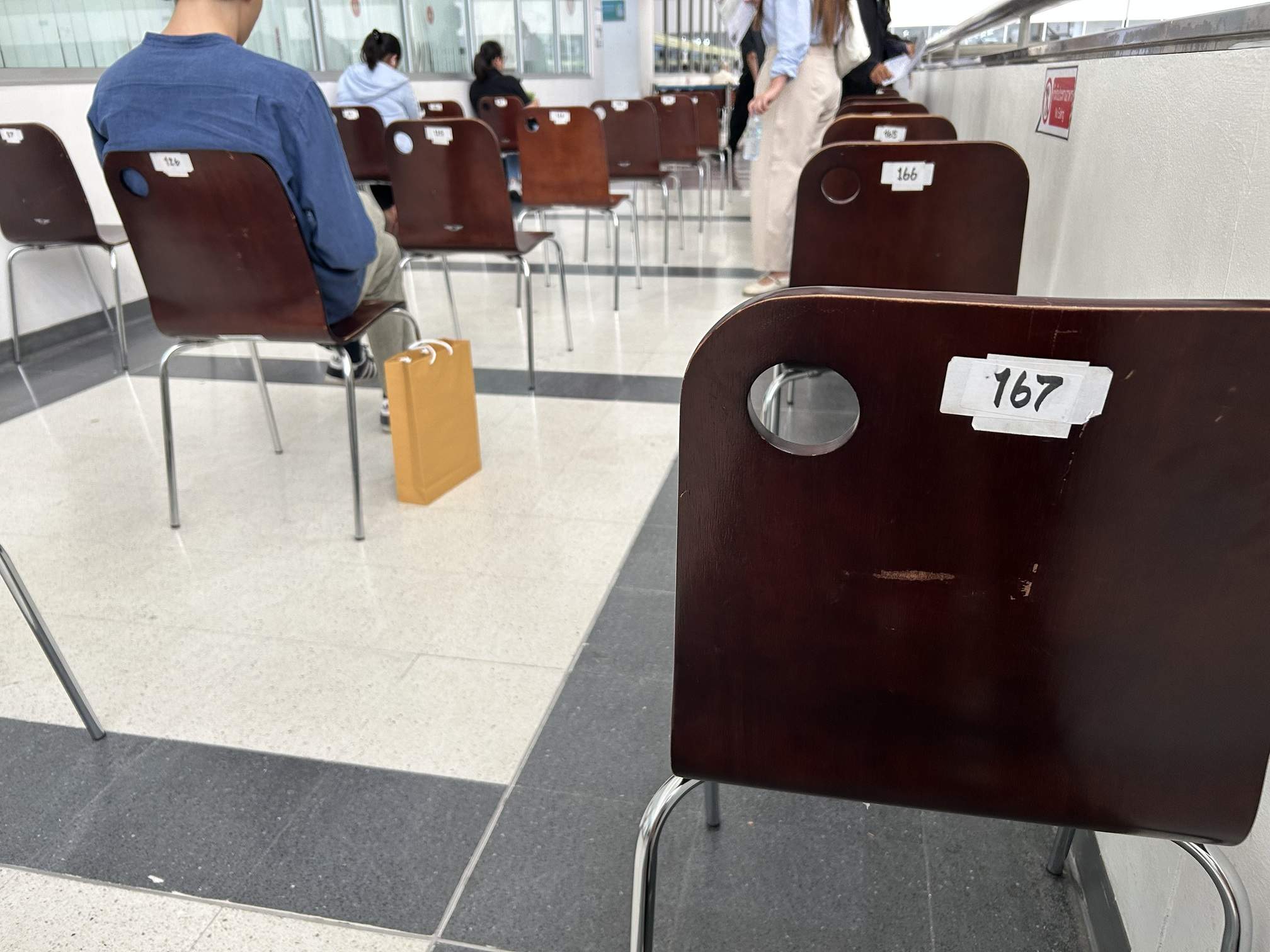
- The 200-Seat Rule: Outside the main entrance hall, exactly 200 seats are provided for early arrivals, with sequence numbers clearly labeled on each chair. If your arrival queue number is higher than 200, don’t waste time trying to find a seat. Instead, hover closely around the main exterior glass doors where the numbers are indicated. While many people don’t queue according to their actual sequence (and I was far too lazy to play queue-police that morning!), the officers will call out blocks of numbers verbally. When your block is called, walk straight in and hand over your ticket.
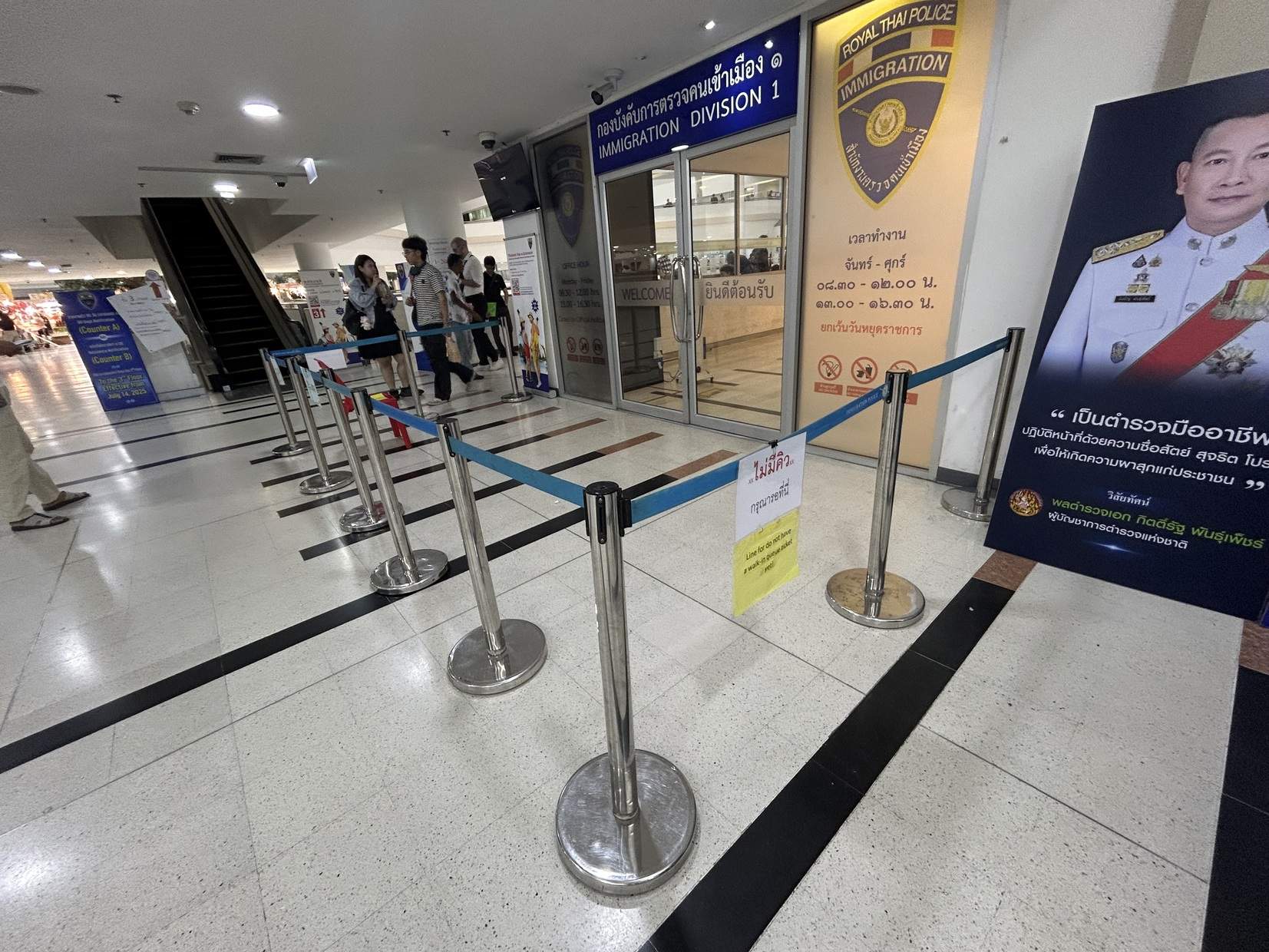
- The Late Arrival “Right Side” Trick: If you arrive after they have officially stopped issuing the preliminary arrival queue numbers out in the hall, head straight to the right side of the main exterior glass doors and line up there. Many people who arrive late just hover around the entrance in confusion, only to realize later that they have to walk all the way to the back of the line without noticing the “no queue number” lane . Skip the confusion and position yourself on the right immediately.
- The Double-Line Hack: When you approach the physical queue ticket counters inside, look closely—there are usually two separate staff lines handing out numbers. Keep your eyes open and simply line up in whichever line is shorter; many applicants freeze in a trance and just blindly follow the longest line in front of them.
- The Early Bird Shift: Be prepared for massive crowds depending on the day. I was highly surprised to receive queue number 210 at 07:15 AM on Day 2, compared to getting number 168 at 07:45 AM on our Day 1 application run. Keep in mind that it isn’t strictly necessary to turn up this early just for a results collection and re-entry stamp; I only did it as a safety buffer in case we had to re-submit our entire folder.
Managing your own legal stay in Thailand without a corporate agent is undeniably a paperwork marathon. But with a meticulously organized folder, strict attention to the 2026 Khor Ror 2 updates, and a supportive partner by your side (a huge shoutout to my husband for rocking these early morning application runs with me!), it is a completely winnable race.
🛺 Need help planning your route to the Government Complex? Don’t get caught out by recent public transit route shifts or fare increases. Check out my fully updated [2026 Chaengwattana Transportation Guide] to find the absolute smoothest interchange route for your morning run!
Have you run into these new marriage certificate timeline rules at your local district office, or did you brave an international flight during your “Under Consideration” window? Let me know your own immigration field notes and survival stories in the comments below!