Culture, Etiquette, and the Chongqing-KL AirAsia Saga

Update (30 April 2026): The “Other Side” of the Lens
Since my last update, a detailed interview has surfaced on YouTube featuring the passenger at the heart of the dispute—the lady seated next to the PRC passenger who first requested she tone down her voice and then stop using her phone.
The passenger has been identified as a Malaysian Chinese tour guide who is fluent in Mandarin and exhibited a very eloquent, well-mannered demeanor during the interview. Her side of the story adds a critical layer of context: she took a photo of the PRC passenger purely for self-protection, an act that unfortunately triggered the final spiral of the confrontation. While taking a photo can provoke physical escalation—which we certainly saw here—she felt it was her only way to document the reality of the situation.
She chose to go to the media because the PRC passenger reportedly claimed she had already apologized and cleared the dispute. The tour guide flatly denies this ever happened and has publicly challenged the passenger to a “face-to-face” meeting rather than lying about a phantom apology.
Interestingly, the interview delved into family upbringing and emotional intelligence. It was a “touche” moment that highlighted the gap between the two parties. While I wasn’t involved, I can’t say for sure I wouldn’t also take a photo if I felt threatened, though perhaps in a more discreet way. As someone who usually a FIT (Free Independent Traveler), if I were to hire a tour guide, I would expect “sound judgment” to ensure the group’s well-being isn’t compromised—though safety comes in different interpretations. In my view, while she felt she was protecting herself, the act of photographing an agitated person put the group’s general well-being at risk by provoking further escalation. The tour guide, however, remains confident that her decision was a result of considerate thinking, not an impulsive reaction.
Reflections on “Safety” vs. “Social Nuisance”
This saga made me reflect on my own flight from Bangkok to Kuala Lumpur a few weeks ago. A monk on board was on a loud speakerphone call even as the plane was leaving the gate. I was annoyed—not because I feared for our safety, but because he was making meeting arrangements that could easily have been handled upon landing. However, I let it pass.
Let’s be honest: how many of us are guilty of turning off airplane mode and texting the moment the wheels hit the runway, well before reaching the gate? I, for one, am guilty of this. When we are honest about our own habits, we realize the “safety” argument is often a secondary concern to what is actually a clash of etiquette.
Update (26 April 2026): Rapid Developments: Since my initial post on 25 April, I have been following the rapid developments of this saga, and this post has been updated accordingly. New passenger statements suggest the plane was already taxiing away from the gate while the passenger was still on her phone. However, there was no one to confirm whether the plane was actually in motion or still stationary when she first made the call. While she claimed to be off-duty crew, the airline she named has since denied she is a staff member. Having spent years in the corporate world, I’ve learned not to take such claims at face value; ultimately, only the passenger and the airline know the full truth.
Most concerningly, the AirAsia crew’s handling has come under fire from a discerning few netizens. They noticed what I previously highlighted: the crew had every opportunity to diffuse the situation. Specifically, a crew member who stepped in—supposedly because he could speak Chinese—reportedly joked about not speaking Mandarin while clearly understanding the passenger’s distress. It is that classic, sarcastic response: replying “No, I don’t speak English” in perfect English. Joking during a highly agitated situation is a failure of professional crisis management.
The Original Post (25 April 2026)
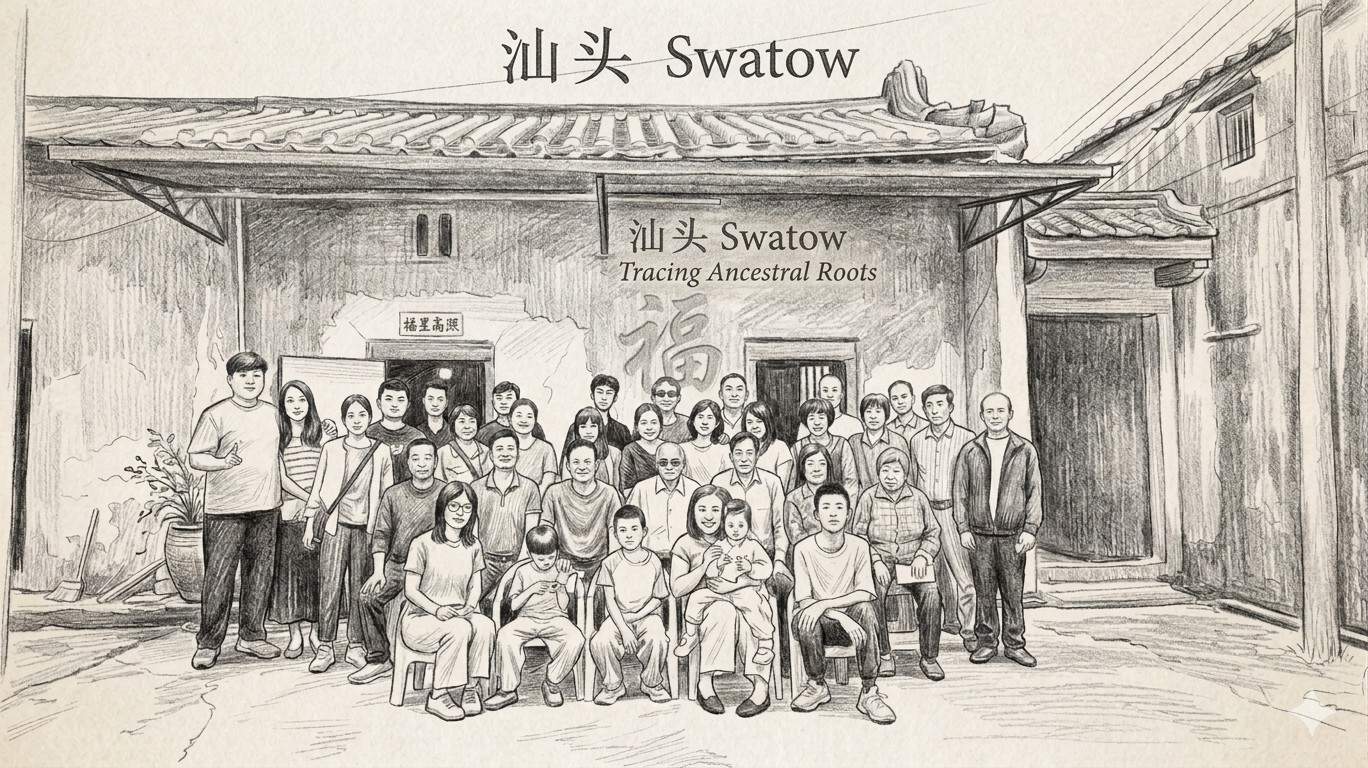
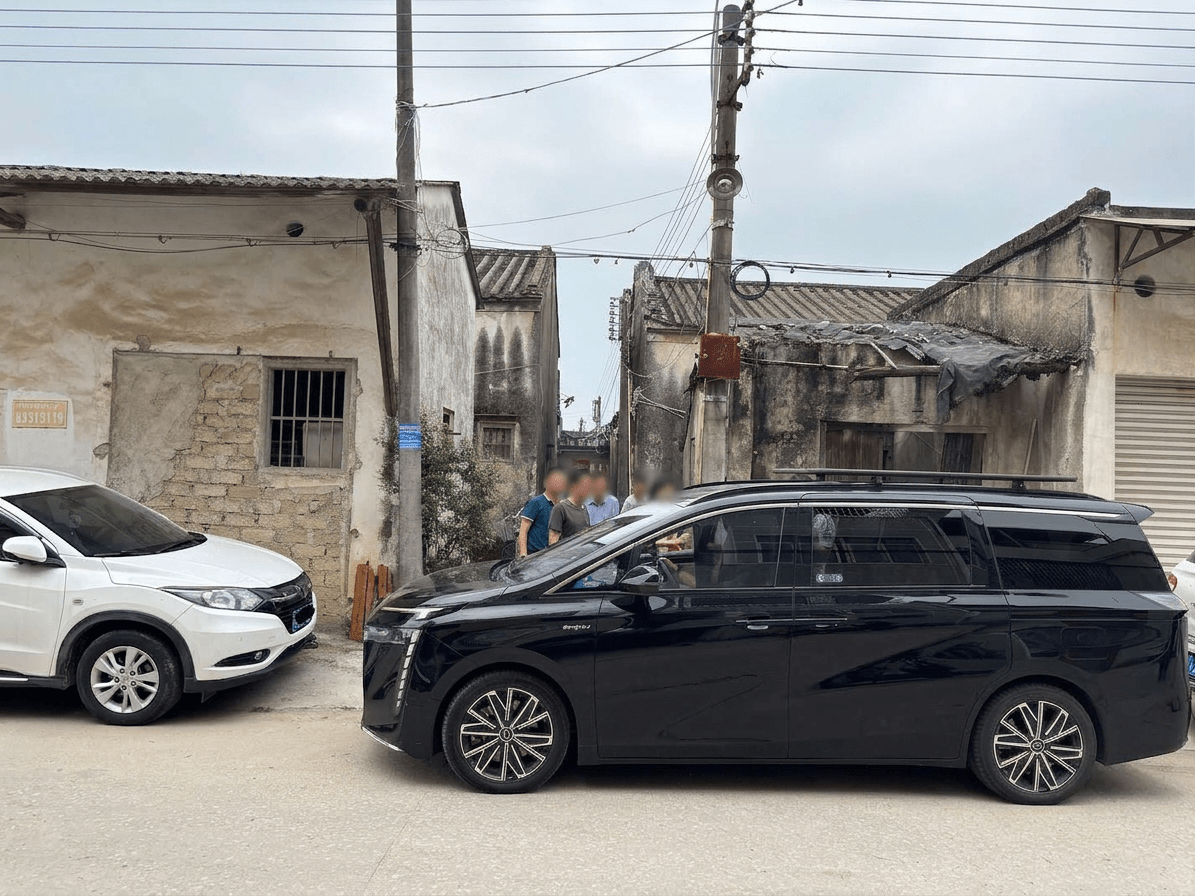
The recent viral saga on the April 22 AirAsia flight from Chongqing to Kuala Lumpur has been weighing on my mind, especially as I prepare for the cultural nuances of my upcoming visit to my husband’s ancestral village in China. It brought back a vivid memory of a recent encounter at Don Mueang International Airport with a man I presumed was from Mainland China.

I was at a charging station, having a quick hot dog bun for breakfast while my phone was plugged into my travel adapter. A man sat two seats away, visibly frustrated that his phone wouldn’t charge from the built-in USB port. Seeing my adapter had a spare port, he didn’t ask for permission; he simply informed me he was going to use it. I let him. When I was ready to leave, I unplugged his phone and returned it to him. As I began packing my things, I reached for my empty hot dog bun box, only to find he had claimed it. He was using it as a “stand” to prop up his phone so the cable wouldn’t stretch. When I asked for it back to discard my rubbish, he simply told me he’d throw it away for me later.
Initially, I was annoyed, but I walked away viewing it through a different lens. What we see as a lack of etiquette, he likely saw as pure survival and practicality. To him, there was a spare port and a piece of “rubbish” that was perfectly functional for his immediate needs. In his world, you fight for what you need; in mine, we prioritize social harmony.

This brings me back to the AirAsia incident. As a Malaysian, I felt a certain level of shame watching the “group bullying” that ensued. The passenger was clearly agitated—her friends were stuck at immigration, a stressful situation for anyone. While she was loud, she wasn’t technically wrong about the phone usage; the plane hadn’t taken off yet, according to her.
The “Viral Execution”: A Violation of Rights
I see this primarily as a massive violation of her rights. She was filmed by everyone around her and posted across social media without her consent. Why is this breach of personal privacy not the focal point? There was no reason to film her in her most vulnerable state, yet that invasion is what escalated the entire event.
In China, the Civil Code (Article 1018) protects an individual’s Portrait Rights (Right of Likeness). Taking a video of someone in a “highly offensive” or “shaming” manner and publishing it online is a legal breach. Even the Chinese police who boarded the plane reportedly told other passengers to stop filming. By the time she was led off, she was asking for the footage to be sent to her as evidence—she knew her privacy had been weaponized against her.
However, her expectation that an international crew speak Mandarin was her downfall. Yet, we must note that the Thai service industry has already pivoted—many staff here in Bangkok are now fluent in Mandarin to cater to the market. In today’s world, lacking those skills in the service sector is almost a professional loss.
The “I Am China” Misunderstanding
The passenger’s phrase “I am China” is being mocked across social media as a sign of arrogance, but for anyone who has ever struggled with a language barrier, the intent is clear: she wasn’t literally claiming to be the country. Given her level of English, she was simply using the most direct words available to identify her origin and explain why she couldn’t understand the crew. It is a linguistic shorthand for “I am from China, and I don’t speak English.” The same “I am Thailand” would likely happen if a Thai passenger, not literate in English, were pushed into a high-stress confrontation.
This gap in communication isn’t just an anecdote; it’s backed by data. According to the 2025 EF English Proficiency Index (EF EPI), Malaysia remains a leader in the region, ranking 1st in Asia (among non-native markets studied) and 24th globally within the “High Proficiency” band. It is worth noting that Singapore is no longer included in these rankings, as EF now classifies it as a native English-speaking country.
In contrast, both China and Thailand fall into significantly lower categories. China ranks 86th (Low Proficiency), while Thailand sits at 116th (Very Low Proficiency) out of 123 countries. In Malaysia, our English proficiency is generally wider and more integrated into daily life. When we judge someone from a “Low Proficiency” band for failing to communicate “politely” in English during a crisis, we aren’t just judging their manners—we are ignoring a massive structural and educational gap. It’s easy to be “calm” in a language you master; it is terrifyingly easy to spiral when you are literally voiceless in a room full of people filming your distress.
It may seem like I am taking her side. She was wrong—there is no doubt. But she was also “right” in her distress, and that is what troubles me. This was a situation that could have been diffused. It isn’t easy, but it is possible if a crew is capable and avoids the “I am doing my job calmly, but inefficiently” trap. That is the difference between a 4/5 and a 3 in a performance appraisal.
The handling on board felt like a textbook failure. Instead of diffusing tension, the environment was allowed to escalate. If the initial crew member was not proficient, they should have found a bilingual colleague pronto—not joked in English while the passenger spiraled. Once she was escorted off, some crew were seen smiling—a gesture easily perceived as mocking. This, combined with passengers clapping, turned a stressful breakdown into a “viral execution.”
The internet labeled this “calm,” but to me, it felt like a collective lack of empathy. We should praise passengers who remain calm during a flight delay, but not when they turn a person’s distress into free “in-flight entertainment.” These videos are violations of rights that can escalate into nationalistic boycotts. As my husband noted, loud behavior isn’t exclusive to one nationality—we see it in Bangkok every day.
Taking photos on a flight is generally allowed for personal use, but recording other passengers to shame them is a different story. Federal laws and airline policies often prohibit filming if it causes a distraction or safety concern. Cabin crew may instruct passengers to stop recording if it causes a disruption, yet they failed to do so here.
I was not on that flight, but seeing this saga turned into entertainment bothers me deeply. Demanding Mandarin is one thing, but it is becoming the norm for service staff in Thailand to speak Mandarin fluently—sometimes to my own shame as a Malaysian Chinese who speaks only broken Mandarin. We need to recognize how this situation was blown out of proportion. The AirAsia crew, and our collective sense of empathy, needs to do better.