The Great Bangkok MRT Shift: What Expats & Commuters Need to Know
Bangkok’s long-sought goal of a unified public transport ticketing system is officially taking shape. Driven by the government’s EMV-based Common Ticket Policy, the city is moving toward seamless transfers across rail lines and transit networks, with a fully integrated single-ticket and unified fare system targeted for 2027.
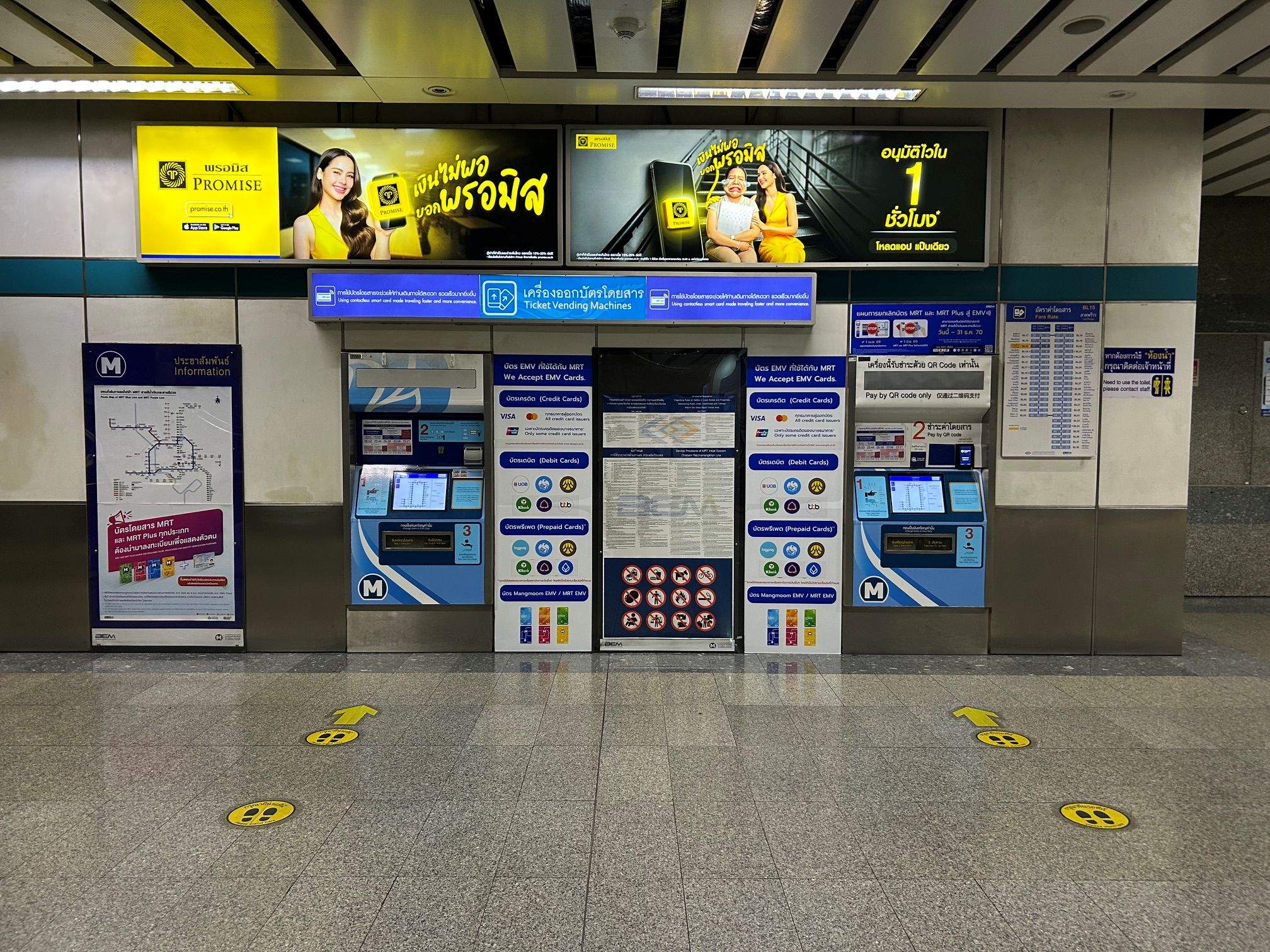
As part of this overhaul, the MRT Blue and Purple lines have fully transitioned to EMV Contactless payments. Commuters can now tap directly using Visa, Mastercard, or UnionPay credit/debit cards—or the new Mangmoom EMV card—bypassing the need for traditional transit cards.
Future secondary legislation under the Common Ticketing System Management Act aims to bring the BTS Skytrain, public buses, and passenger boats into this exact same unified ecosystem.
🚨 Real-World Update: EMV Workarounds on the MRT Yellow Line
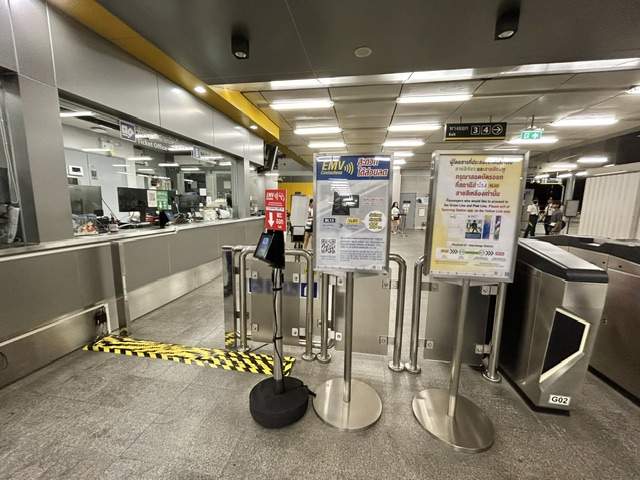
UPDATE (August 2026): While the city aims for a standardized entry experience, layout differences across station operators mean that EMV tapping isn’t identical everywhere yet!
- Separate Reader Setup: On the MRT Yellow Line (tested at Chok Chai 4 and the Lat Phrao terminus), standard turnstile gates process Rabbit cards and tokens, while EMV contactless cards can only be tapped at a separate, dedicated card reader.
- Where to Find It: These standalone EMV readers are positioned near the ticketing counter next to the wide, manual-access gate typically reserved for station staff or passengers with large luggage.
- Proactive Staff Assistance: If you’re holding a credit card and feeling confused near the main turnstiles, don’t worry! Station staff at both Chok Chai 4 and Lat Phrao were quick to notice and proactively guided us to the dedicated EMV reader.
The takeaway: Despite the city-wide push for unified cards, physical station architecture varies. Keep an eye out for standalone reader posts when transferring onto yellow lines!
🗓️ The Sunset Timeline: What Changed in 2026
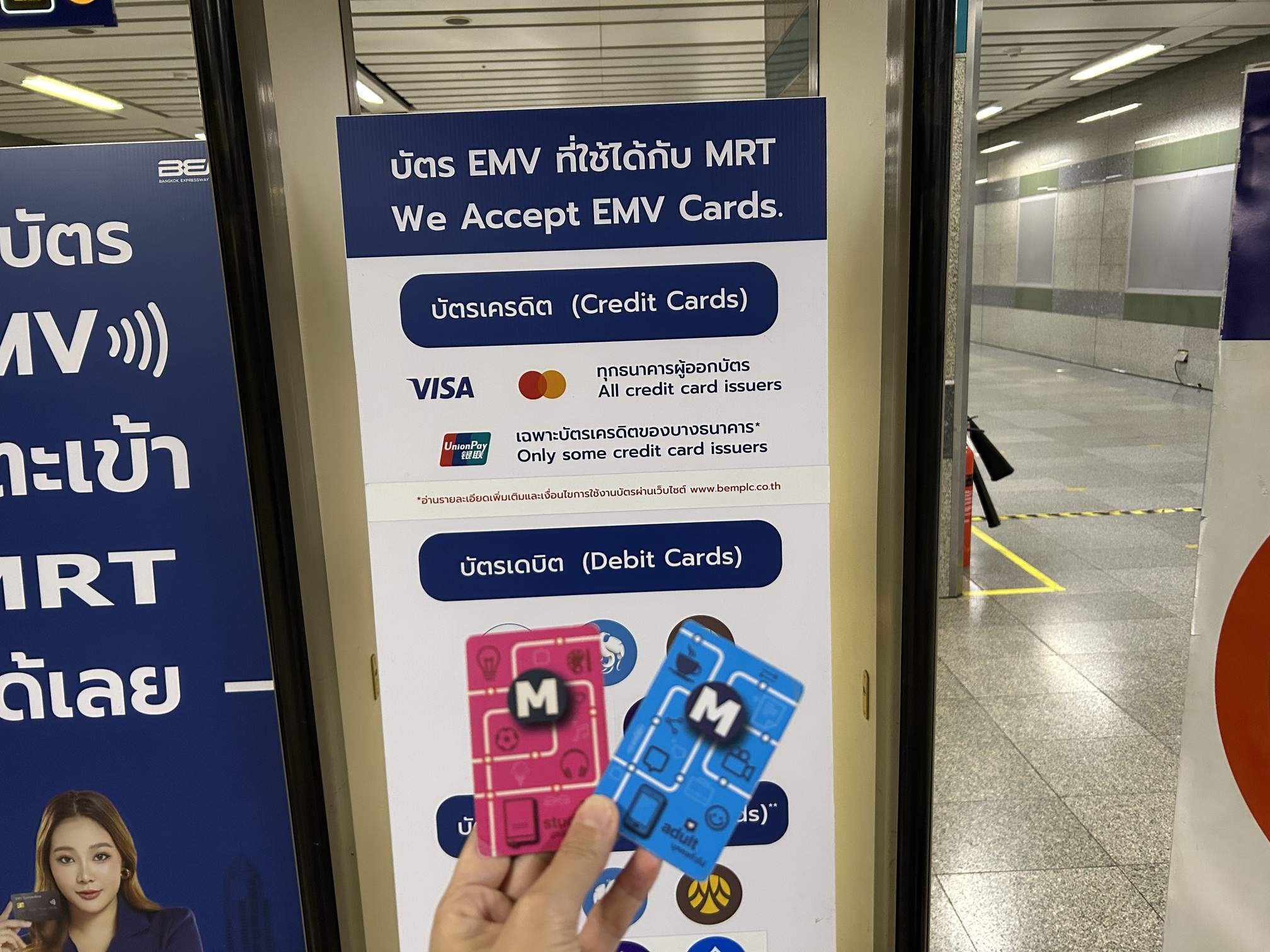
If you still hold an old stored-value MRT or MRT Plus card, take note of the hard deadlines that took effect earlier this year:
- 1 April 2026: Top-ups for legacy MRT and MRT Plus cards were officially discontinued.
- 1 June 2026: Legacy cards were deactivated. They can no longer be used at ticket gates.
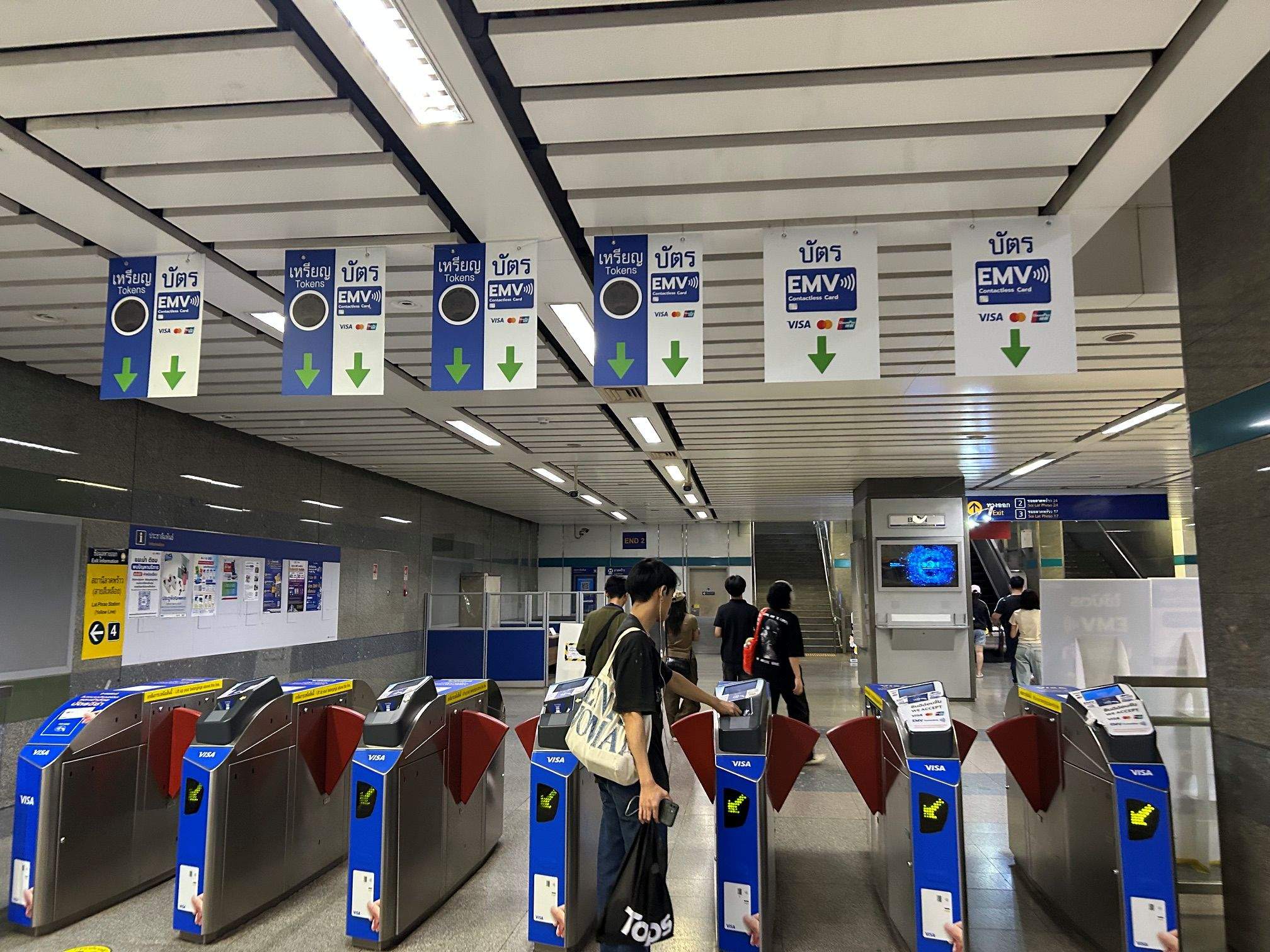
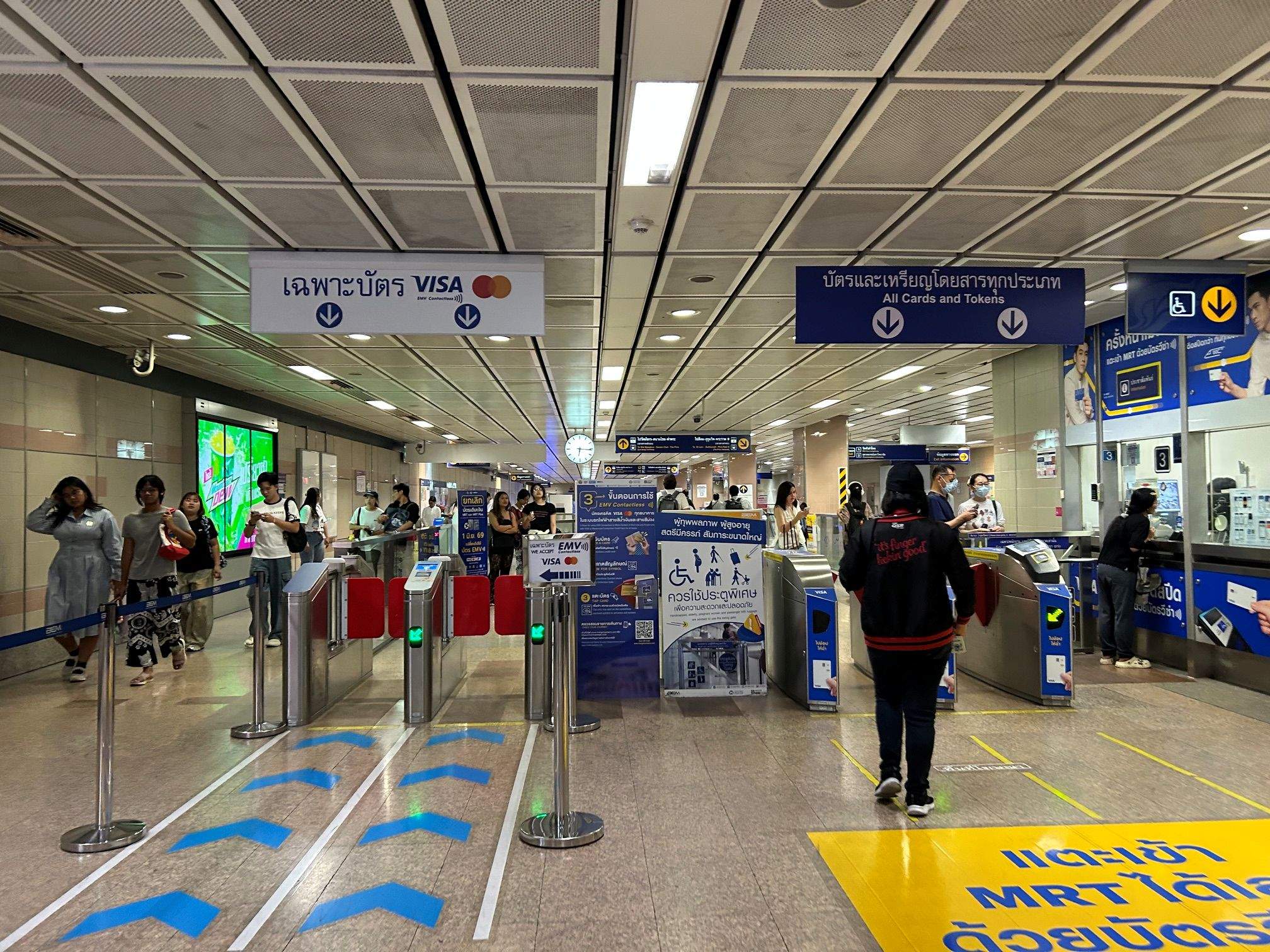
Gate Signage Note: Ticket gate labeling can still be slightly confusing. Most gates accept all EMV cards, while select gates process both EMV cards and single-use tokens purchased at counters or ticket machines.
💳 The New Standard: Mangmoom EMV vs. Bank Cards
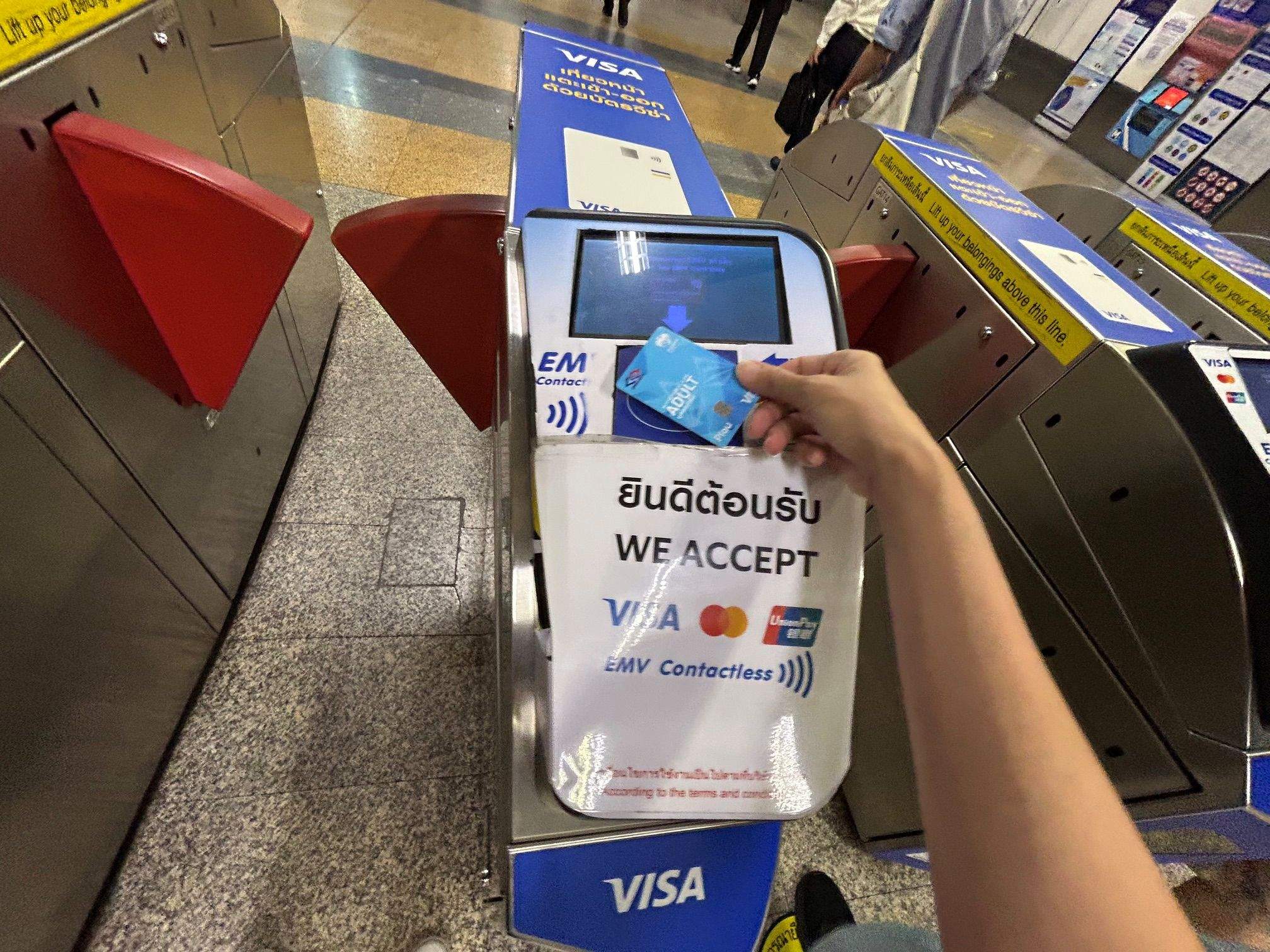
The flagship element of this transition is the new Mangmoom EMV card, jointly developed by Krungthai Bank and the Mass Rapid Transit Authority (MRTA). It features standard banking-level security (complete with a card number and CVV) and offers key capabilities:
- Multi-Line Access: Works seamlessly across the MRT Blue, Purple, Yellow, and Pink lines, as well as the SRT Red Line and Airport Rail Link.
- Retail Usability: Functions like a prepaid debit card and is accepted by various retail merchants outside transit stations.
- Paotang Integration: For Thai citizens, the card links directly to the Paotang (เป๋าตัง) app—Thailand’s digital wallet hub that handles government subsidies and health benefits.
⚠️ The BTS Skytrain / Green Line Trap
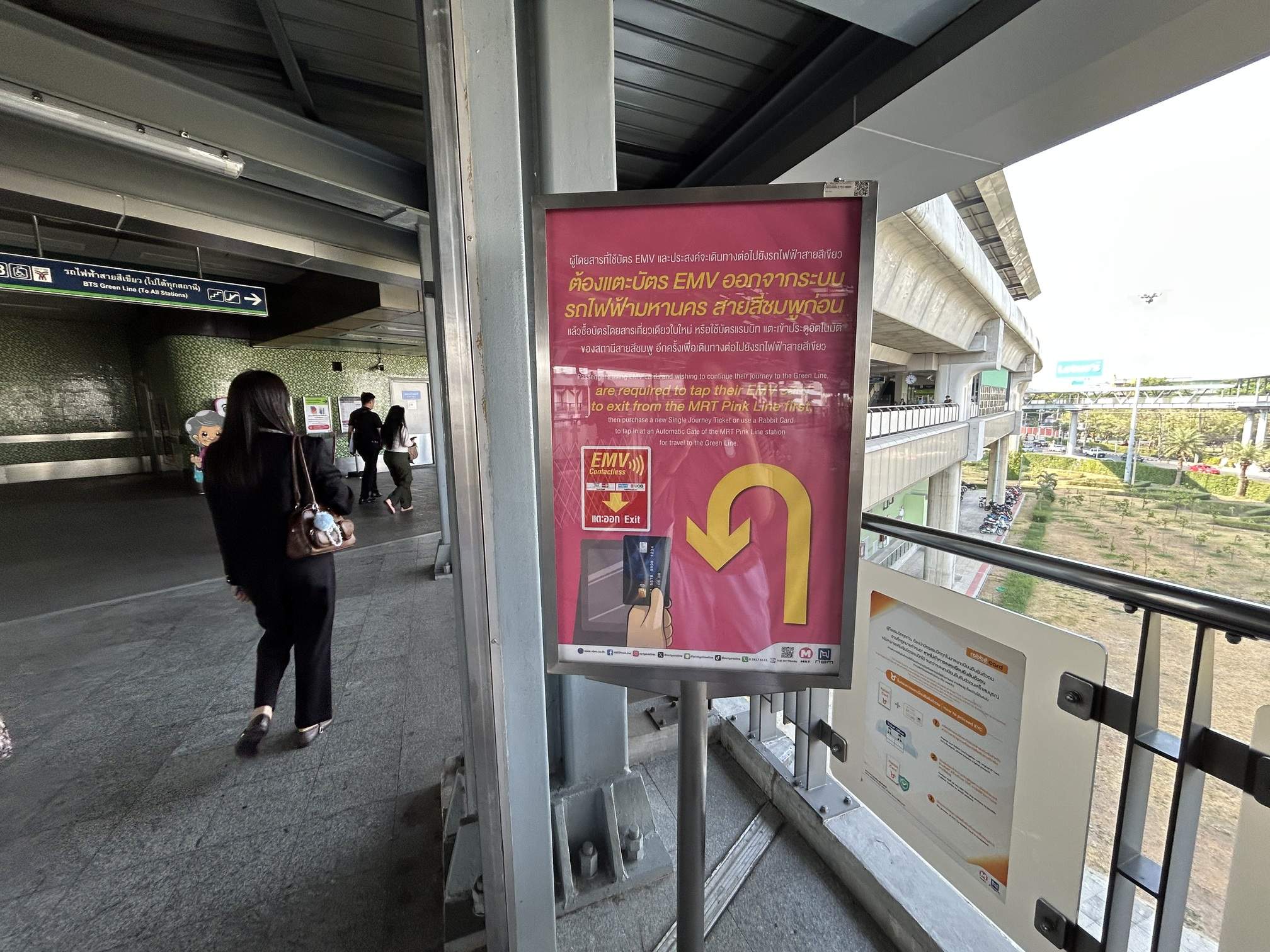
Unified EMV coverage is not yet universal. At interchange points with the BTS Green Line, you must tap out of the EMV network, then switch to a Rabbit Card or buy a standalone BTS single-journey ticket. If you regularly commute via the Pink Line to Chaengwattana Immigration, keeping a Rabbit Card handy remains the smoothest option for the BTS portion of your trip.
💰 Fees & Card Issuance Breakdown
Because EMV chips are more expensive to produce than legacy RFID cards, pricing structures have been adjusted:
| Card Option | Cost / Fee | Key Details |
| New Card (via Paotang App) | 50 THB | Strictly for Thai citizens (requires Thai ID authentication). |
| New Card (at MRT Station Counter) | 250 THB | Includes a 150 THB card fee + 100 THB initial transit balance. |
| Replacement (Exchanging Old Card) | 150 THB | Your old 50 THB deposit is credited, bringing the net cost to 100 THB. |
🛂 Long-Term Expat Realities & Hurdles
Navigating the transition as a foreign resident involves a few quirks and administrative friction points:
- The “Thai Only” Station Gate: Despite official announcements, staff at several station counters strictly reserve physical Mangmoom EMV cards for Thai nationals due to the card’s backend integration with the Paotang app.
- The Spouse Workaround: If your Thai spouse requests an additional card for you, keep in mind that it remains tied to their Paotang account. You won’t have independent visibility over card balances or transactions.
- Sync & Balance Lag: Unlike instant RFID balance updates, EMV transactions can process with a slight delay. Balance top-ups via the app can take time to sync—meaning if you top up right before heading through a turnstile, the gate may briefly fail to register your funds.
- Card Loss Risk: Because the Mangmoom card functions as an active debit wallet, losing it carries higher financial risk than losing a basic transit token. Consider requesting that retail payment features be toggled off if you want to limit risk in case of loss.
💡 Quick Tips for Commuters & Tourists
- The 1 THB Authorization Hold: When tapping a personal credit card at turnstiles, you may see frequent 1 THB pending charges. These are automated verification holds, not extra ride fees. Final billing for your trips often posts to your statement 24 to 48 hours later.
- Tourists & Multi-Currency Cards: Using international bank cards can incur foreign exchange fees on each transaction. A multi-currency travel debit card (such as Wise or Revolut) helps avoid these charges.
- Ticket Machine Sensitivity: Automated single-token machines require crisp, uncreased banknotes. If a machine rejects your cash, skip the automated line and visit the counter—staff will swap your notes for accepted coins or issue a token directly.
🔄 How to Claim Your Old Card Deposit Refund
You can surrender retired MRT/MRT Plus cards at any station counter to recover remaining funds and your 50 THB original deposit.
- Deadline to Claim: 31 December 2027
- Process Time: Approximately 3–5 minutes per card.
⏱️ Pro-Tip: If you are handling refunds for multiple family members, avoid doing so at busy single-window stations during peak hours to keep queues moving smoothly for fellow commuters!
🛠️ System Teething Pains & Recommended Backup
The network is still stabilizing. You may occasionally encounter turnstile read errors on newly issued cards or fluctuating counter top-up availability during off-peak hours.
Best Practice: Always keep a secondary contactless Visa or Mastercard handy in your wallet. Tapping a personal credit card is the fastest fallback if a station turnstile experiences a temporary glitch.