The TM47 90-Day Report: My DIY Journey from Bureaucracy to Online Bliss
🚨 OCTOBER 2026 UPDATE: The Mail-In Snag & The Final 24-Hour Online Approval!
After switching to a Non-O visa, transferring stamps to a new passport, and traveling abroad, I hit the infamous “digital lock” on Thailand’s online 90-day reporting system. Here is how my recent mail-in attempt played out, how an in-person sync at Chaengwattana solved it, and how I finally unlocked seamless 24-hour online approvals!
📮 October 2026 Update: The Mail-In Attempt & The “Signature Snag”
Following my annual extension renewal at Chaengwattana Immigration, I made a point to ask an officer at the counter if I could use the mail-in option for my upcoming report. She confirmed I could. To be safe, I locked in a backup in-person queue slot online just in case anything went wrong.
📋 What to Include in Your Mail-In Packet:
For a mail-in TM47 report in Bangkok to be valid, your envelope must be postmarked at least 15 days before your due date.
- Completed & Signed TM47 Form: Signed and dated.
- Previous 90-Day Slip: Your original notification slip (or a police report if lost).
- Passport Copies: Bio-data page, current extension stamp, re-entry permit, and latest entry stamp. (Note: If you recently transferred stamps to a new passport, include the transfer page referencing your old passport number).
- Thailand Digital Arrival Card (TDAC) Confirmation: A printout of your digital arrival receipt.
- TM30 Receipt: A copy of your registered residence notification slip.
- Self-Addressed Stamped Envelope: Affix a 20 THB stamp so Immigration can mail your new slip back.
- 💡 Envelope Size Tip: The notification receipt slip measures 11 cm x 21 cm. Instead of a small envelope that forces officers to fold your receipt multiple times, use an 11 cm x 23cm envelope placed inside a larger C4/A4 envelope with your document copies.
📮 Thai Post Logistics & The “Friday Shipping Trap”
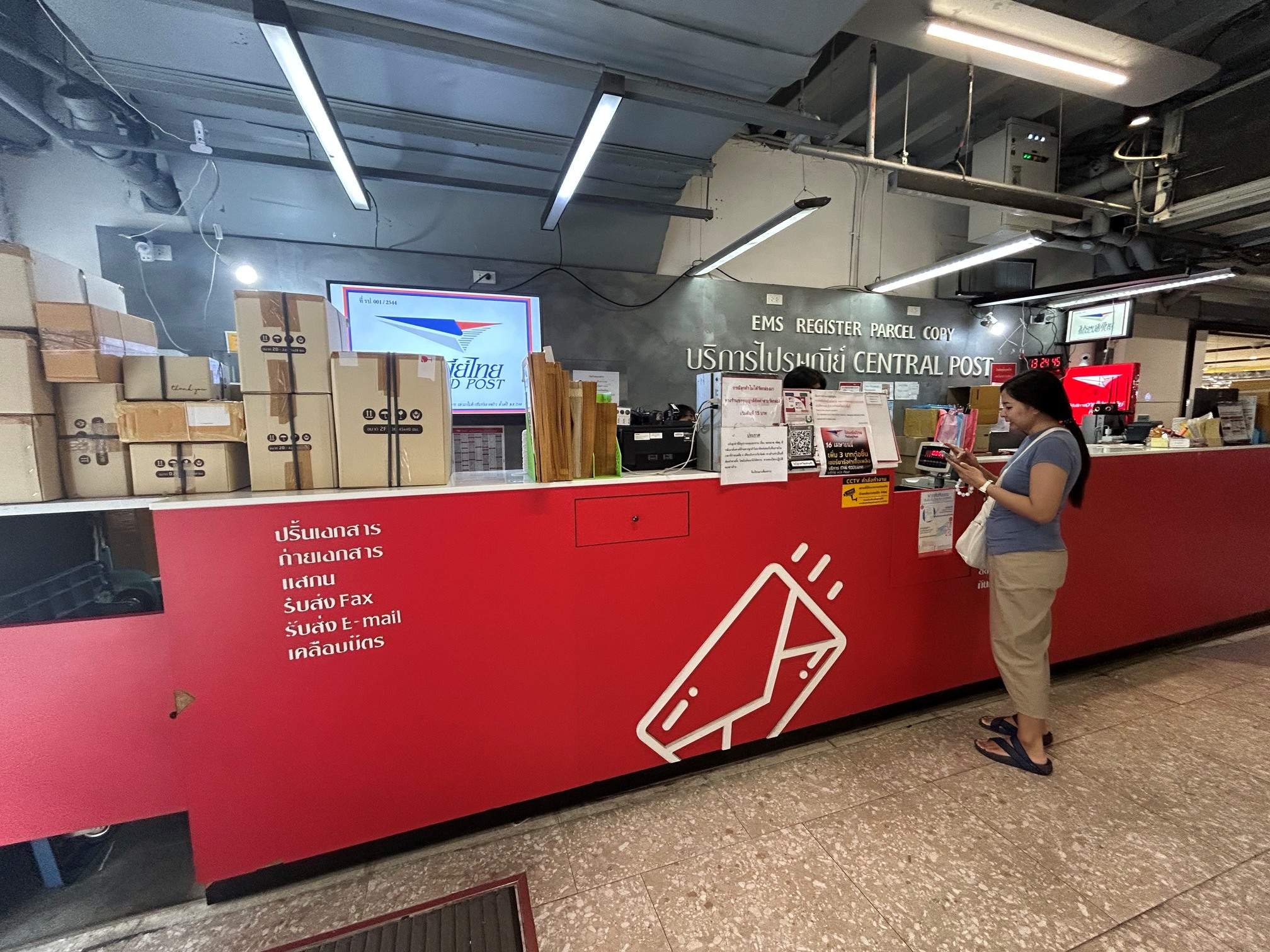
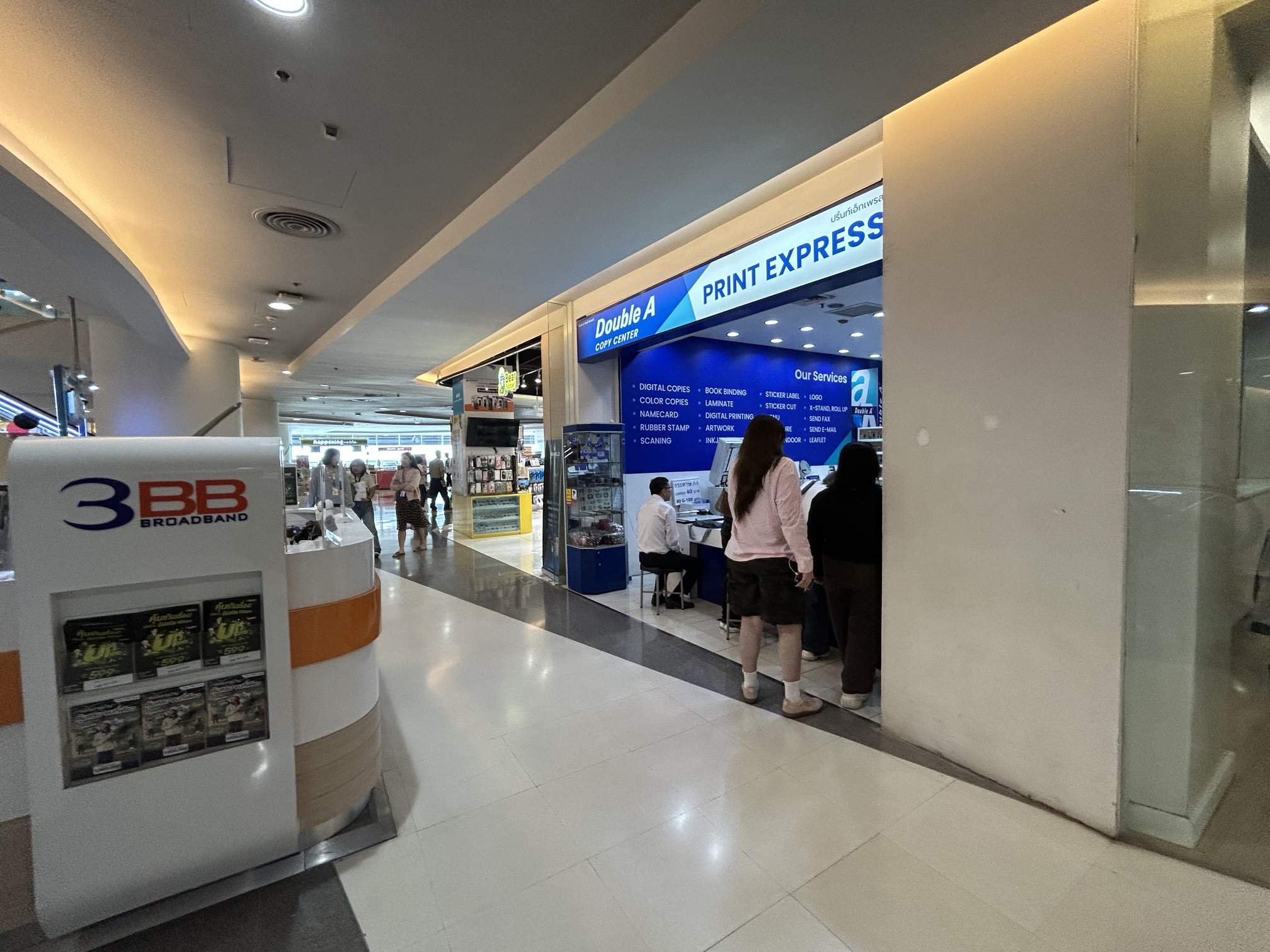
I posted my packet using a Thai Post outsourced counter at Central Latphrao (costing 69 THB total: 20 THB stamps + 49 THB service fee for a 74g packet).
I sent the packet on a Friday early afternoon, and to my surprise, Thailand Post actually attempted delivery the very next day—a Saturday, when government offices are closed! Keeping track of the delivery status via the Thai Post website made me quite nervous, especially knowing the envelope contained full photocopies of my passport.
Fortunately, a second delivery attempt on Monday was successful.
⚠️ Pro-Tip on Mailing Days: Avoid mailing your 90-day packet on a Friday! It never crossed my mind that Thai Post wouldn’t check whether a government destination office is open on weekends before attempting delivery. Furthermore, as experienced expats advise: take screenshots of every step on the Thai Post tracking portal, and take clear photos of your signed documents alongside the stamped envelope before sealing it off as part of your audit trail.
⚠️ The Signature Oversight & Backup Plan
Right after sending the packet off, realization struck: I had forgotten to sign blue-ink signatures across all the document photocopies during a last-minute document copy run!
Predicting the packet would likely be rejected or held up, I was immensely relieved to have kept my pre-booked in-person appointment at Chaengwattana. I never received a response via the self-addressed envelope; however, because I completed the report in person before the mail packet was processed, my record was already updated in the system. While it meant a small loss of postage and effort, keeping that backup appointment saved the day!
🏛️ In-Person Counter Insights (Chaengwattana)
When I reported in person using my online appointment slot, the officer reviewed my documents and updated my new passport and extension details in their master database.
Crucial Advice from the Officer: She assured me that because my physical records, TM30, and latest entry details were now fully synced in person, I would finally be eligible for online submissions on my next reporting cycle.
Key Rules for Mail-In vs. Online Windows:
- Mail-In Reporting: Must be postmarked at least 15 days before your due date.
- Online Reporting: Can be submitted between 15 days before and not less than 7 days before your due date.
- In-Person / Proxy: Allowed from 15 days before up to 7 days after your due date without penalty. (Filing past the 7-day grace period can result in a fine of up to 2,000 THB).
🎉 The Ultimate Win: 24-Hour Online Approval!
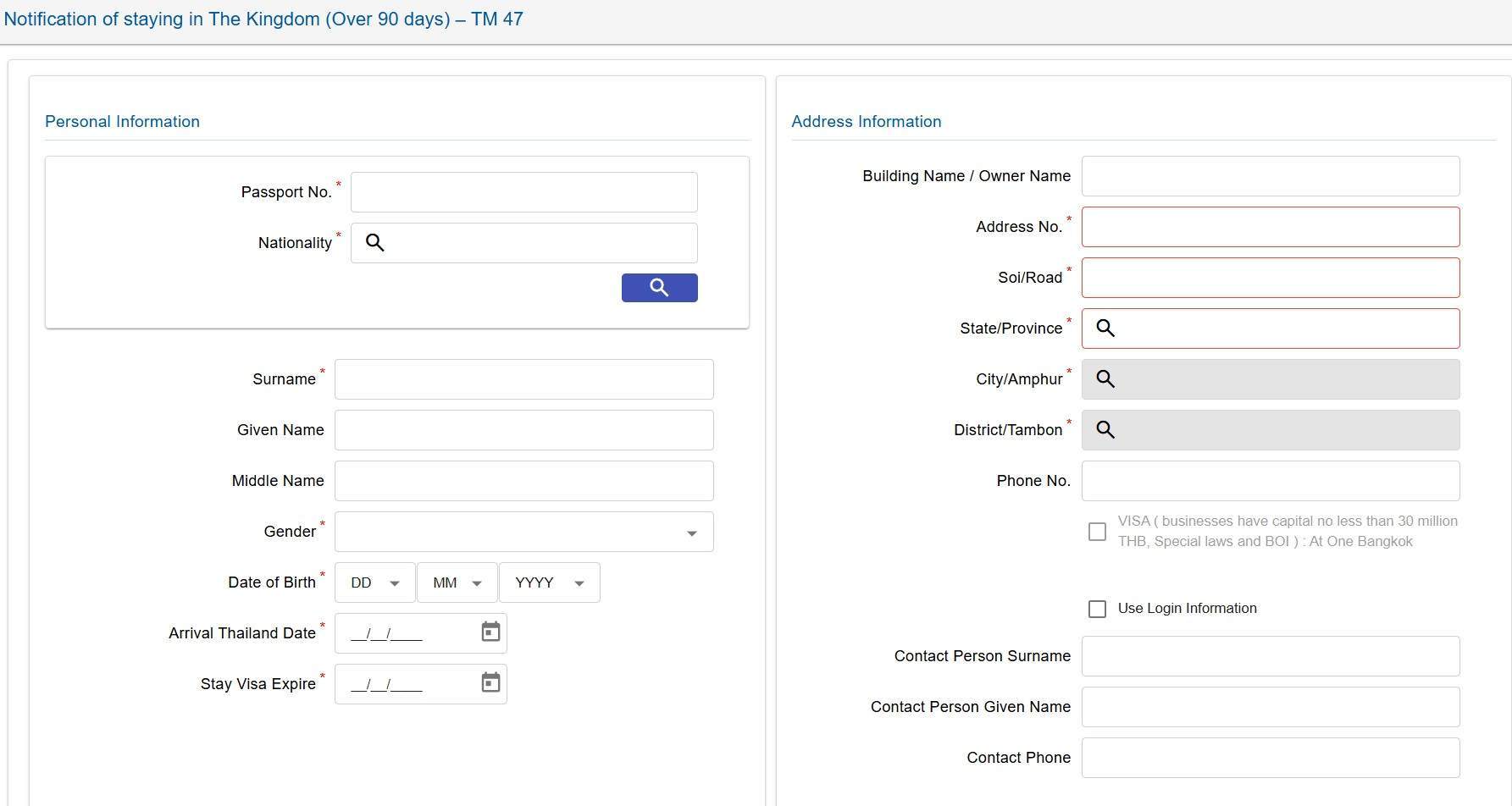
When my next 90-day notification window arrived, I tested the online portal once more.
I submitted my application on a public holiday. To my delight, first thing on the very next working day, I received an official notification email with my approved TM47 receipt attached! Kudos to the Thai Immigration Division 1 team for such fast digital processing once the back-end records are aligned.
💡 Summary: The Ideal 90-Day Strategy
If you are managing your own TM47 reporting in Bangkok, here is the stress-free blueprint:
For Subsequent Reports: Go online as soon as your 15-day window opens. Once your data is unlocked, the digital approval process is fast, convenient, and completely hassle-free!
After a New Passport, Visa Change, or Annual Extension: Do your first 90-day report in person (preferably with a pre-booked online queue slot on the 3rd floor at Chaengwattana). This ensures your physical stamps, TDAC, and TM30 data are manually verified and synced in the master database.
If Mailing Your Report: Triple-check that every single photocopy is signed in blue ink, avoid mailing on Fridays to prevent weekend delivery attempts, send via registered mail/EMS at least 15 days in advance, and document your postal tracking steps.
📜 Previous Updates & Historical Context
🚨 APRIL 2026 UPDATE: The “Catch-22” & The TDAC Glitch
I wrote a lengthy post last year (kept below for reference), thinking online reporting was the “Holy Grail.” As it turns out, it’s a bit of a hit-or-miss game in 2026. While it works for some, there is a serious lack of published info on why it fails for the rest of us “aliens” who manage our own paperwork.
The “Reset” Reality:
Beyond a new visa type, any international travel now resets the system. While your TM30 and TM47 history remain in the database, the new Thailand Digital Arrival Card (TDAC)—which replaced the old paper TM6—does not always sync properly. When your TDAC reference number changes, the online system often “locks” you out.
The Catch-22 of Reporting:
- Mail-in: Must be postmarked at least 15 days before the due date.
- Online: Can only be submitted starting 15 days before the due date.
- The Trap: By the time you try online and receive a rejection email 48 hours later, you have already missed the window for a mail-in report. My advice: If you have traveled abroad since your last report, don’t gamble—pivot straight to mail-in or an in-person appointment.
Chaengwattana Intel (March/April 2026)


- Documents: Officers confirmed that for a standard TM47, only the form and your passport are required. Despite what the official website still claims, copies are generally not needed if your data is in the system. However, keep them as “insurance.”
- The Police Report Hack: I lodged a police report for my “lost” previous receipt just in case (as some forums report strict officers demanding it), but it wasn’t used. The record was already visible on their screens.
- TM30 Myths: The 2020 Rule states that if you return to the same residence and your extension is valid, a new TM30 isn’t strictly required for every entry. I was told at the counter that returns within 3 months are generally fine. My Jan 2026 entry went un-filed, and I faced no issues—though it’s still wise to update this annually or before a major extension.
- The 1:00 PM Appointment Trap: Doors open at 1:00 PM sharp. Those with pre-checked “queue cards” (both walk-in and online) line up on the right and go in first. If you have a 1:00 PM slot, get there before they close for lunch to get that card, or you’ll find your number flashing on the screen while you’re still at the door! In my case, the officer was understanding and still attended to me after I explained I was held up at the document check.
Summary: Key Changes at a Glance (2025 vs. 2026)
| Feature | 2025 Status | 2026 Reality |
| Online Success | High (if records matched) | Low (if you have traveled internationally) |
| Primary Arrival Record | TM6 (Paper) | TDAC (Digital) — The main cause of sync errors. |
| Appointment Lead Time | 2–3 Weeks | 4–5 Weeks (The “Songkran Crunch” is real). |
| The “Safe Bet” | Online | Registered Mail (if you’ve traveled). |
| Counter Location | 3rd Floor | 3rd Floor (Still efficient, but higher volume). |
Final Thought for the Road: Every little win counts! I’ll be getting a new passport soon, and thereafter my second year extension of stay, and the officers confirmed I can update the system on the day I collect my extension results. If you can bundle your errands, do it—it’s the only way to beat the “Triple-Counter” wait times.
Original Post (For Context)
For years, I was lucky. All my Thai immigration matters were handled seamlessly by my company’s agency. That is, until I transitioned from a Non-B visa to an O-visa and was thrust into the world of Thai bureaucracy. What followed was a journey of trial and error that taught me some valuable, hard-won lessons about the 90-day report (TM47).
Part 1: My Online Report “Failures”
My first attempt to navigate the system started with my 1-year extension of stay. I believed a 90-day report was a prerequisite, so I tried to submit it online on April 27th. When there was no immediate response, I made a long, arduous trip to Chaengwattana Immigration the very next day. After hours of waiting, I got my answer: the report wasn’t required before the extension. To add insult to injury, one day later, I received an email rejecting my online submission with the message: “This online application can be submitted 15 days in advance until the due date of notification.” This was a predictable outcome since I had tried to report too early.
My second chance came after I was granted the 1-year extension, with a new 90-day report due on July 30th. Knowing online reporting could be done 15 days in advance, I gave it another shot on July 16th. While the system confirmed my submission, the status remained “Pending.” My skepticism was confirmed the next day when I received an email rejecting the application. Unlike the first rejection, this one came with an ominous new line: “Please contact the Immigration Office in person immediately.” My hunch was that my new visa type hadn’t fully updated in the system, but I saw no reason to rush. I had already made a smarter move.
Part 2: The In-Person Appointment That Changed Everything


Instead of walking in and waiting for hours, I had made an online appointment for August 6th, well within the reporting window. Arriving early gave me time to observe a crucial change: the 90-day report and residence counters have moved to the 3rd floor (effective July 14th). This is a game-changer—the space is much bigger with plenty of seats, and the officers seemed less stressed and more friendly. Counter A (five counters in operation) serves 90-Day Notifications, while Counter B (four counters, including the online appointment counter) serves Residence Notifications.
Here’s how my online appointment played out:
- 10:40 AM Appointment Slot: The officer at the queue counter checked my online confirmation email and ensured I had a pre-filled TM47 form.
- Queue Card: I was given a blue queue card for the 10:40 AM slot for counter B07. I later found there was no B07 counter on the new floor, but I was served at counter B66, which handles online appointments.
- Processing: My number was called at 10:41 AM, and the process was finished by 10:44 AM. The actual processing time was incredibly quick—approximately 3 minutes per online appointment.
Unlike the list of photocopies I’d prepared (passport pages, stamps, TM30, etc.), the officer only required the TM47 form and my passport. She then updated my new visa information in the system, which leads me to believe that all my future 90-day reports should now be manageable online.
I observed the queue movement during my 45 minutes there. The 90-day notification counters (A) processed an impressive 47 numbers, while the online appointment counters (B) called 9 numbers. This provided a clear picture of just how quickly the in-person counters move.
Part 3: Your Ultimate Guide to the TM47 90-Day Report
Based on my experiences and extensive research, here is a consolidated guide to navigating the 90-day report with minimal stress.
Methods of Reporting the TM47

- In Person: The most reliable method, especially for first-timers or after a visa/passport change.
- Online System: Highly convenient if your records are already in the system, but prone to technical issues.
- Registered Mail: A popular option for some, but requires careful documentation and timing.
- Proxy: You can appoint another person to submit the report on your behalf.
Why Online is Your Best Bet (and How to Make it Work) The physical 90-day report counter at Immigration can be a nightmare of long queues. Even with the new 3rd-floor location, an online appointment is a huge time-saver.
- Pro Tip: For online appointments at Immigration Division 1 in Bangkok, book at least 3 weeks in advance. The slots for July were already full by mid-July, but as of August 6th evening, limited spots are available from August 22nd onwards.
- Online Appointment Link: Use this official link: https://gov.immigration1.queueonline.net/appointment/login.html?v32
- Steps for Online Booking:
- Choose “Government Complex ChaengWattana Rd.” and “Notification of staying in the Kingdom over 90 Days (TM.47).”
- Enter your email to receive an OTP.
- Select your desired date and time (10-minute blocks).
- If an email isn’t sent immediately, use the “email” option to get a confirmation copy.
Important Guidelines for In-Person Appointments
- Location: The 90-day report counters are now on the 3rd floor of the Government Complex in Chaengwattana.
- Timing: Arrive at least 15 minutes before your appointment.
- Documents: Come with all documents prepared. For my online appointment, only the TM47 form and my passport were needed, but it’s always best to have photocopies of your passport biodata, visa page, and stamps as a backup.
- Common Rejection Reasons: Be aware of common mistakes that lead to a rejection and a long wait:
- Going to the wrong Immigration office for your address (e.g., Bangkok vs. Nonthaburi).
- Reporting too early or too late (the window is 15 days before or up to 7 days after the due date).
- Not having your TM30 residence notification on file.
Penalties for Late Reporting It’s crucial to report on time. A fine of 2,000 baht applies for reporting more than 7 days after the due date, increasing to 5,000 baht if you are discovered by authorities.
While my initial DIY attempt was a comical failure and my online report was rejected, I was still able to find a way to make the process simple. For anyone navigating the 90-day report, I highly recommend booking an online appointment to minimize hassle and avoid the endless queues.