The Legend of the Floating Buddha: An Insider’s Guide to Luang Pho Sothon, Chachoengsao
Luang Pho Sothon (or Phra Phuttha Sothon) is one of Thailand’s most highly revered and sacred Buddha statues. Buddhists nationwide view Wat Sothon Wararam Worawihan as a profoundly sacred place of pilgrimage, widely celebrated for granting wishes, protecting devotees, and bringing prosperity.
Located just a 1- to 2-hour drive east of Bangkok in Chachoengsao Province, this holy site is flocked by visitors every single day, becoming especially vibrant and crowded during weekends and key festivals.
Because Chachoengsao happens to be my husband’s family’s hometown, we visit and pray to Luang Pho Sothon whenever we are in the area. Over the years, I’ve witnessed the temple evolve through various restorations—some of which are still ongoing today.
Insider Insight: It is eye-opening to realize that this is undeniably one of the busiest and most lucrative temples in Thailand. Thousands of devotees and business people visit daily. The temple’s massive wealth comes from millions of yearly visitors and the sale of highly sought-after Luang Pho Sothon amulets. When visiting, feel free to donate modestly; every bit helps maintain the grounds, but there is absolutely no pressure to give large amounts.
I’ve compiled this guide to help you plan your visit, understand the fascinating history, and know exactly what to expect.
🏛️ The Legend and History of Wat Sothon
Built during the late Ayutthaya period, the temple is an officially recognized Thai Royal Temple. Originally named Wat Hong, it sits beautifully in the municipal area right by the scenic Bang Pakong River.
The core of the temple’s fame lies in a miraculous local legend. Generations ago, three sacred Buddha statues—known as the “brothers”—were seen floating down the river from the north. The medium-sized statue, Luang Pho Sothon, drifted down the Bang Pakong River, where it was eventually pulled ashore by locals and enshrined right here.
Showing just how deeply rooted this legend remains, a major commemorative ceremony was held in April 2026 to reenact and honor the historical lifting of Luang Pho Sothon from the Bang Pakong River. This grand event served as a powerful reminder to devotees of the enduring sacredness and protective power associated with Chachoengsao’s most revered image.
The statue is depicted in a meditation posture, measuring 1.65 meters wide and 1.48 meters high. While the original image was incredibly beautiful, centuries ago, the temple covered it in a thick layer of cement to disguise its true value and protect it from burglars.
According to historical legends and restoration records, the interior statue was originally crafted from a mix of bronze alloy or carved stone. While its exact internal color remains unverified because the original bronze core has never been permanently stripped, bronze generally possesses a rich brownish-metallic or reddish-brown hue. Today, what devotees actually see and paste gold leaf onto is this protective outer layer.
🌊 The Floating “Brother” Buddhas of Thailand
Depending on which region of central Thailand you visit, you will hear different versions of the floating Buddha folklore. While the most famous local tale focuses on a trio of “Brother” statues, a wider national legend speaks of five miraculous brothers—all of whom were monks who transformed into sacred Buddha statues to bless different major rivers across the land:
- Luang Pho Sothon: The youngest brother, enshrined along the Bang Pakong River (Chachoengsao).
- Luang Pho Wat Rai Khing: Enshrined along the Tha Jeen River (Nakhon Pathom).
- Luang Pho To: Enshrined along the Samrong Canal (Samut Prakan).
- Luang Pho Ban Laem: Enshrined along the Mae Klong River (Samut Songkhram).
- Luang Pho Thong (Luang Pho Wat Khao Takhrao): Enshrined along the Phetchaburi River (Phetchaburi).
🗺️ Interactive Map Pins & Locations
To track down these sacred sites, you can use this Custom Road-Trip Route of All Five Temples on Google Maps to chart a journey starting right from Chachoengsao.
🔴 The Three Main Brother Buddhas
- Luang Pho Sothon (The Youngest Brother): Wat Sothon Wararam Worawihan, Chachoengsao | Google Maps Pin
- Luang Pho Ban Laem: Wat Phet Samut Worawihan, Samut Songkhram | Google Maps Pin
- Luang Pho To (The Largest Brother): Wat Bang Phli Yai Nai, Samut Prakan | Google Maps Pin
🔵 The Extended National Legend Brothers
- Luang Pho Wat Rai Khing: Wat Rai Khing, Nakhon Pathom | Google Maps Pin
- Luang Pho Thong: Wat Khao Takhrao, Phetchaburi | Google Maps Pin
Quick Comparison of the Primary Three Brothers
| Feature | Luang Pho Ban Laem | Luang Pho To | Luang Pho Sothon |
| Location | Samut Songkhram Province | Samut Prakan Province | Chachoengsao Province |
| Posture | Standing, holding an alms bowl (associated with Wednesday birthdays) | Standing, holding an alms bowl (the largest of the three) | Seated in a meditation posture |
| Legend | The largest statue to float into the Mae Klong River. | The smallest statue to float into Khlong Bang Phli. | The middle-sized statue, successfully lifted from the Bang Pakong River. |
| Commonly Known For | Miraculous recoveries from illness and general blessings. | Granting business success, protection, and fertility. | Miraculous granting of wishes, family protection, and prosperity. |
🖤 A Rare Sight: The “Black Buddha” Restoration
Every November, the temple hosts its massive annual Luang Pho Sothon Festival. If you happen to visit during major restoration cycles, you might see something truly unique.
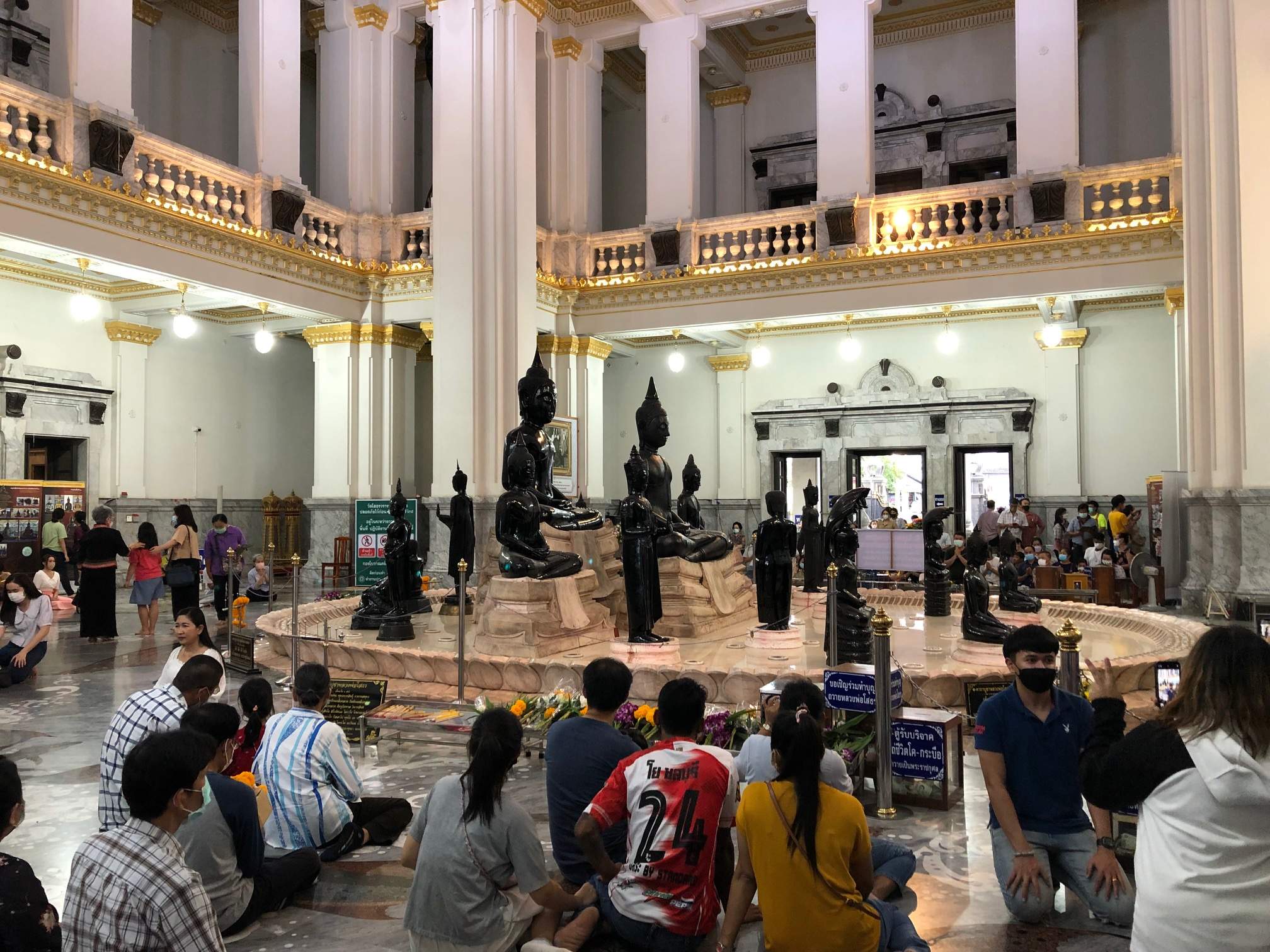
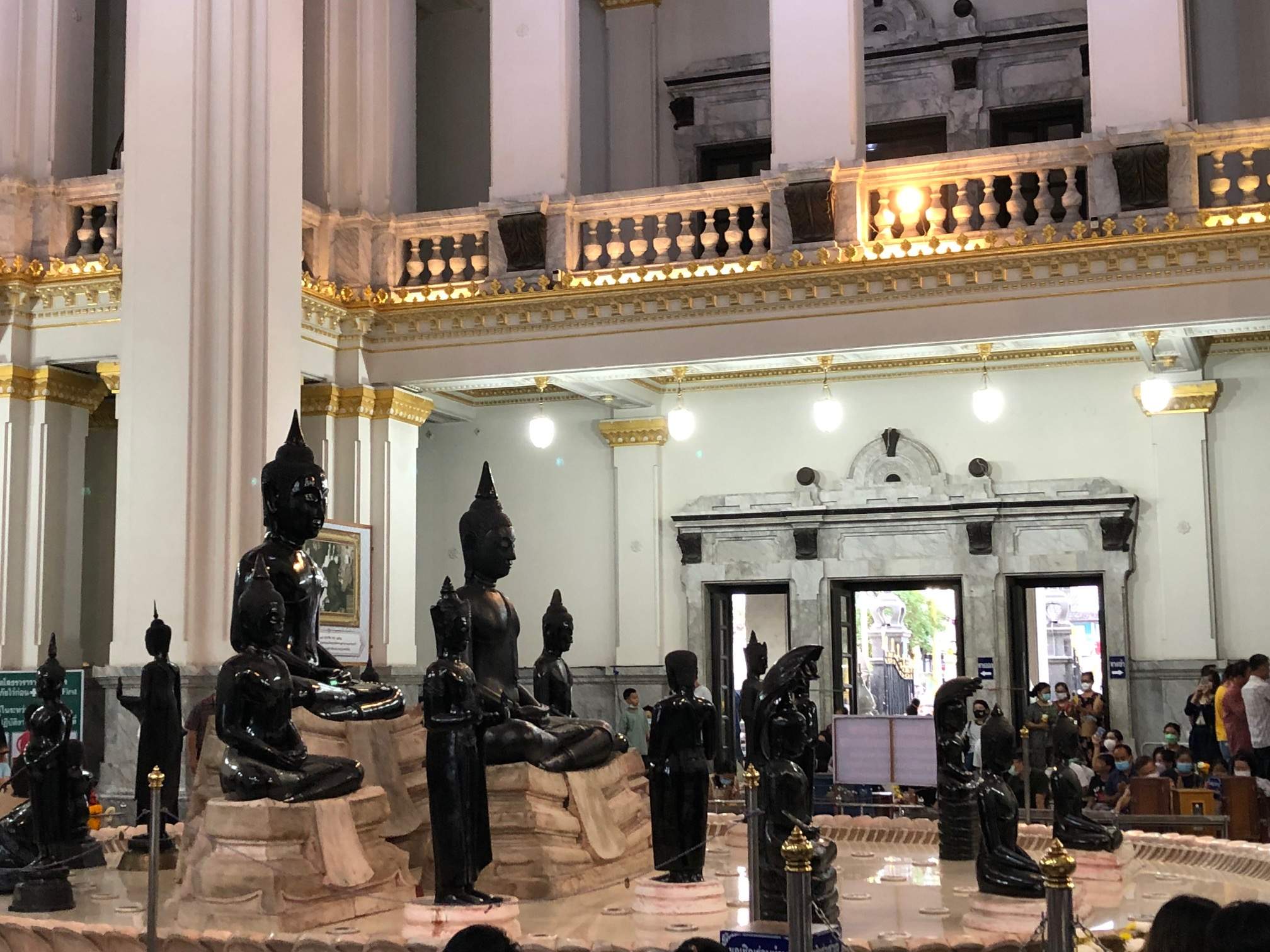
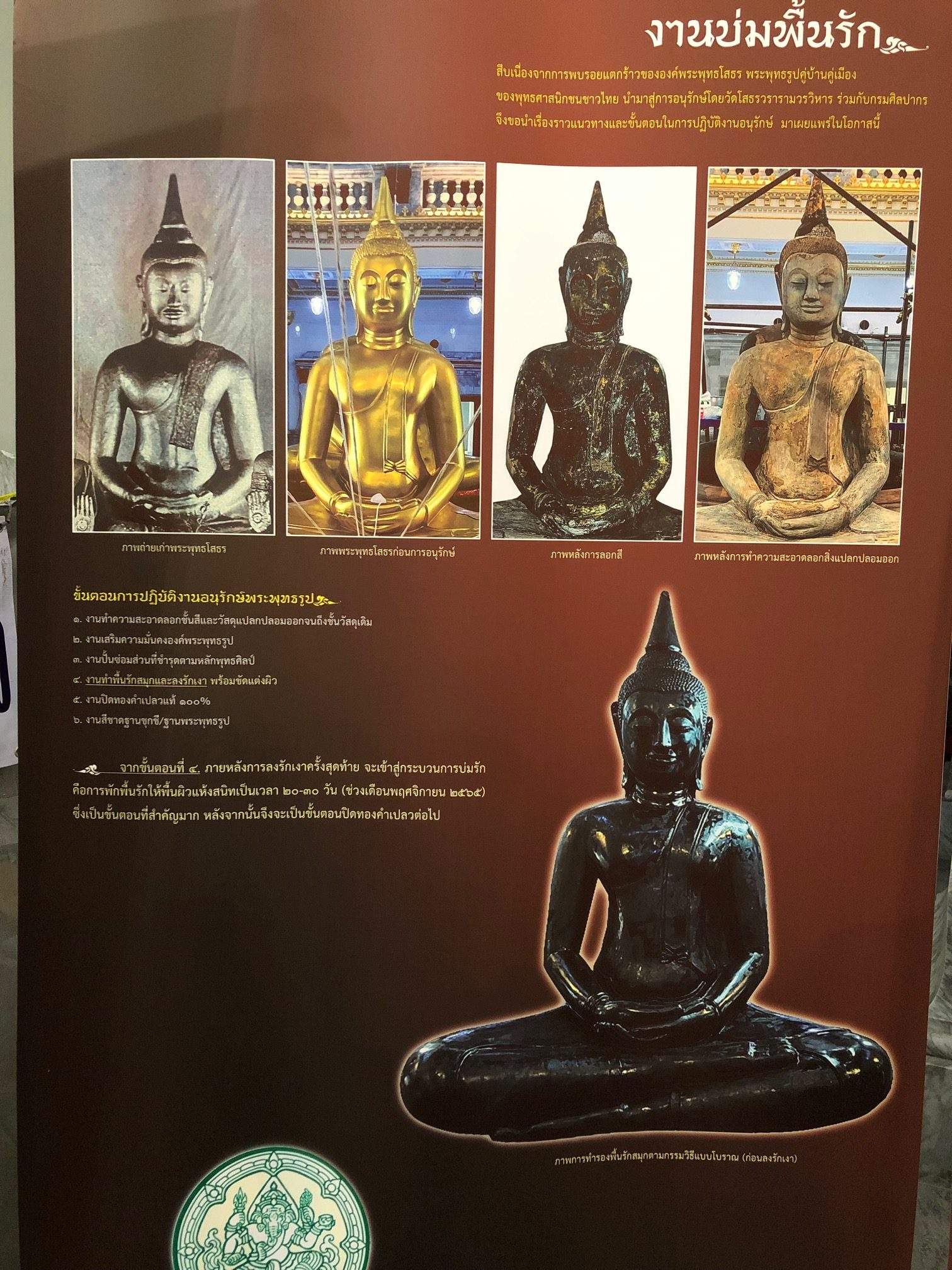
During the 2022 restoration, I was lucky enough to see the statues completely black! To repair the core structure, workers must painstakingly peel away decades of layered gold leaf. The statues are then coated with a base of black lacquer before the regilding process begins, offering a rare, striking look at the figures.
To a devotee, seeing a Buddha statue stripped of its outer layers for restoration carries profound symbolic weight. It beautifully visualizes the core Buddhist concept of impermanence (aniccā), reminding us that all physical forms decay. The process represents spiritual purification, the uncovering of inner truth, and the ongoing reverence of the Dhamma.
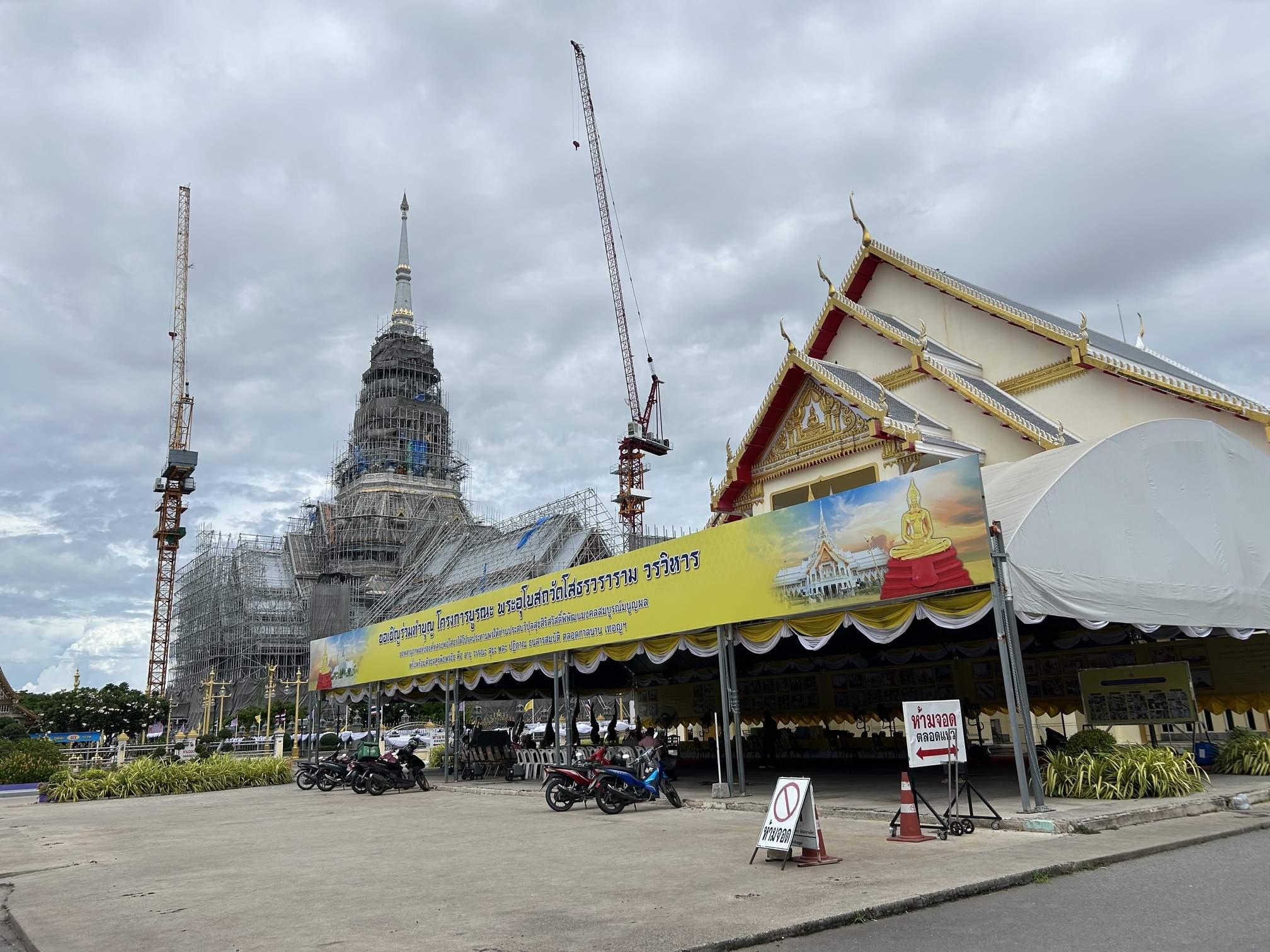
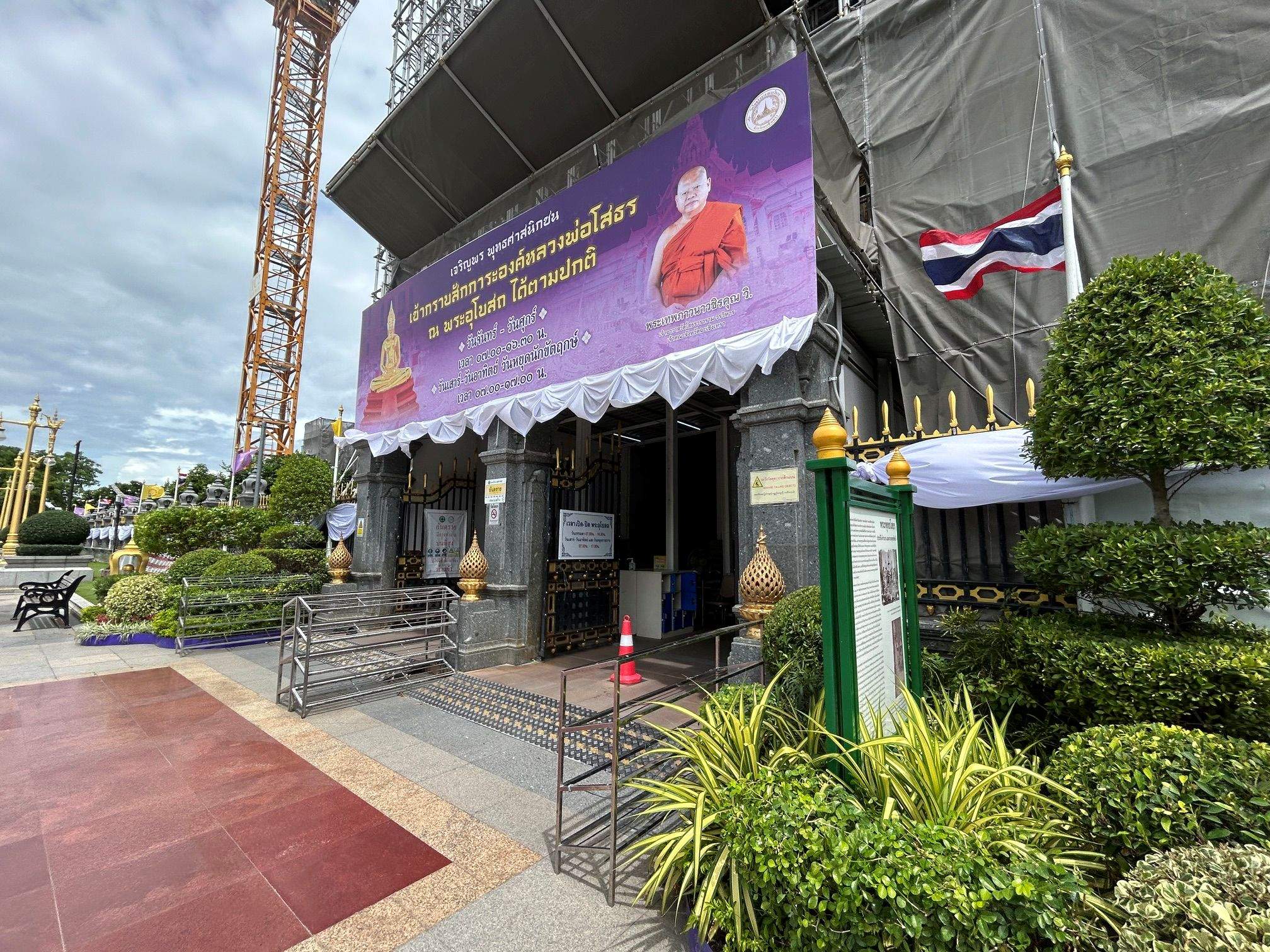
Traveler Tip: While you might occasionally see maintenance scaffolding on the exterior facades due to ongoing upkeep, the interior worship areas always remain fully accessible to the public.
🗺️ Navigating the Temple: The Two Main Halls
When you arrive, it is important to know that Wat Sothon features two distinct main exhibition halls (ubosots). We usually visit both, but if you are on a tight schedule, prioritize the New Ubosot.
1. The New Ubosot (The Main Marble Hall)
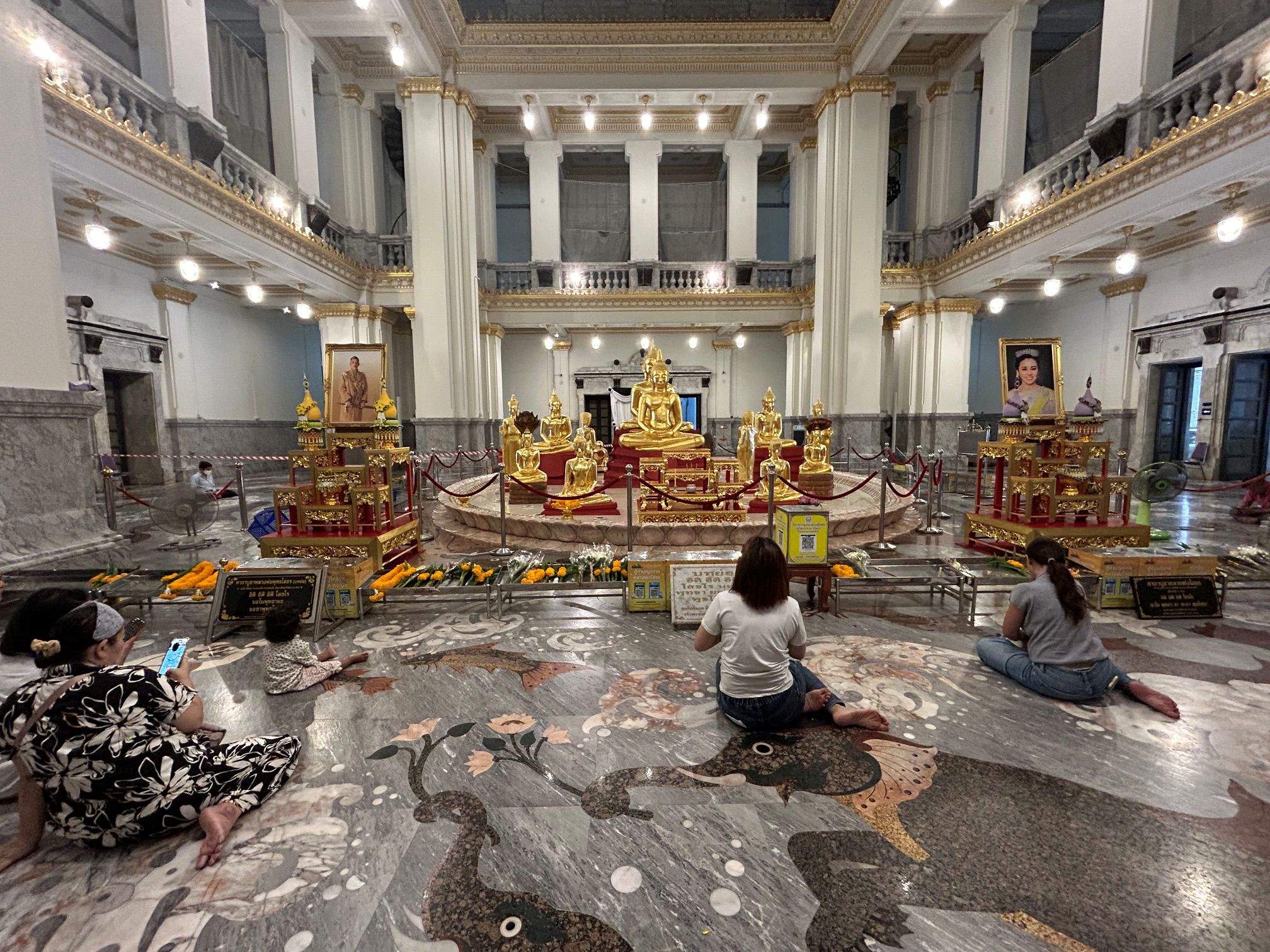
This is a breathtaking, grand, 84-meter-high Italian white marble building. It houses the original, authentic Luang Pho Sothon Buddha image. Because the temple wants to protect the pristine marble structure from smoke damage, burning incense, lighting candles, or pasting gold leaf is strictly forbidden inside this hall.
2. The Replica Hall (The Old Ubosot)
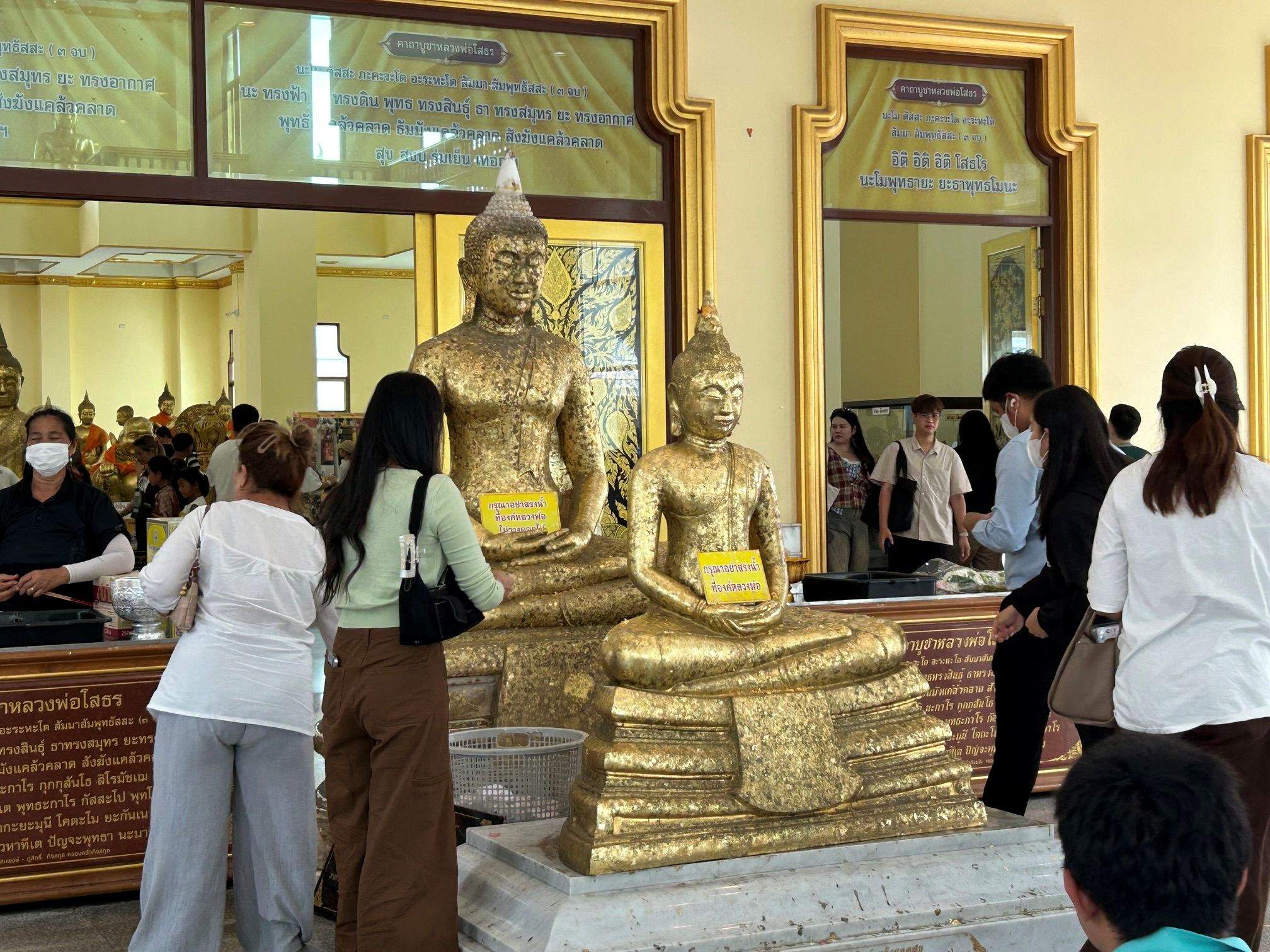
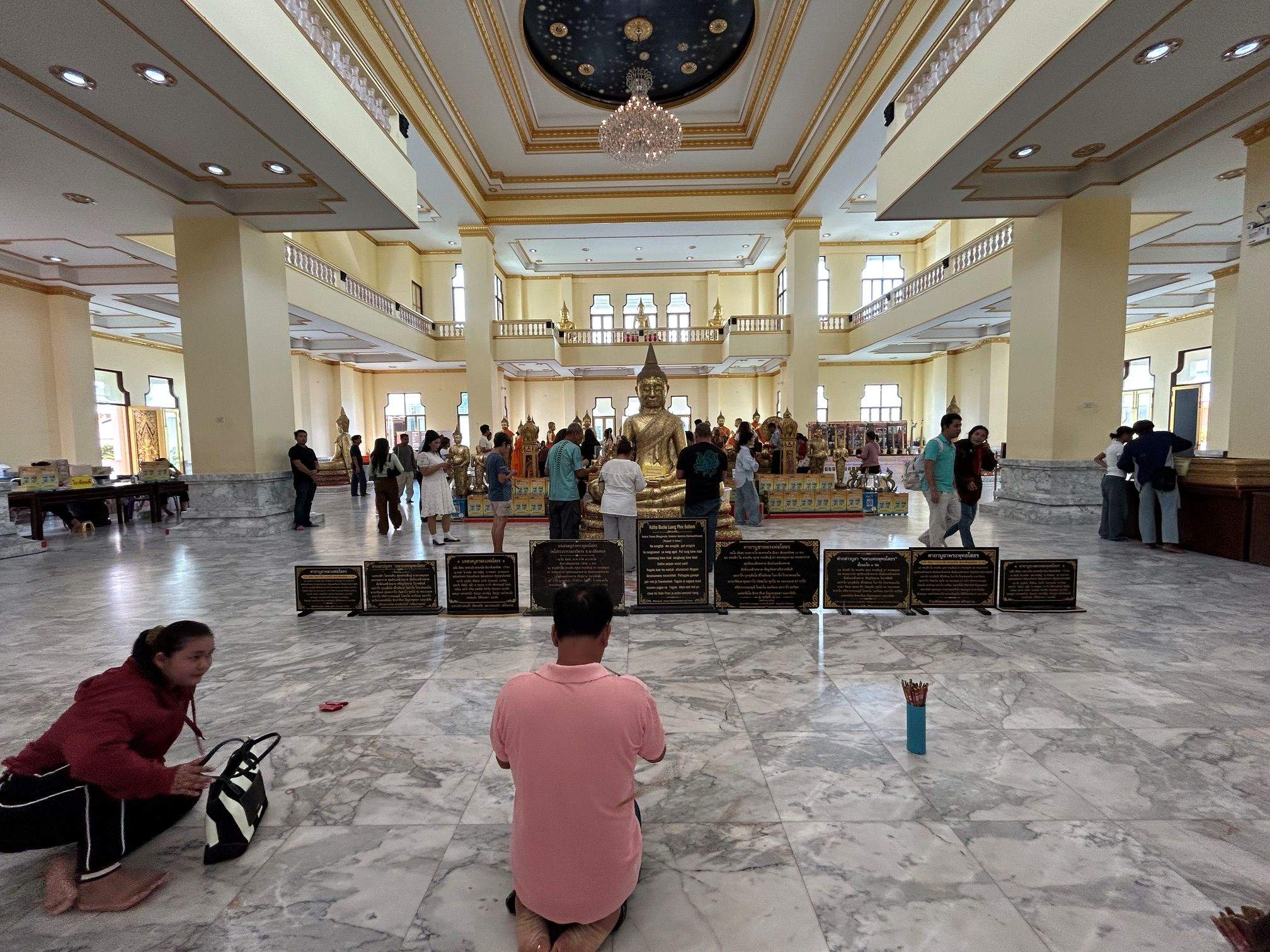
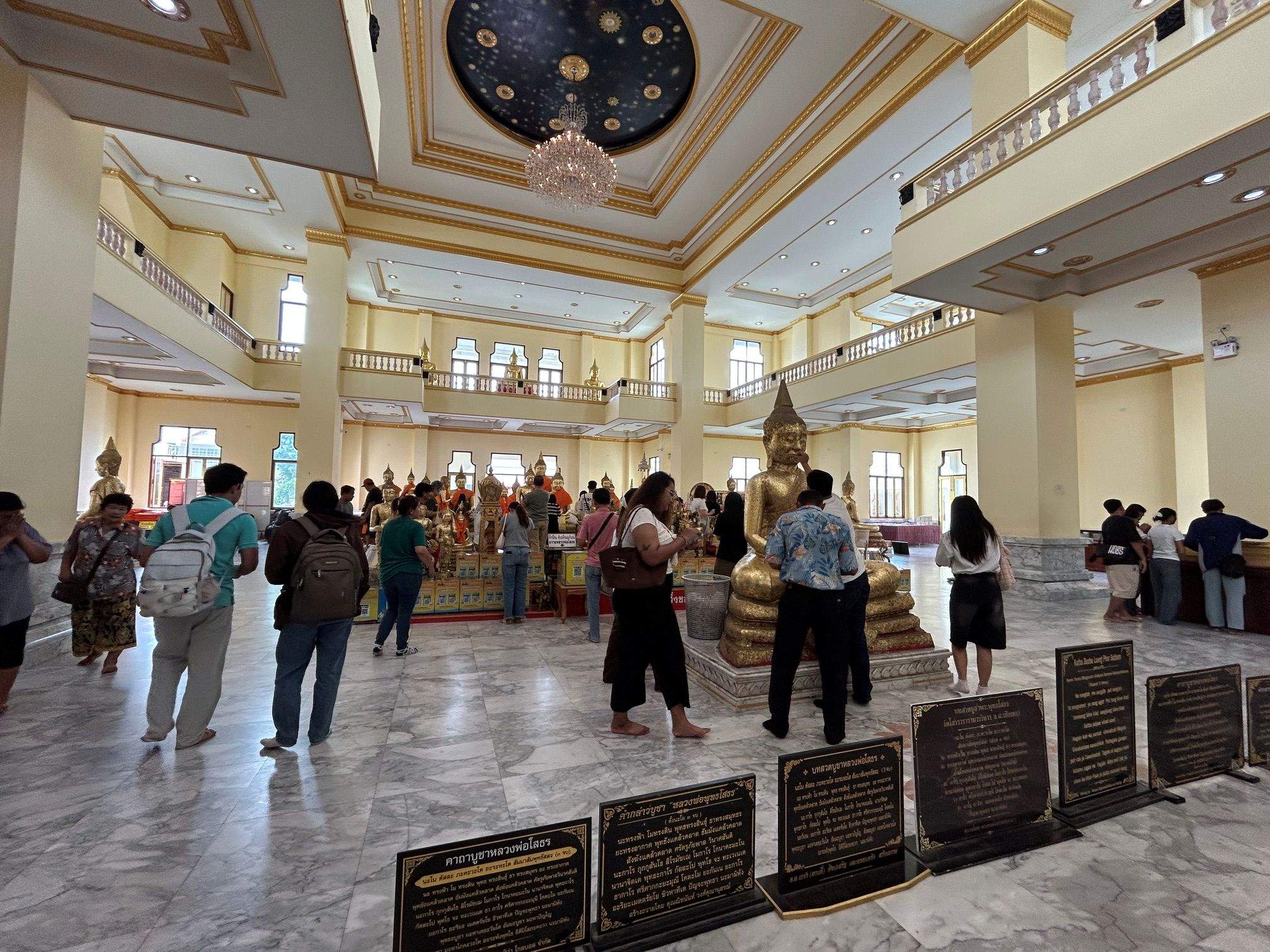
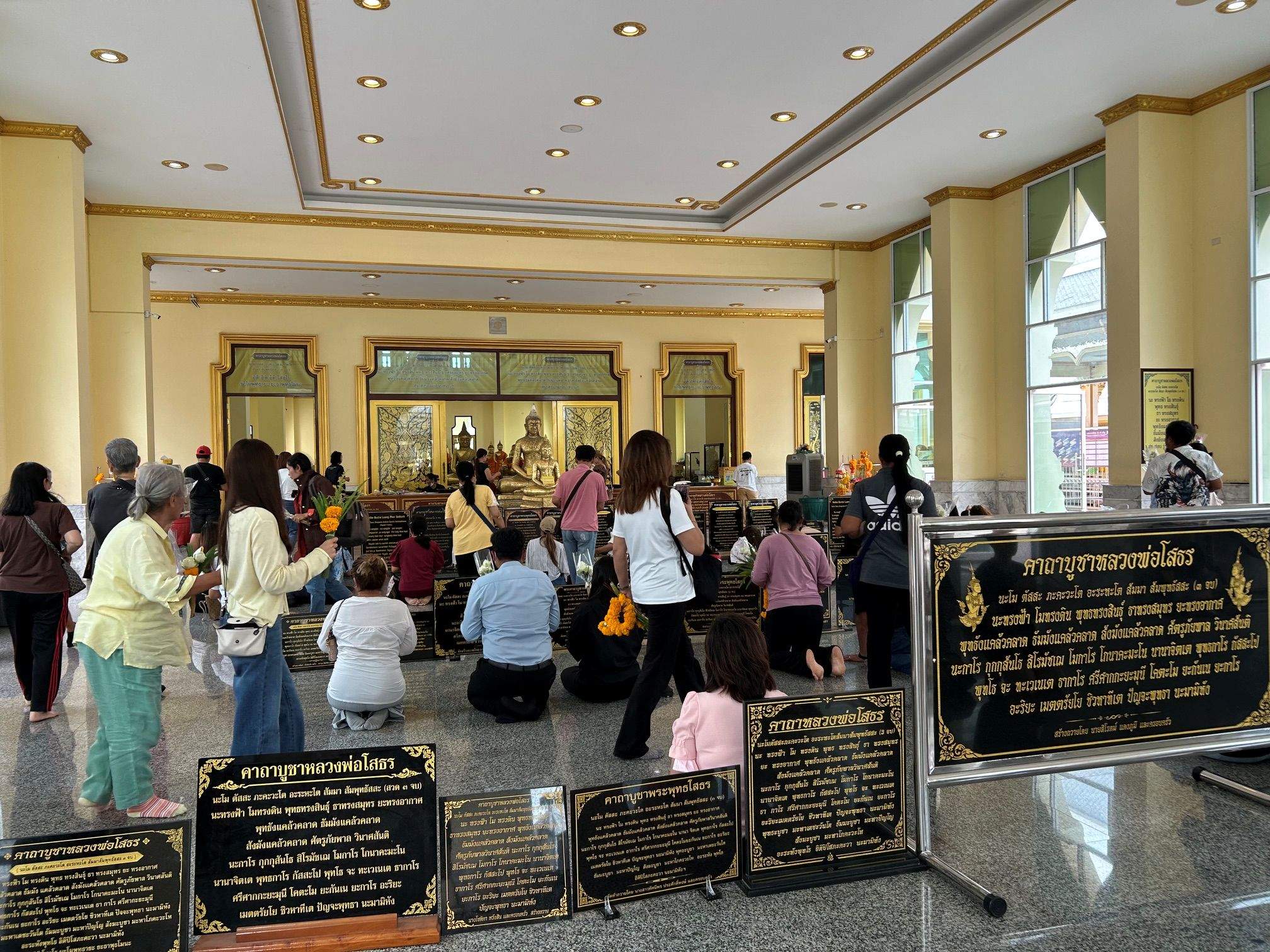
Located right next to the marble hall, this building houses replicas of the sacred Buddha statue. This is the active ritual hall where worshippers are allowed to light incense, paste gold leaf, and make traditional offerings—including baskets of boiled eggs, which are famously offered here to thank the Buddha when a wish comes true.
🙏 Katha Bucha Luang Pho Sothon
A Katha (often spelled khatha or kata) is a sacred Buddhist mantra, chant, or prayer primarily rooted in Thai Theravada traditions. Derived from the ancient Pali word gatha (meaning “speech” or “verse”), these chants invoke the protective and positive forces of the Buddha, Dhamma, and Sangha to bring luck, protection, or spiritual focus.
This specific Katha is used to pay homage to Phra Buddha Sothon. Devotees believe that chanting this daily before asking for blessings helps wishes come true. Traditional offerings made alongside the prayer include boiled eggs (the primary offering), Lakhon Chatri (ancient Thai dance performances), fresh fruits, and flower garlands.
The Chanting Ritual
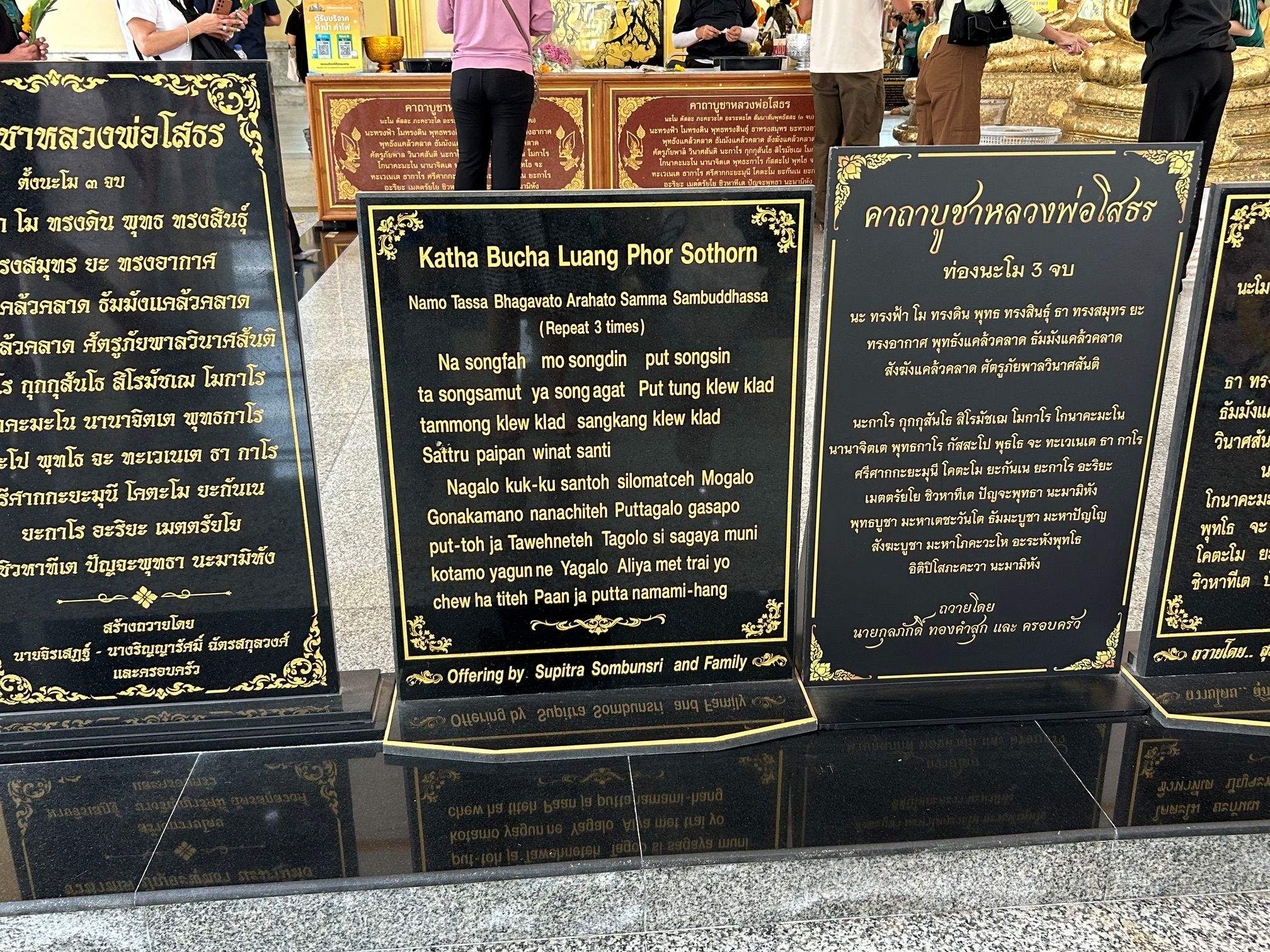
First, recite the standard Buddhist primary homage 3 times:
Namo Tassa Bhagavato Arahato Samma Sam Buddhassa
Namo Tassa Bhagavato Arahato Samma Sam Buddhassa
Namo Tassa Bhagavato Arahato Samma Sam Buddhassa
Next, recite the specific prayer for Luang Pho Sothon:
Na songfah mo songdin put-songsin
ta songsamut ya song agat Put tung klew klad
tammong klaw klad sangkang klew klad
Sattru paipan winat santi
Nagalo kuk-kukoo santoh silomatcheh Mogalo
Gonakamano nanachiteh Puttagalo gasapo
put-toh ja Tawehneteh Tagolo si sagaya muni
kotamo yagun ne Yagalo Aliya met trai yo
chew ha titeh paan ja putta namami-hang
💡 Essential Tips for Visitors
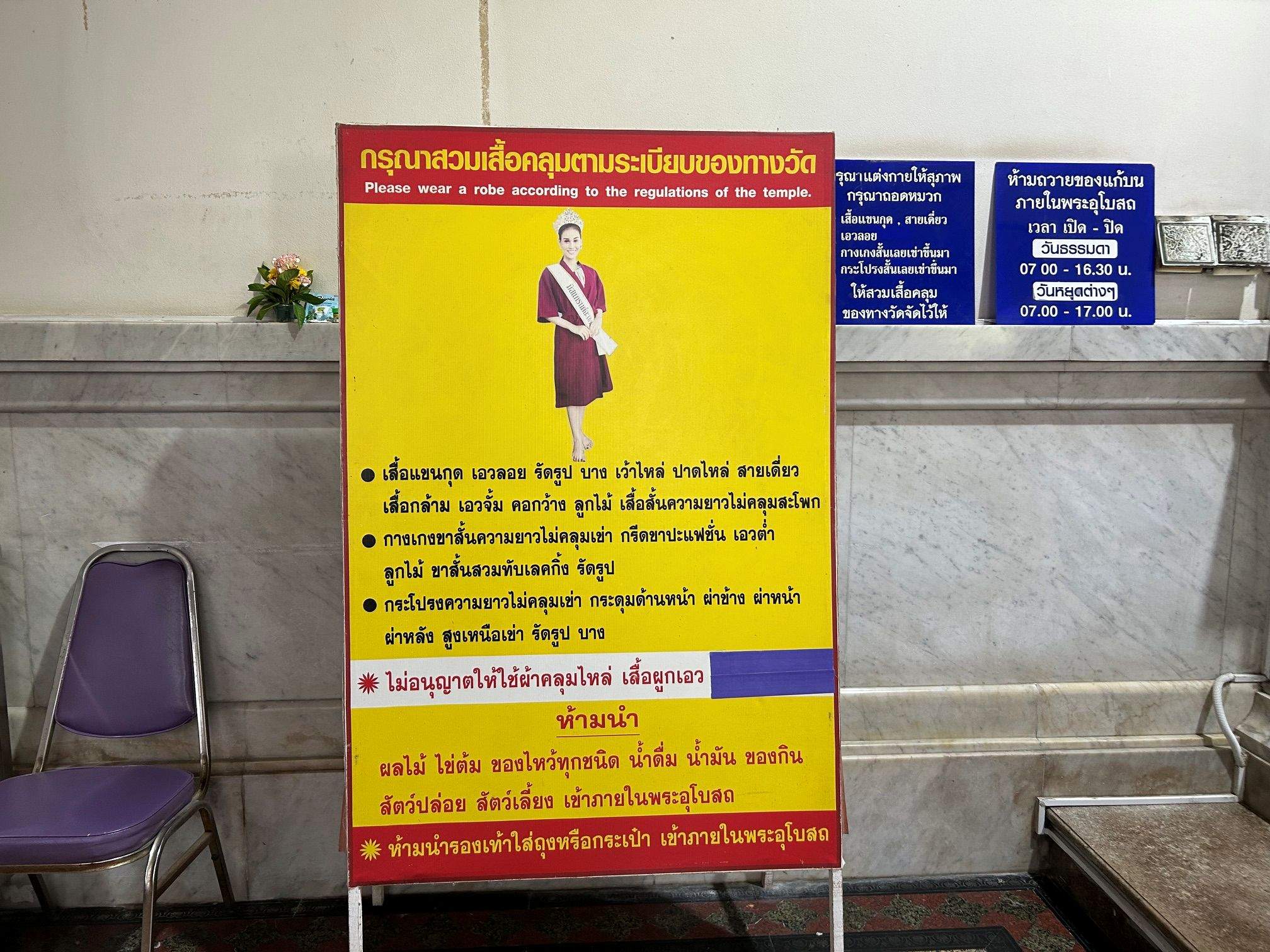
- Dress Code & Etiquette: Modest attire is strictly required—shoulders and knees must be covered. Be mindful of how you wear your clothes! When I was there, I had a cardigan tied around my waist; the temple staff asked me to untie it. Cap to be removed before walking in.
- Footwear: No shoes are allowed inside the halls. There are plenty of shoe racks available at the entrance.
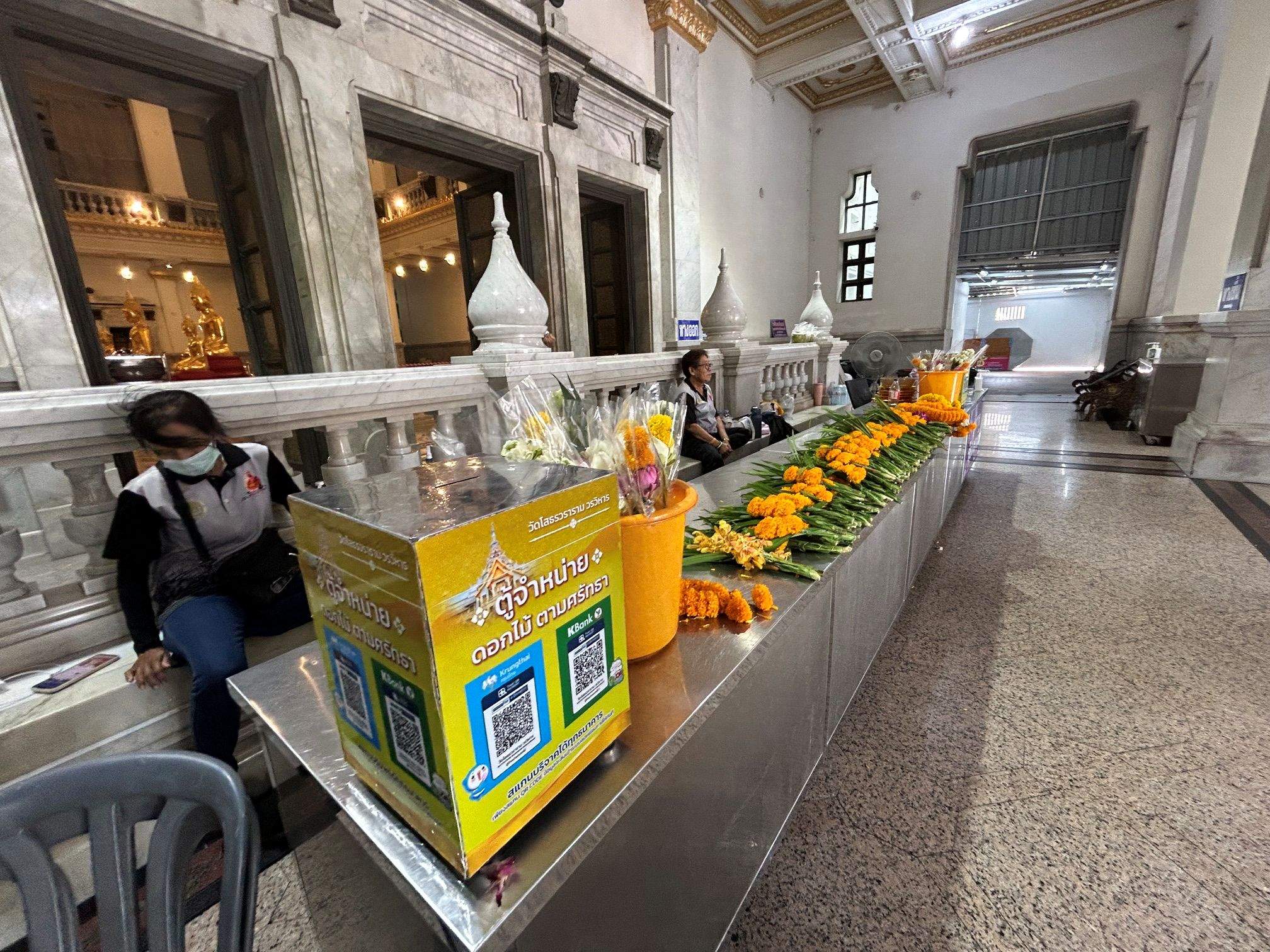
- Offerings & Boiled Eggs: You can purchase flowers for offerings on-site. The donation amount is entirely up to you. For those buying boiled eggs to fulfill a vow, don’t worry about bringing them from afar—there are plenty of stalls around the temple grounds and lining the main road leading up to the entrance.
- Annual Fairs:
- 5th Lunar Month: A massive 3-day, 3-night fair is held annually to celebrate the Buddha image.
- 12th Lunar Month (Late November): Another major festival and homage ceremony takes place.
⏰ Opening Hours
- Weekdays: 7:00 AM – 4:30 PM
- Weekends: 7:00 AM – 5:00 PM
🚗 Parking: An Insider Hack
Because of the massive volume of daily visitors, parking here can be an absolute nightmare. However, during our recent trip, we found a fantastic workaround. We spotted an open space right across the road that had been converted into market stalls with a sign advertising Free Parking.
We parked there smoothly, but as a courtesy, we made sure to buy some local snacks from the stall directly in front of our car. It was situated at the deep end of the lot and lacked foot traffic, so supporting them felt like a great way to say thank you for the hassle-free parking!
⛵ Beyond the Temple
After making your merits, be sure to explore the nearby local stalls offering delicious food and Chachoengsao souvenirs.
If you want to extend your day trip, you can catch a local long-tail boat service from the temple pier to travel to and from the bustling city market for a scenic, breezy ride down the Bang Pakong River.