The Viral MacBook Debate: Is Thailand Really That Safe?
I initially drafted this post seven months ago, but it sat unpublished in my drafts until a recent video surfaced online: a local Thai creator posted on TikTok about a MacBook stolen right inside a Starbucks in Silom. Reading that was the final push I needed to publish this heads-up for fellow travelers and expats.
We see it all the time across Bangkok. Whenever I see unattended laptops and bags sitting alone on cafe tables or at TK Park (a public library space I frequent), I catch myself thinking back to my home country, Malaysia, where those belongings would be gone in a heartbeat.
The conversation erupted online after a viral TikTok by user @zaafirnomad—showing a man casually holding an open MacBook while waiting on a BTS skytrain platform—set social media ablaze. The headline in Khaosod English summed it up: “Viral MacBook Clip Sparks Debate Over Safety in Thailand.“
While tourists in the comments swooned over what they called an “unparalleled level of safety,” those of us who have lived here for years see a far more complex reality. As my husband pointed out when we watched the clip, videos like this risk creating a dangerous, false sense of security—especially for newcomers and tourists.
Here are the two biggest nuances the viral “hoo-ha” misses—and why you should still keep your guard up.
1. Seat Hogging vs. Safety: The “Kreng Jai” Factor
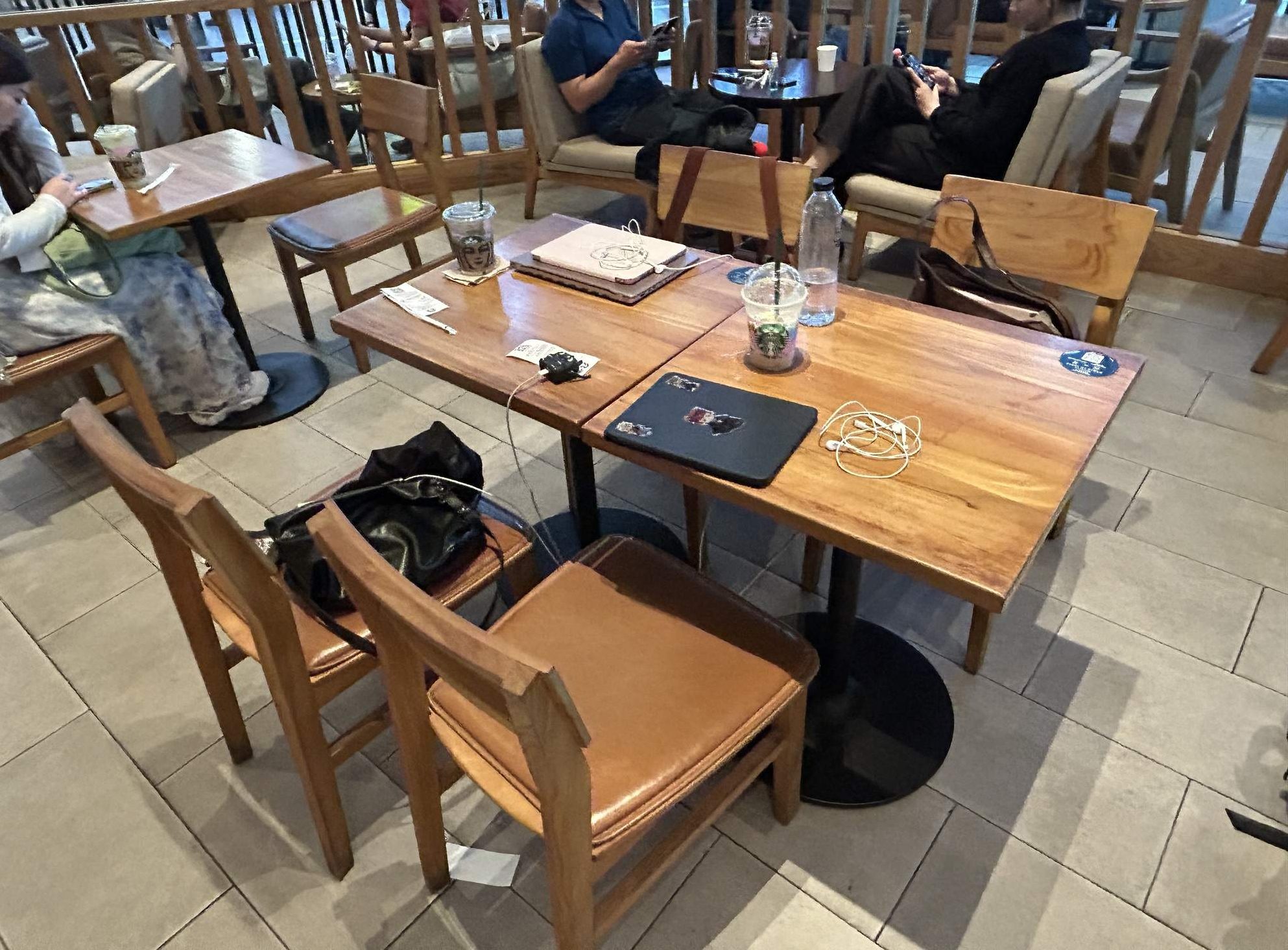
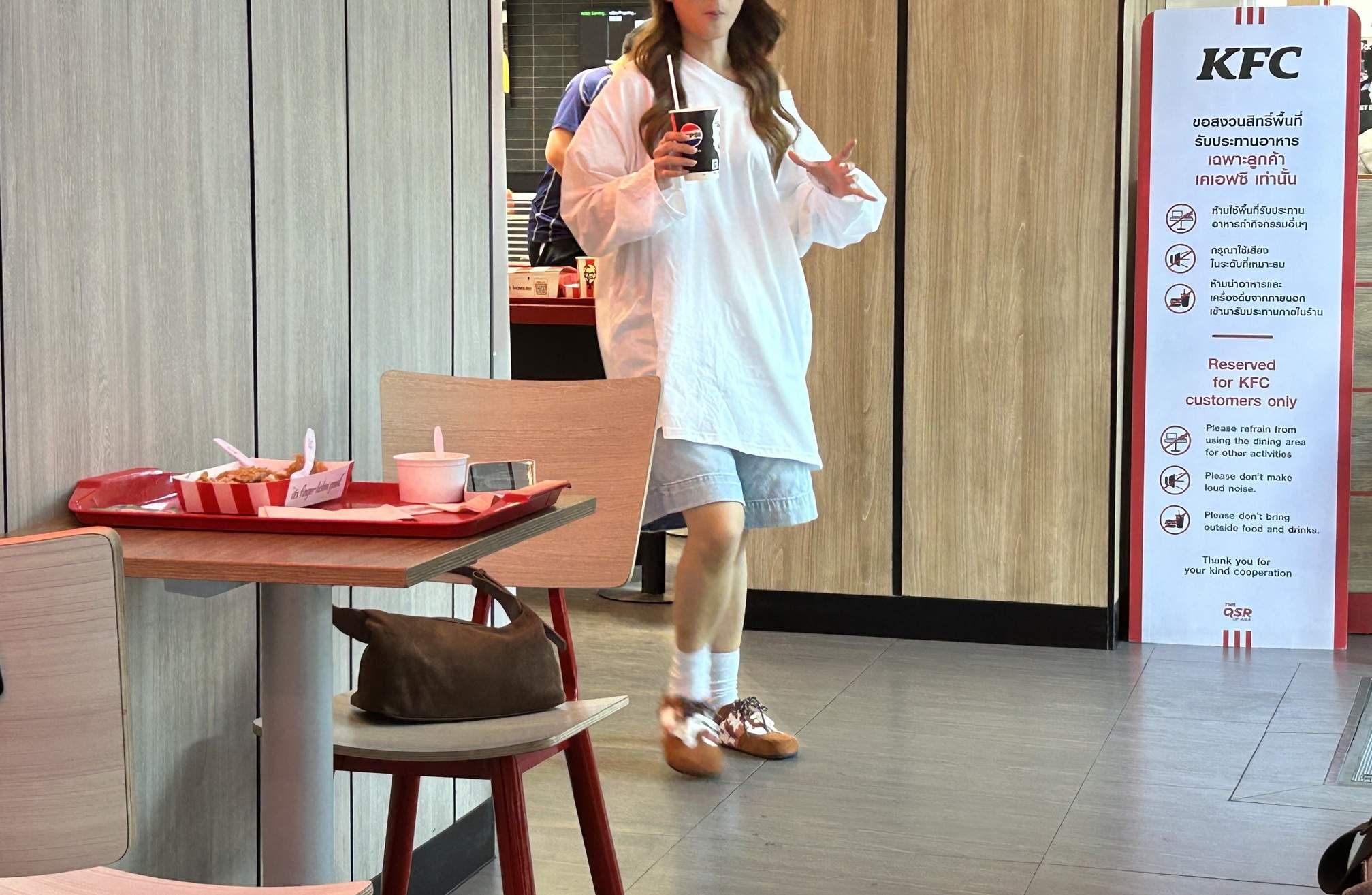
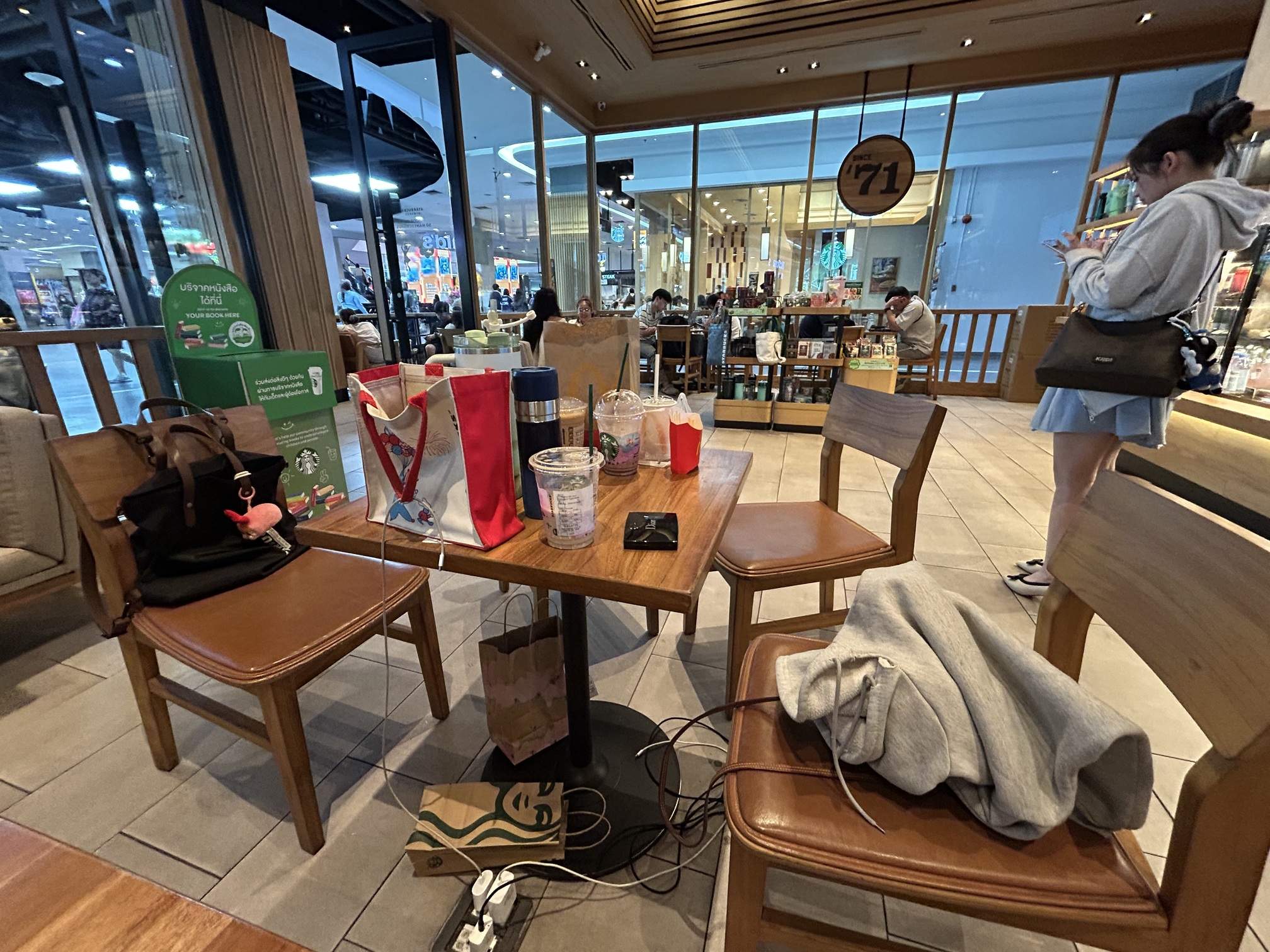
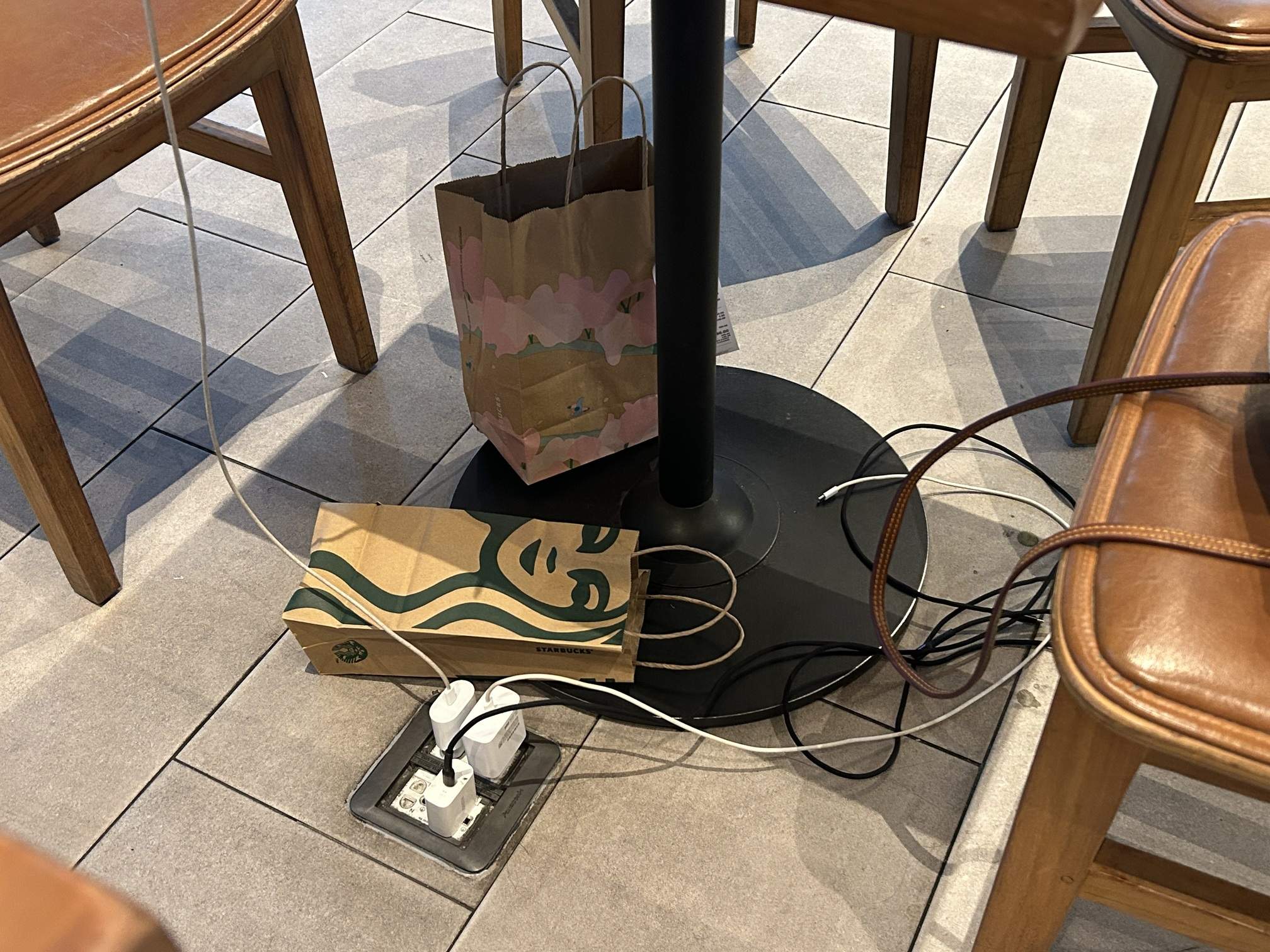
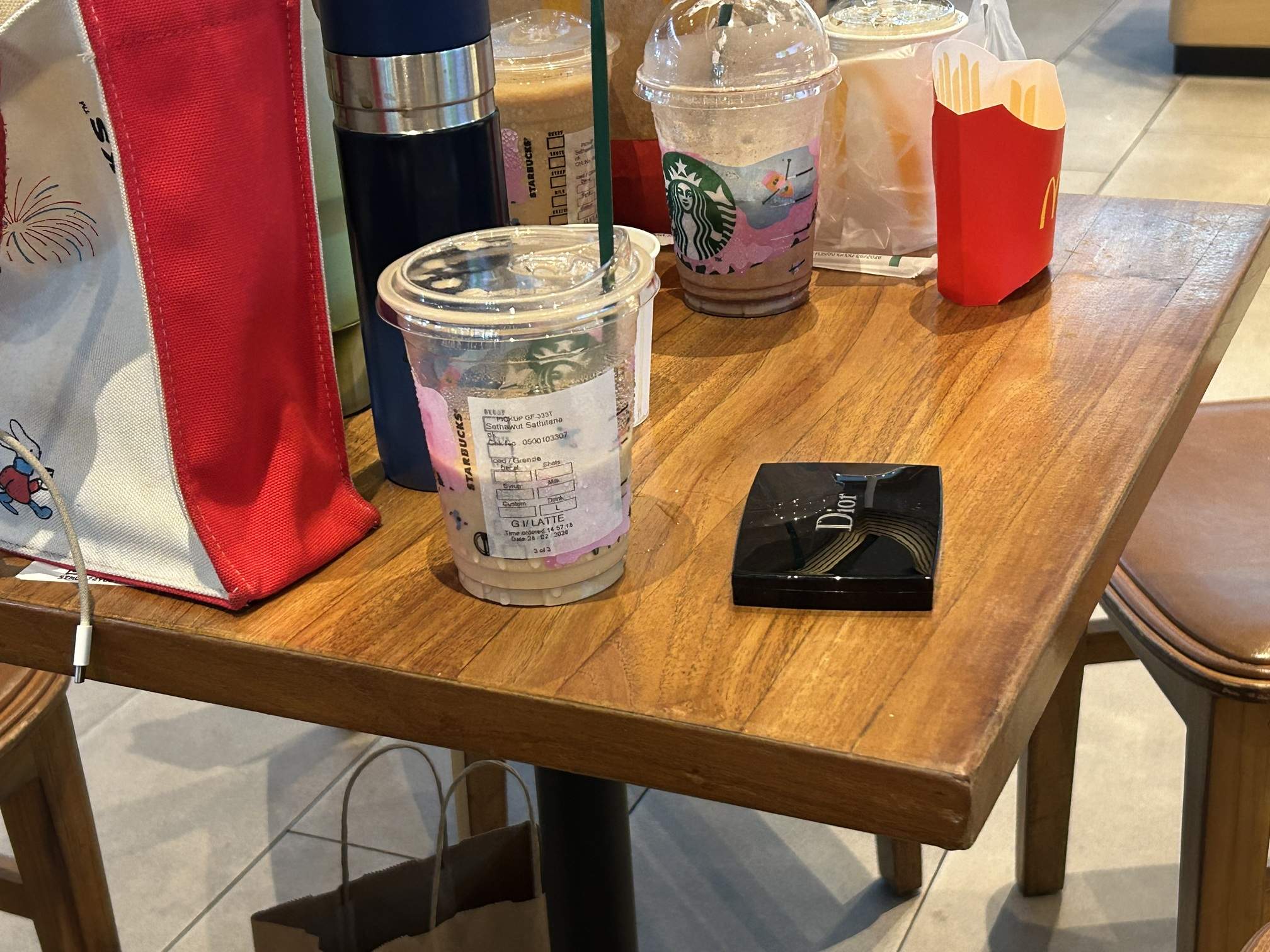
We’ve all witnessed it: a expensive laptop or a designer bag left alone to “reserve” a table while the owner disappears for an hour. Just recently at a fast-food outlet, I saw a local girl leave her phone on the table and her bag on a chair while she walked over to refill her drink. A woman sitting at the opposite table threw a quick, instinctive glance over to keep an eye on it until she returned. Both were locals.
- The Cultural Reality: This phenomenon isn’t purely about living in a high-trust, crime-free society; it heavily leverages the Thai social concept of Kreng Jai (เกรงใจ)—an extreme consideration for others and a deep reluctance to impose or cause confrontation. Most people won’t touch your left-behind belongings, not necessarily out of saintliness, but because they want to avoid the social friction of moving someone else’s property.
- The Etiquette Gap: Leaving personal items to hold a spot while stepping out for a full meal elsewhere isn’t just risky—it’s entitled “seat hogging by proxy.” Expecting your “reserved” cafe or library table to sit empty on your behalf puts an unfair burden on the shared space and the people around you.
2. The “Foreigner Tax” on Risk
Here is a hard truth for expats and tourists: Do not assume you can move through space with the same safety net as locals.
- The Invisible Community Shield: Locals benefit from an implicit “community watch.” As with the woman who glanced at the unattended phone at the fast-food shop, shared language and subtle cultural familiarity create an invisible deterrent.
- The Expat Reality: As a foreigner, you exist outside that specific social fabric. If your gear gets stolen, you face a bureaucratic ordeal—language barriers, police report filings, and lost work hours—that a local can navigate much faster. For us, the true cost of a stolen laptop isn’t just replacing the hardware; it’s the week of administrative headaches that follows.
Is Thailand “Safe”? A 2026 Reality Check
Thailand consistently performs well in regional safety indices—Chiang Mai and Bangkok regularly secure top spots in ASEAN safety rankings. However, “safety” is nuanced and depends heavily on the type of risk involved:
| Type of Crime / Risk | The Reality in Thailand | Context Comparison |
| Violent Crime | Very Low. Violent muggings or street robberies are exceedingly rare. | Much lower than in many major Western cities. |
| Petty Theft | Low to Opportunistic. “Crime at rest” is uncommon, but opportunistic theft happens. | Lower than European tourist hotspots, but non-zero. |
| Road Safety | Extreme Risk. Traffic and motorbikes represent the highest physical danger. | Significantly riskier than in countries with strict road enforcement. |
| Scams & Overcharging | Moderate to High. Tuk-tuk tricks, “closed temple” detours, or rigged meters. | Common in high-density tourist hubs worldwide. |
The Verdict: “Safe” for the Mindful
Thailand is exceptionally safe in the sense that you can walk down a street at 2:00 AM without fearing for your life. However, safety is contextual and localized. Even locals will warn you about specific alleyways or nightlife pockets in the city where the rules shift.
The habit of leaving motorbikes with keys in the ignition or leaving MacBooks unattended on a Starbucks table is a luxury tied to a very specific social ecosystem. For an expat or traveler, adopting that habit is a gamble that eventually catches up to you. Petty crime is “non-existent”—right up until the moment it happens to you.
Enjoy the peace of mind that Bangkok offers, but keep your MacBook in sight!