The Not Your Typical Tourist Guide to Where to Stay in Bangkok (Pre-Launch Edition)
Quick answer: If you’ve been to Bangkok before, choose your base for how you want to travel, not for the sights you’ve already ticked off. Ha Yaek Lat Phrao in northern Bangkok suits repeat visitors who want BTS and MRT access, parks, local markets and Chatuchak, with an everyday-neighbourhood feel. It is not the best base for first-timers focused on temples and rooftop bars; Sukhumvit, Siam and the Old City still win there.
Perhaps it’s time to stop choosing your Bangkok accommodation based on the attractions you visited on your first trip.
The neighbourhood you choose sets the entire rhythm of your trip.
In our own travels, my husband and I have stayed everywhere: from hyper-central downtown hubs surrounded by iconic landmarks to quiet, off-the-beaten-track residential neighbourhoods. And let’s just say, not every accommodation decision has been a masterstroke!
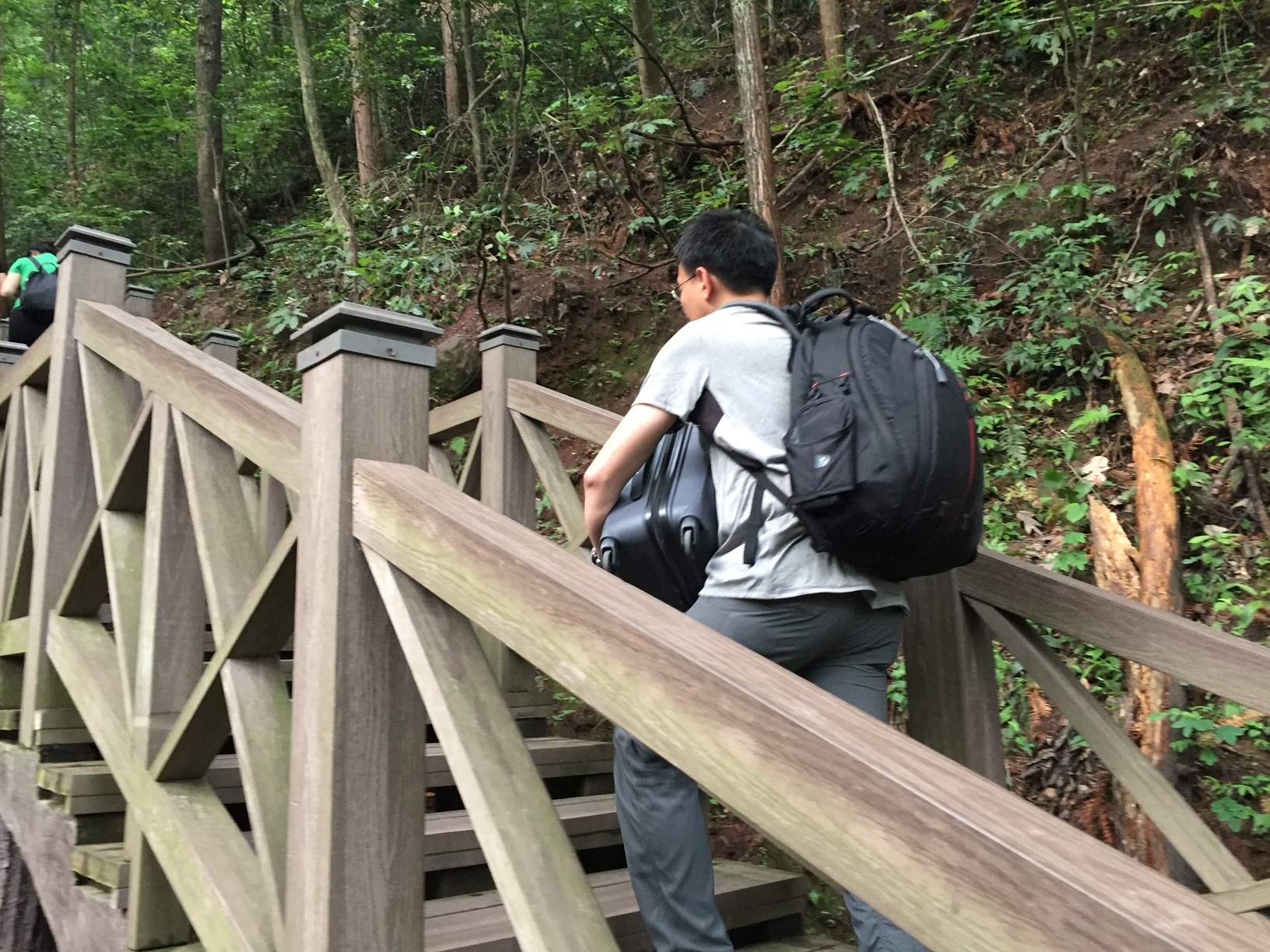
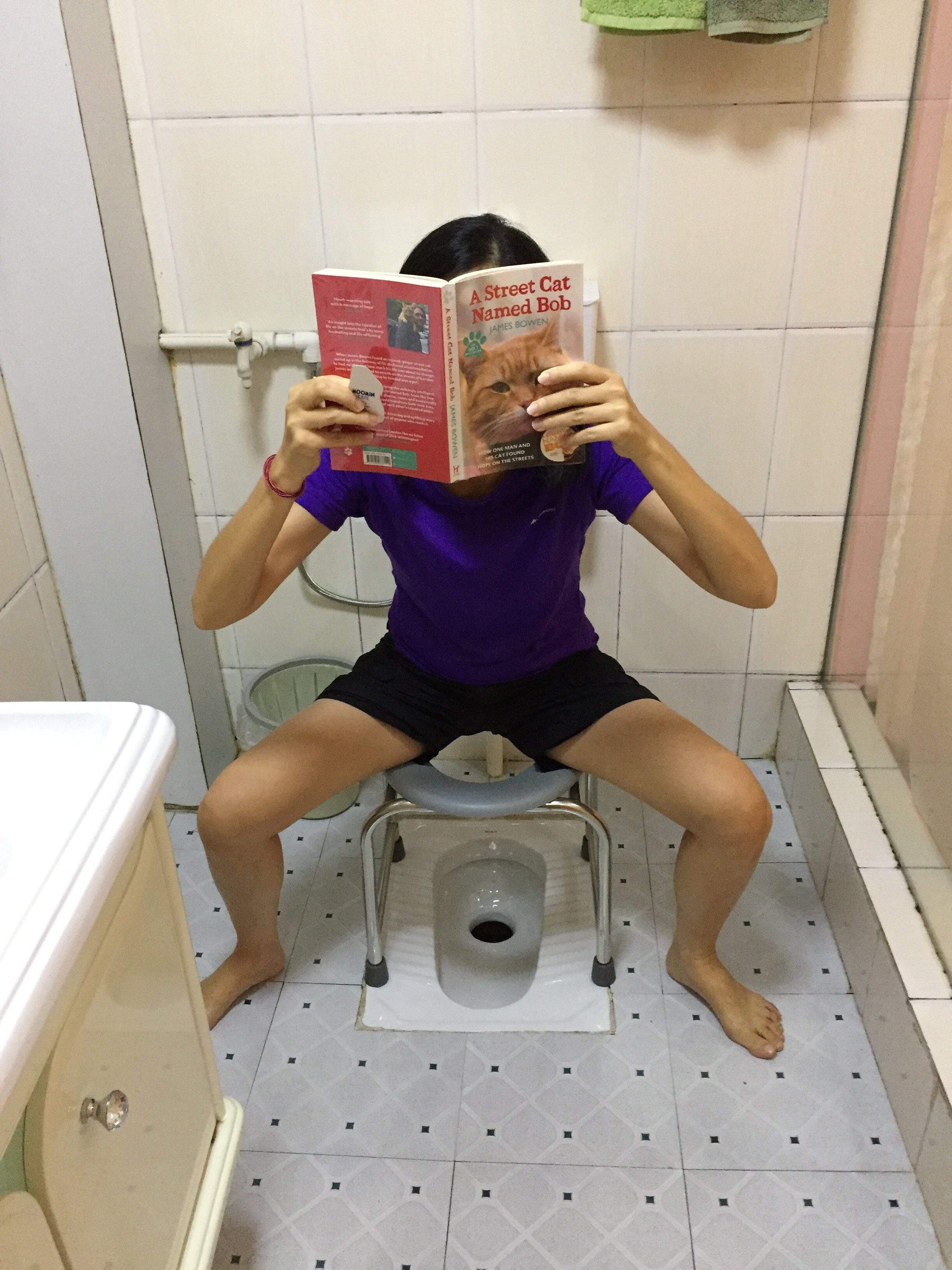
On one memorable trip to Zhangjiajie, China, my husband had to carry our rolling suitcases across a mountain trail because I hadn’t done my homework properly. (And I still laugh thinking about the portable toilet seats provided by our Airbnb host in Fenghuang!)
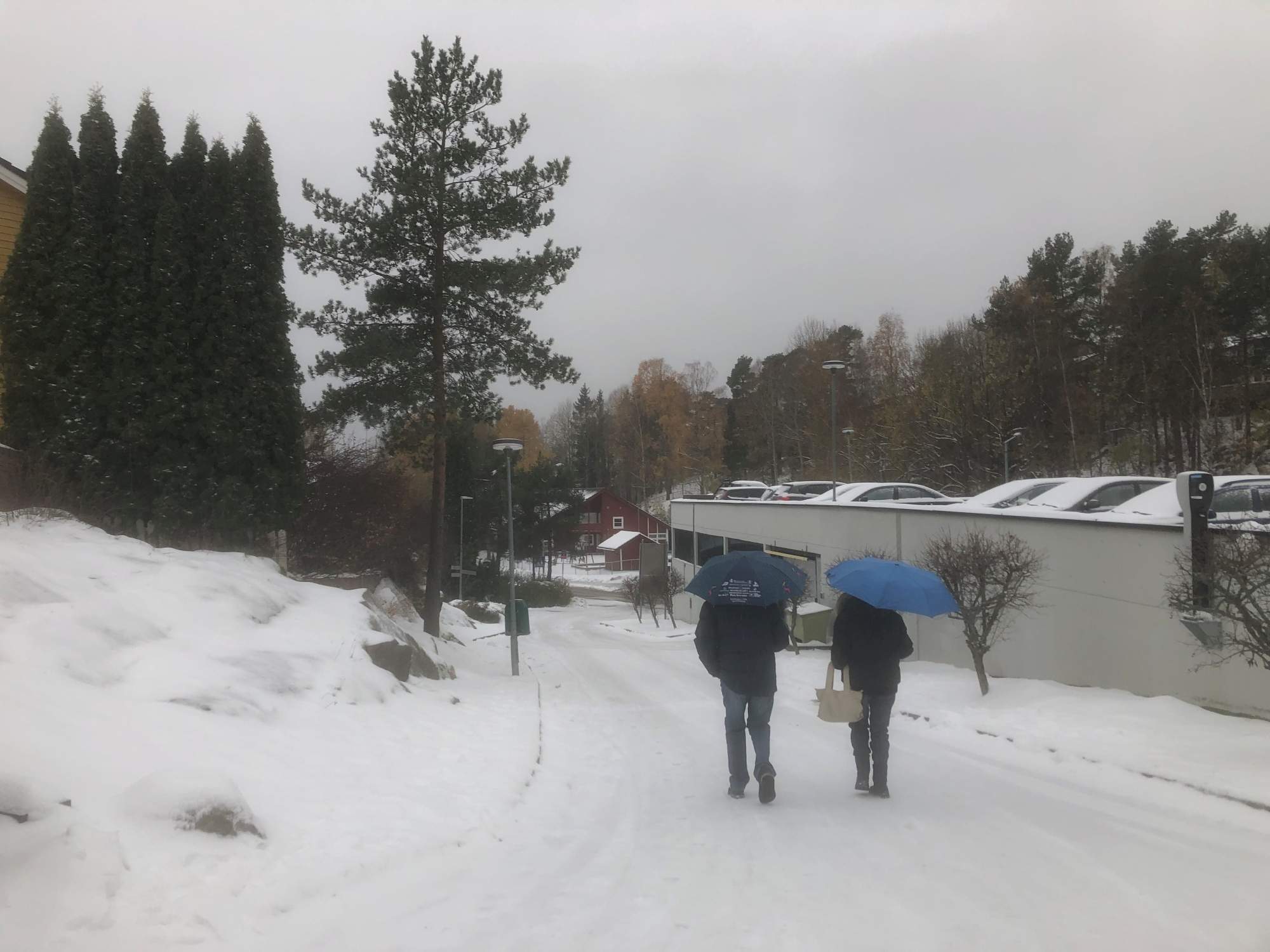
During a solo trip to Oslo, I opted for a spacious apartment in a local neighbourhood, just a 12-minute train ride from Oslo Sentral, for a fraction of downtown prices. I got lost walking in the snow after following a friendly local who walked alongside me and, rather confidently, guided me in the wrong direction. I also experienced my very first neighbourhood trick-or-treaters.
Would I repeat that stay? In a heartbeat.
The good, the bad and the unexpected choices often shape our best travel memories. Over the years, I’ve come to realise that the most memorable experiences aren’t necessarily found beside famous landmarks or within walking distance of the city’s busiest attractions.
Sometimes, they’re found in the little things: a neighbourhood coffee shop, a favourite local food stall, a familiar convenience store, or simply experiencing everyday life alongside the people who call that place home.
And that brings us to Bangkok.
First-time visitors vs repeat visitors: is it time to rethink where you stay?
“Where should I stay in Bangkok?” used to be the single most frequent question friends asked me. Over the years, fewer friends ask. Why? Because almost everyone seems to have visited Bangkok at least once!
Bangkok remains one of Asia’s most compelling repeat-visit destinations. In Agoda’s 2026 Repeat Visitor Ranking, based on first-half 2026 accommodation bookings, Bangkok placed second in Asia behind Tokyo, which took the top spot for the first time. It is Bangkok’s second consecutive year in the top three.
But here’s something worth reconsidering: if you’ve already visited the Grand Palace, wandered through Wat Arun, explored the familiar shopping corridors of Siam and eaten your way through Chinatown, do you really need to choose your next accommodation based on proximity to those same attractions?
Of course, there’s nothing wrong with revisiting favourite places. But the way we choose accommodation can evolve as our travel habits change.
- First-time visitors often prioritise convenience to major attractions, shopping districts and well-known nightlife areas. Staying around Siam, Sukhumvit or the Old City makes sense when there is a long list of first-time experiences to tick off.
- Repeat visitors may have different priorities: independent cafés, creative neighbourhoods such as Talat Noi and Song Wat, interesting food, or simply more time to enjoy the city without rushing between attractions.
- Independent explorers might venture further into everyday Bangkok, to places such as Talat Phlu, Tao Poon and Bang Pho, where local markets, traditional businesses and residential communities offer a different perspective.
None of these travel styles is better than another. The point is that your accommodation should complement the kind of trip you’re taking, rather than dictate it.
The typical tourist gridlock: three familiar Bangkok dilemmas
When chatting with family and friends visiting Bangkok, three logistical headaches always come up. They’re not reasons to avoid the popular attractions, but they show why choosing your base strategically matters.
1. The Chatuchak Weekend Market dilemma
Chatuchak Weekend Market is a Bangkok institution, and for good reason. But its location in northern Bangkok creates an awkward puzzle for travellers staying deep in the downtown core.
Those flying in or out over the weekend often try to squeeze in a market visit straight after landing or just before heading to the airport. Others attempt a rushed pit stop on the way back from Hua Hin or Pattaya. The result? Heavy luggage, limited time, extreme heat and the inevitable question: where do we leave our bags, and where can we shower before our evening flight? Negotiating a late check-out at a downtown hotel is another headache.
Sometimes the smarter approach is to choose accommodation that makes your intended activities easier to organise, especially when your itinerary includes northern Bangkok.
2. The souvenir and Big C haul chaos
Let’s be honest: a supermarket run for Thai snacks, local products and souvenirs has become an essential part of many Bangkok trips.
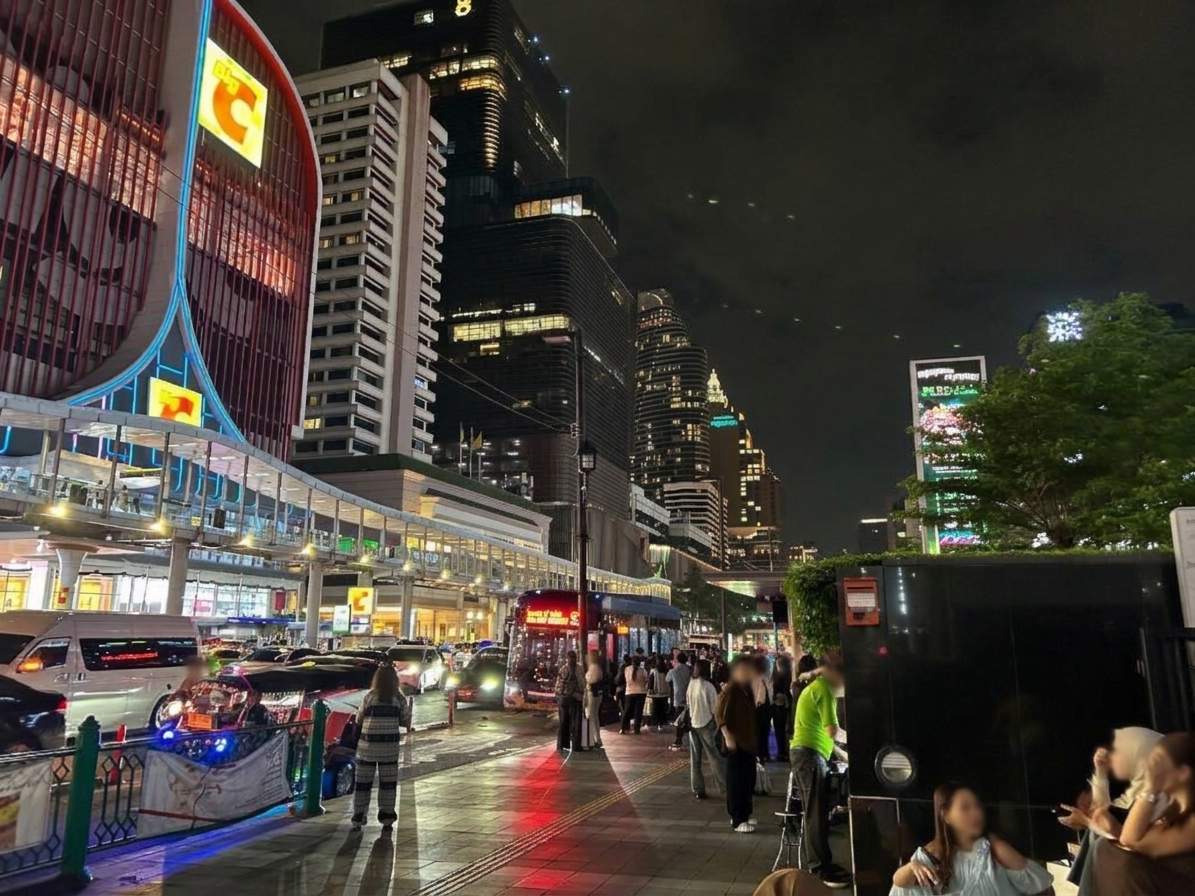
Big C Supercenter Ratchadamri is a familiar favourite for gifts in one place, but it can get exceptionally busy in peak tourist periods. And once you’ve accumulated several bags of snacks, sauces and souvenirs, the last thing you want is a long, traffic-choked journey back.
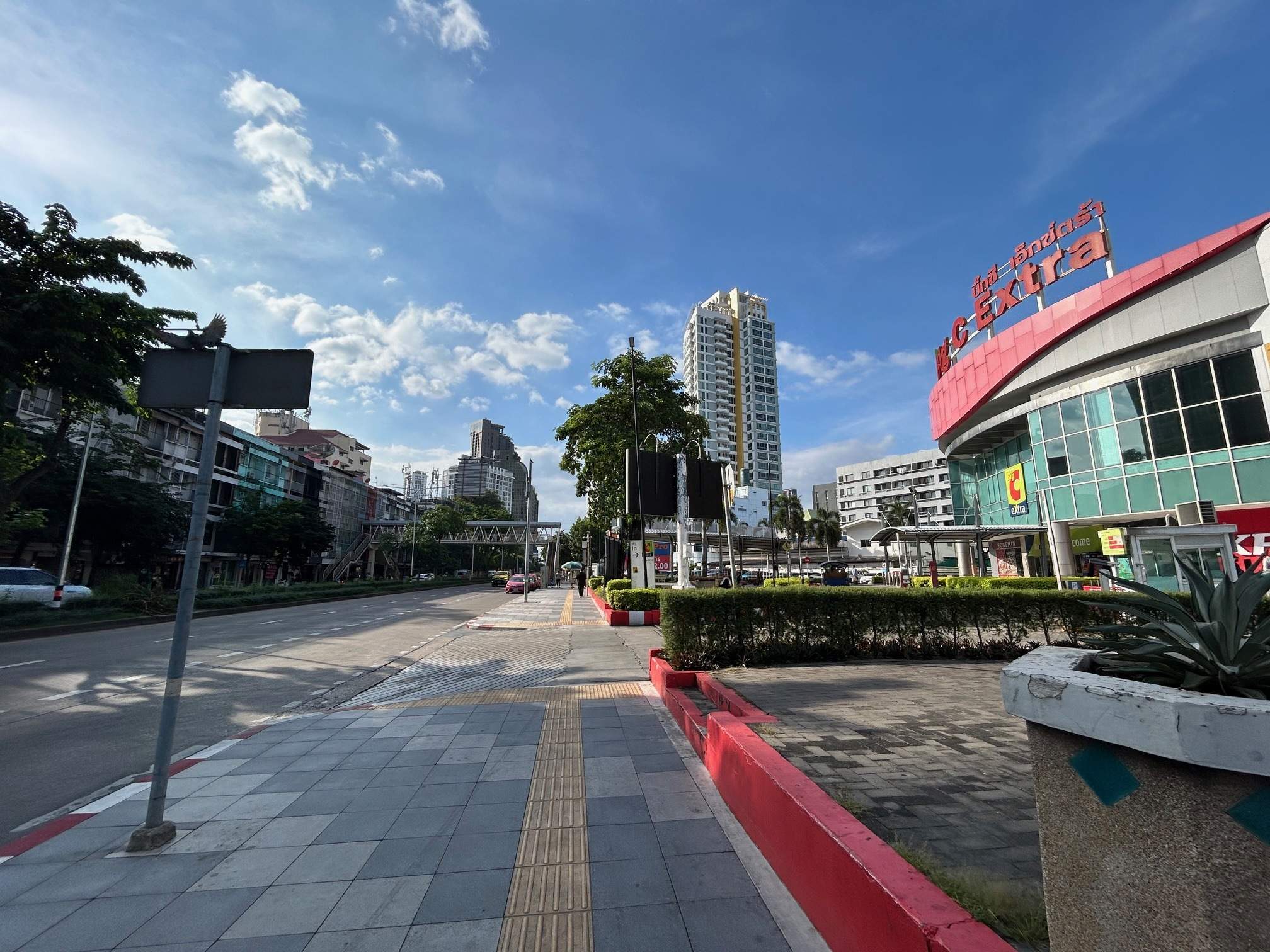
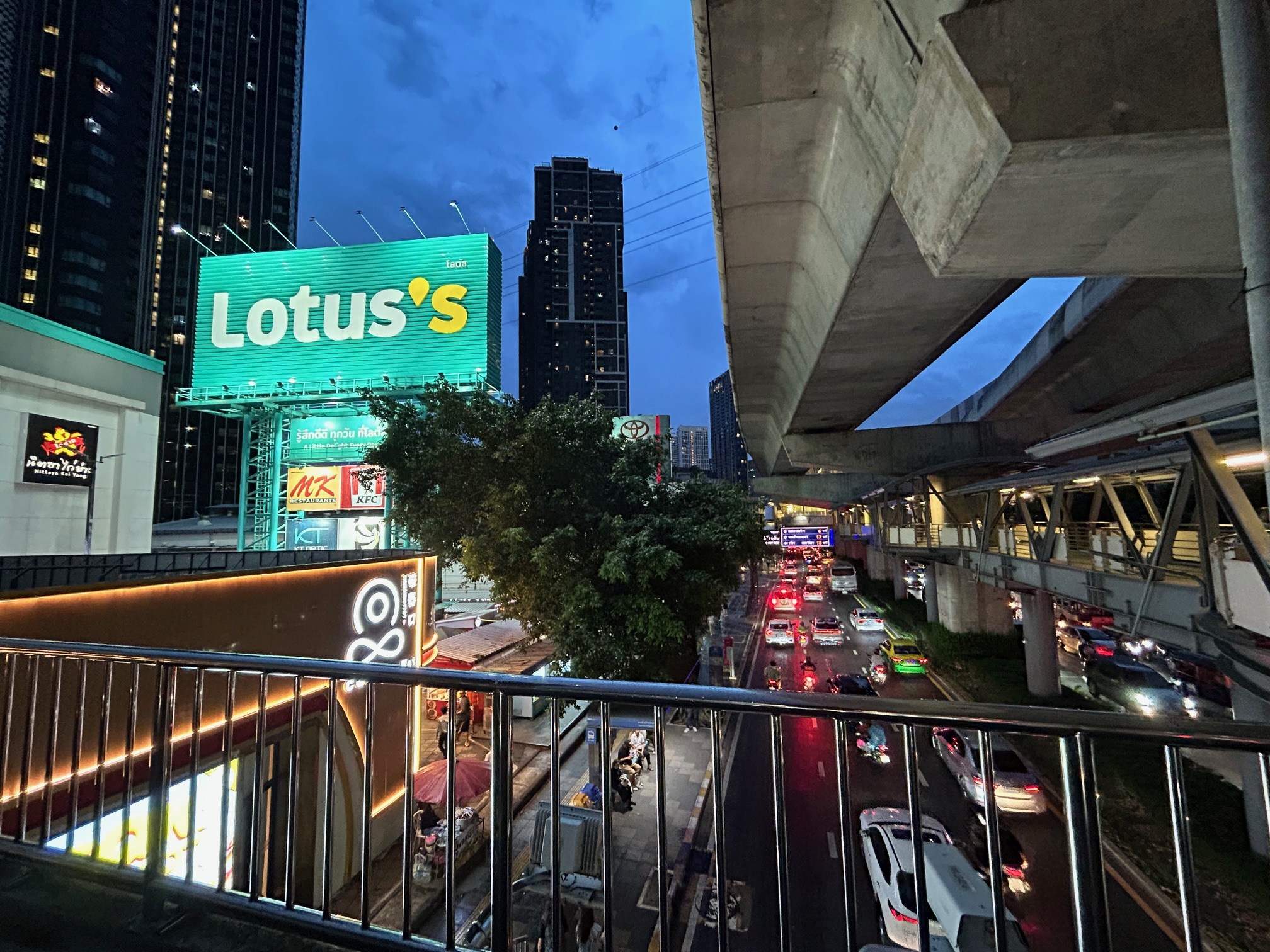
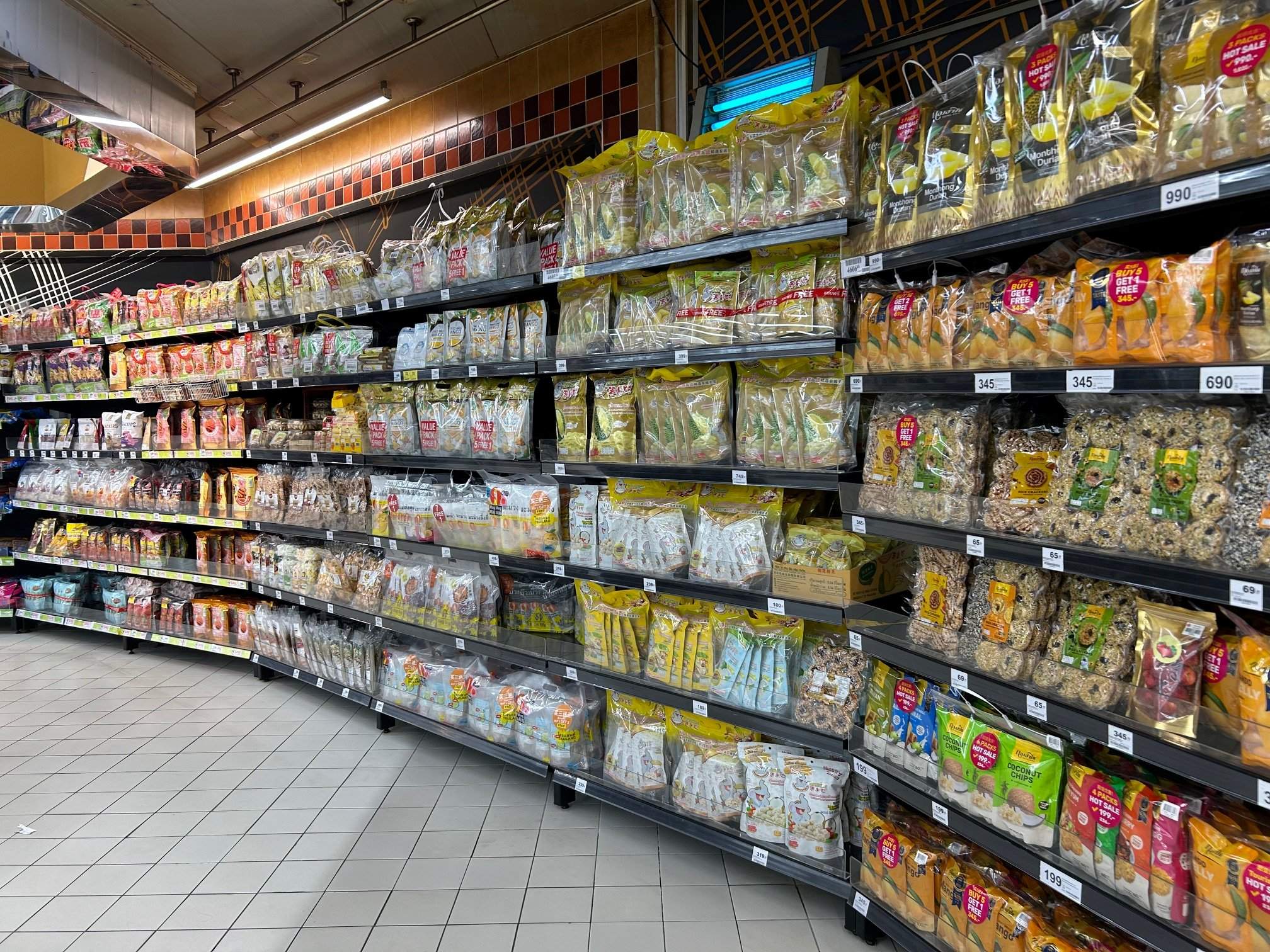
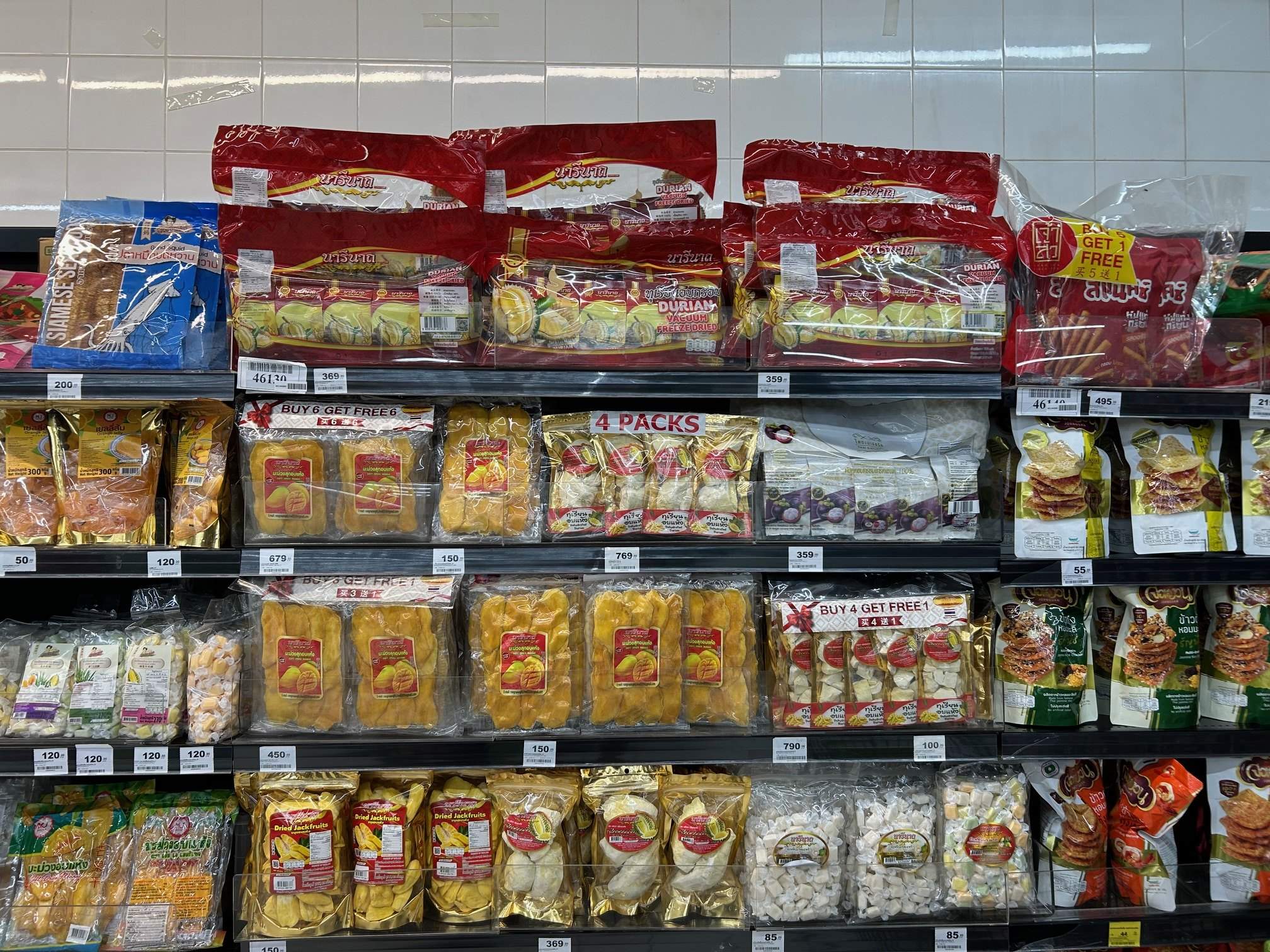
A local alternative: don’t automatically assume you have to shop at the most famous branch. Other major Big C and Lotus’s branches around Bangkok can offer a more relaxed experience and a selection that suits you just as well. Convenience is not always about the most famous location.
3. Night market fatigue and transit headaches
Bangkok’s evenings offer plenty, from established night markets to neighbourhood food streets and independent bars. But after a full day of shopping, walking and navigating the heat, travelling across the city again for dinner can feel like another assignment.
Rather than choosing a base solely because it is close to one famous night market, consider whether it gives you access to several areas and the flexibility to change plans.
And what about disruption? Bangkok’s late-September 2026 floods were a serious reminder. After days of heavy rain, flooding reached all 50 districts and thousands of residents were moved into shelters. September is the peak of the rainy season, and even outside major weather events, traffic congestion and occasional rail disruptions are realities of a large city.
My golden rule: look for a location with more than one practical transport option. Ideally, consider access to both BTS and MRT, alongside reasonable road connectivity to the airports. Having a Plan B is always better than relying entirely on a single train line or a car journey on departure day.
The northern Bangkok advantage: Ha Yaek Lat Phrao
Full disclosure: we’re preparing to open a small studio in this neighbourhood (NYTT Stays BKK), which is why we know it well. We’ve tried to be as candid about the trade-offs as about the advantages.
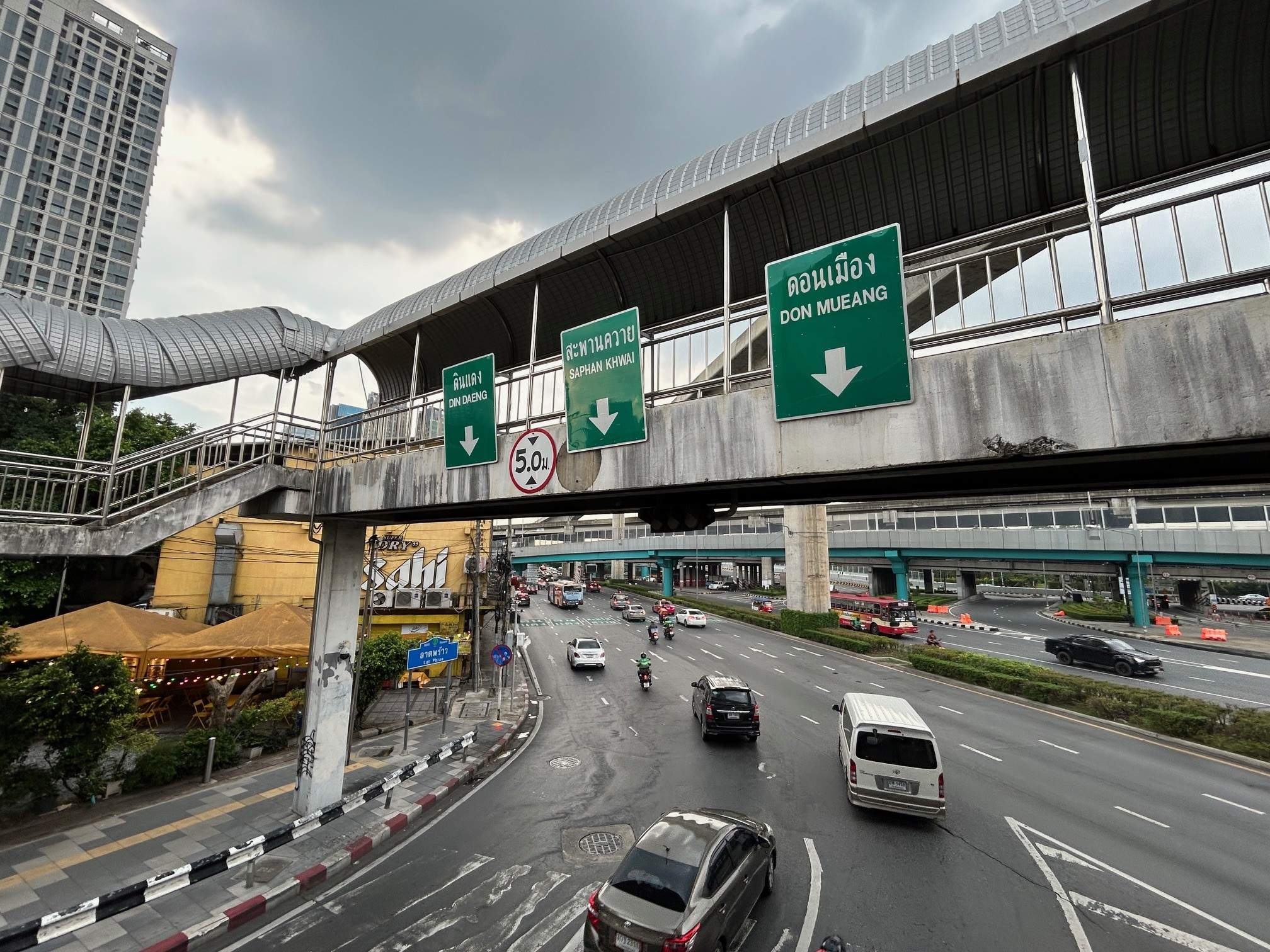
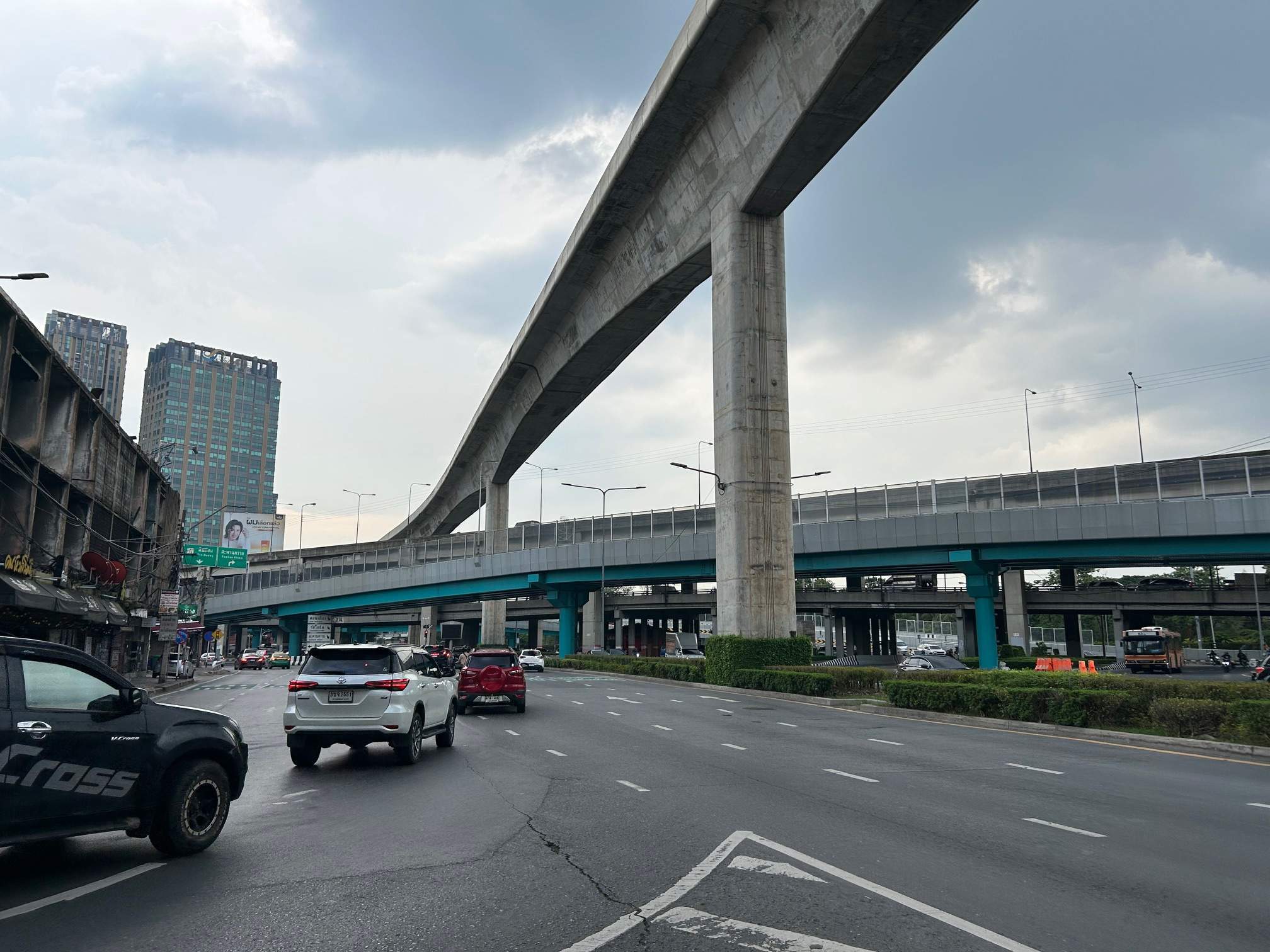
Northern Bangkok has evolved into a major urban and lifestyle hub, and one of its most strategic locations is Ha Yaek Lat Phrao (Lat Phrao Five-Way Intersection, ห้าแยกลาดพร้าว). Around the Phahonyothin, Vibhavadi Rangsit and Lat Phrao corridors, it offers something visitors often overlook: an established commercial district alongside the everyday character of a residential neighbourhood.
It isn’t the postcard version of Bangkok, and that’s precisely the point.
Beyond Central Ladprao and the budget-fashion appeal of Union Mall, the area is surrounded by public parks, local markets, supermarkets, food outlets and established communities. It is also changing: The Central’ Phaholyothin, a large mixed-use development by Central Pattana, is under construction and will sit alongside Central Ladprao.
Why consider Ha Yaek Lat Phrao as your Bangkok base?
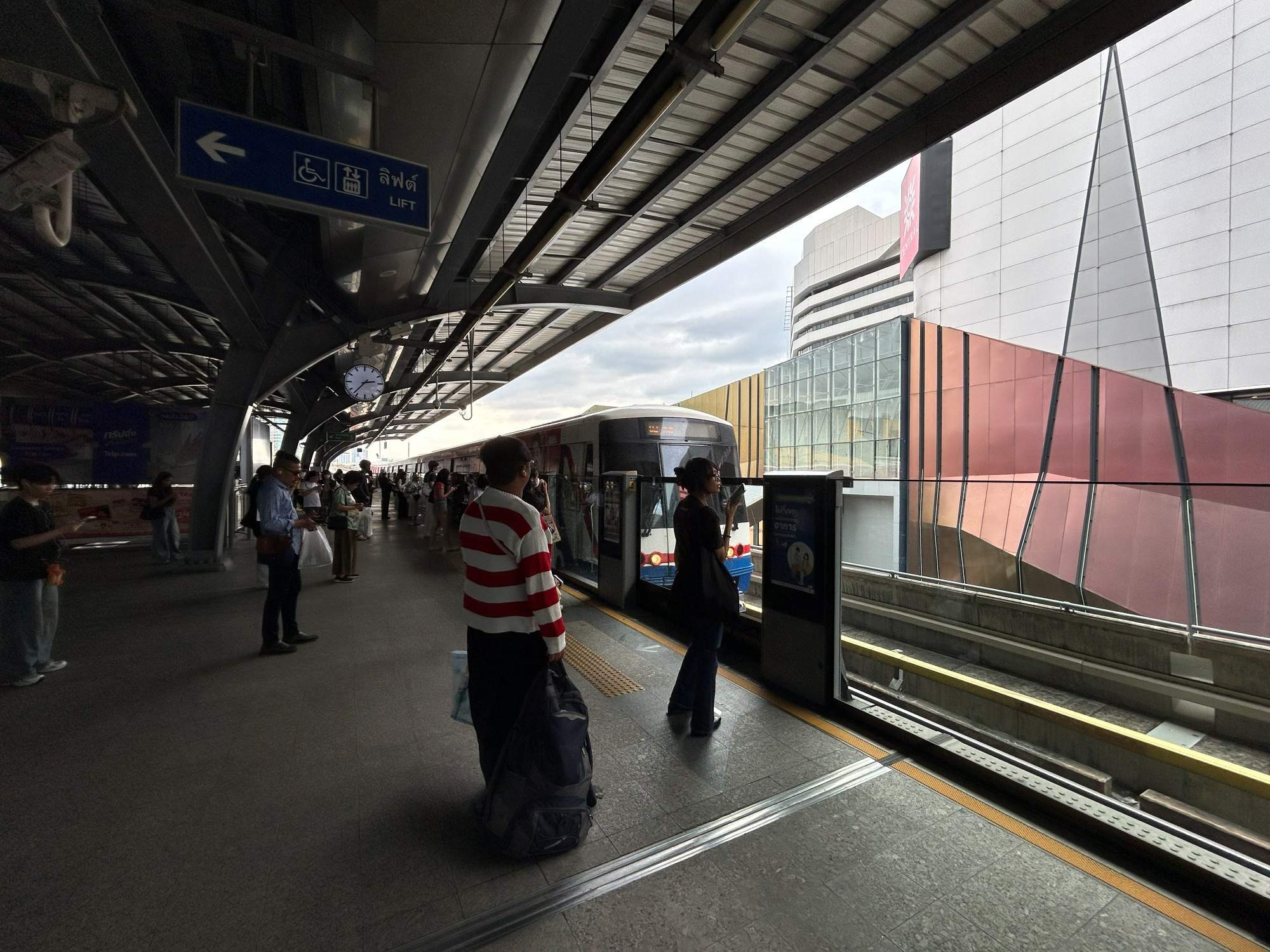
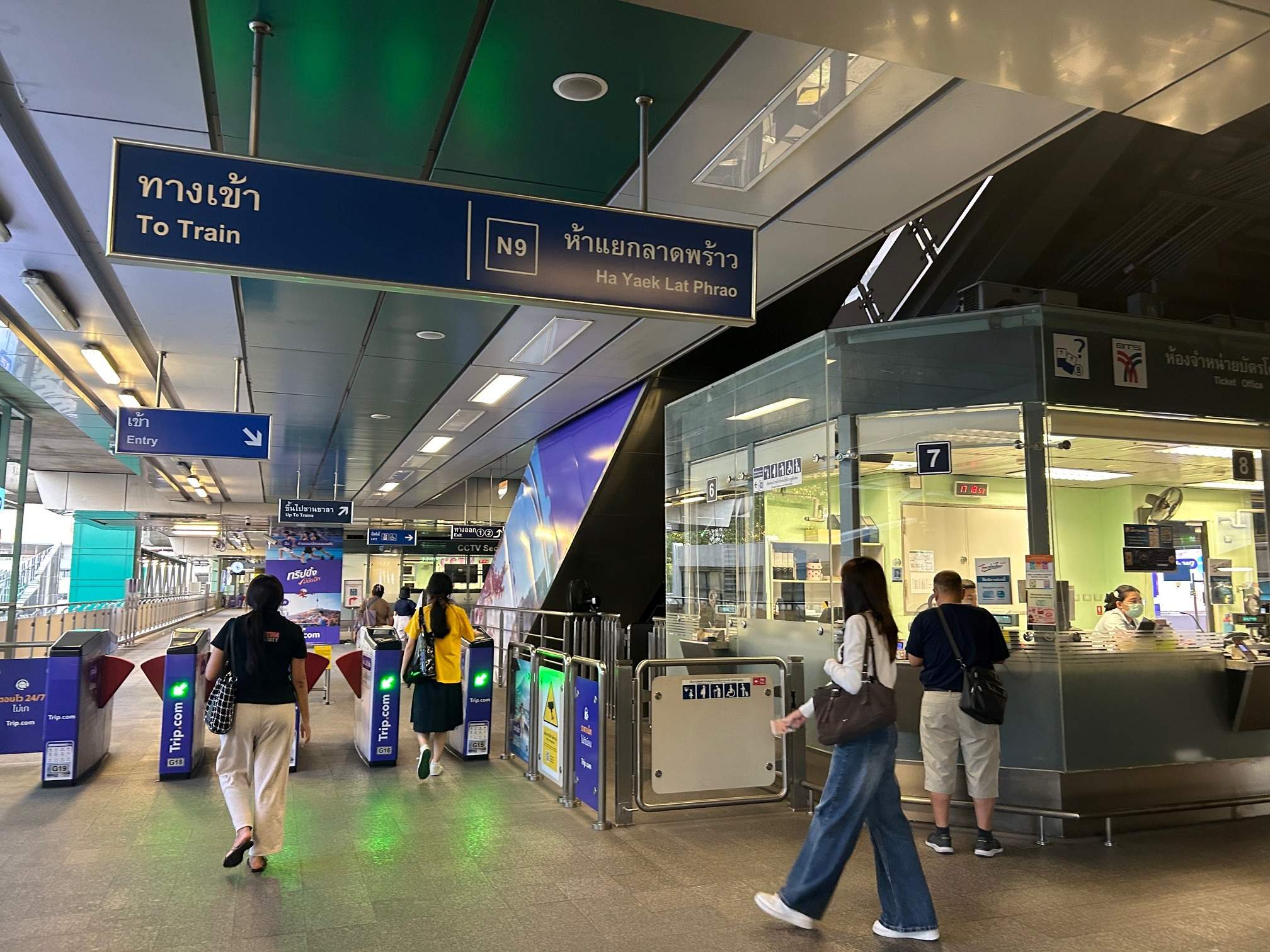
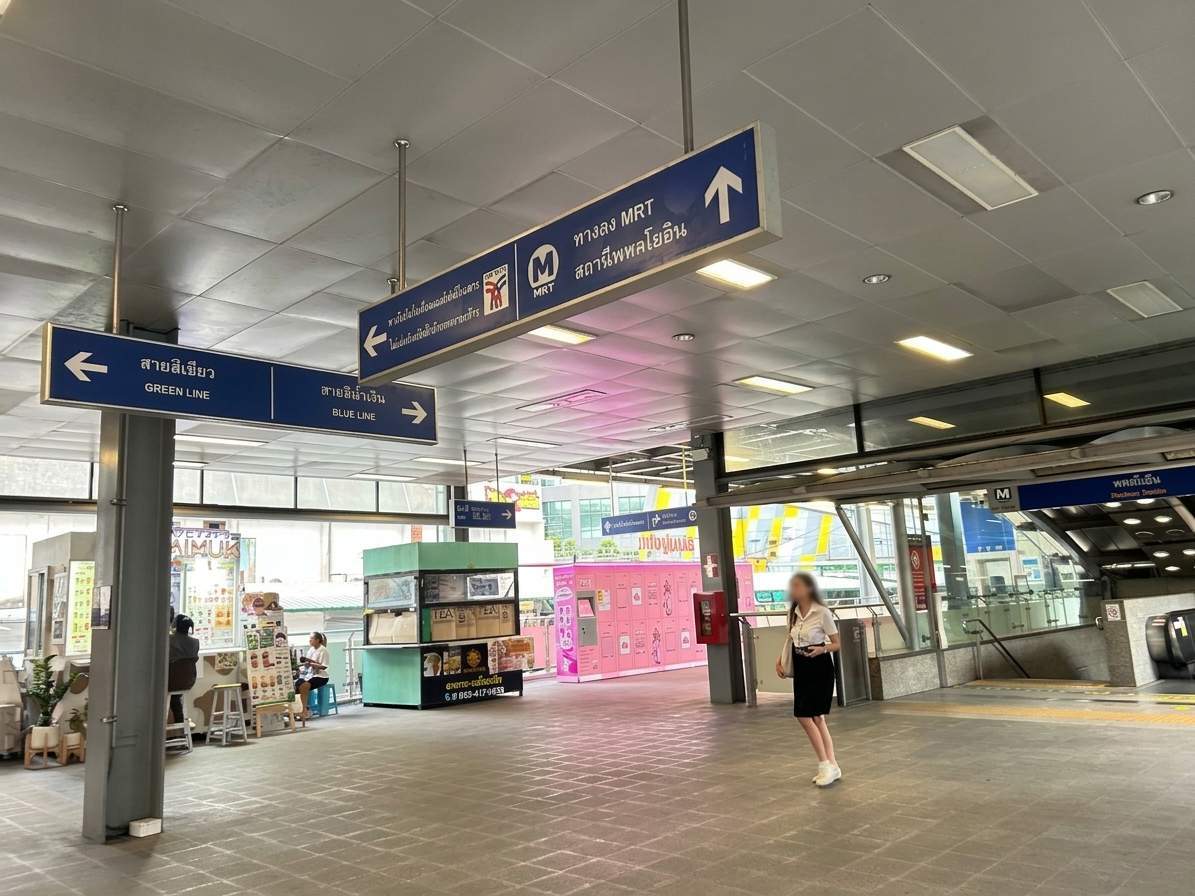
1. A genuinely useful mass-transit interchange. BTS Ha Yaek Lat Phrao (Sukhumvit Line) and MRT Phahon Yothin (Blue Line) connect you to different parts of the city: Asok, Sukhumvit, Silom, Rama 9 and the historic areas, with onward rail connections. For travellers who prefer not to depend on taxis or ride-hailing, that is a considerable advantage. (Distances from our planned studio: about 650 m to MRT Lat Phrao, 700 m to MRT Phahon Yothin and 1.3 km to BTS Ha Yaek Lat Phrao, all approximate.)
2. A green escape in a busy city. Chatuchak Park, Queen Sirikit Park and Wachirabenchathat Park (Rot Fai Park) are close by, for an early-morning walk, a cycle or a break from the concrete.
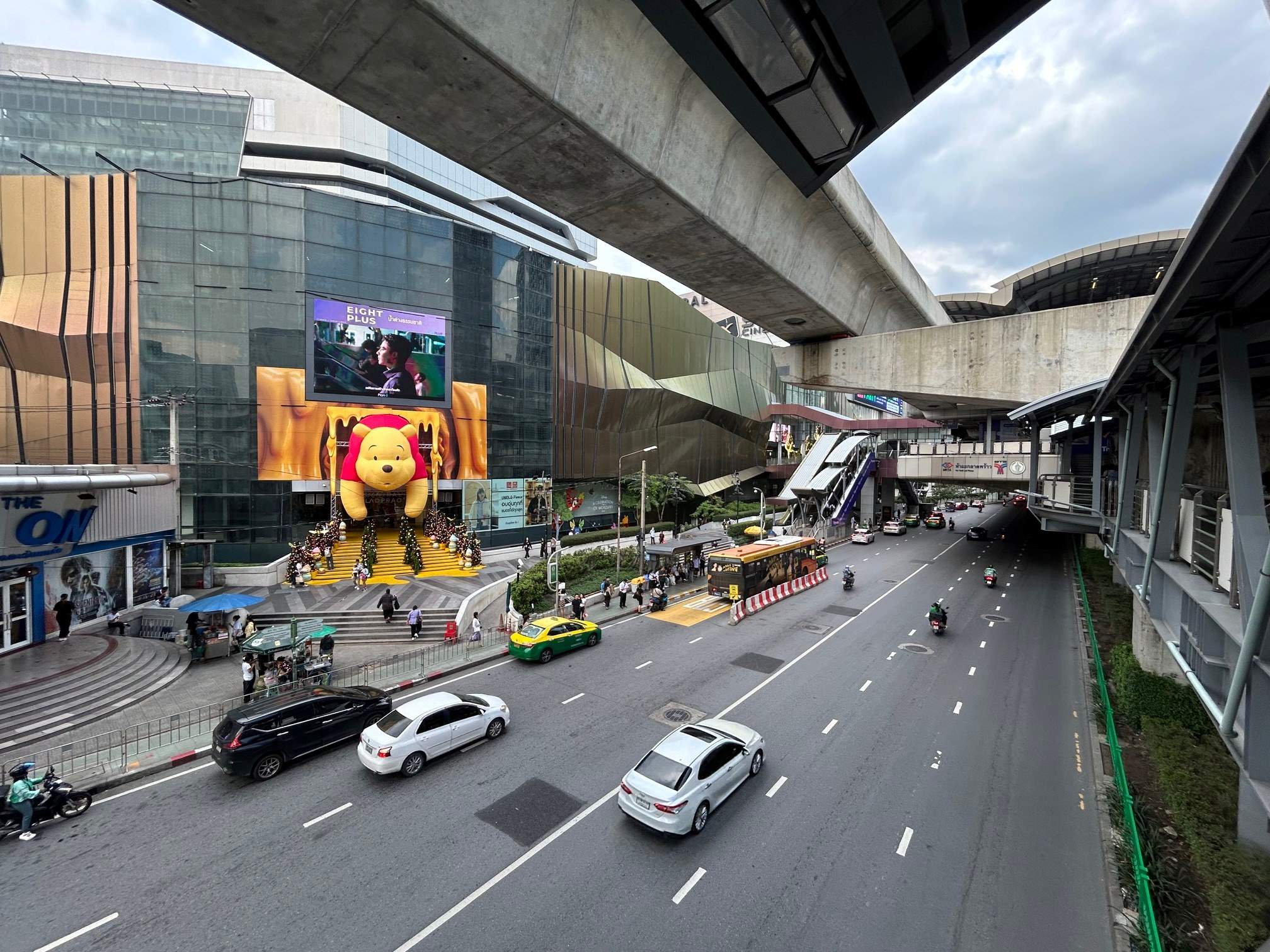
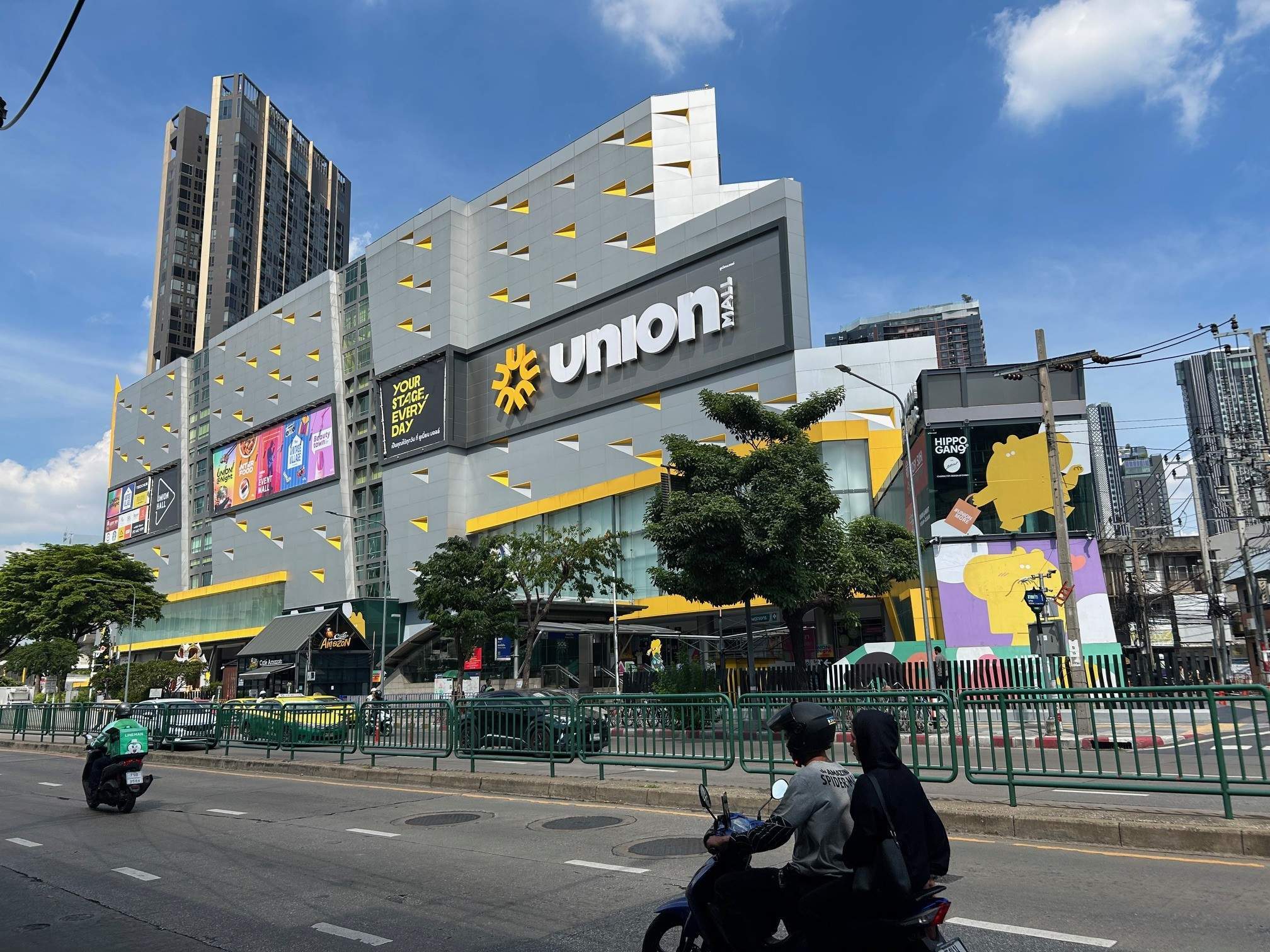
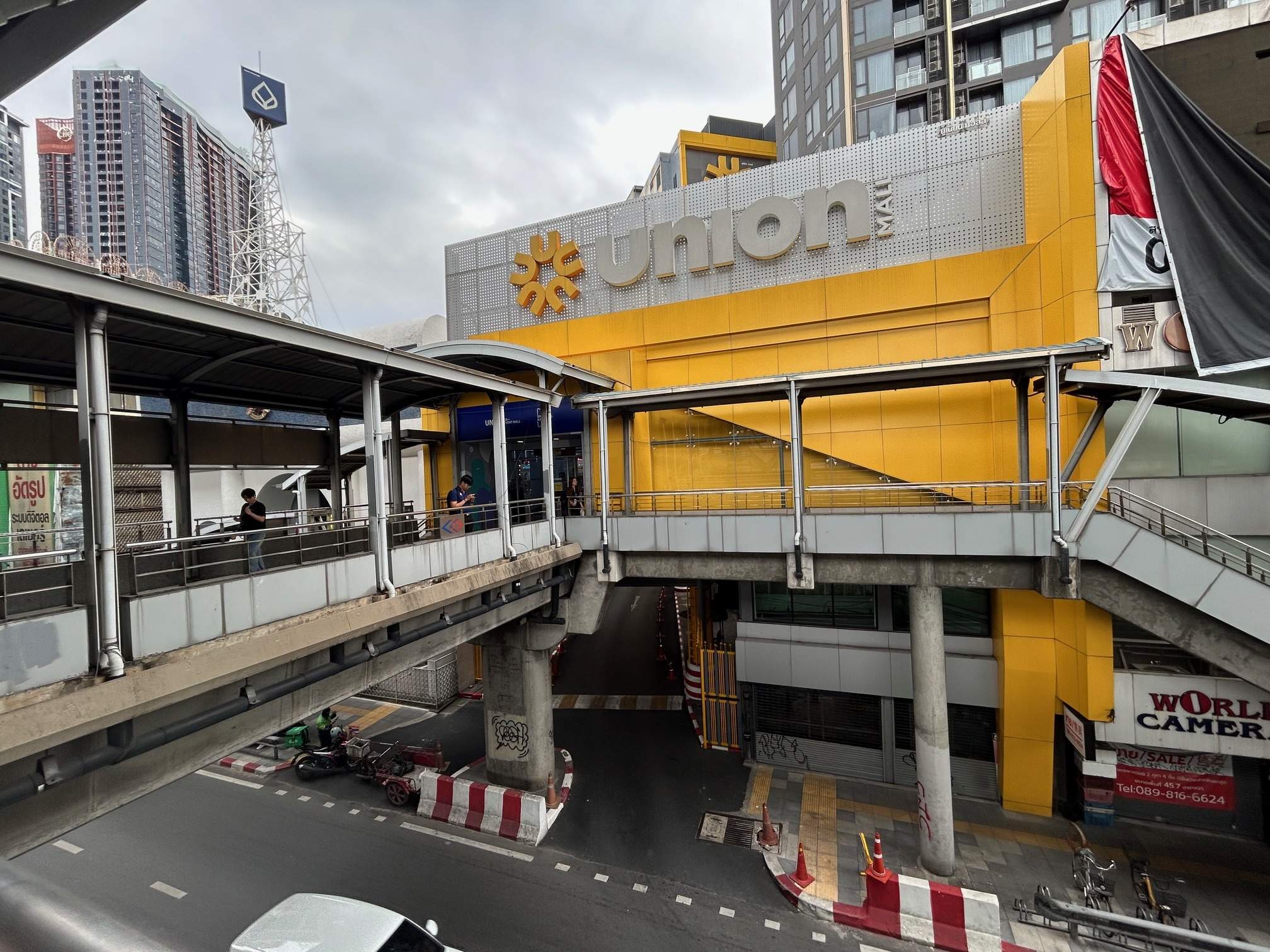
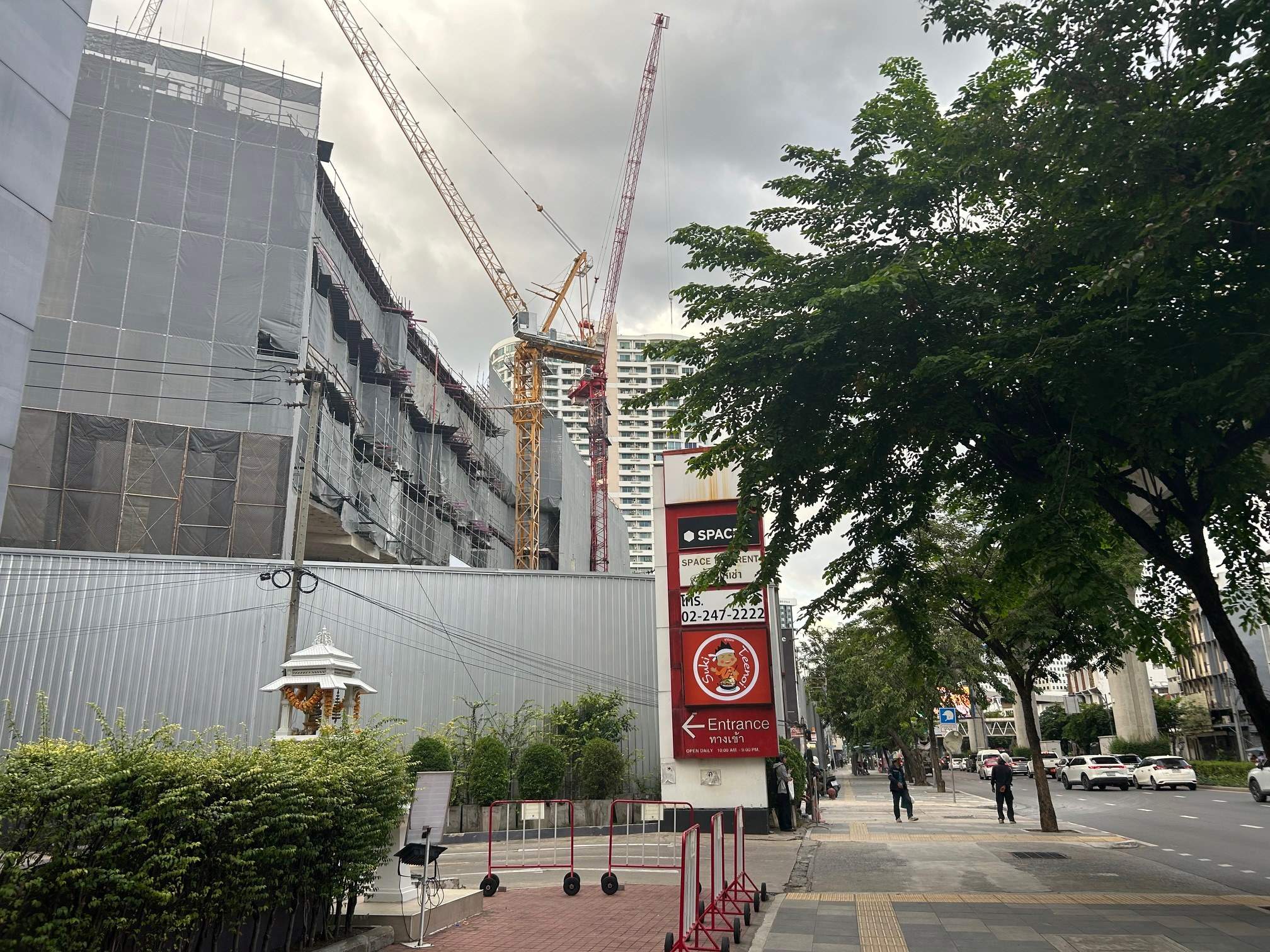
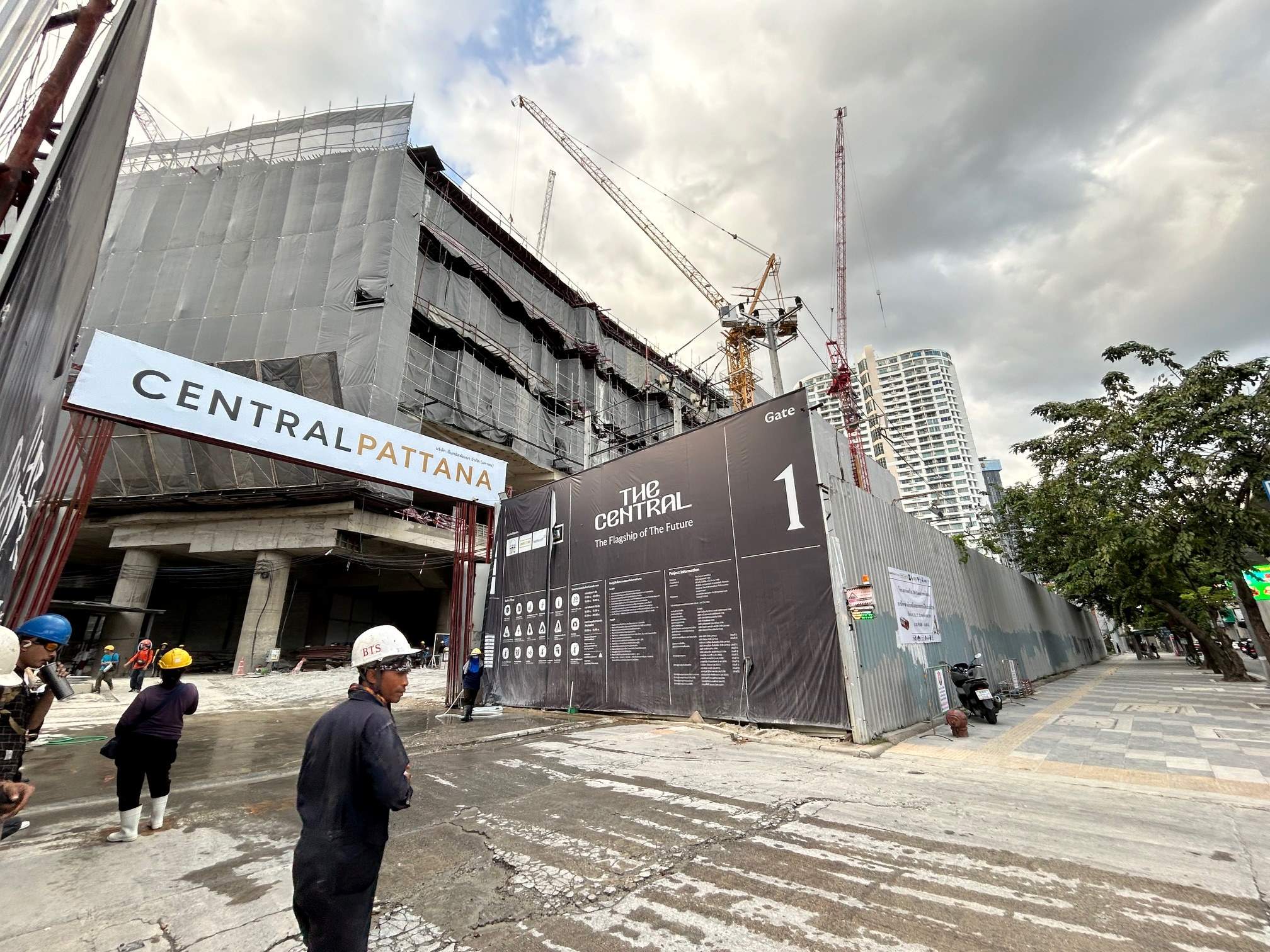
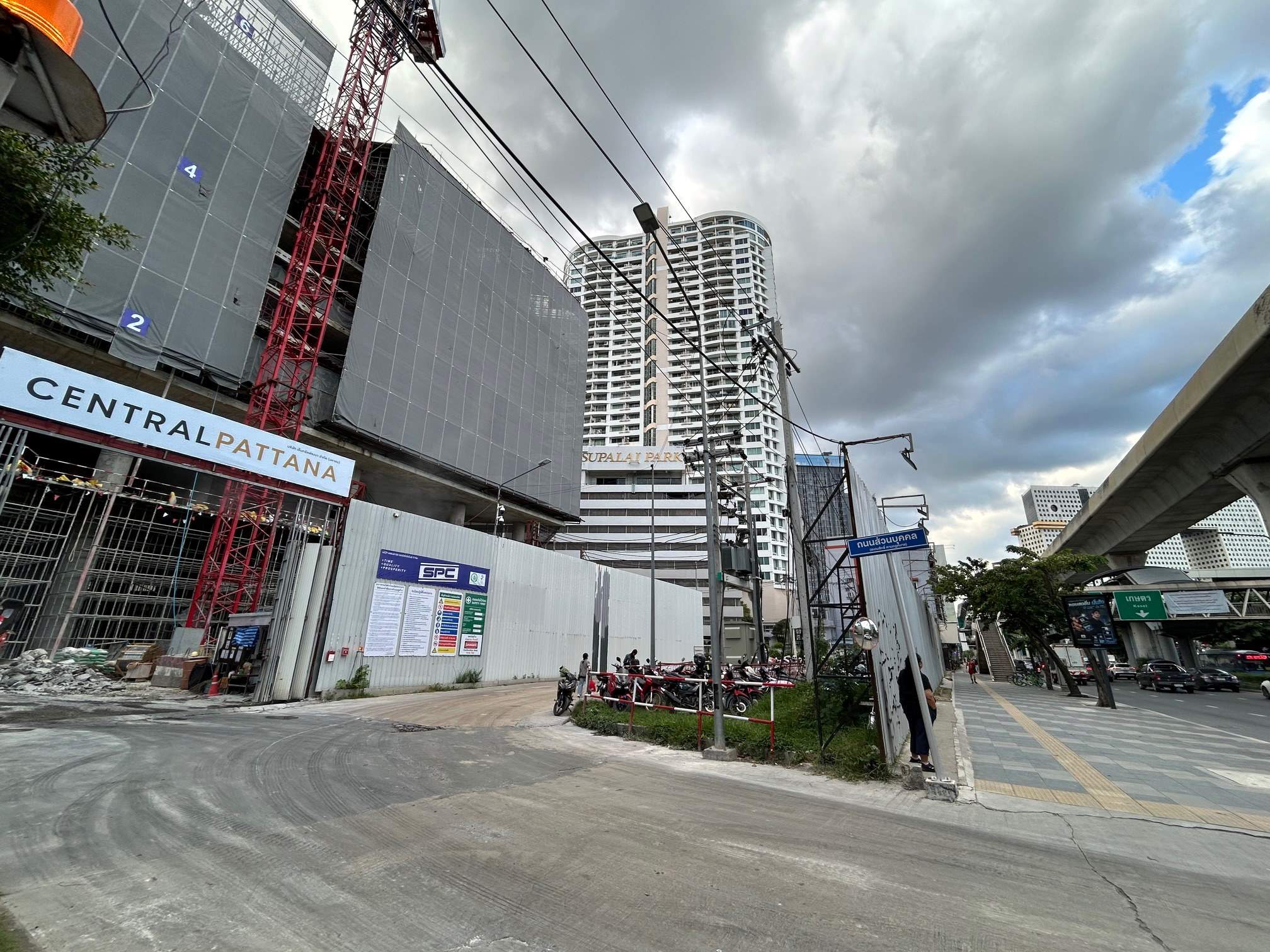
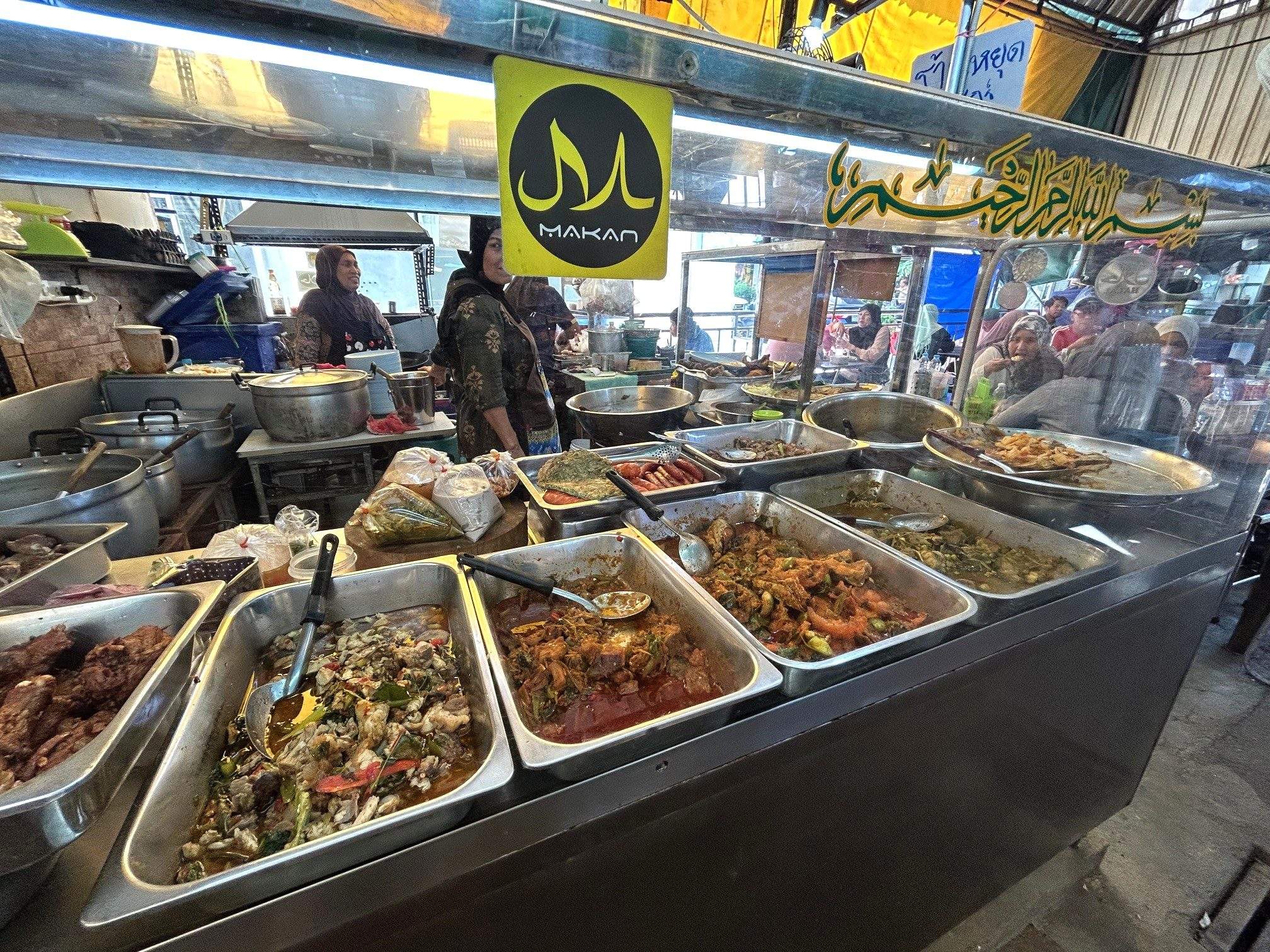
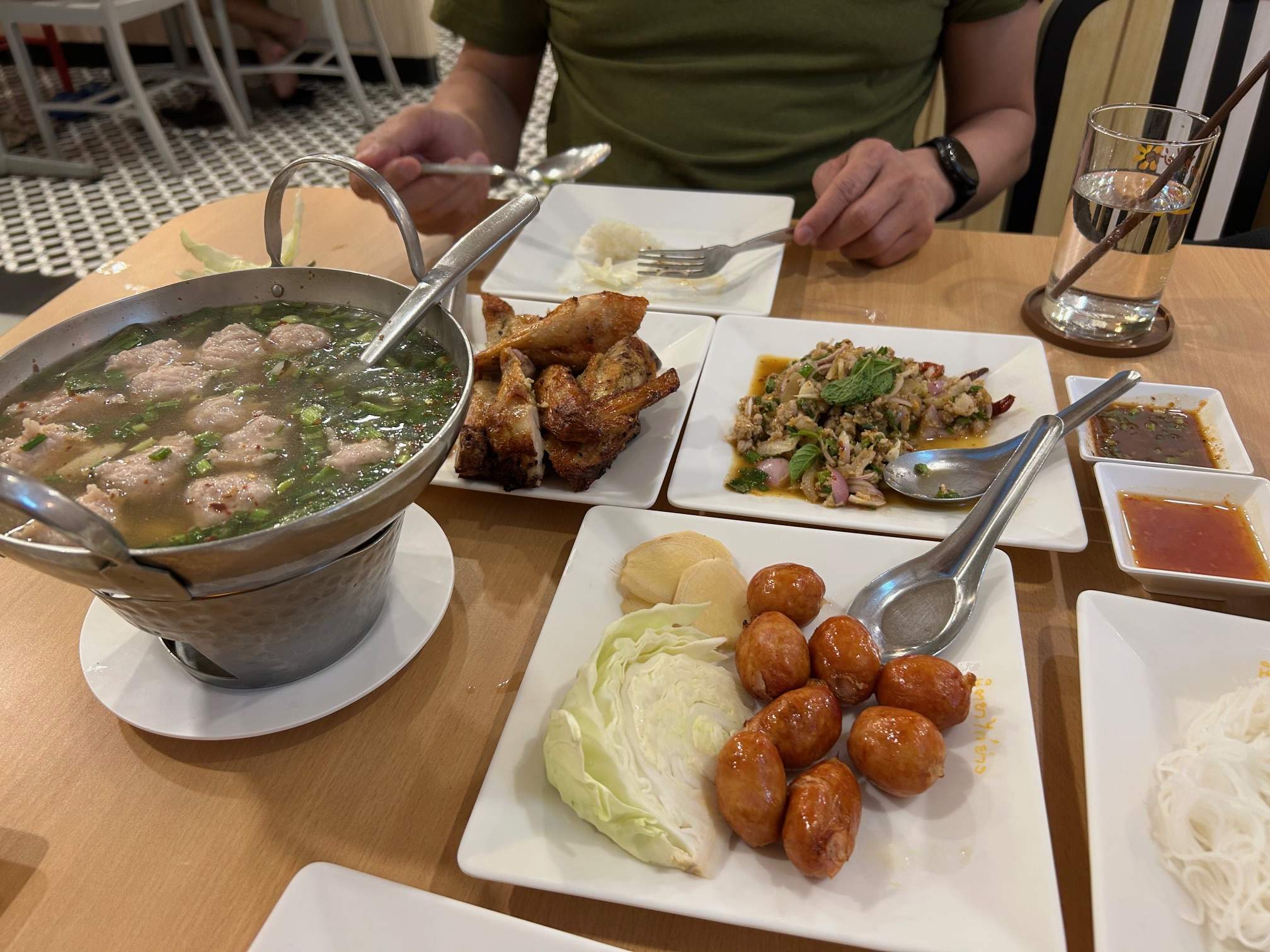
3. Plenty of food and shopping without trekking downtown. Central Ladprao has Thai restaurant chains, cafés, fashion and everyday conveniences. Union Mall covers budget fashion and accessories, and The Central’ Phaholyothin, now under construction next door to Central Ladprao, will add more once it opens. Lotus’s and Big C outlets serve groceries, while Or Tor Kor Market and Chatuchak Market offer more specialised food and market experiences.
4. A more everyday Bangkok experience. Perhaps the most underrated advantage: this is a functioning neighbourhood where people work, shop, eat, commute and spend their weekends. For repeat visitors who have done the usual circuit, that balance can be surprisingly appealing.
Who it is not for
- Temples-first itineraries. Expect a longer journey to the Old City and the riverside than from a downtown base.
- Rooftop bars and nightlife on the doorstep. Sukhumvit, Silom and Sathorn suit that better.
- Anyone who wants quiet streets at all hours. It is a busy junction area, and traffic builds at peak times.
If that list describes your trip, stay downtown and enjoy it. If it doesn’t, read on.
Getting around by bike: Bangkok’s public bike-sharing
I love cycling and try to ride wherever I travel, which is why a bicycle sits in our logo. Short, slow hops are often how you notice a neighbourhood, and Bangkok’s public bike-sharing has grown quickly this year, helped by a “night ride” trend in the old town.
The system is now app-based, and visitors can use it. Unlike the older card-based Pun Pun scheme, you don’t need a kiosk card or an office visit. Here is how it works with operators such as HelloRide (some guides list its blue bikes as Hello Punpun) and Anywheel:
- Download the app (iOS App Store or Google Play) and register with the details it asks for. Check that it accepts your international phone number before you arrive.
- Add a payment method. Operators accept cards, TrueMoney or in-app top-up credit.
- Scan the QR code on the bicycle to unlock it at a designated docking point.
- Return it to a docking point, lock the rear wheel and confirm the return in the app.
What it costs: the base rate is THB 10 per 30 minutes on both HelloRide and Anywheel. Prices can change, so check the app. The free daily hour advertised by some operators is limited to Thai citizens, so don’t plan around it.
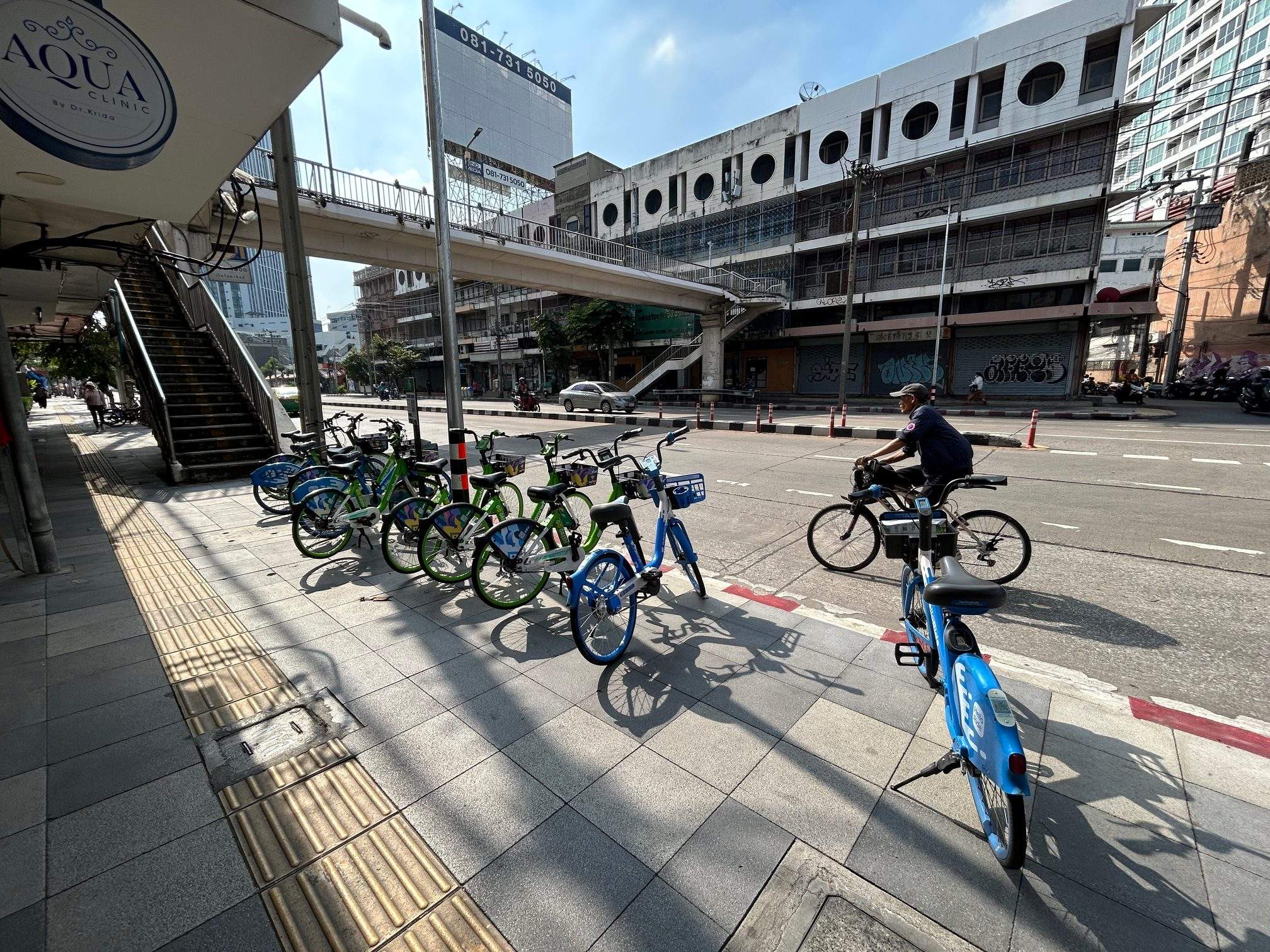
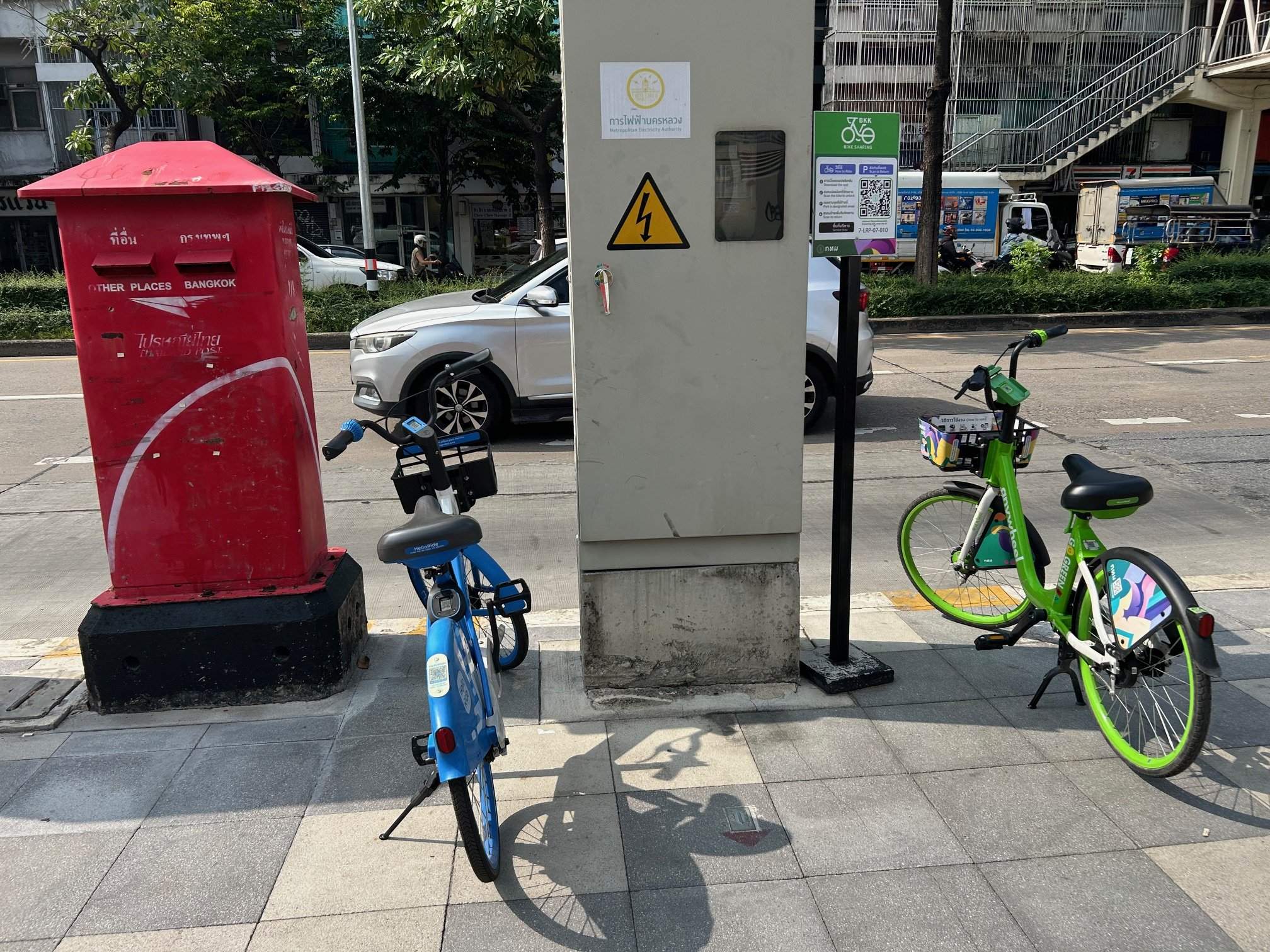
Where the bikes are: HelloRide and Anywheel docking points are at both MRT Lat Phrao, MRT Phahon Yothin and BTS Ha Yaek Lat Phrao, and there is another docking station in front of Big C, right next to our building. A bike is an easy way to cover short distances from the stations. Elsewhere, docking points cluster around rail stations and busy districts, with the densest coverage in central Bangkok. Stock varies by dock: one morning we found only two bikes in front of Big C, while the next docking point along the road had more. Operators and station lists change often, so check the app map for your route.
Ride smart: Bangkok traffic is busy, and zebra crossings are not a safe guarantee. Many drivers and motorcyclists don’t stop for them, and crossings have been the scene of serious accidents. Never assume a vehicle will yield. Cross at signalised crossings or use pedestrian bridges, get off and walk the bike, and step out only when traffic has actually stopped. Dismount at narrow gaps between motorcycle barriers, and ride in cooler daylight hours or on quieter streets and park paths.
A local ritual: the Ganesha shrine at Union Mall
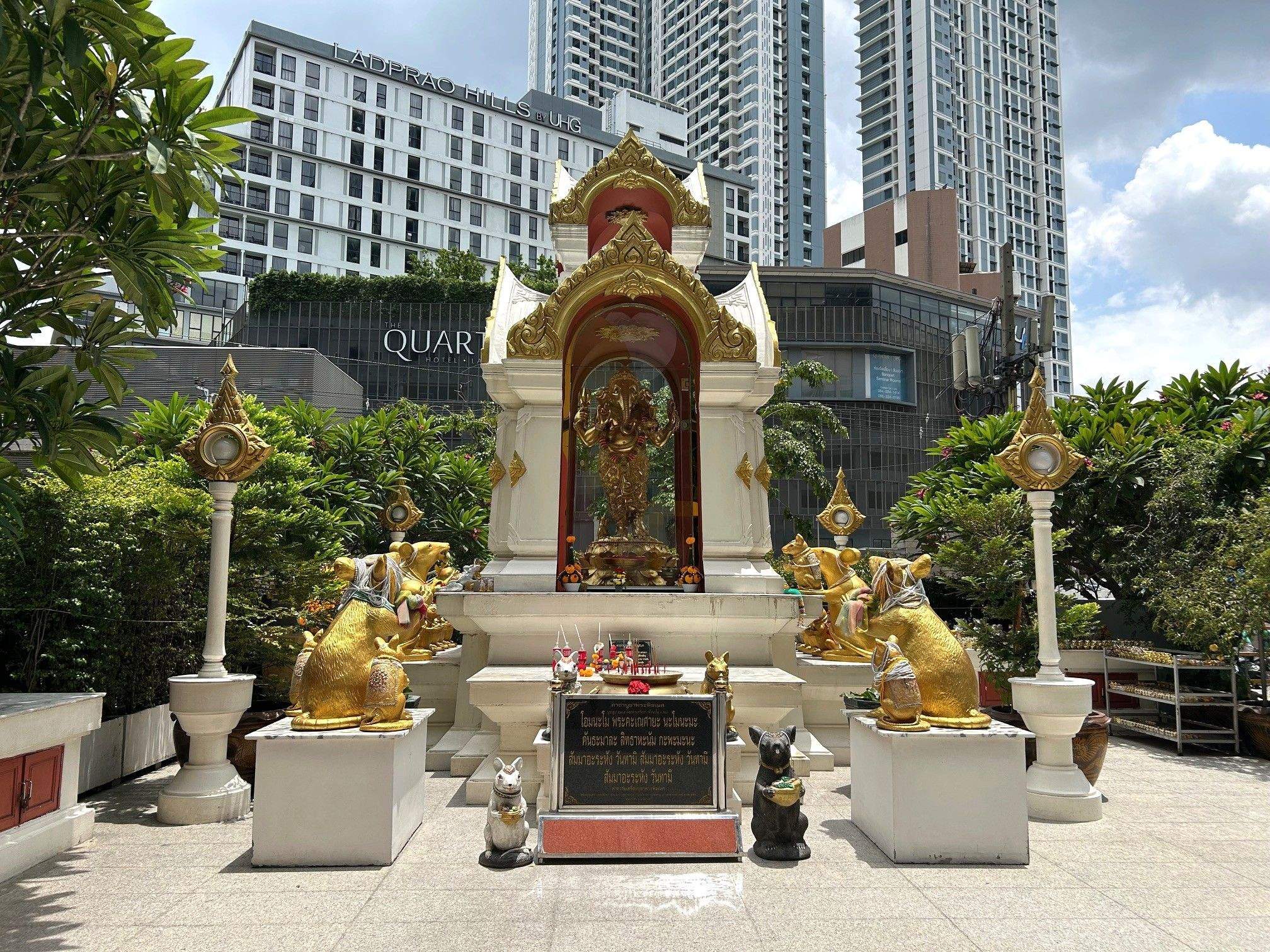
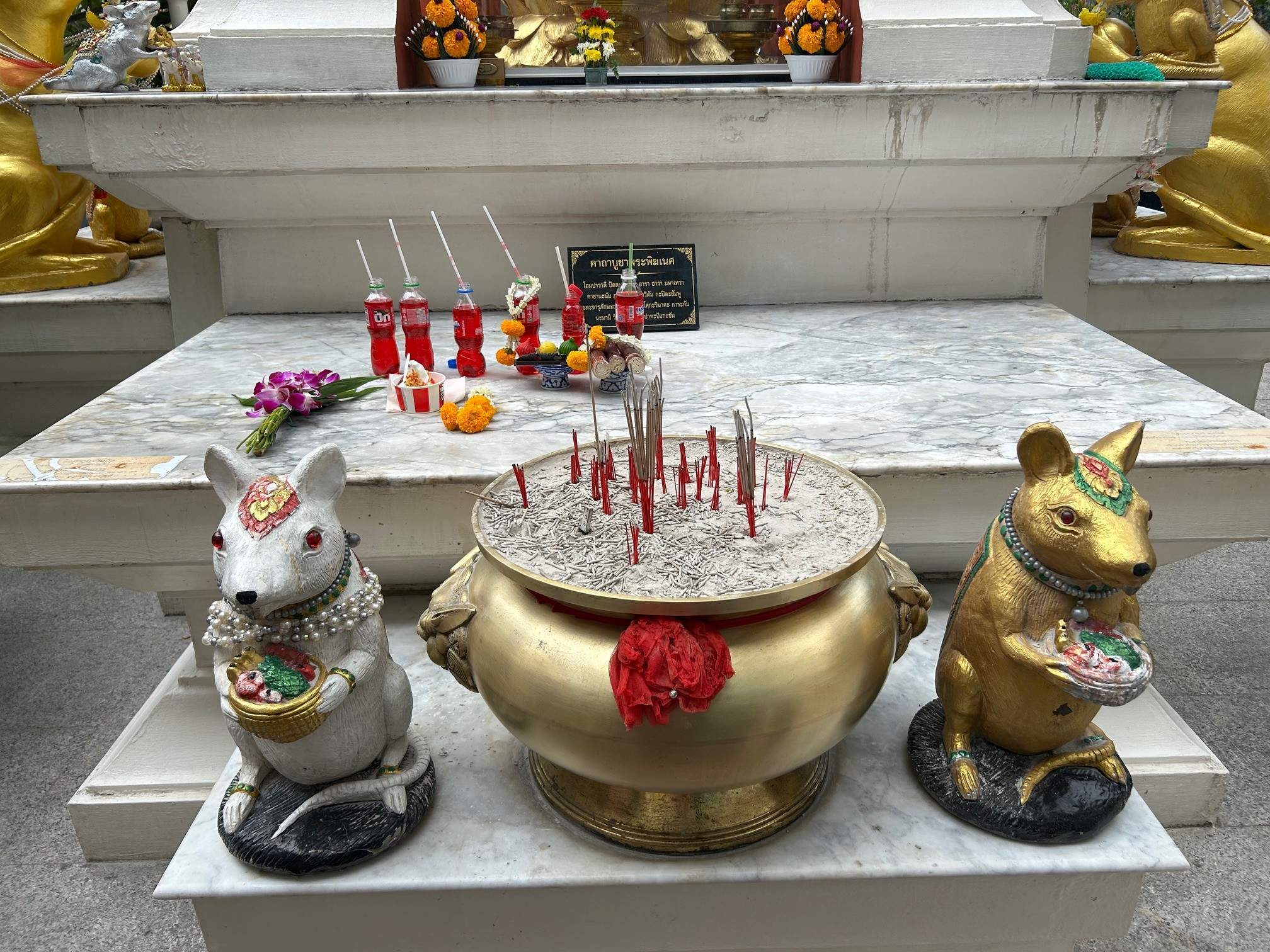
Outside Union Mall, which connects by skywalk to MRT Phahon Yothin (Exit 5), stands an open-air shrine to Ganesha, known in Thai as Phra Phikanet (พระพิฆเนศ). It sits just beside MRT Phahon Yothin, close to where the cat is often seen. Locals stop to pray on their way to work, shopping or the station, and garlands are sold close by. The golden statue is shown in a blessing pose with one raised hand, which Thairath notes is popular with people seeking career and financial progress.
Ganesha is revered in Thailand as the remover of obstacles and a patron of wisdom, success and the arts. Hindu deities have long sat alongside Buddhism in Thai spiritual life, so you will see people of every age pausing here, from office workers before a big meeting to students before exams.
What makes this shrine memorable is how modern it feels:
- Offerings. Marigold garlands are the classic choice. Many visitors also leave cups of bubble milk tea, and a sign by the shrine lists the bubble tea shops inside the mall.
- Making a wish. Devotees typically give their full name and their wish, and whisper it to Mushika, the golden rat attendant. Some return with more cups once the wish comes true.
You are welcome to watch, but it is a place of worship. Stand back while people pray, don’t touch the offerings, and photograph the shrine rather than the worshippers.
The viral station cat: Black Cat with White Socks

There’s another little local celebrity around Ha Yaek Lat Phrao: a black cat with distinctive white paws, affectionately known as “Black Cat with White Socks”.
It is often spotted around Exit 4 of MRT Phahon Yothin, near the connection to BTS Ha Yaek Lat Phrao. Sometimes it lounges nearby, sometimes it snoozes on the security guard’s desk, and the occasional visitor brings a treat. Sightings are shared online, but you won’t find it every time you pass through.
It’s one of those small, unexpected encounters that make a neighbourhood memorable. Keep an eye out, and please admire from a respectful distance. Our studio is pet-free, so the cat remains a station regular rather than a resident.
Airport connections: why northern Bangkok makes practical sense
Another consideration is how easily you can reach Bangkok’s two international airports. The best option depends on your arrival time, luggage, travelling companions and comfort level.
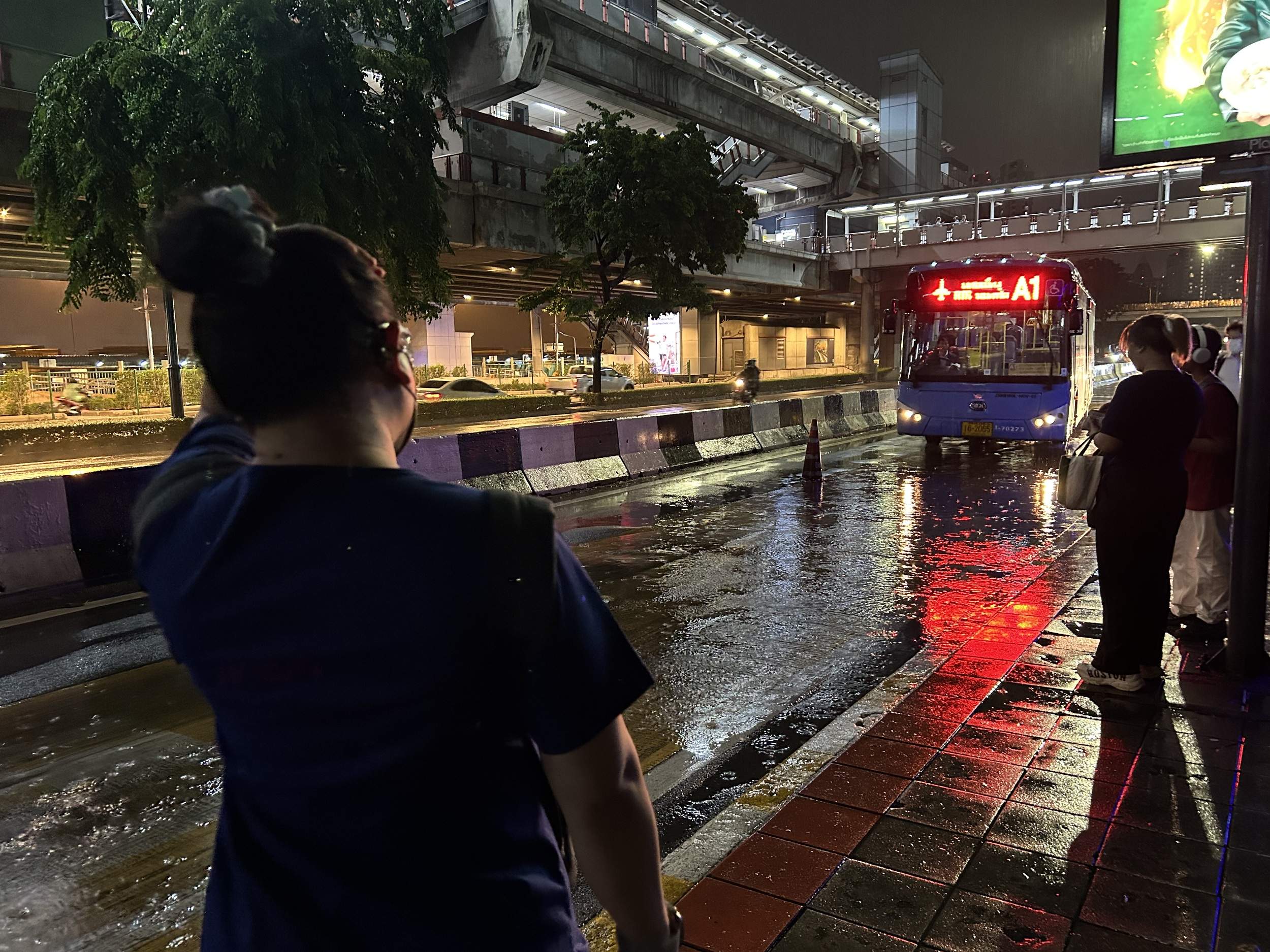
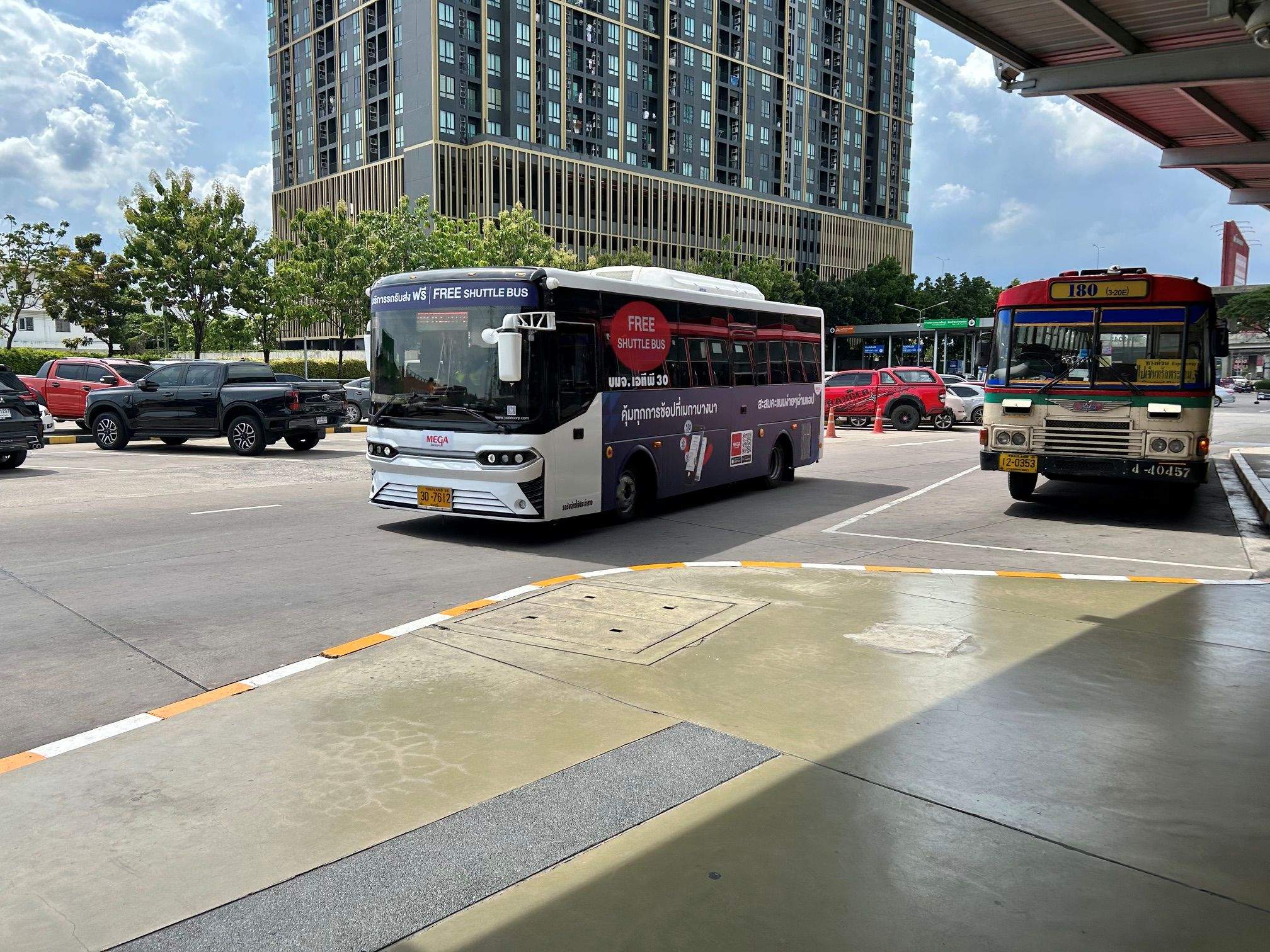
From Don Mueang (DMK). The Airport Bus A1 connects Don Mueang with the Mo Chit transport hub, where you can continue by BTS or MRT. The published A1 fare is THB 30, and it is a useful option if you want to avoid a road journey in heavy traffic.
From Suvarnabhumi (BKK). One practical rail option is the Airport Rail Link to Makkasan, a transfer to the MRT Blue Line at Phetchaburi, then onward towards Phahon Yothin. It reaches northern Bangkok without relying entirely on a taxi.
With heavy luggage or a late-night arrival, a taxi or pre-arranged transfer may still be the more sensible choice. Always check current fares, operating hours and service conditions before you travel.
Which Bangkok neighbourhood suits your travel style?
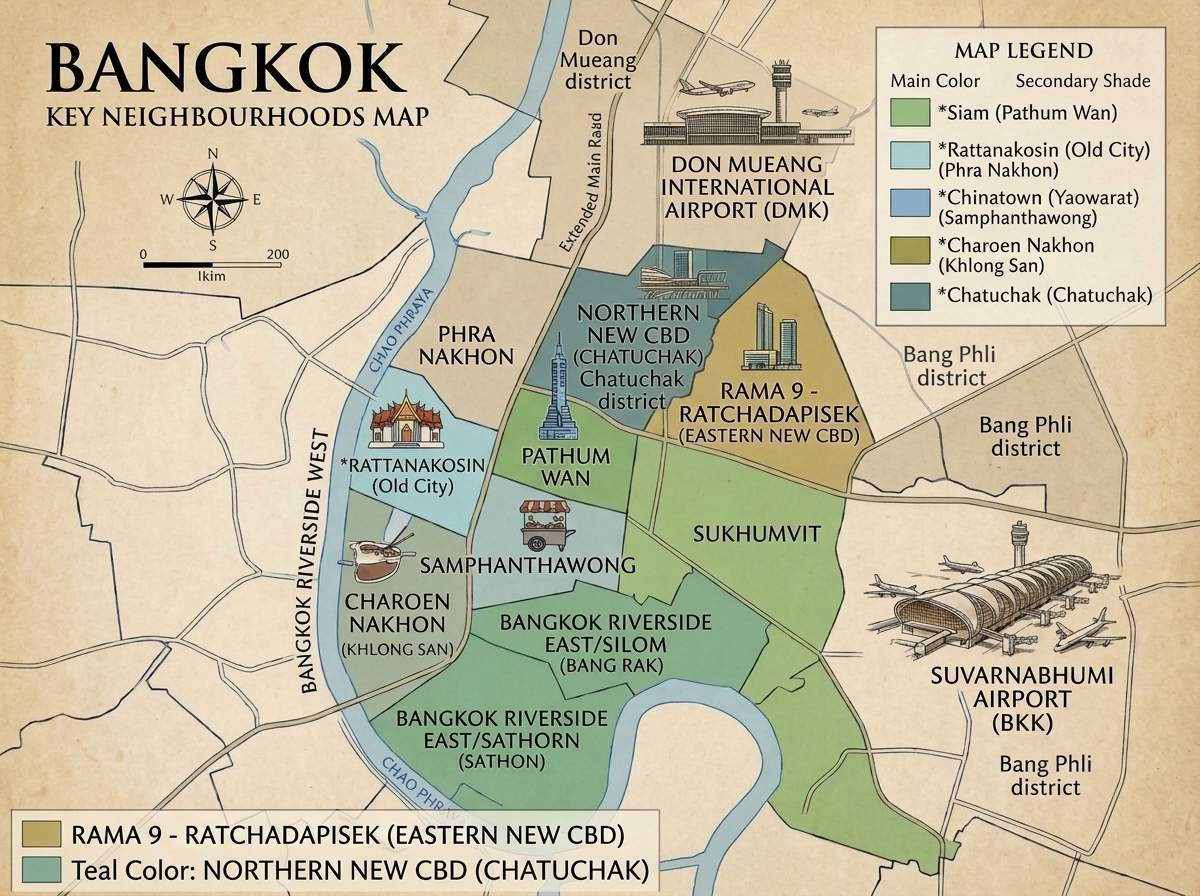
Bangkok has 50 administrative districts (khet), each with its own character. Rather than one universally best place to stay, here is a practical overview of some better-known bases and what each asks in return.
| Base | Best for | The trade-off |
|---|---|---|
| Sukhumvit (Watthana, Khlong Toei) | First-timers who want international dining, hotels, nightlife and easy BTS access | Busy and commercial, with less everyday local feel |
| Siam (Pathum Wan) | Shopping at Siam Paragon, MBK and CentralWorld, with central connectivity | Crowded, and very much on the tourist circuit |
| Silom and Sathorn (Bang Rak, Sathon) | Business convenience, leafy side streets, rooftop bars and good local food | More of an office-district feel |
| Rattanakosin / Old City (Phra Nakhon) | First-timers focused on the Grand Palace, Wat Pho and heritage | Check rail access for your route before booking |
| Chinatown / Yaowarat (Samphanthawong) | Street food, old coffee shops, and independent cafés on Song Wat Road | Dense, busy streets |
| Charoen Nakhon / Thonburi (Khlong San) | A relaxed riverside atmosphere around ICONSIAM | Plan your cross-river connections |
| Rama 9 – Ratchadaphisek | Contemporary shopping at Central Rama 9 and Fortune Town, with MRT Blue Line access | A modern commercial feel, fewer heritage sights |
| Ha Yaek Lat Phrao – Chatuchak | Repeat visitors who want BTS and MRT access, parks, local markets and Chatuchak | Further from Old City temples; a busy junction; limited nightlife |
| Tao Poon – Bang Pho | Independent explorers who want traditional businesses, local food and woodworking heritage | Fewer visitor facilities |
The emerging hubs may not have the instant recognition of Siam or Sukhumvit, but that doesn’t make them less interesting.
So, where should you stay in Bangkok?
My answer has changed over the years. I used to think that staying as centrally as possible was the safest choice. After all, who wouldn’t want to be close to everything?
But experience has taught me that the most convenient location isn’t necessarily the one closest to the most famous attraction. Sometimes it’s the neighbourhood that lets you explore different parts of the city without constantly fighting traffic. Sometimes it’s the one with a good local market, a supermarket around the corner, a park nearby, a bike dock and a reliable train connection. And sometimes it’s simply the place where you can imagine yourself living for a little while, rather than just passing through.
Bangkok rewards curiosity. So, on your next visit, perhaps try something different. Choose a neighbourhood, not just an address. Explore beyond the obvious. Eat where the locals eat, take a different train line, wander down an unfamiliar soi and leave a little room in your itinerary for the unexpected.
After all, you can always visit the famous sights again. But perhaps this time, you should experience a different Bangkok.
Stay a little differently. Discover a little more.
Follow @nytt.stays.bkk to hear when we open.