My First Flood: A Year to Remember in Bangkok
I had my first earthquake experience last year, and one and a half years later, I experienced my first Bangkok flood—a phenomenon that has been part and parcel of my husband’s (and extended family’s) life since childhood, given that their family home sits in the low-lying eastern side of Bangkok.
When the last mega flood hit in 2011, I was in Bangkok, but my then-boyfriend-now-husband sent me packing back to Kuala Lumpur to stay safe. Over the years, we experienced only minor inconveniences—an occasional puddle in the alley next to our condo, where thoughtful condo staff would open the side garbage truck entrance so residents could walk on dry ground.
This time, however, after 48 hours of non-stop torrential downpours, we woke up on Saturday, September 26 to find our surrounding area completely submerged.
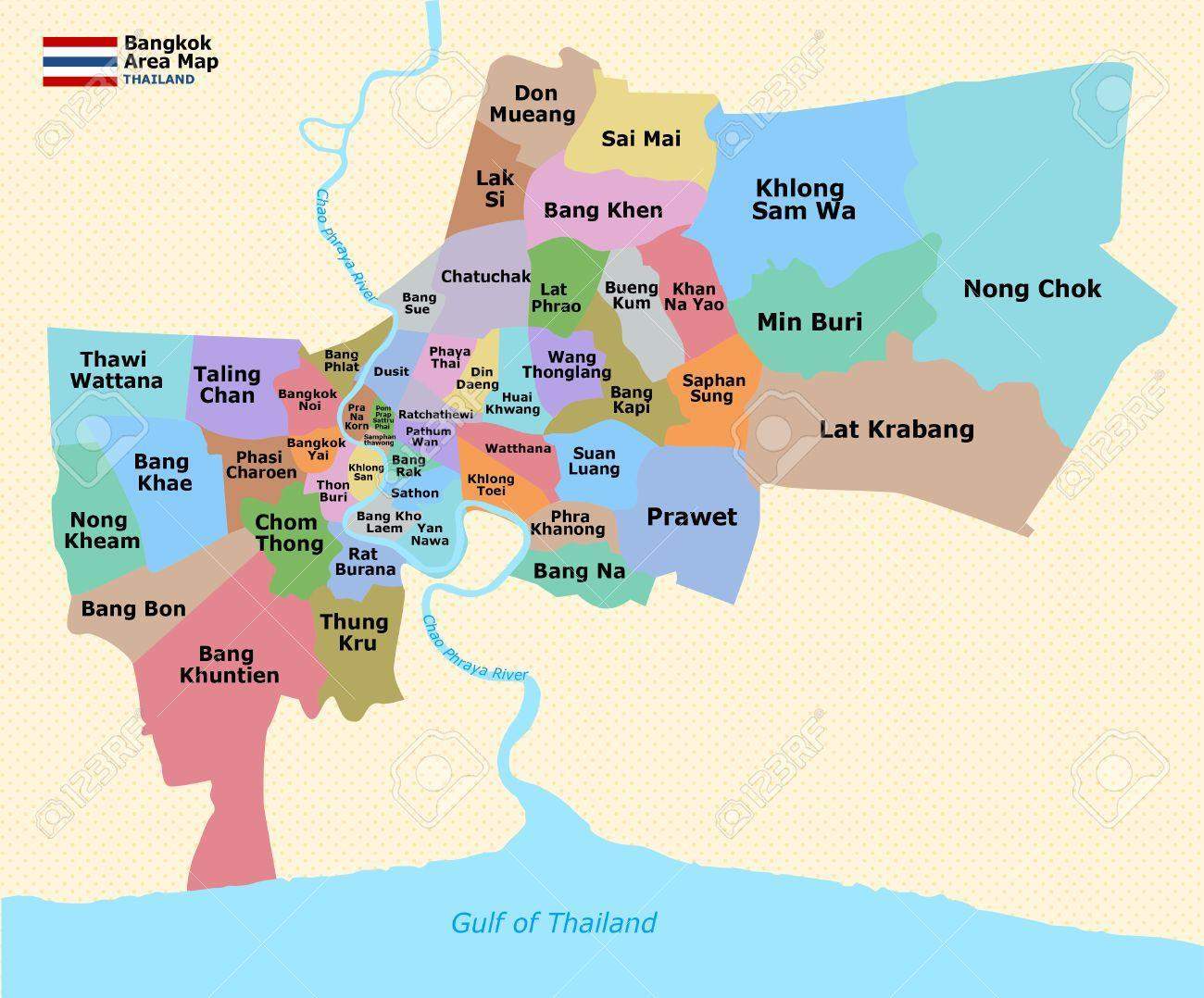
As local media later widely reported, this crisis was a localized “rain bomb” driven by an active low-pressure system severe thunderstorm directly over Bangkok. Unlike the catastrophic 2011 floods caused by massive upstream water runoff moving down from Northern Thailand, this inundation was caused by intense, concentrated rainfall right over the capital. Eastern Bangkok—farthest from the Chao Phraya River and sitting on low ground—bore the heaviest brunt of the deluge, leaving roads, homes, and vehicles underwater across multiple districts.
Meanwhile, districts along the Chao Phraya River largely escaped this initial event. Bangkok sits on a low-lying river delta originally made up of marshlands and freshwater swamp forests. The city’s basin-shaped topography means many eastern and northeastern districts sit in lower, bowl-like depressions where water naturally pools and takes longer to drain. Bangkok is functionally basin-shaped because it occupies a massive, low-lying alluvial depression at the southern terminal end of the Chao Phraya River Basin. Spreading across 1,568 square kilometers, the terrain forms a flat “saucer” or delta bowl that sits at an average elevation of just 1 to 1.5 meters above sea level. While the entire city is low-lying, its elevation is uneven: some peripheral, historic, and northern zones are slightly higher, while certain central and eastern districts act as localized structural depressions. This means water draining from the northern plains pools inside the metropolitan “bowl” on its way south toward the Gulf of Thailand.
Thailand’s engineering systems—centered on the khlong (canal) networks and water gates—form a complex, historic, and continuously adapted hydraulic infrastructure designed to manage seasonal monsoons, low elevation, and tidal flows in the Chao Phraya River delta. Water moves through the city via the main river channel and local canals to empty into the Gulf of Thailand, but high sea tides can slow this drainage and temporarily raise river levels.
Compounding this is severe land subsidence—Bangkok sinks roughly 1 to 2 centimeters per year under the weight of urban development—and the fact that the city rests on a thick layer of soft “Bangkok Clay.” When high tides hit, river drainage stalls; if a “rain bomb” strikes simultaneously, local pumping systems quickly become overwhelmed.
Why the Inner City Stays Drier
- Deep Drainage Tunnels: Massive underground drainage megaprojects act like high-speed expressways to divert heavy rainwater directly toward the Chao Phraya River or the sea before it can pool in the commercial core.
- Priority Pumping Stations: Critical economic and government zones receive prioritized, high-capacity mechanical pumping to quickly lift and discharge accumulated water.
- Better Maintenance & Higher Elevation Profiles: Parts of the inner city (such as Pathum Wan, Sathorn, Silom, and central Sukhumvit) are historically better protected by surrounding embankments, floodwalls, and river dikes alongside the Chao Phraya River.
Why Outer Districts Still Flood
- The “Plumbing” Bottleneck: While the big underground tunnels work well in the center, water from outer residential or eastern districts (like Bang Kapi, Min Buri, or Don Mueang) relies on smaller, clogged, or slower local canals (khlongs) to reach the main on-ramps.
- Basin Topography: Many suburban areas sit on lower ground or act like natural bowls where heavy rainfall accumulates faster than gravity and local pumps can clear it.
🌧️ The Gathering Storm (Thursday – Friday)
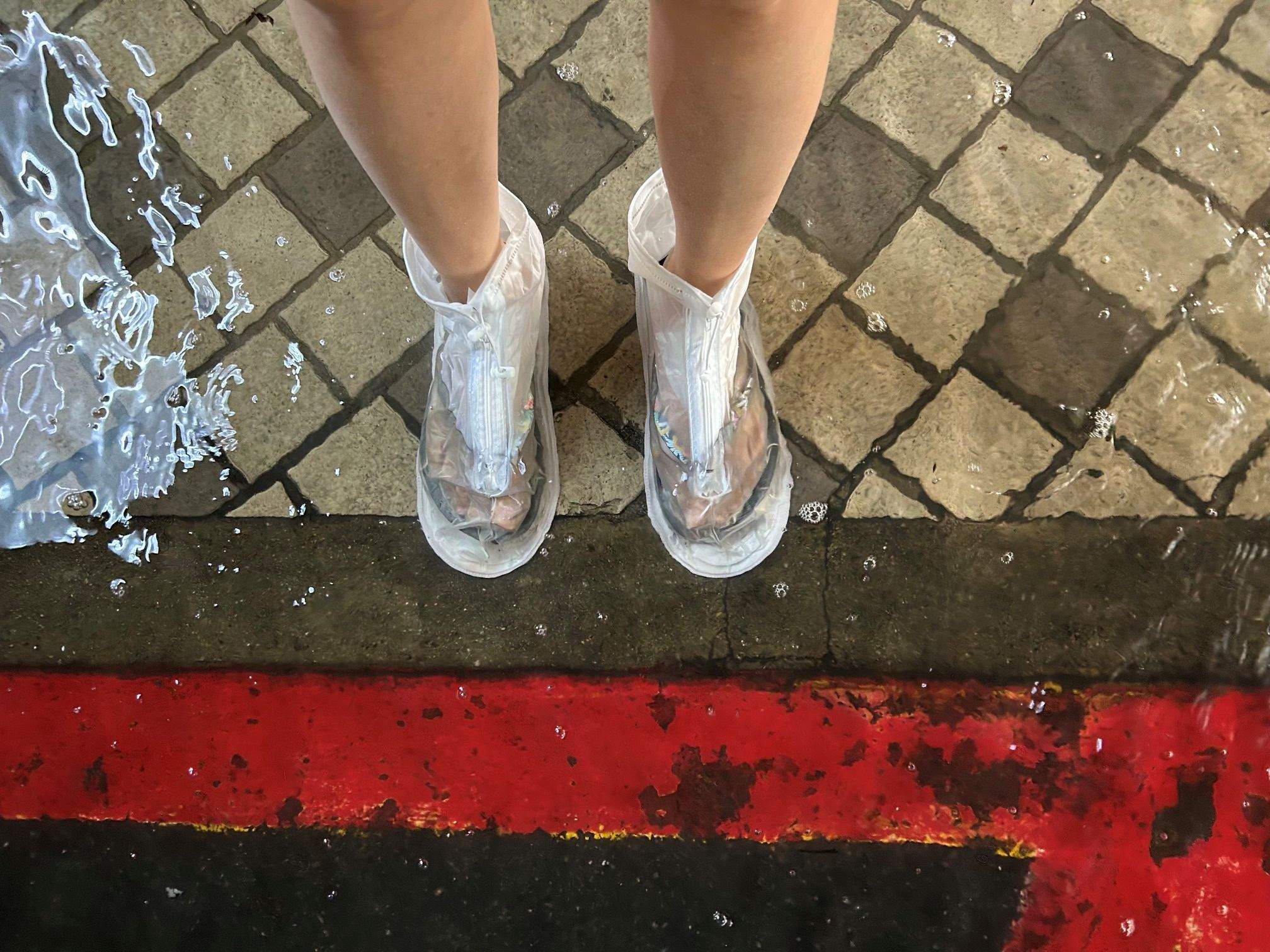
It had been raining heavily since Thursday, September 24. Knowing how easily Bangkok streets hold water, I packed my rain shoe covers when we headed out on Friday. Call it intuition or a sixth sense, but my husband could tell I was uncomfortable when I voiced my concerns about potential flooding. Something felt off with the sheer, non-stop intensity of the downpour—though I never imagined it would turn out this serious!
Despite the heavy rain on Friday evening, we got our errands done in town, enjoyed dinner out, returned the books at TK Park (thank goodness, avoiding any overdue penalties!), took the MRT back, and walked home to our condo on dry land under our umbrellas.
Struggling with insomnia lately, I was still awake at 5:00 AM on Saturday morning listening to the persistent rainfall. The alley next to our building still looked clear, so I finally drifted off to sleep—completely unaware of the sudden flash flooding about to hit our street.
🌊 Waking Up to the Flood (Saturday Morning)
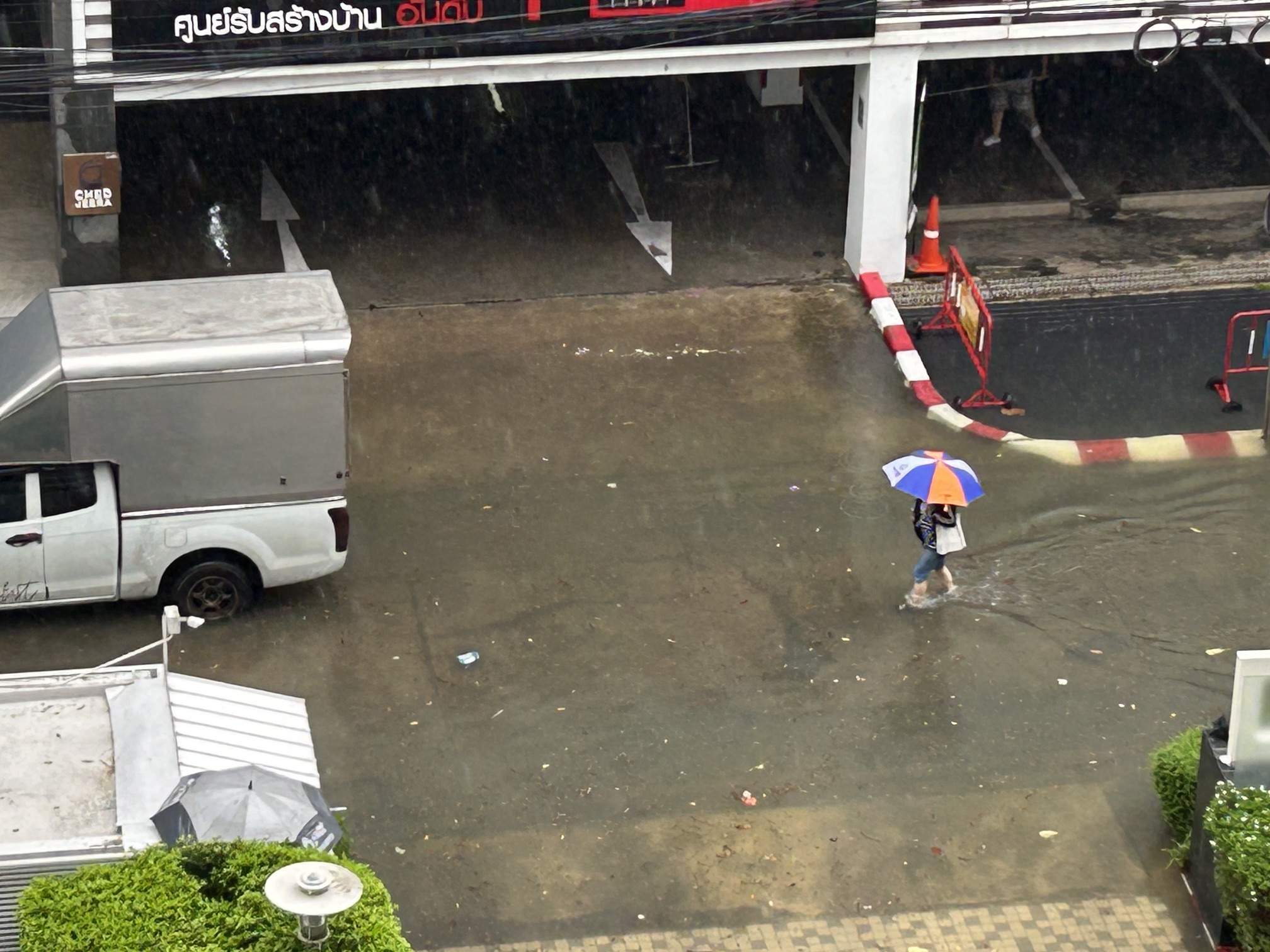
By 8:30 AM, I woke up to find the alley entirely under water, though it was only ankle-deep. Still unaware of how widespread the flooding was across the district, I quickly placed an order on a delivery app for sourdough, pastries, and some groceries for emergency backup.
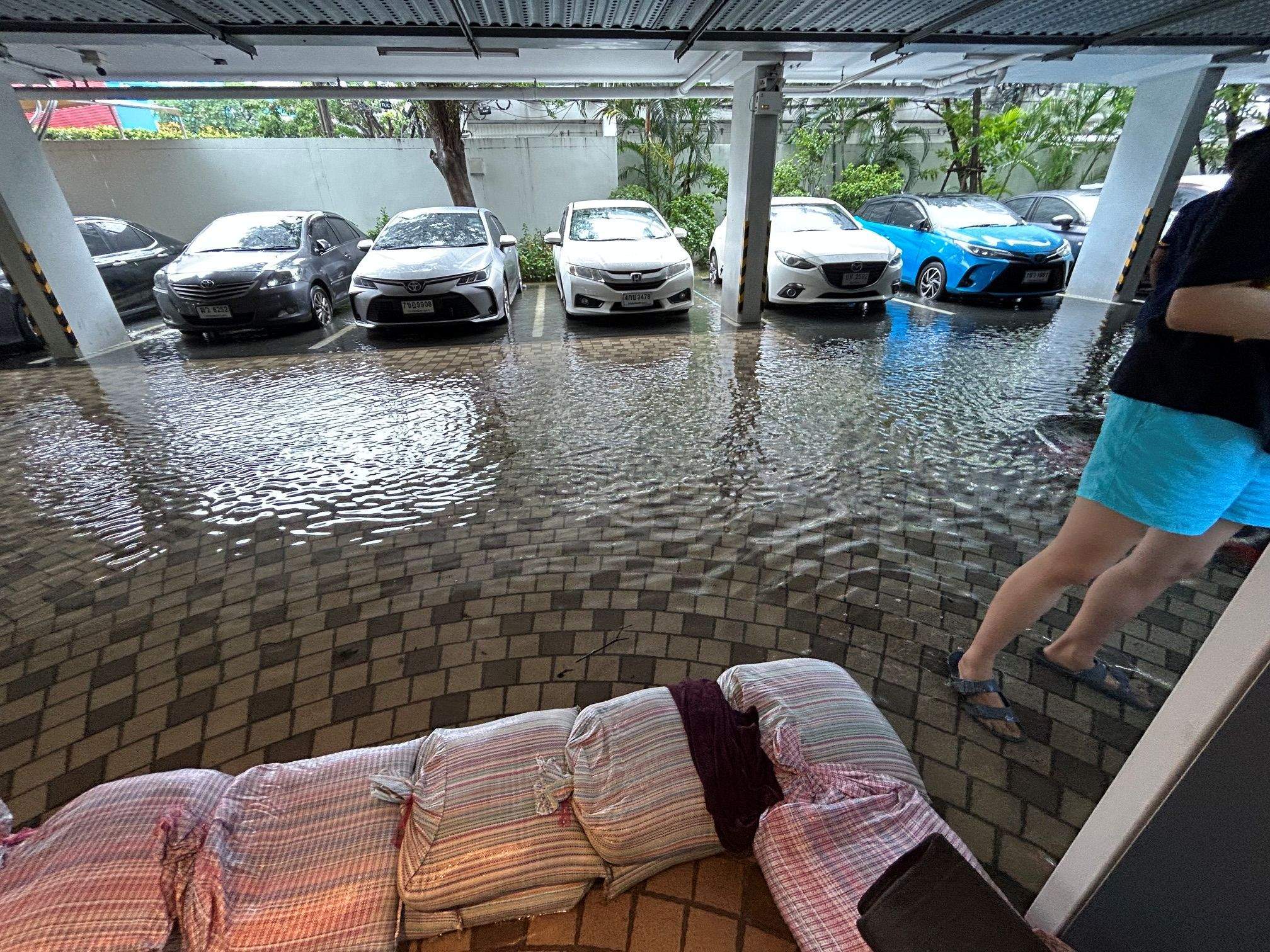
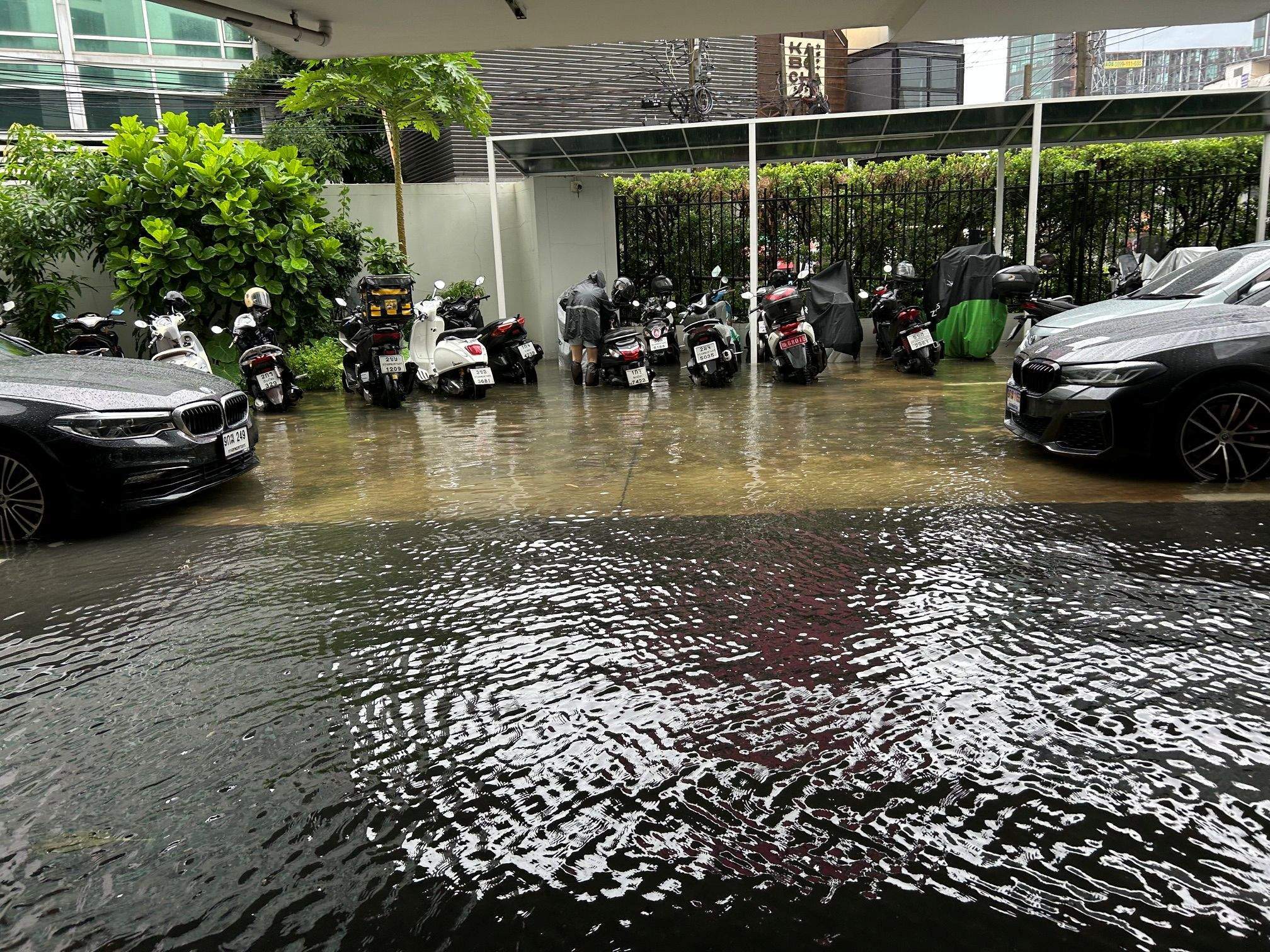
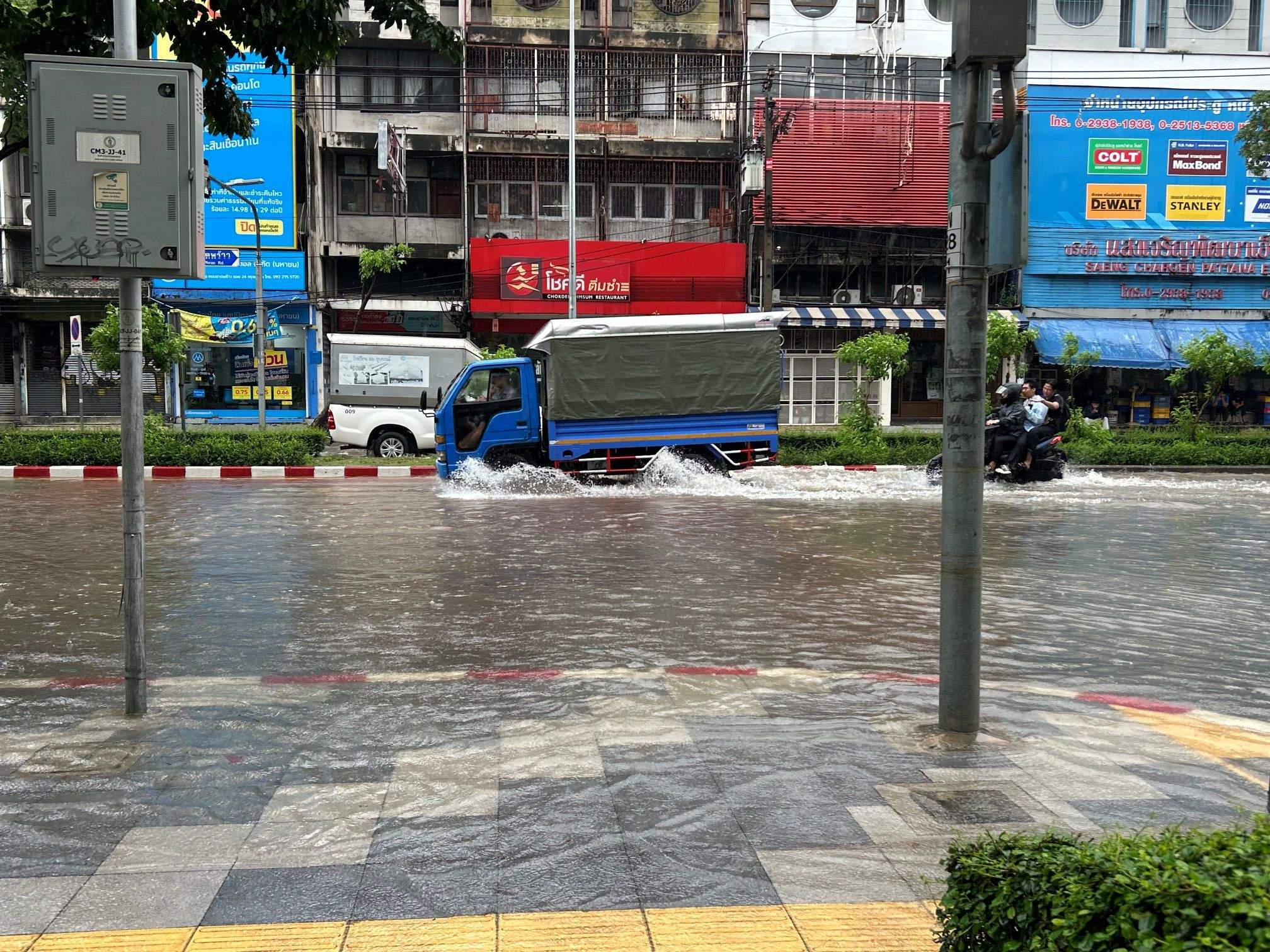
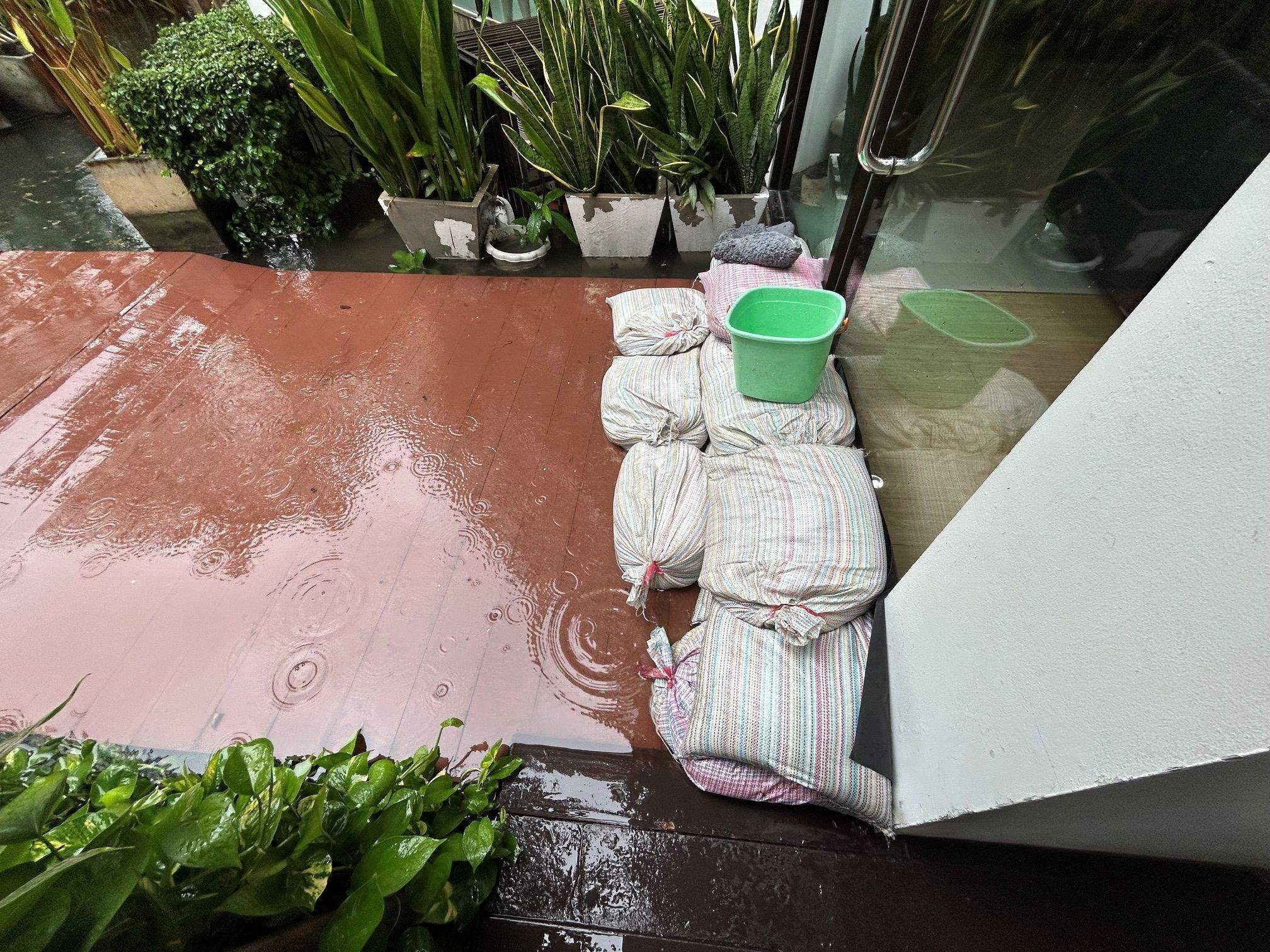
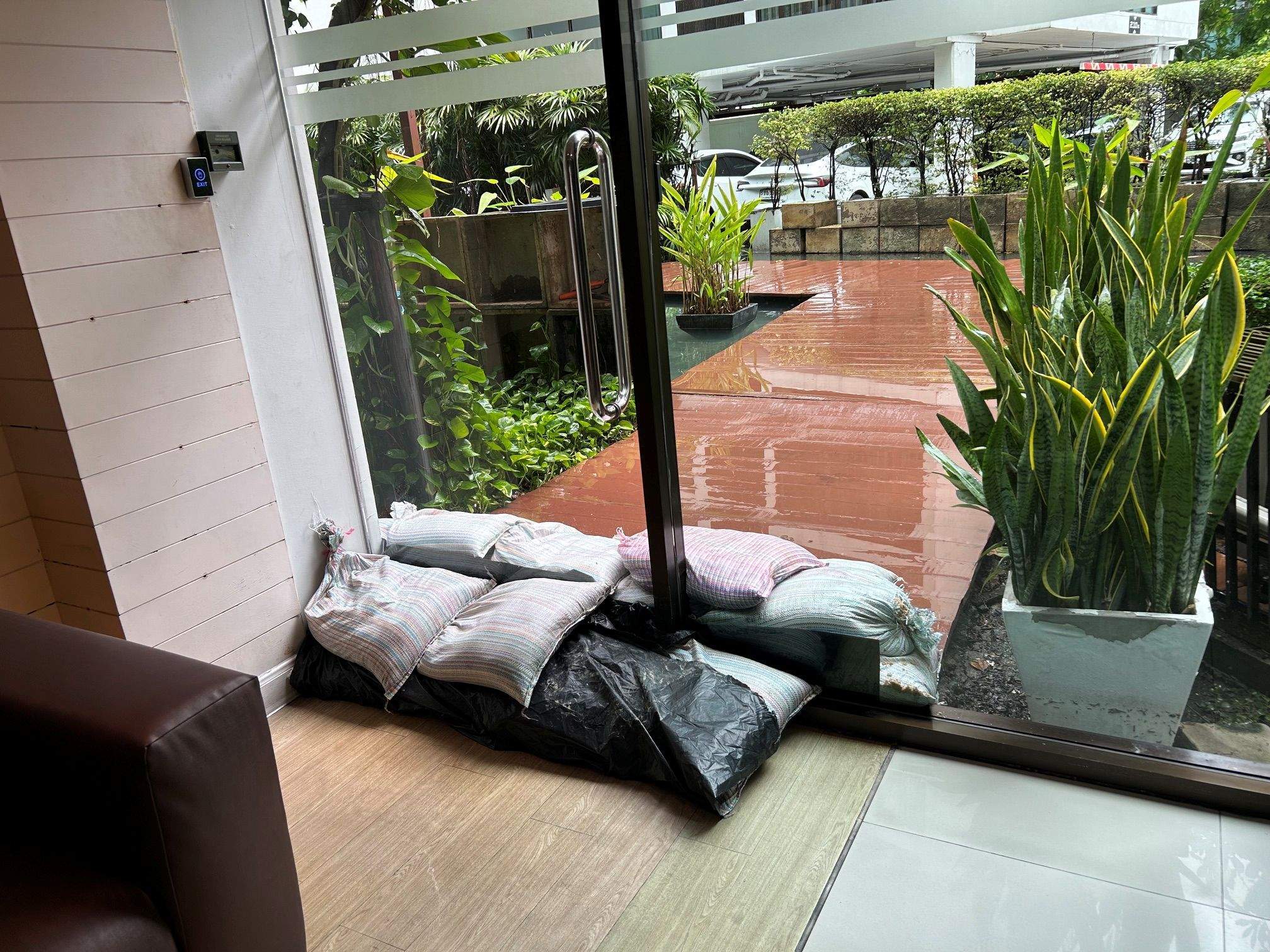
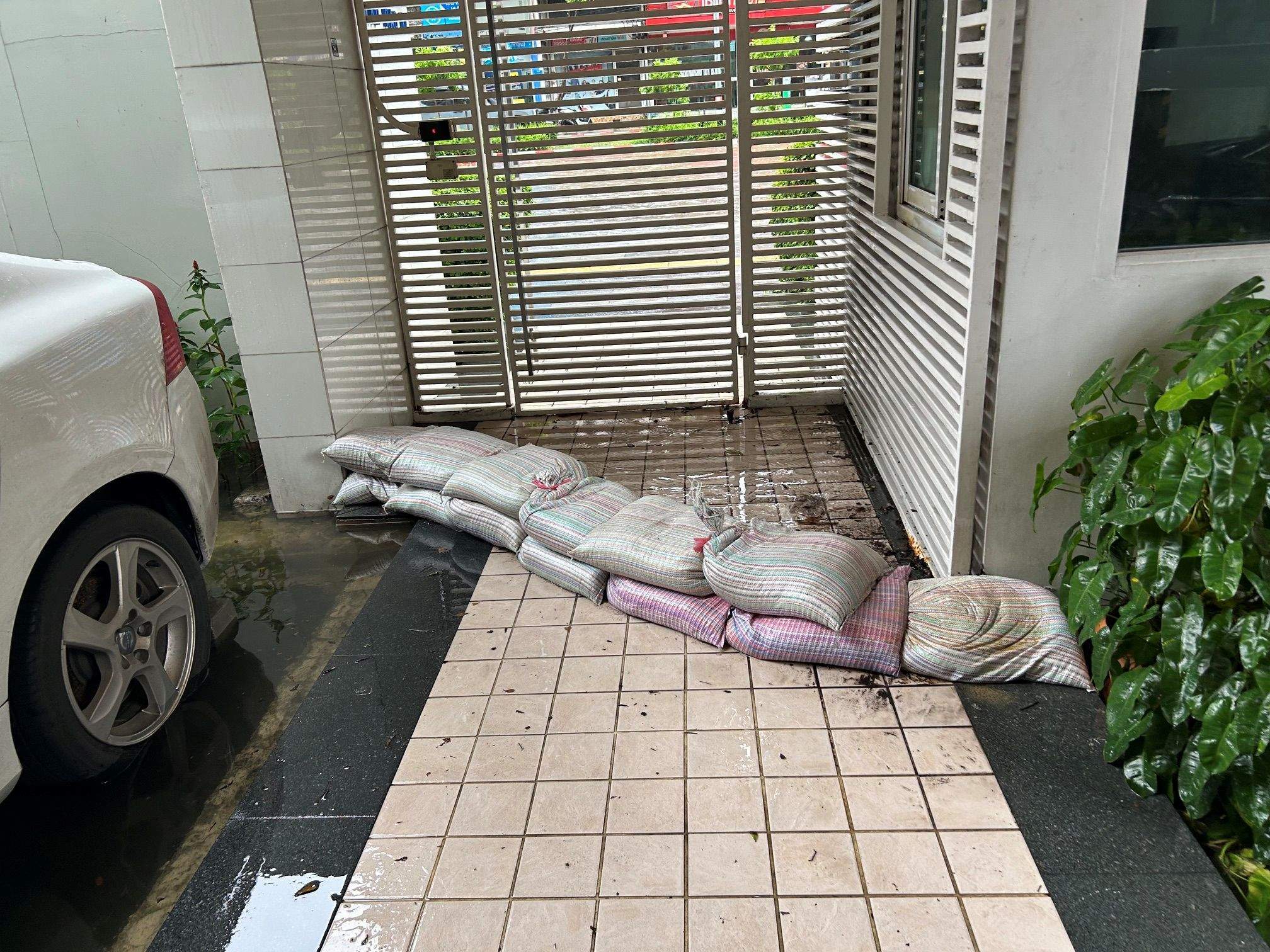
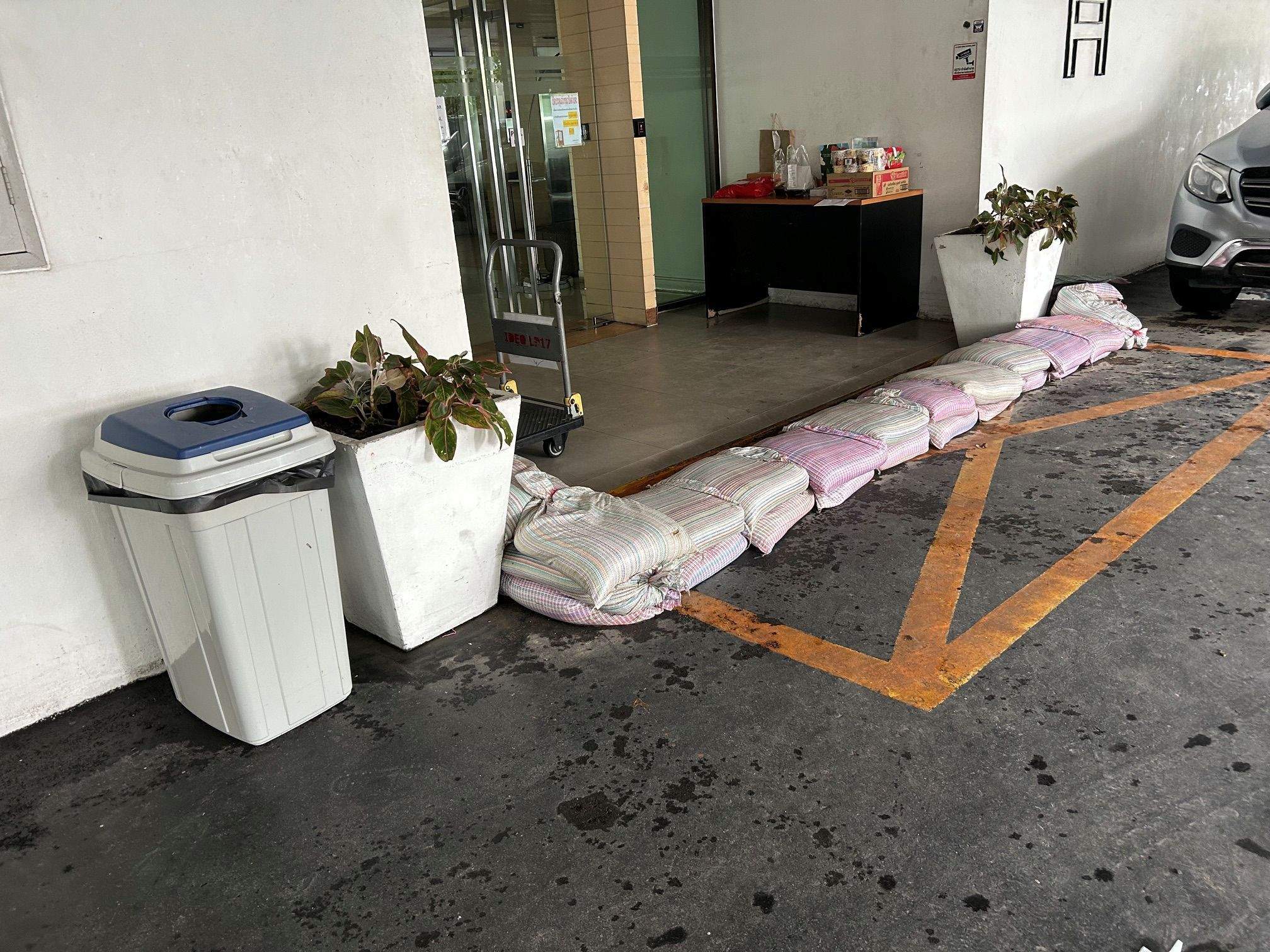
It was only when I walked down to the lobby and saw staff scrambling to stack sandbags, with water pooling in areas of our ground floor—and then walked out toward the main road to see the true water levels—that reality set in. I felt terrible for requesting a delivery rider during a localized disaster and tried to cancel, but the app wouldn’t allow cancellations at that stage. My sincere apologies go out to the shops for creating extra work during such a hectic time.
I hurried back upstairs to report the situation to my husband. Working on his laptop in the bedroom, he remained remarkably calm. Having lived through multiple Bangkok floods, he knew high-rise condo living keeps you safe (aside from ground-level vehicles). By the time free emergency parking announcements were made by shopping malls and the Mass Rapid Transit Authority (MRTA), moving our car to higher ground—like the nearby Park & Ride building—was no longer an option as surrounding roads were already impassable.
Down in the lobby, condo staff worked tirelessly stacking sandbags at the building lobby and pedestrian entrances. However, the open-air ground-level parking lot couldn’t be sealed, allowing floodwater to trickle into the compound. Fortunately, our car is an older model; older car engines are often mounted higher in the engine bay compared to modern, lower-slung vehicles. My husband noted that worst-case scenario, water might seep into the cabin, requiring only upholstery cleaning and replacement rather than total engine replacement—something he had already experienced years ago.
The Department of Disaster Prevention and Mitigation (DDPM) in Thailand actively broadcasts flood emergency messages to mobile phones through their Cell Broadcast System and the T-Alert / SMS Alert system. Following major downpours that trigger severe urban flooding and canal overflows, these safety blasts are strictly pushed geographically to affected regions. The delayed emergency flash flood warning issued by the Thai Meteorological Department (TMD) around 1:29 AM on September 26 sparked significant public frustration because it arrived after severe flooding had already taken hold. I also received the message in Thai, whereas previous alerts had arrived in English.
🏢 Condo Life & Pantry Preparedness
Having lived through supply chain disruptions during COVID-19, combined with seeing frequent natural disasters both in Thailand and worldwide, I’ve now become a habitual pantry-stocker. Nothing excessive for our small space—just a few extra cans of tuna, dried goods, and spare cooking oil. While nearby residents waded through floodwaters leaving local supermarket shelves bare, we felt no panic:
- Home Cooking Advantage: While many condo residents rely daily on takeout or food delivery, we regularly cook at home and had plenty of ingredients stored away, both fresh and dry.
- Thoughtful Consumption: Our condo’s 7-Eleven vending machine still had bologna ham on Saturday morning, but knowing our pantry was stocked, I intentionally left it for neighbors who needed it more.
- Domestic Logistics: Condo staff did a fantastic job managing building services, keeping the utility rooms cleared of garbage throughout the emergency. I was also relieved I had washed our beddings right before the rain hit; I even managed to dry regular laundry indoors using a standing fan.
Looking around at our organized home, I couldn’t help but smile to myself, thinking that if my husband had a different wife, our apartment might not have been in such pristine order—with zero pileup of dirty laundry and a clean, functioning kitchen throughout the entire ordeal!
🛒 Neighborhood Reconnaissance & Supply Hunts
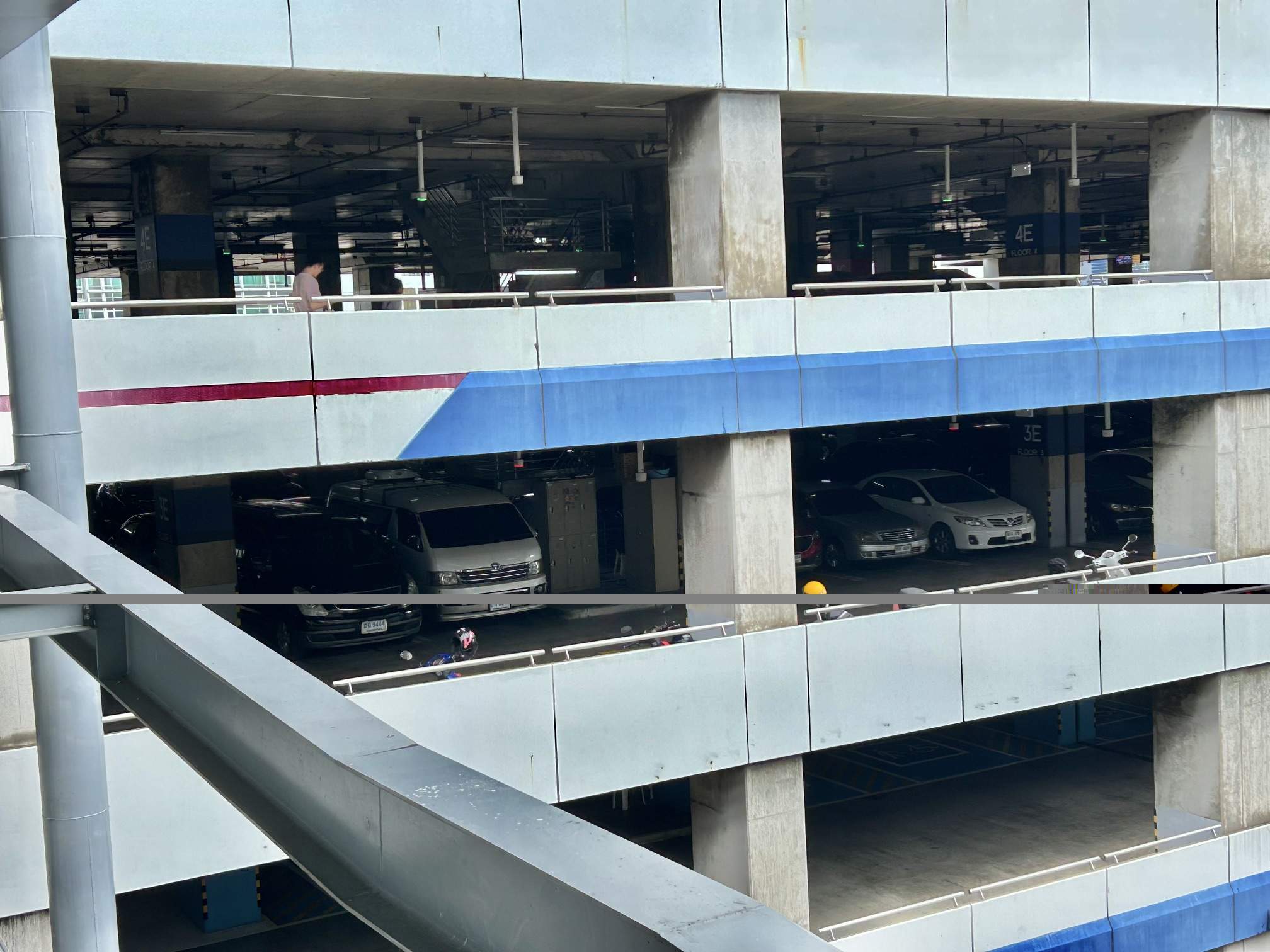
Walking around our neighborhood on Sunday morning when we headed out for groceries, we saw stranded cars lined along the roads and elevated overpasses. Interestingly, the local Park & Ride building still had plenty of vacant upper-floor spaces—a frustrating sight knowing many residents could no longer drive their flooded vehicles to reach them by the time emergency parking was announced. Normally, Bangkok MRT Park & Ride parking costs 15 Baht per 2 hours for train passengers, and 40 to 50 Baht per hour for non-users, with overnight parking strictly prohibited under standard operations.
Stock levels varied wildly across the city as establishments scrambled to replenish:
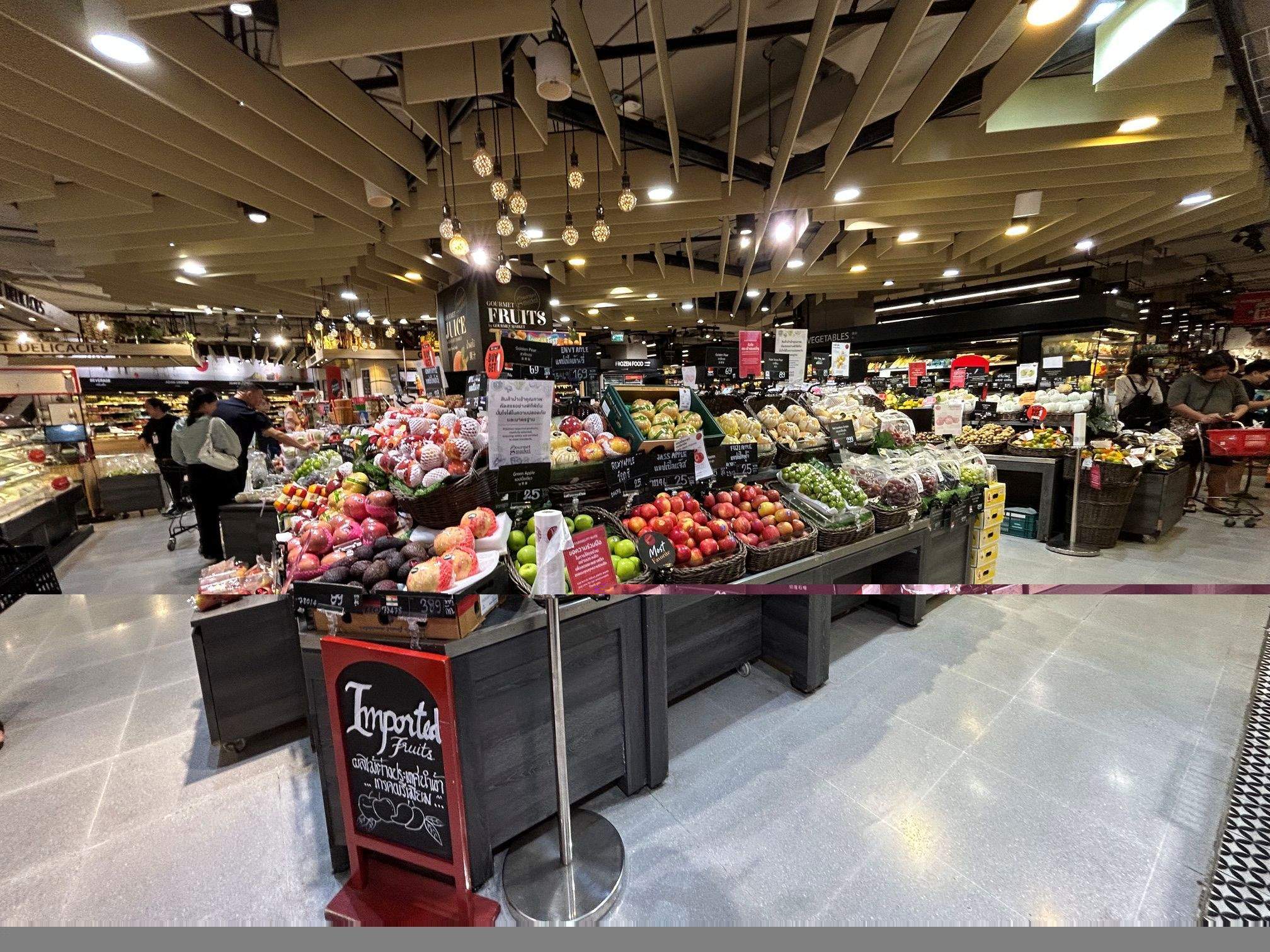
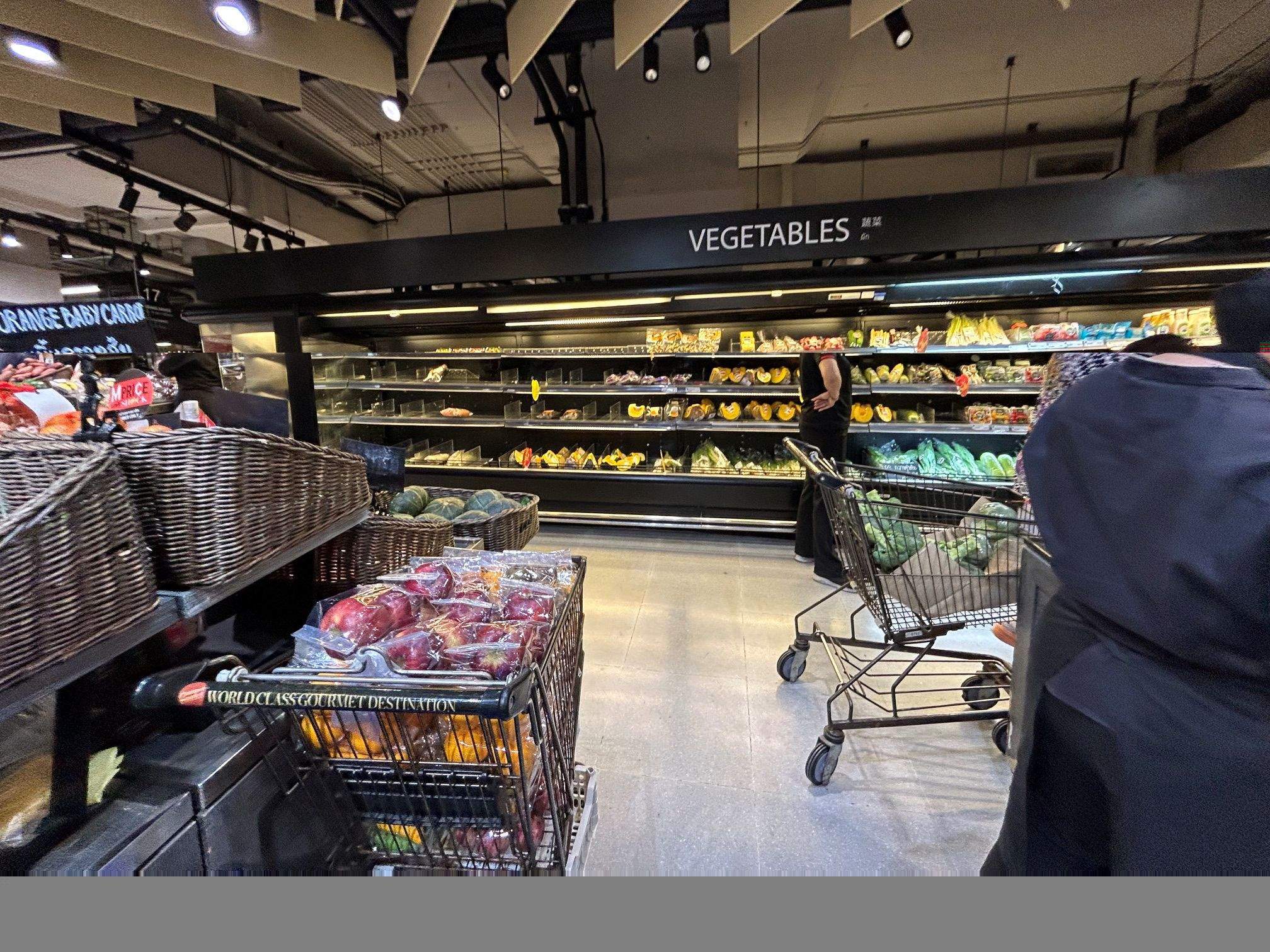
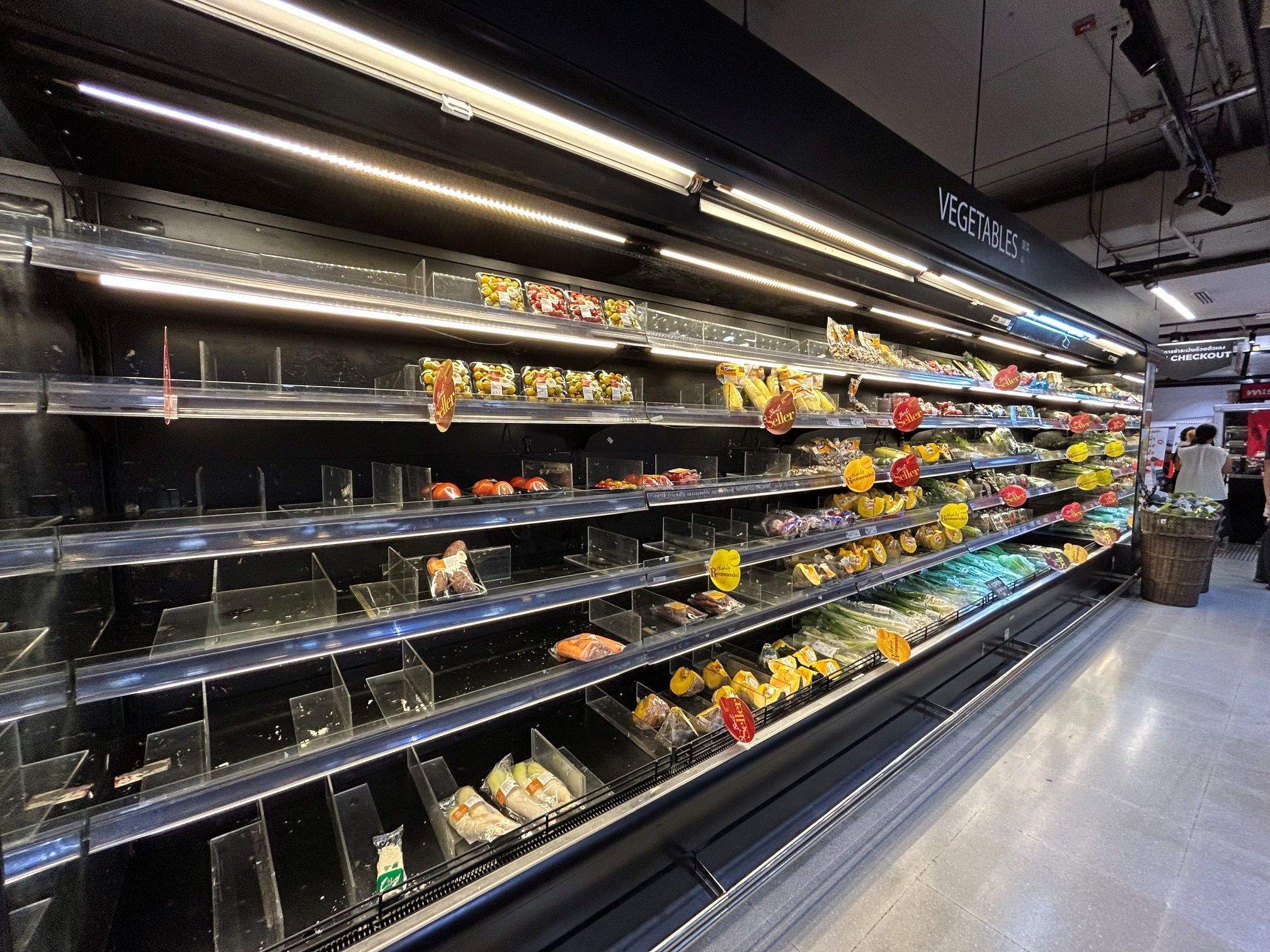
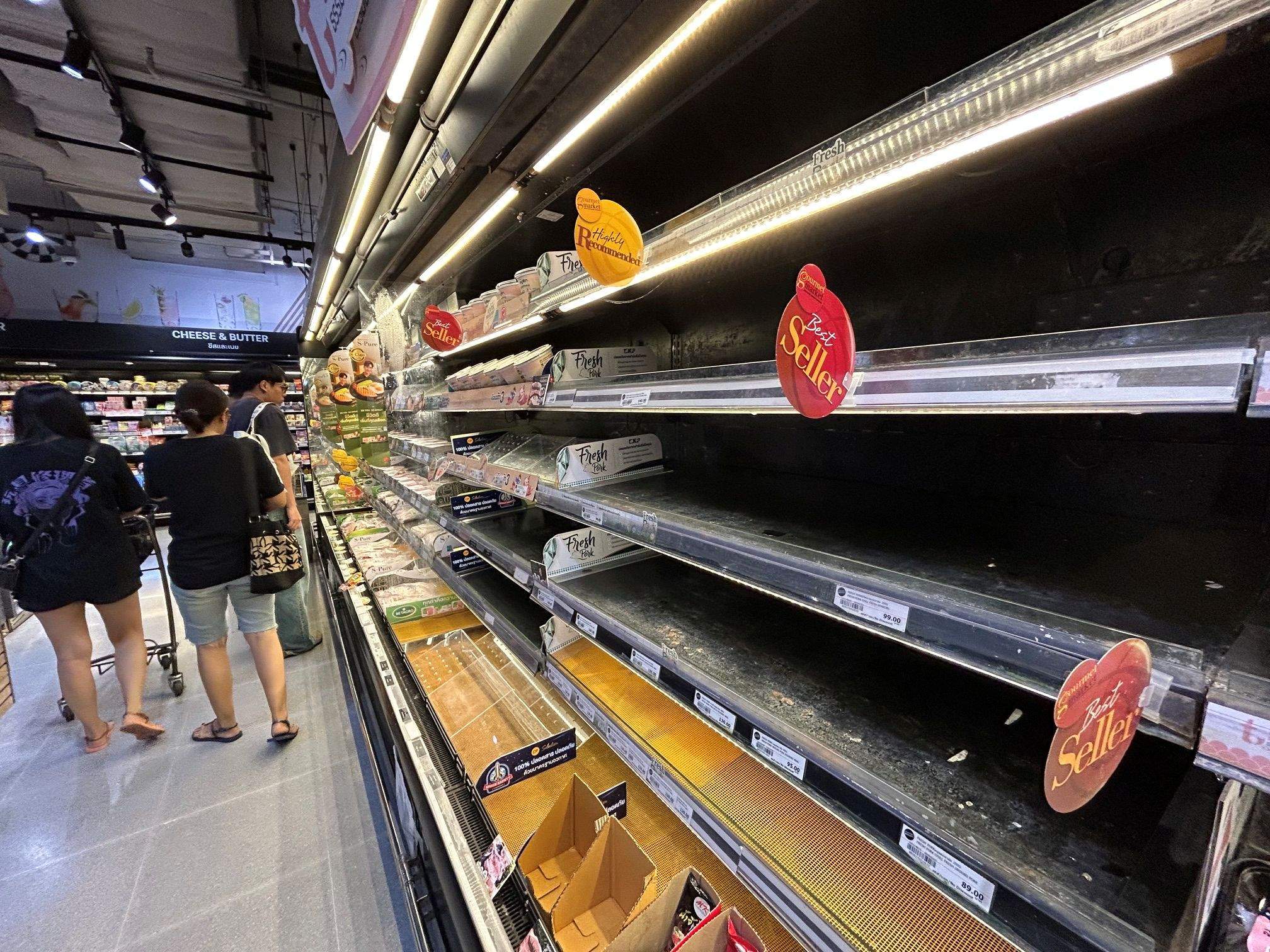
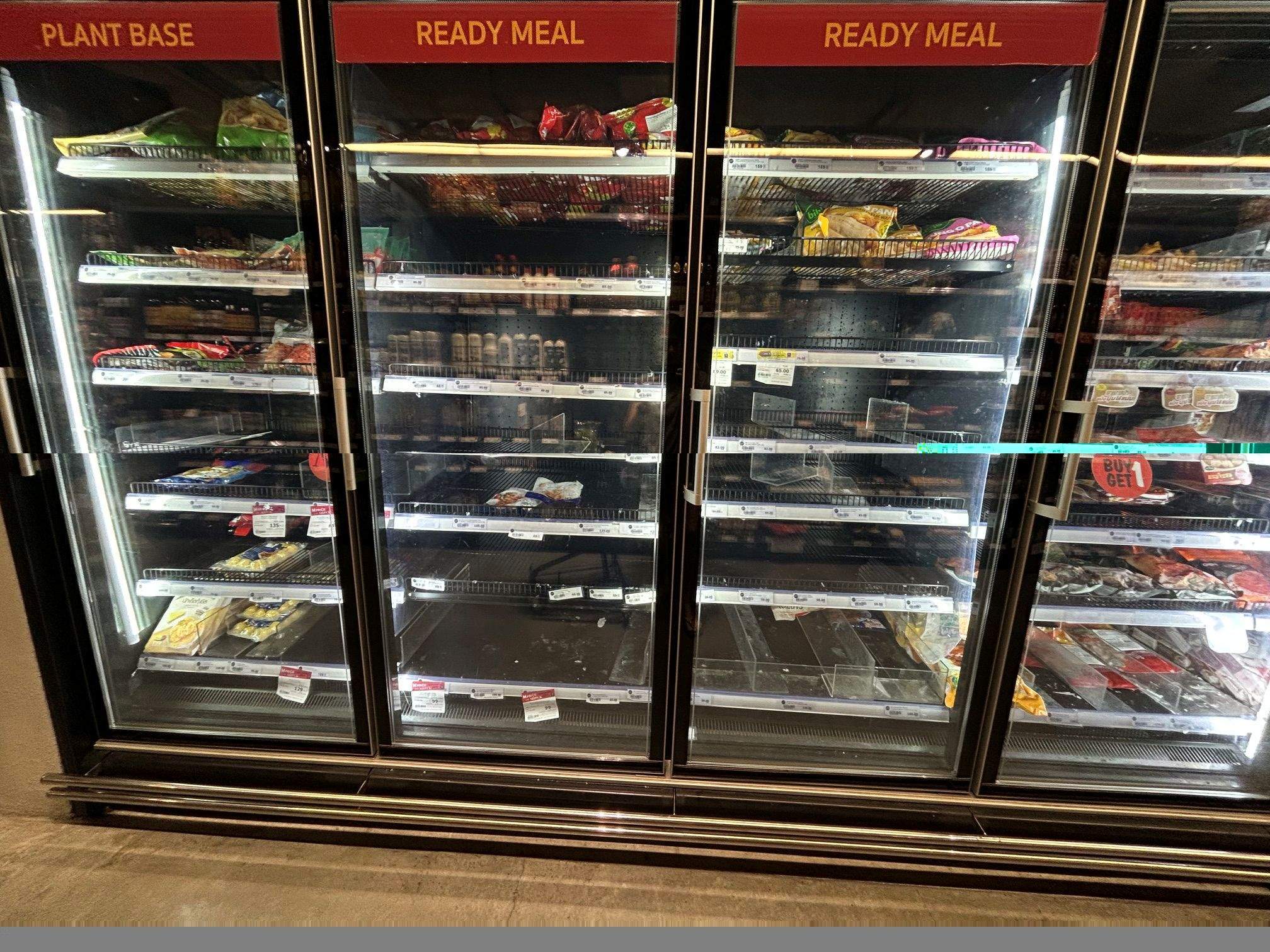
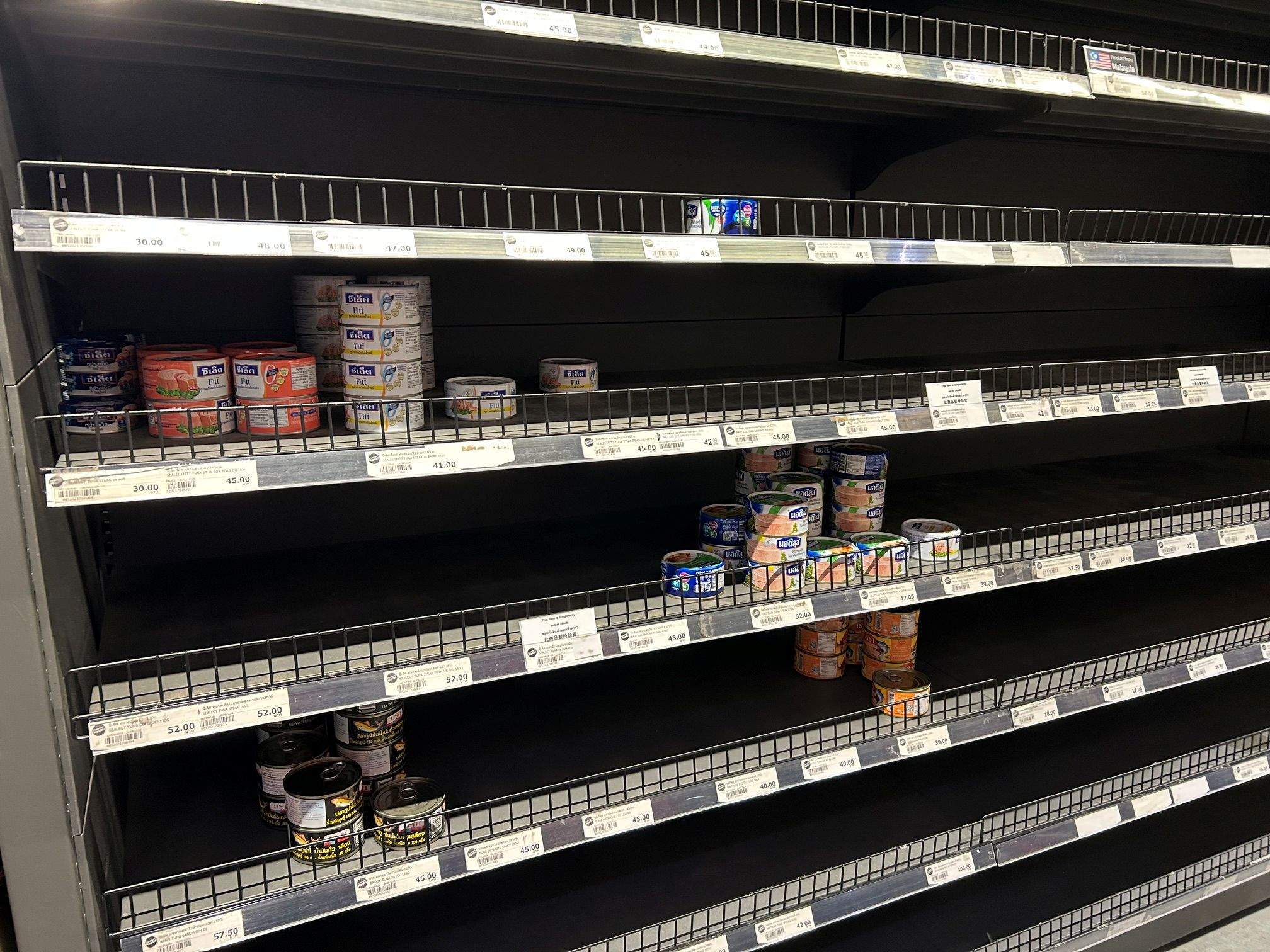
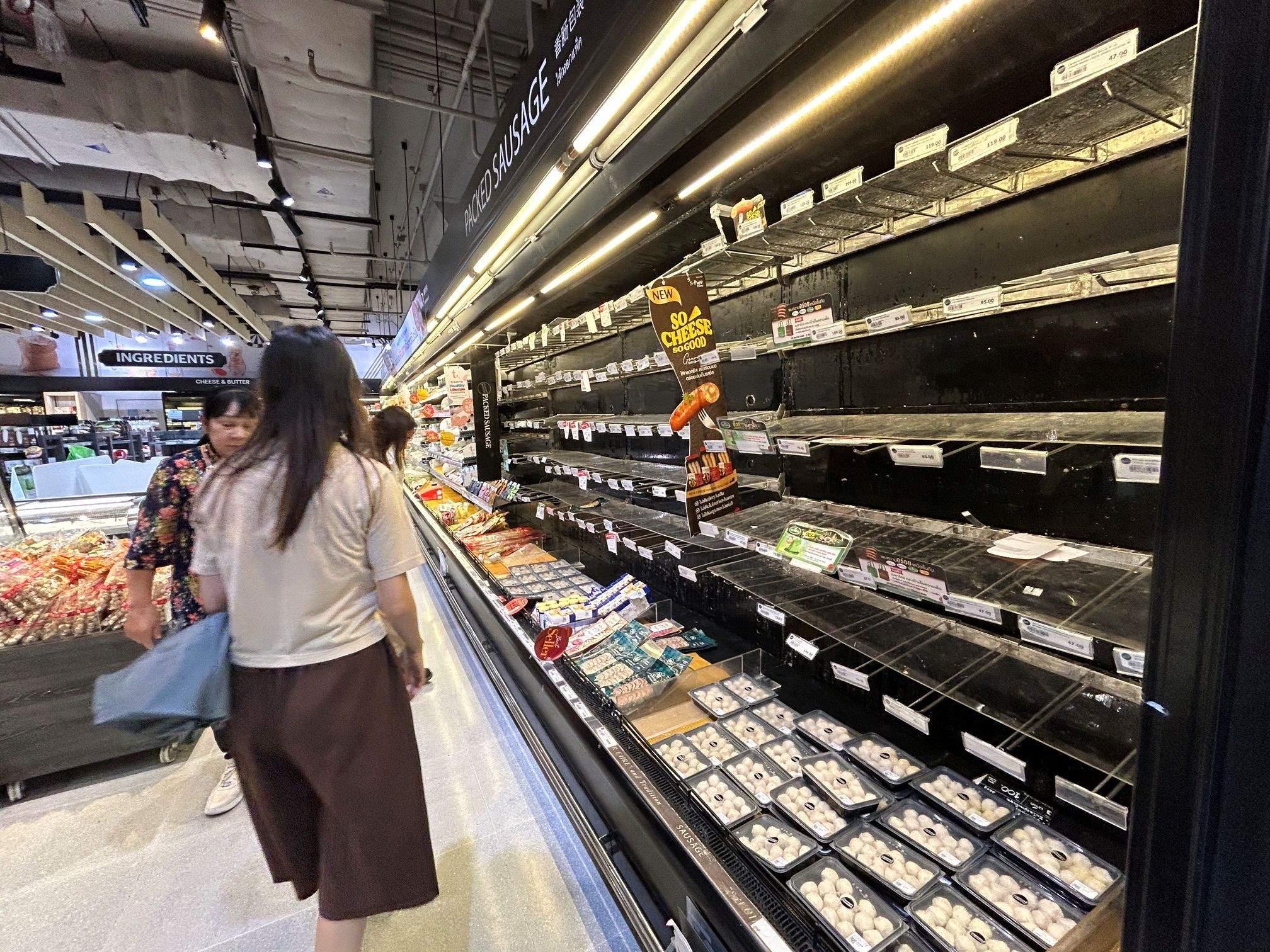
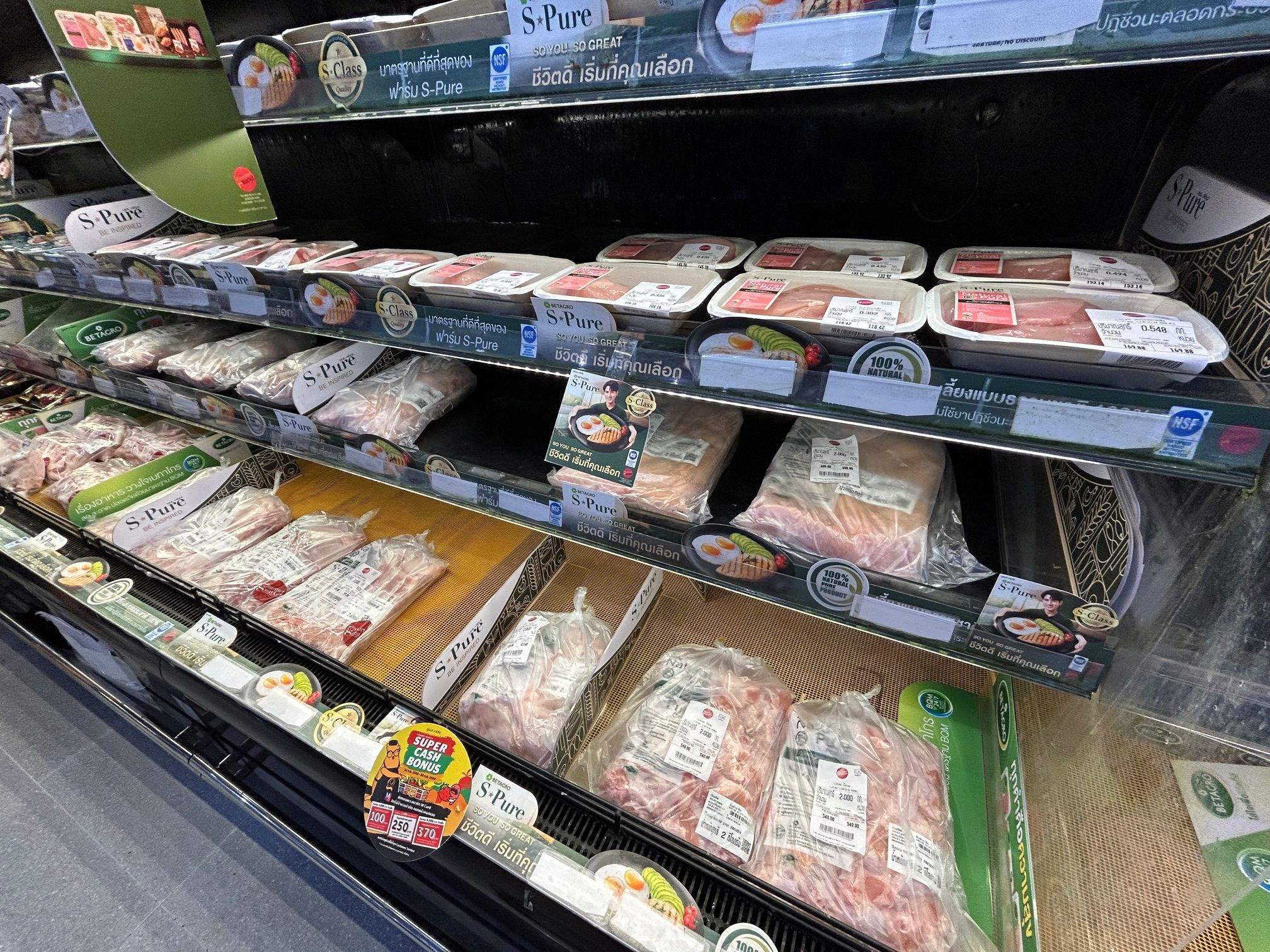
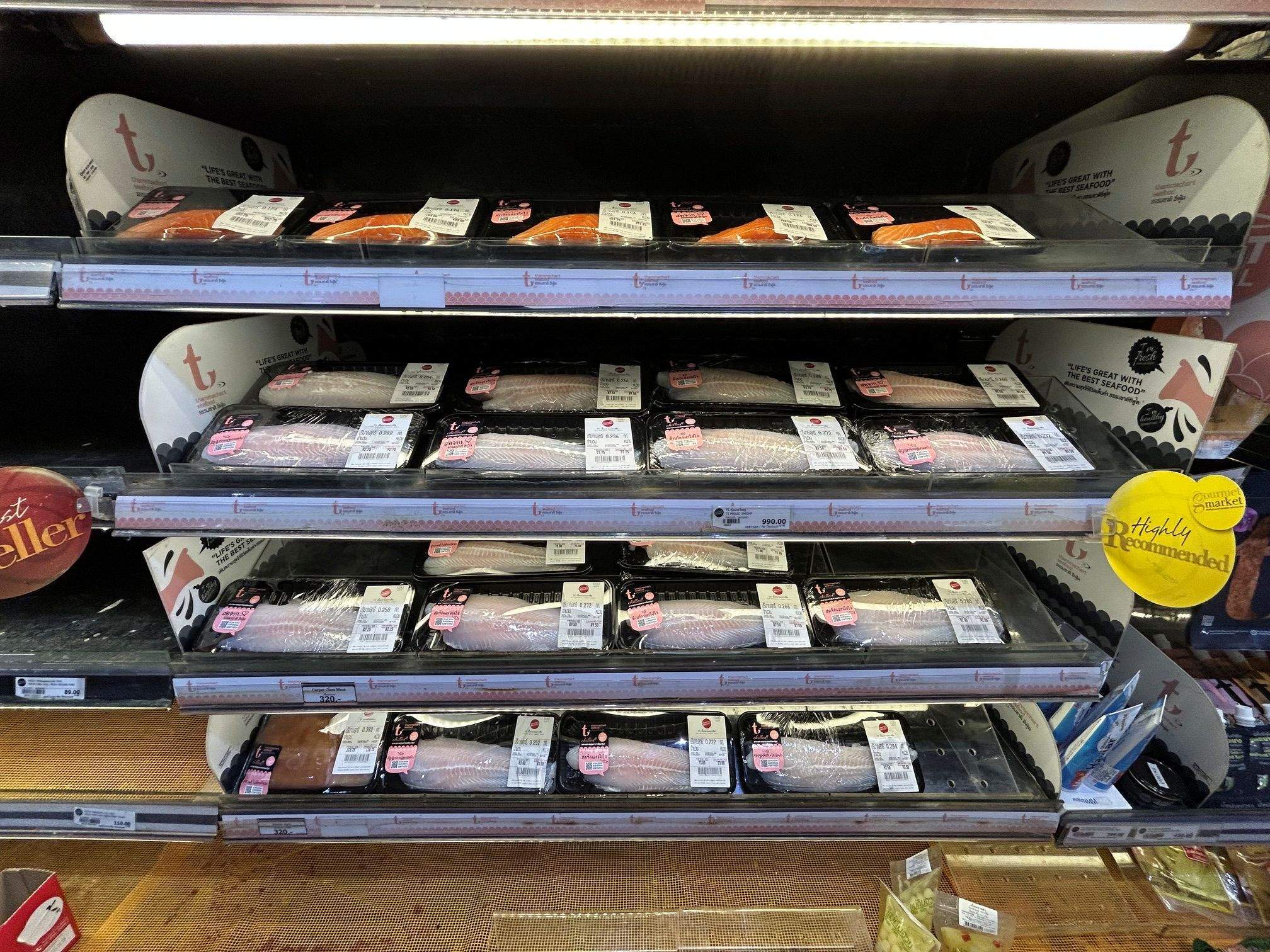
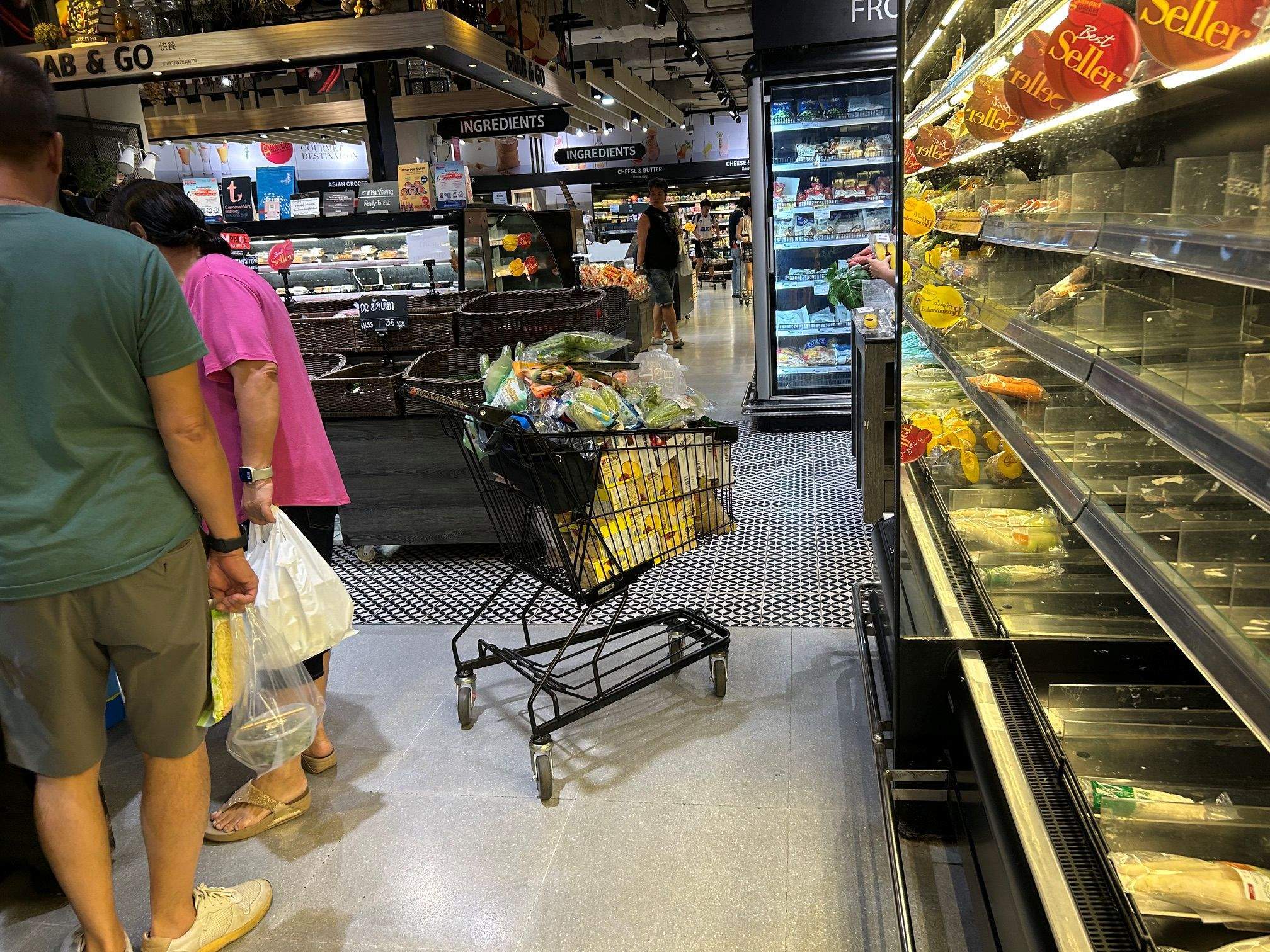
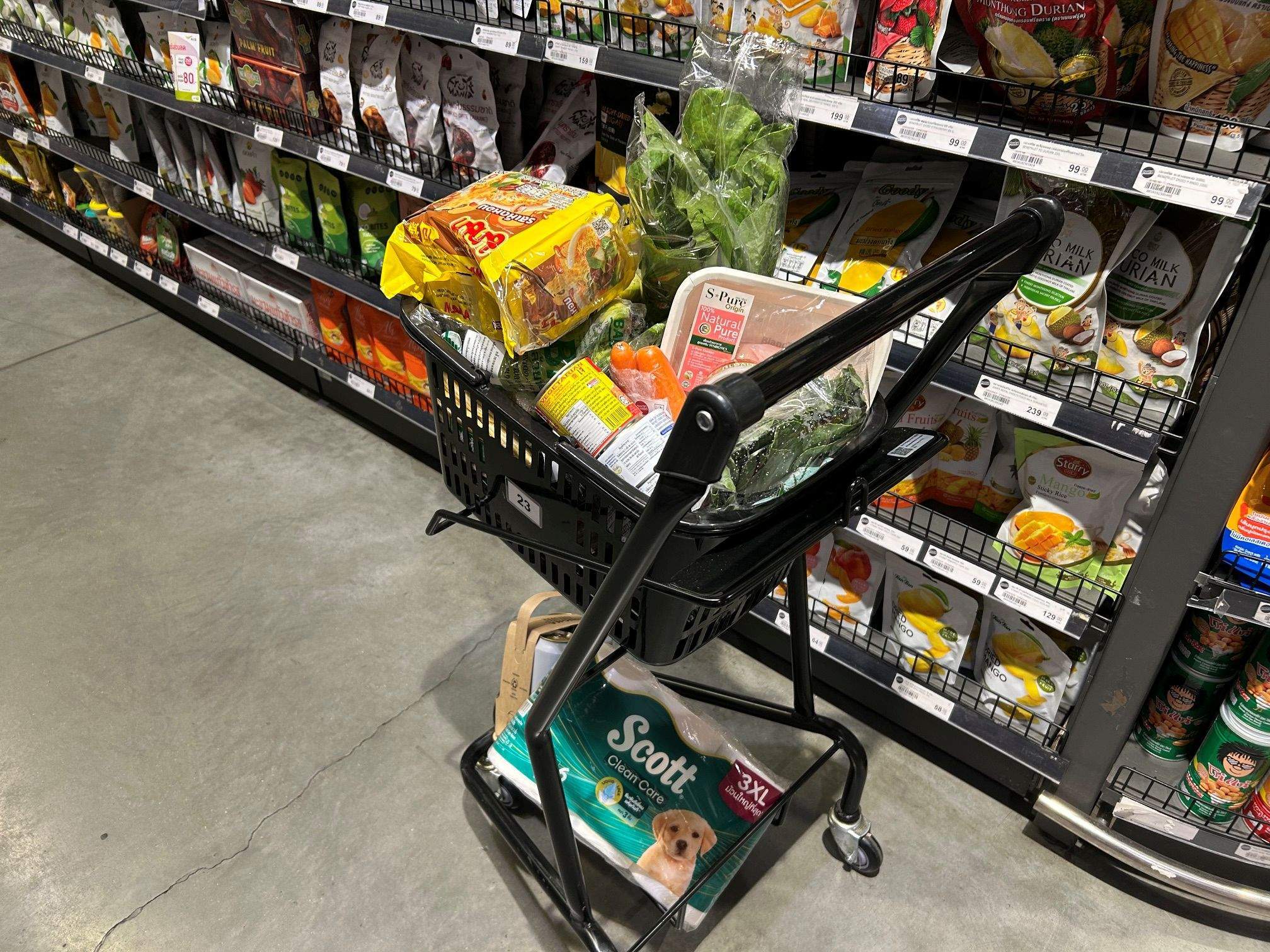
Gourmet Market: At Gourmet Market on Sunday, standard pork and deli items (bacon, ham, and hot dogs) were completely cleared out. If you weren’t picky, supplies were manageable—I picked up fresh mushrooms, chicken breast, and the last pack of tofu.
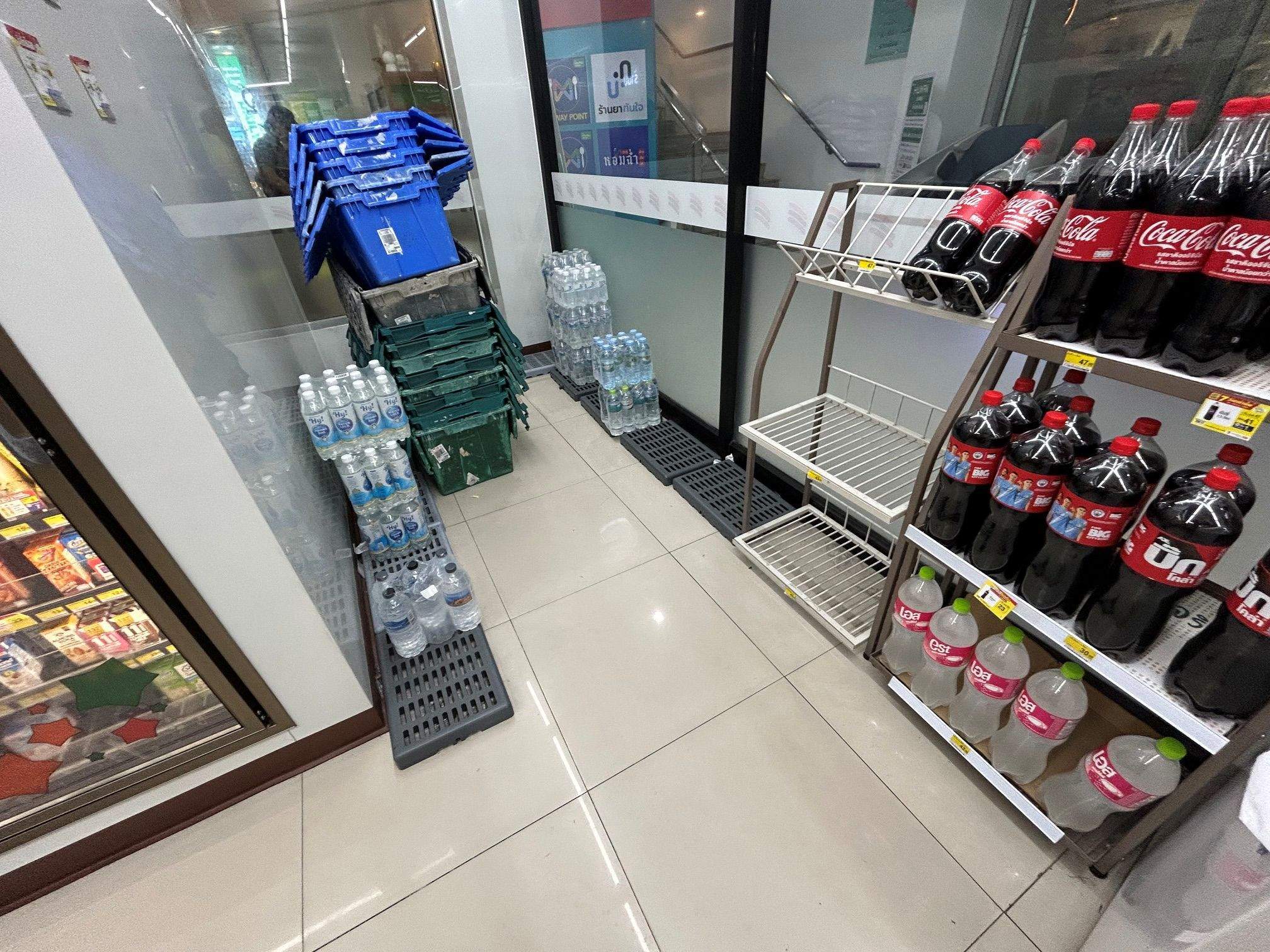
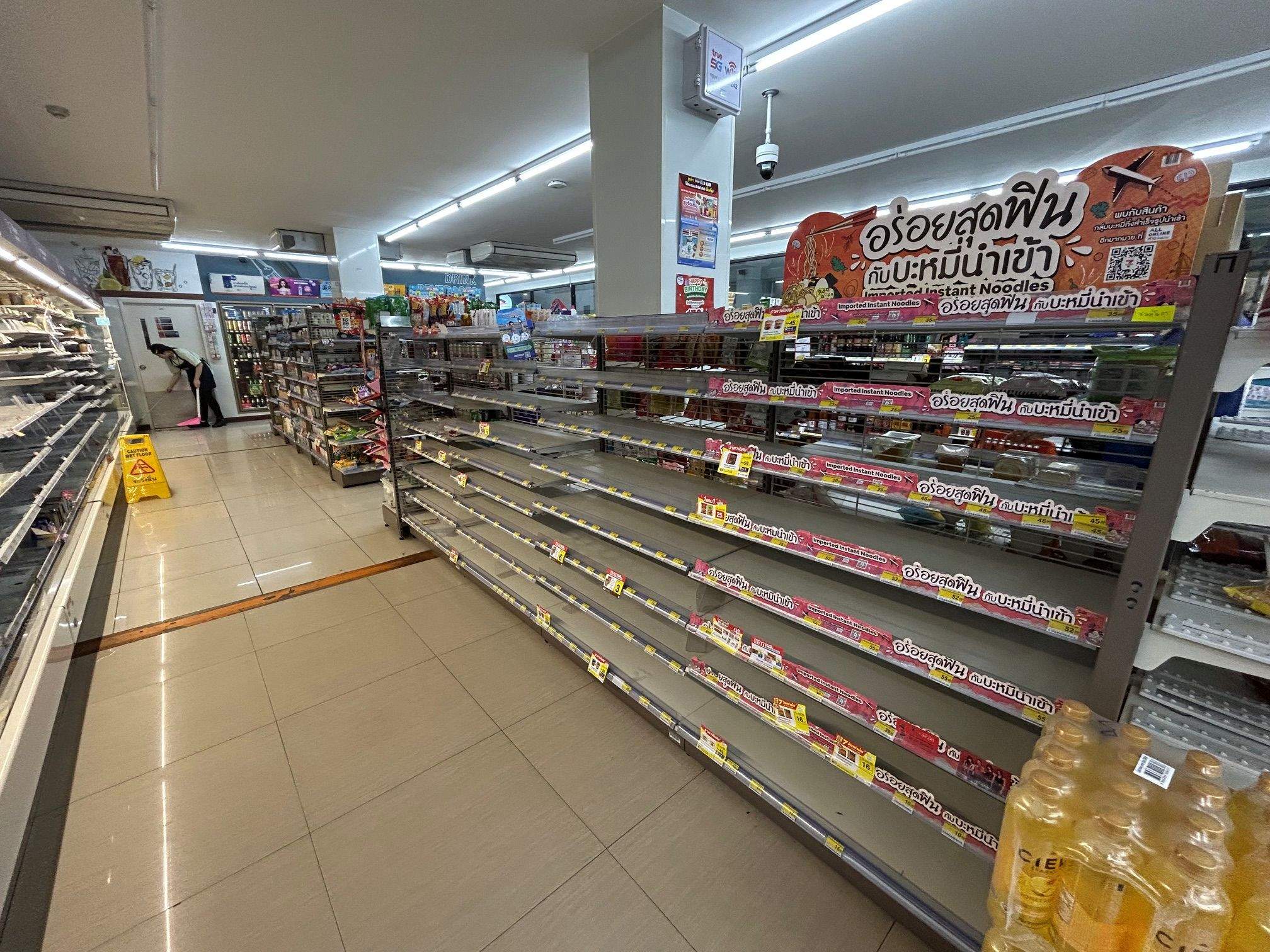
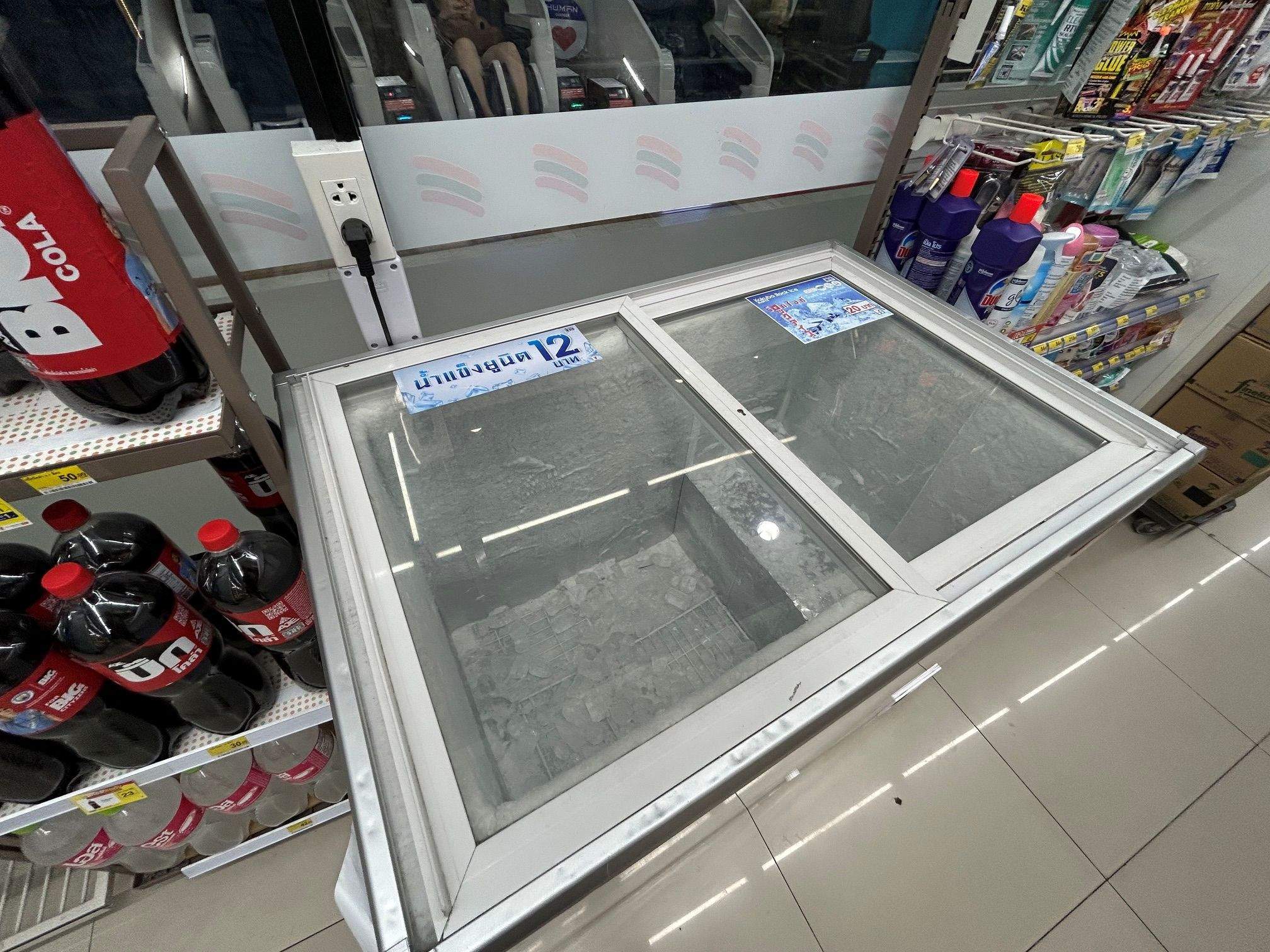
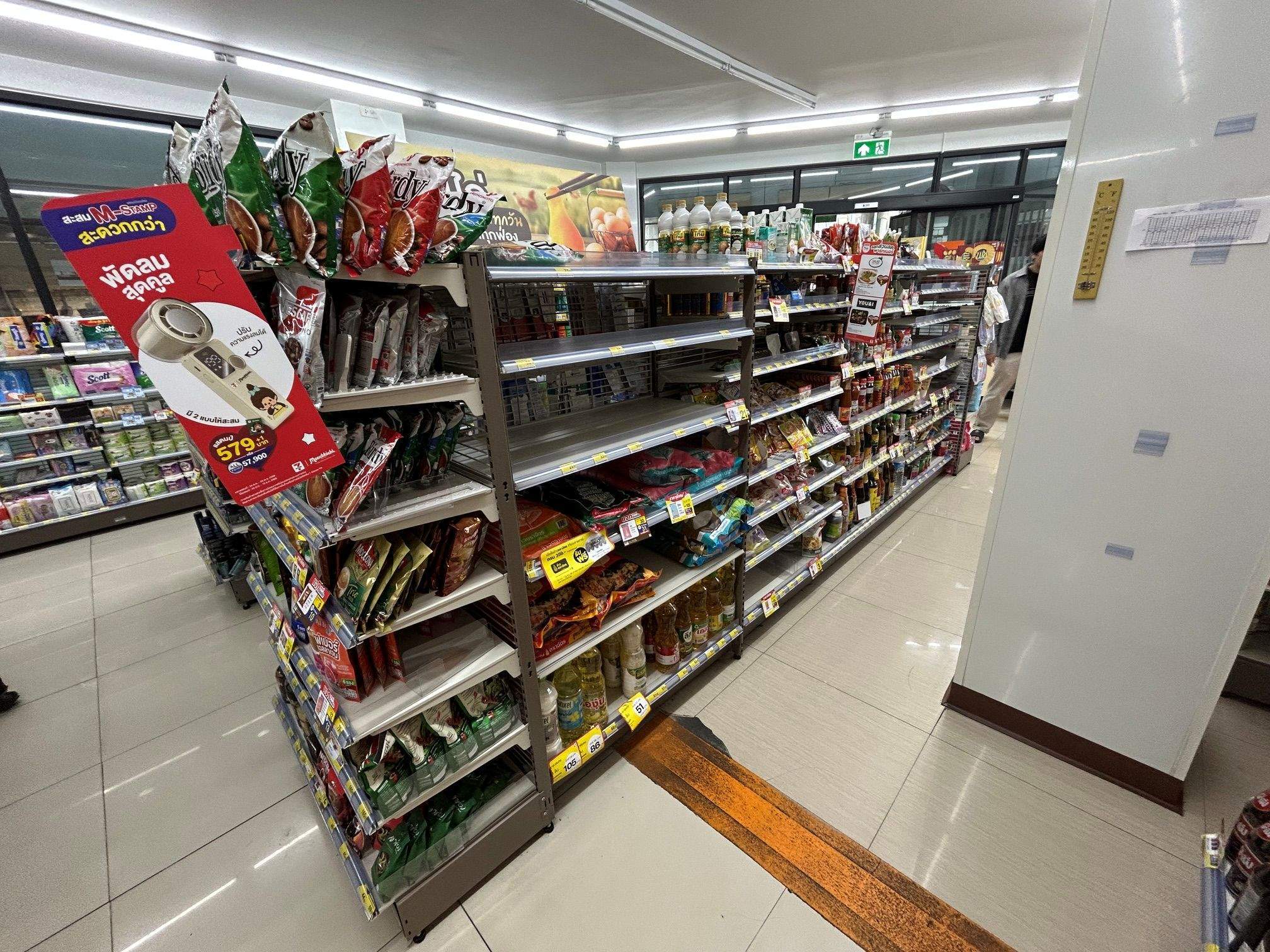
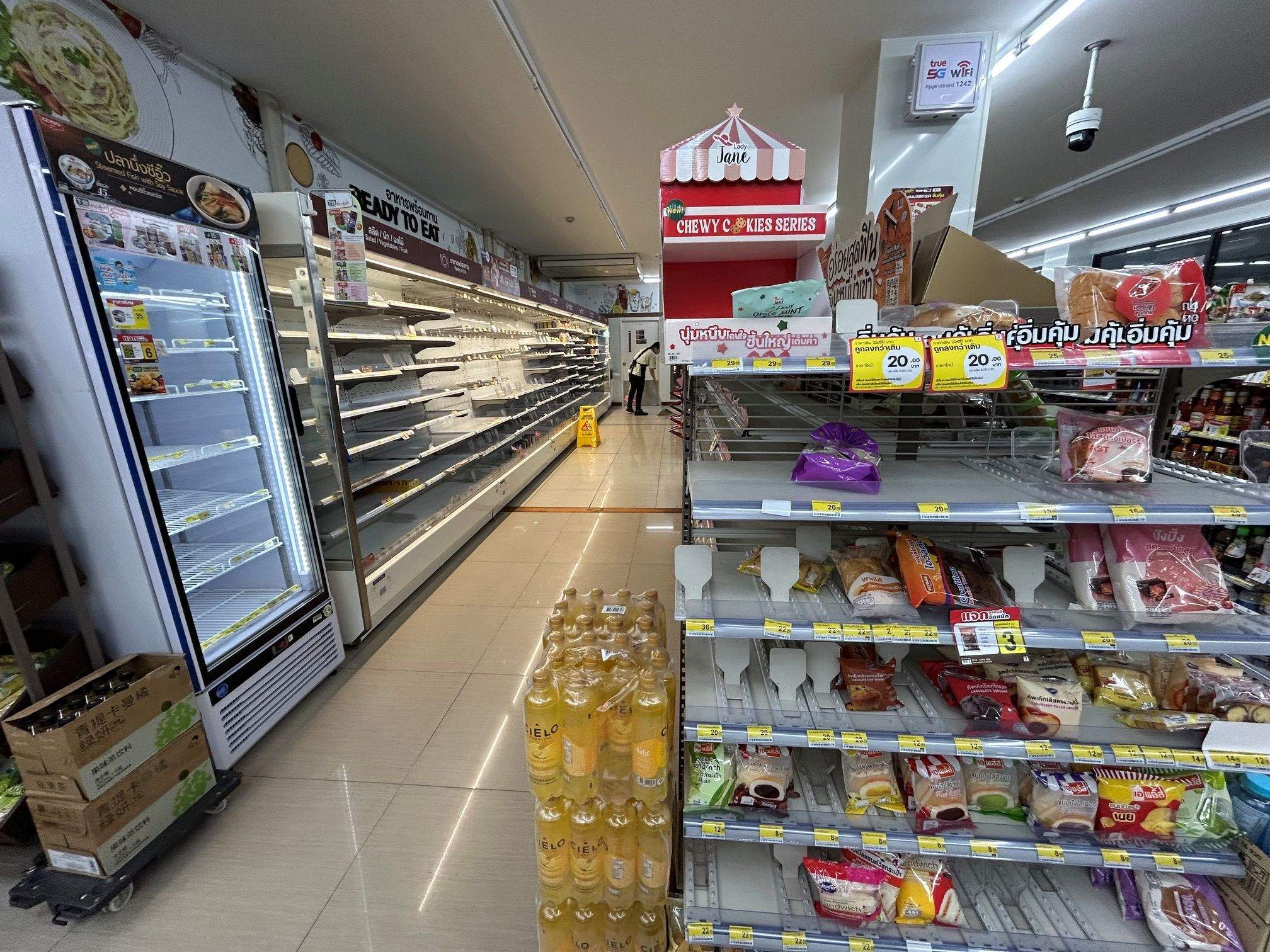
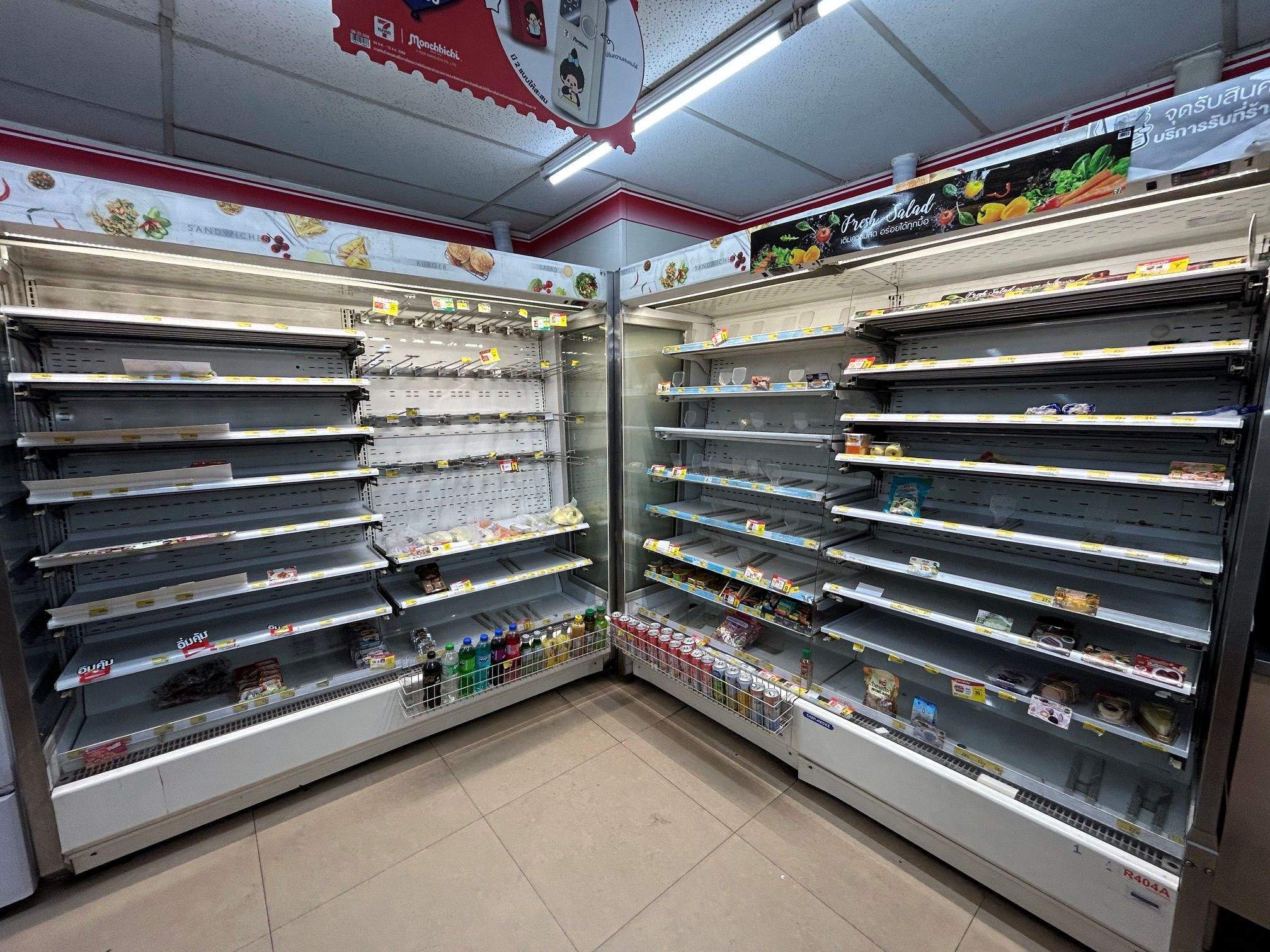
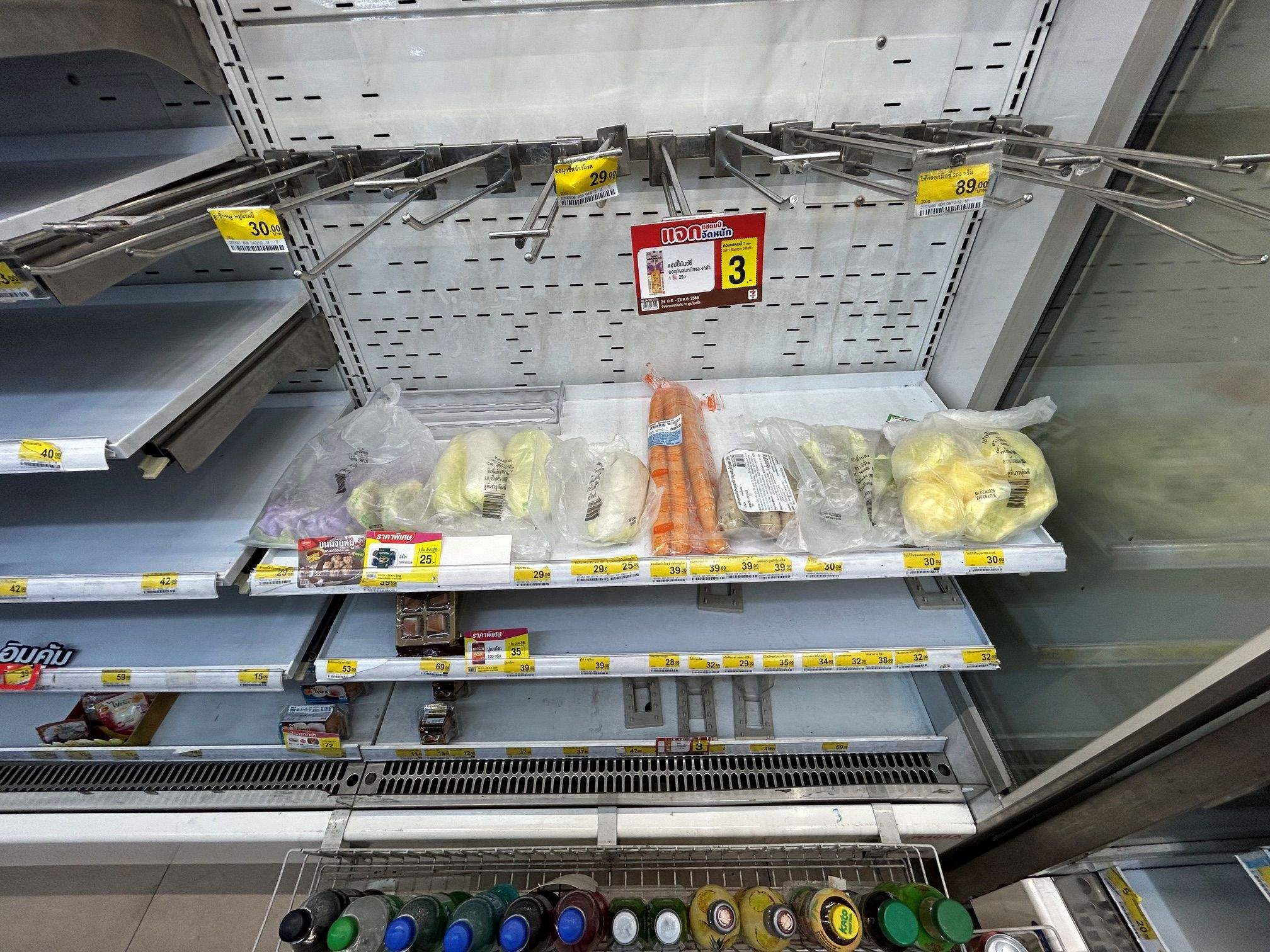
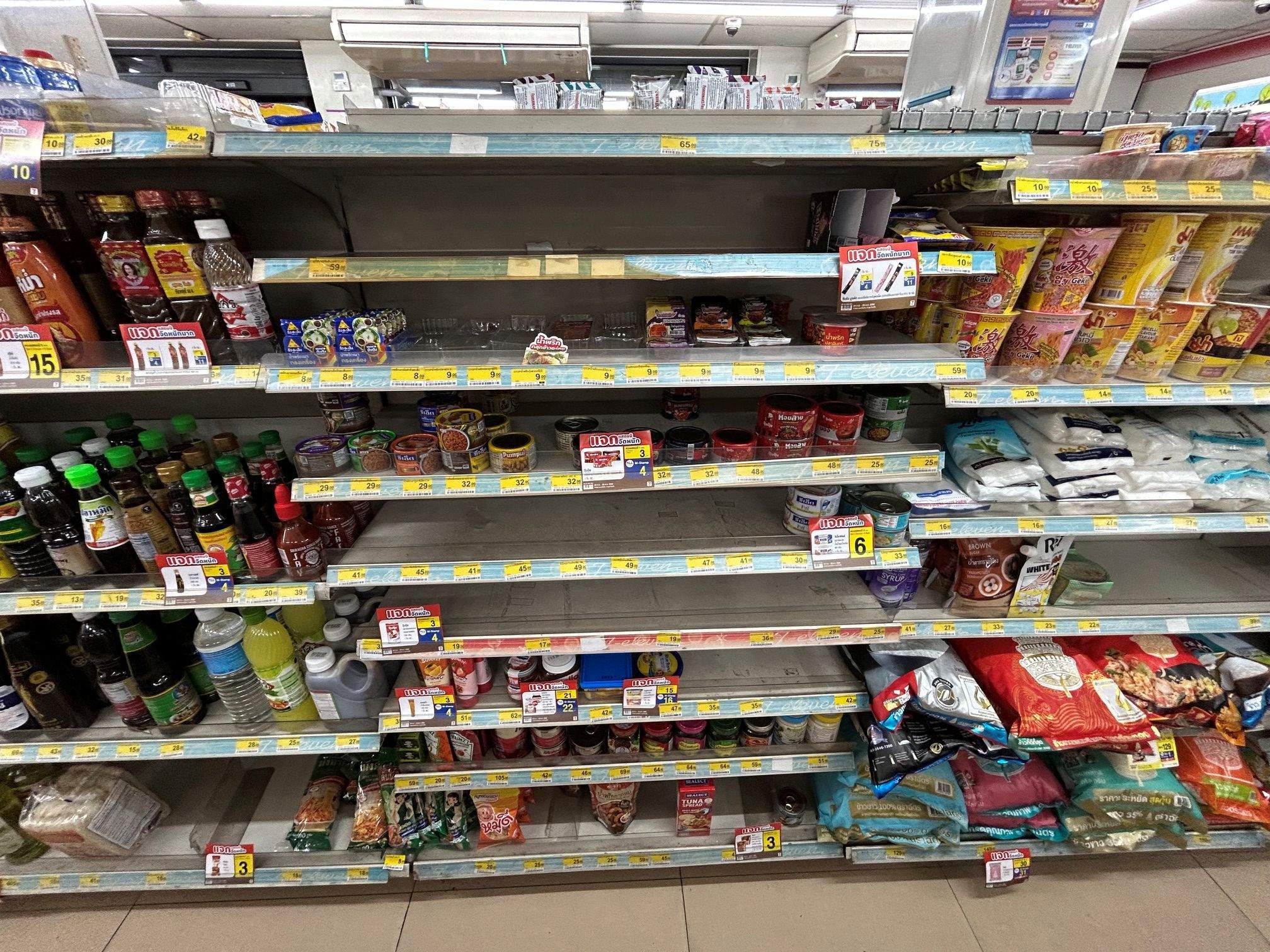
Local 7-Elevens: Nearby 7-Elevens still had mostly empty shelves into Monday. Fortunately, by Wednesday, Gourmet Market’s pork, deli, and egg sections were fully restocked.
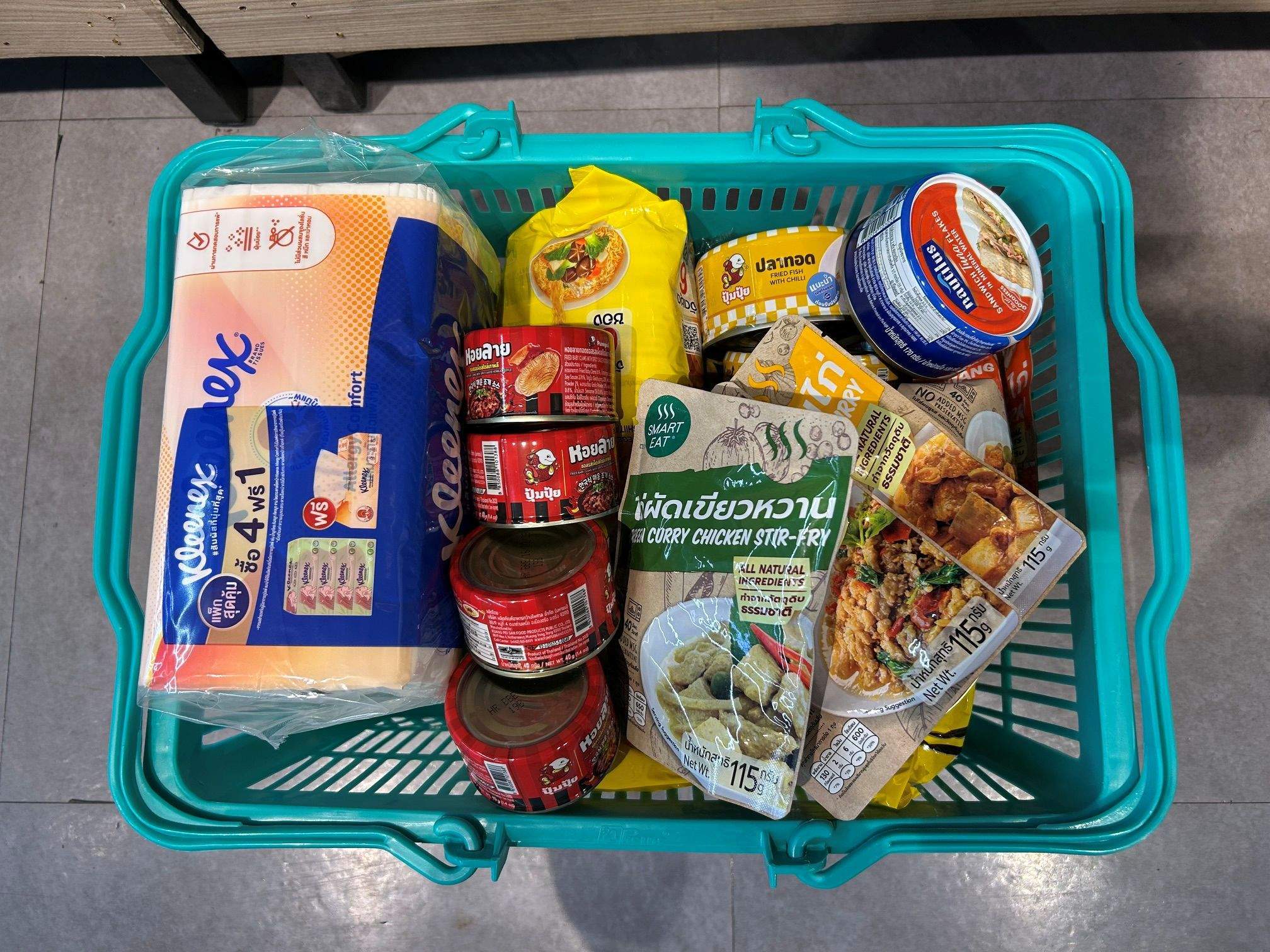
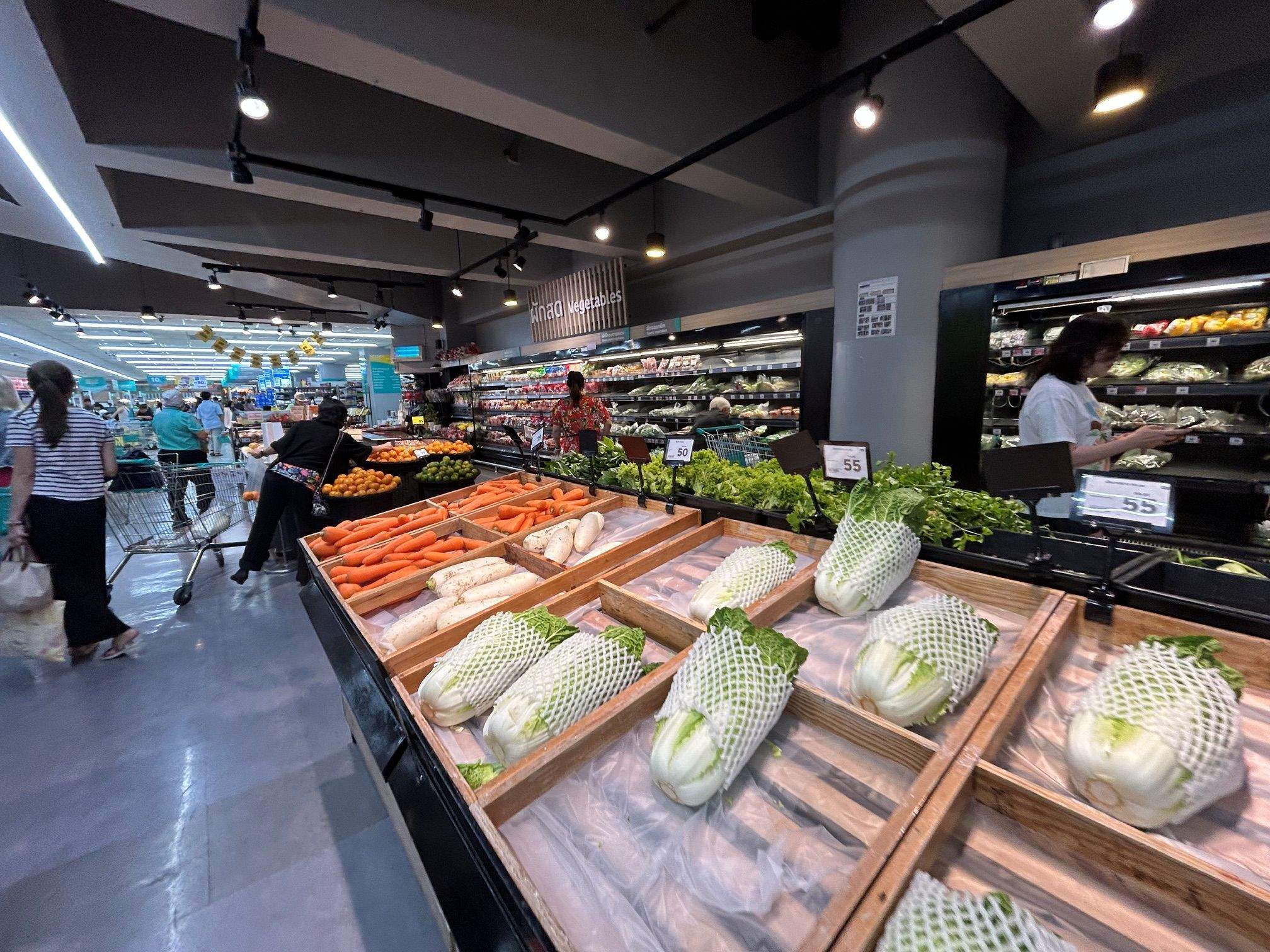
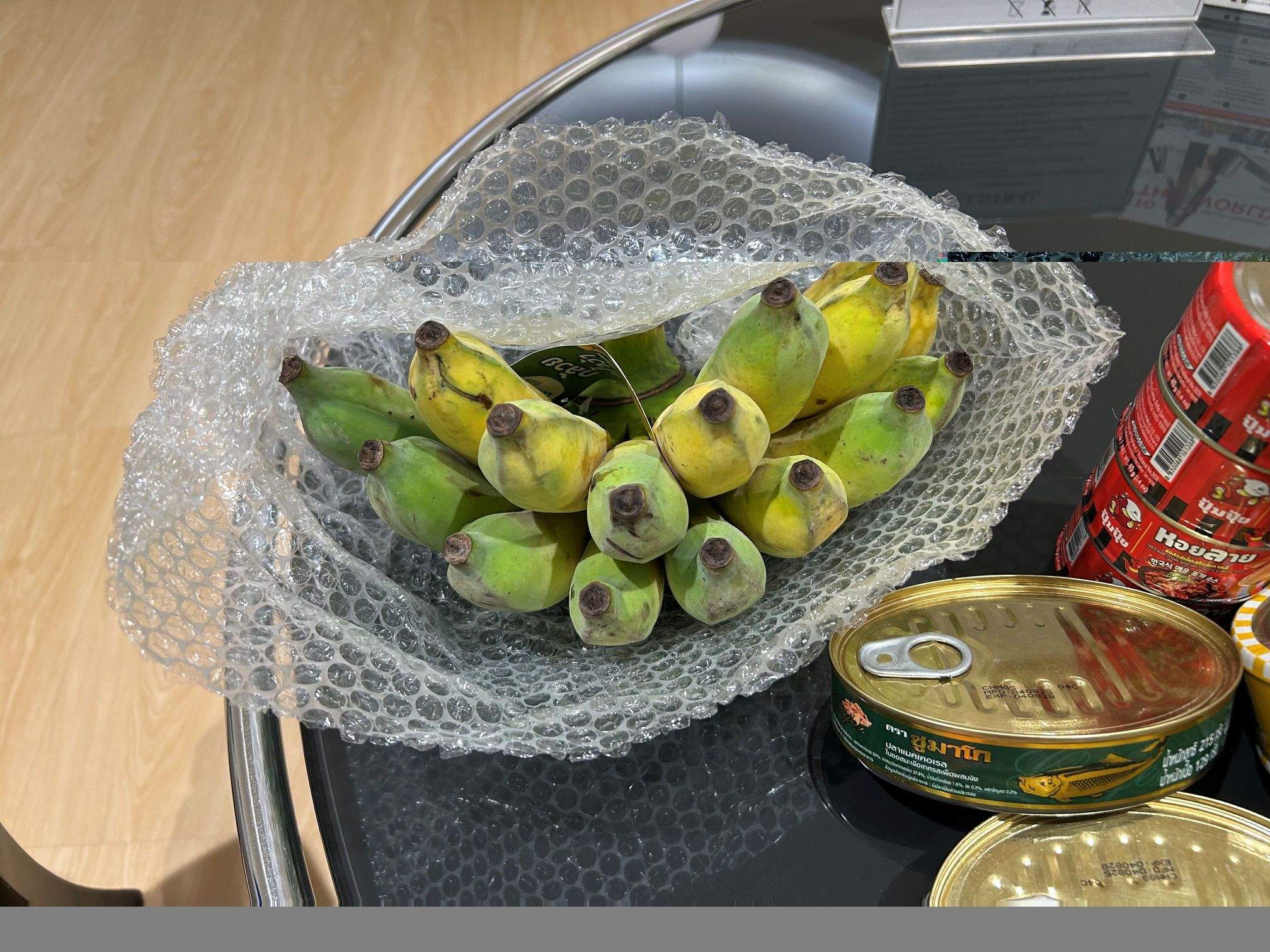
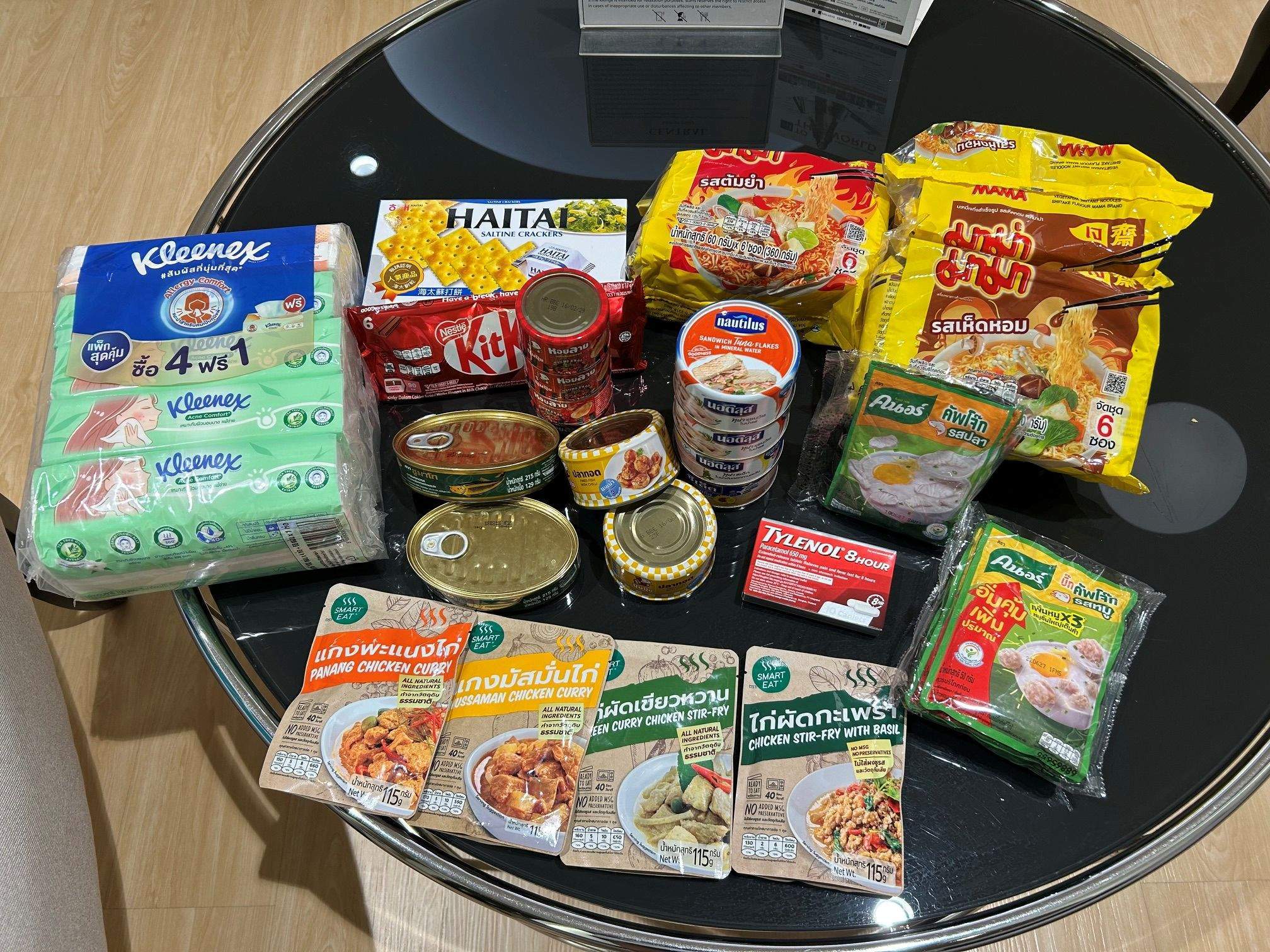
Phra Ram 9 Search: On Monday, we headed to Phra Ram 9 expecting Tops and Lotus’s to be better stocked closer to town, but supplies were surprisingly low. Eggs were completely sold out, proving that flexibility was key. Eventually, my mother-in-law’s sister had her husband deliver emergency supplies to them from a nearby province on the same day, including eggs!
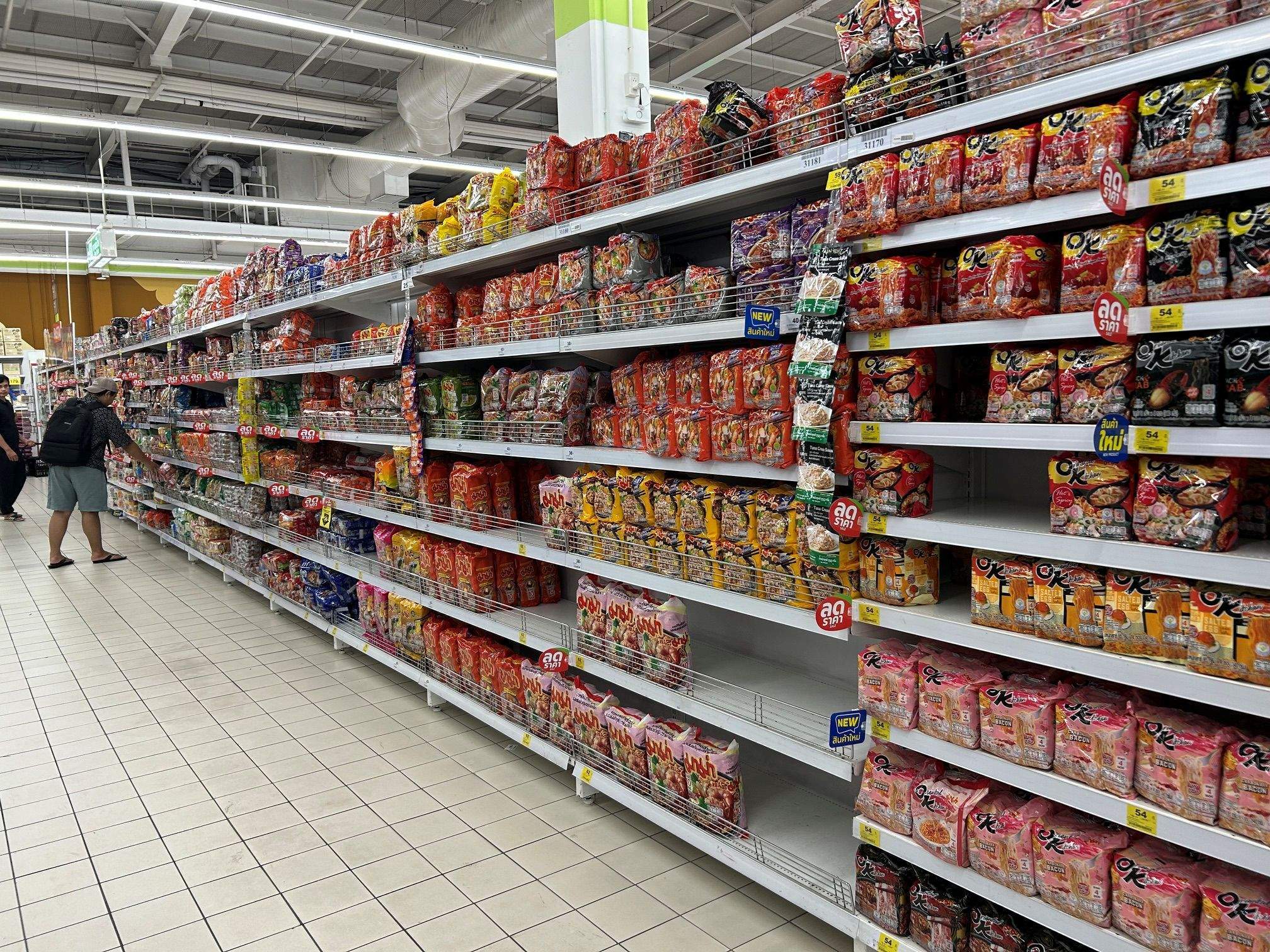
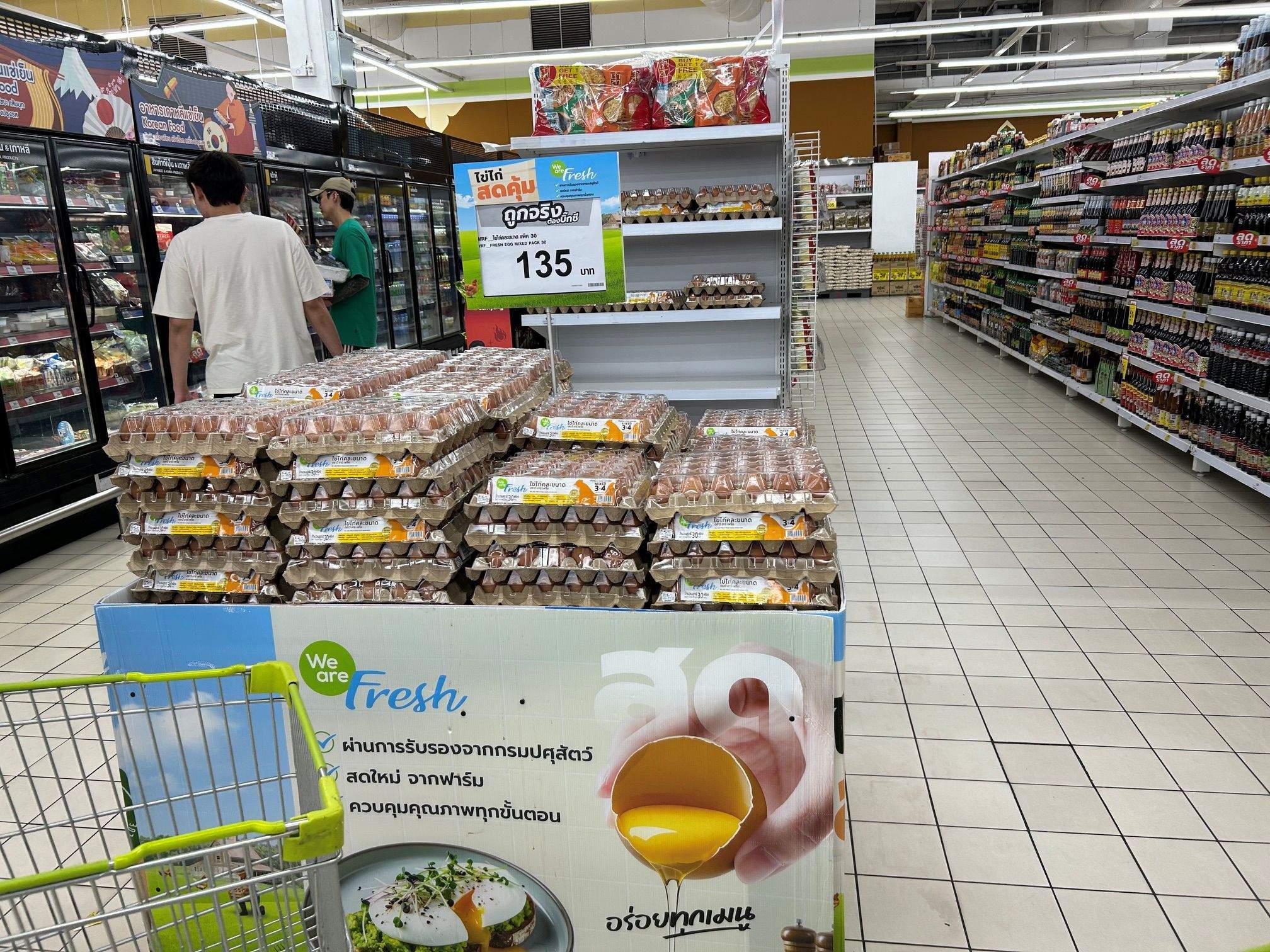
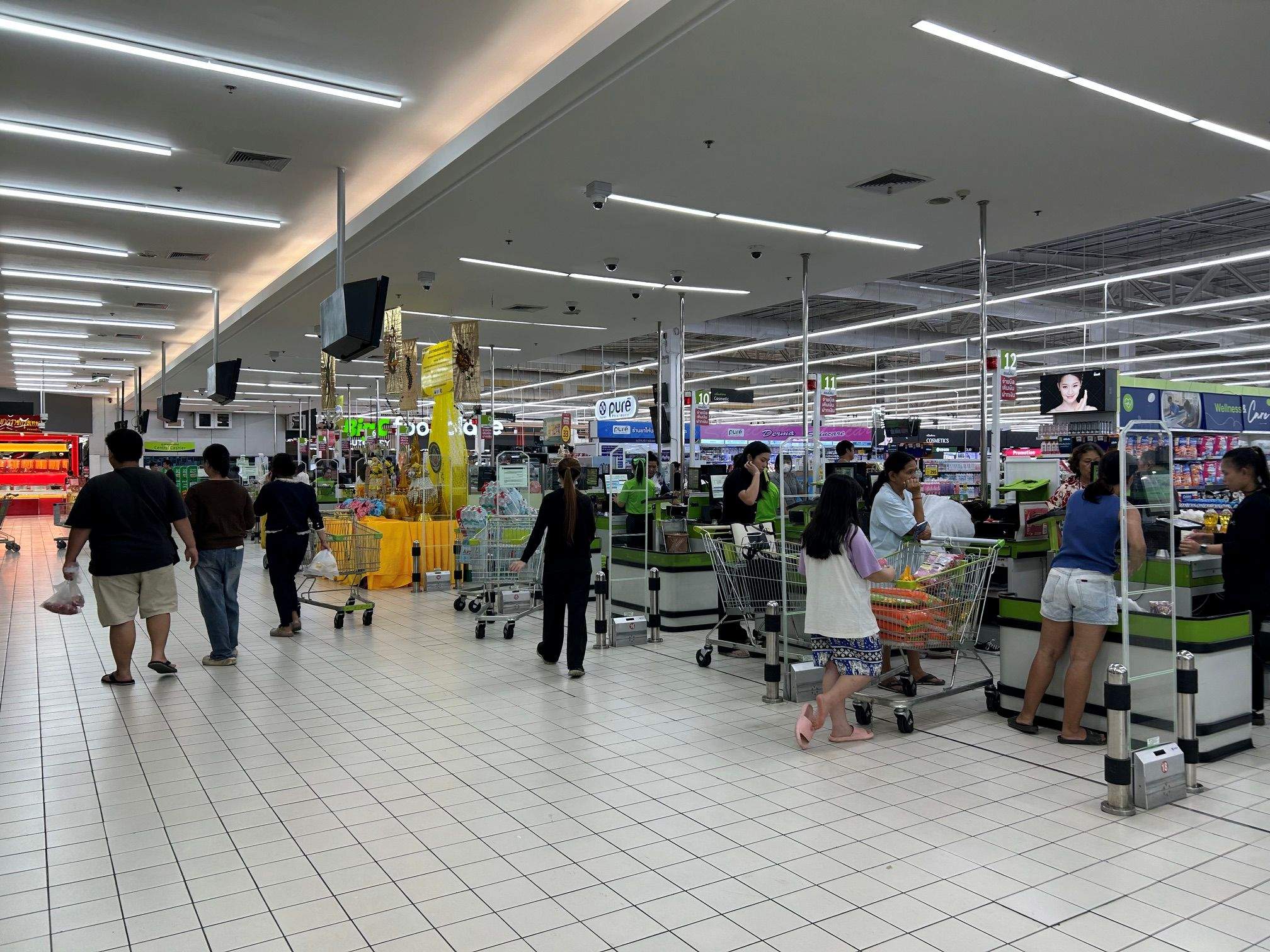
Big C Savior: Interestingly, the Big C near our condo turned out to have complete stocks, including large cartons of eggs.
Supply availability really depended on district logistics and retailer supply chains. 7-Eleven seemed to struggle in this instance, though we know they (CP) also focus distribution efforts on flooded communities in urgent need, which makes complete sense. Unflooded areas, on the other hand, generally kept good stock levels.
🟡 The Yellow Line Lifeline & Human Moments in Bangkapi
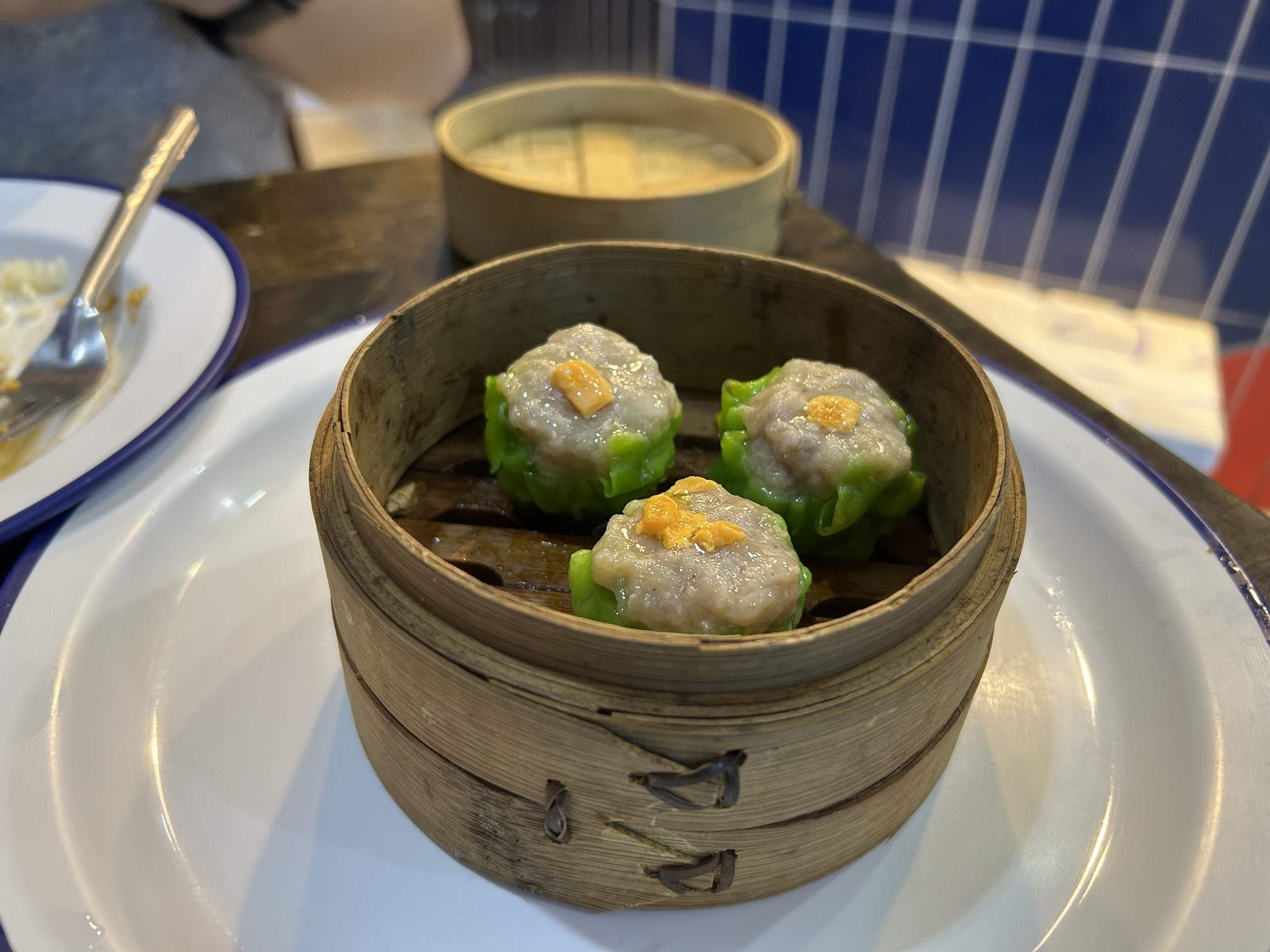
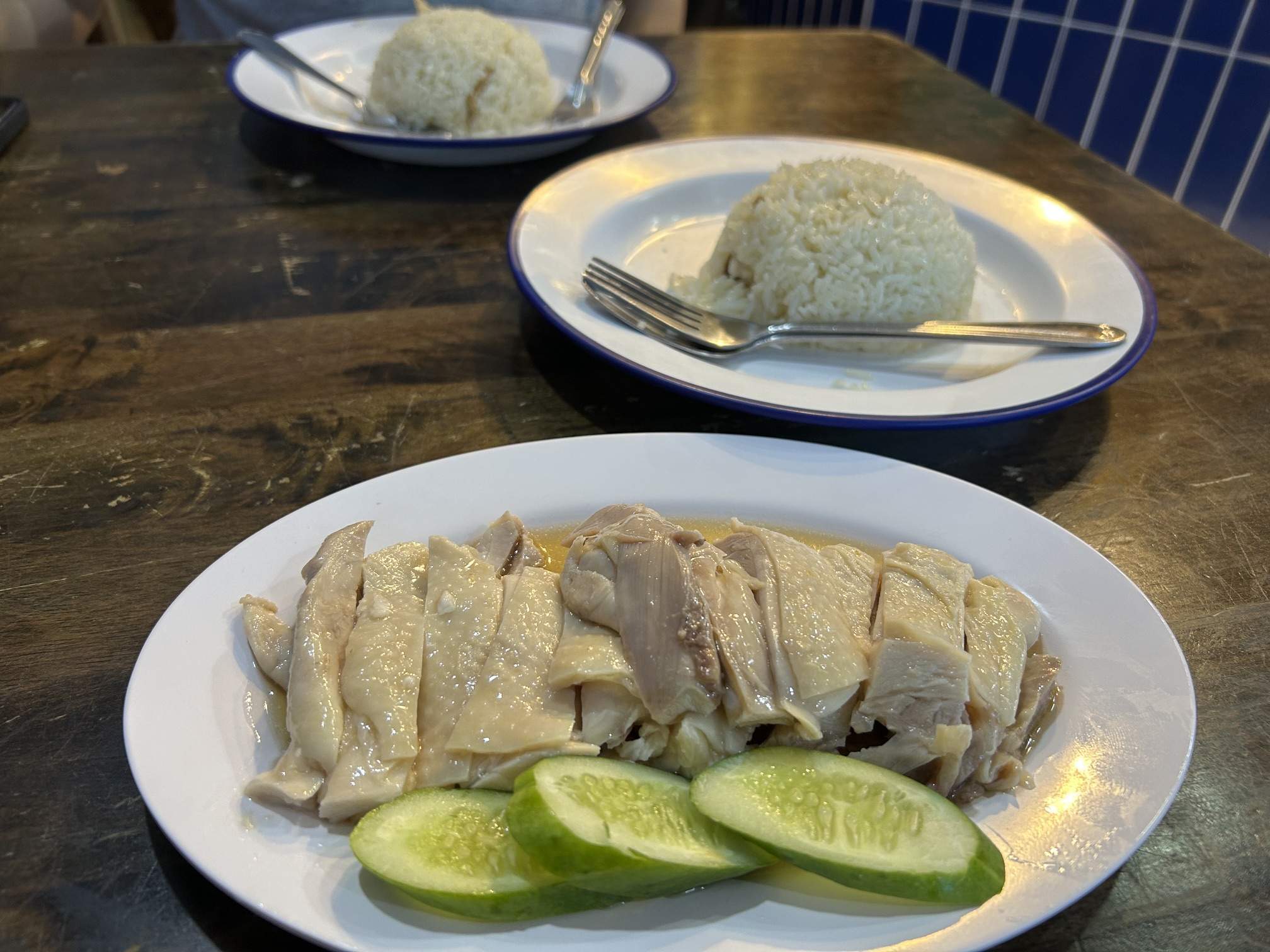
By Sunday, local eateries started reopening, so we decided to go out again for dinner to support a neighborhood business before hopping onto the MRT Yellow Line toward Bangkapi, where my husband’s family home is located.
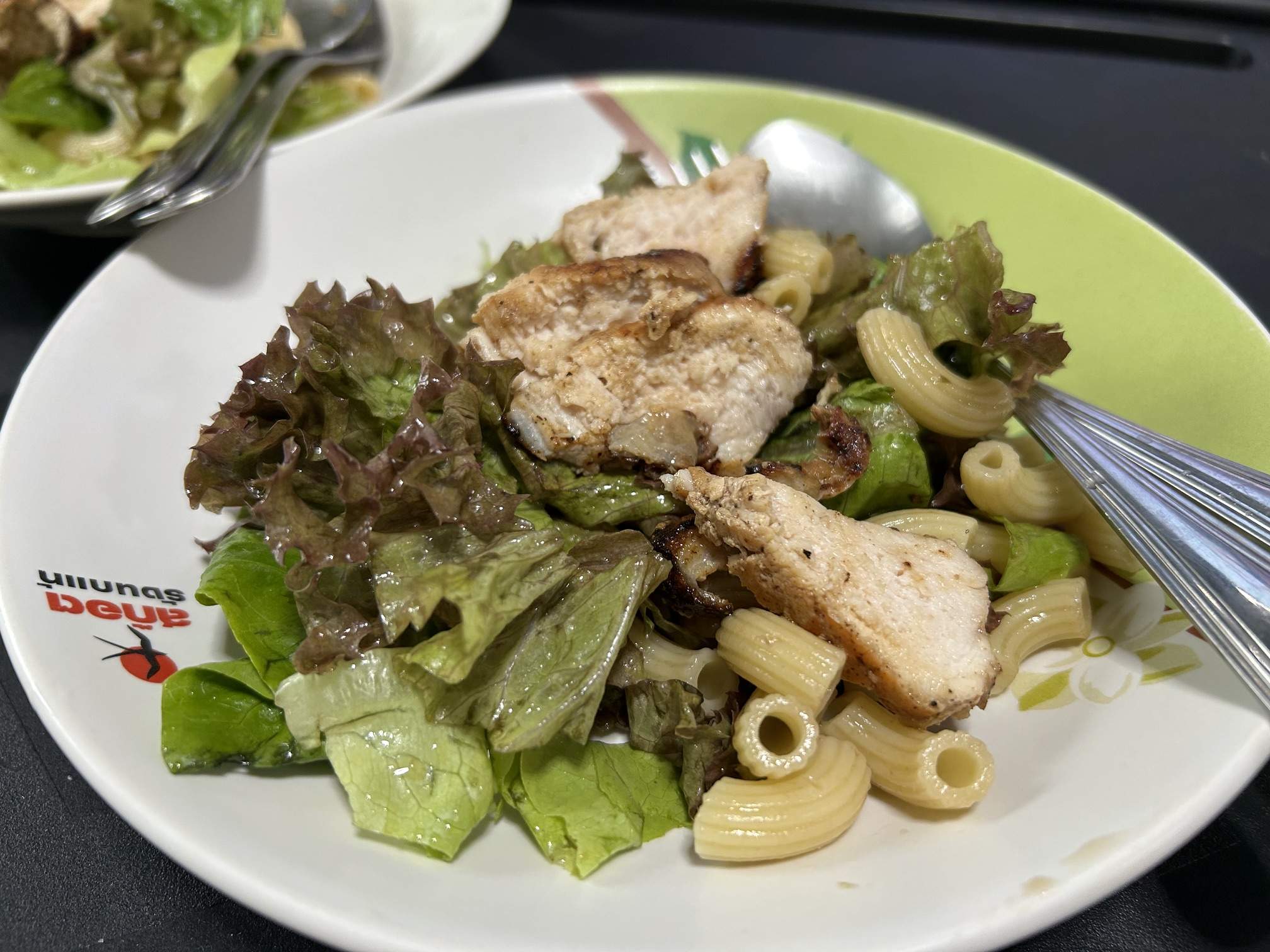
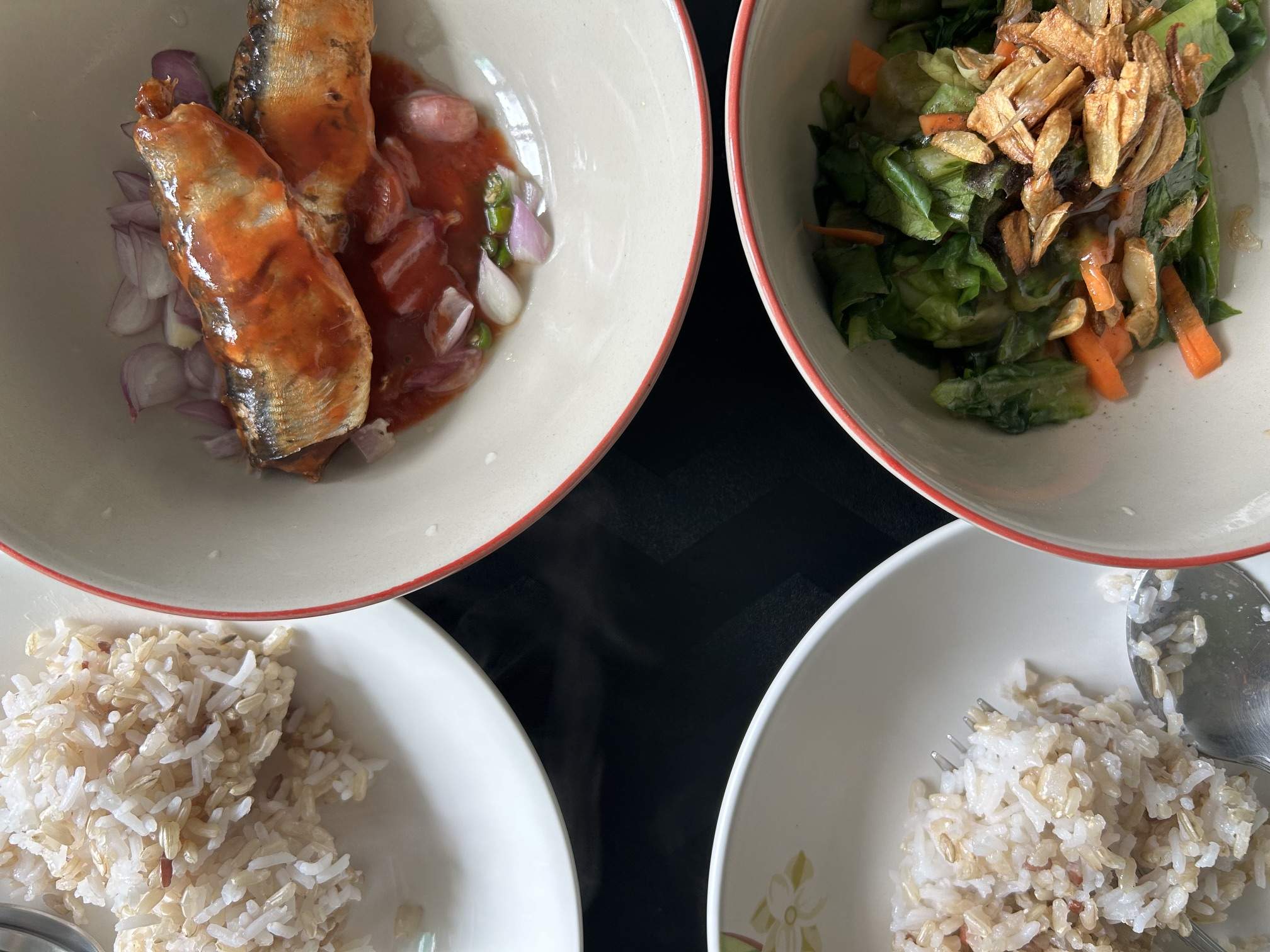
Earlier that morning, the reality of his family’s situation finally set in. While life in our condo rebounded quickly, his family home had taken in floodwater. His parents and sisters had to move to the upper floor to manage the household and wait out the water. I felt a pang of guilt for casually sharing photos of our home-cooked meals on Sunday before realizing the severity of what they were facing.
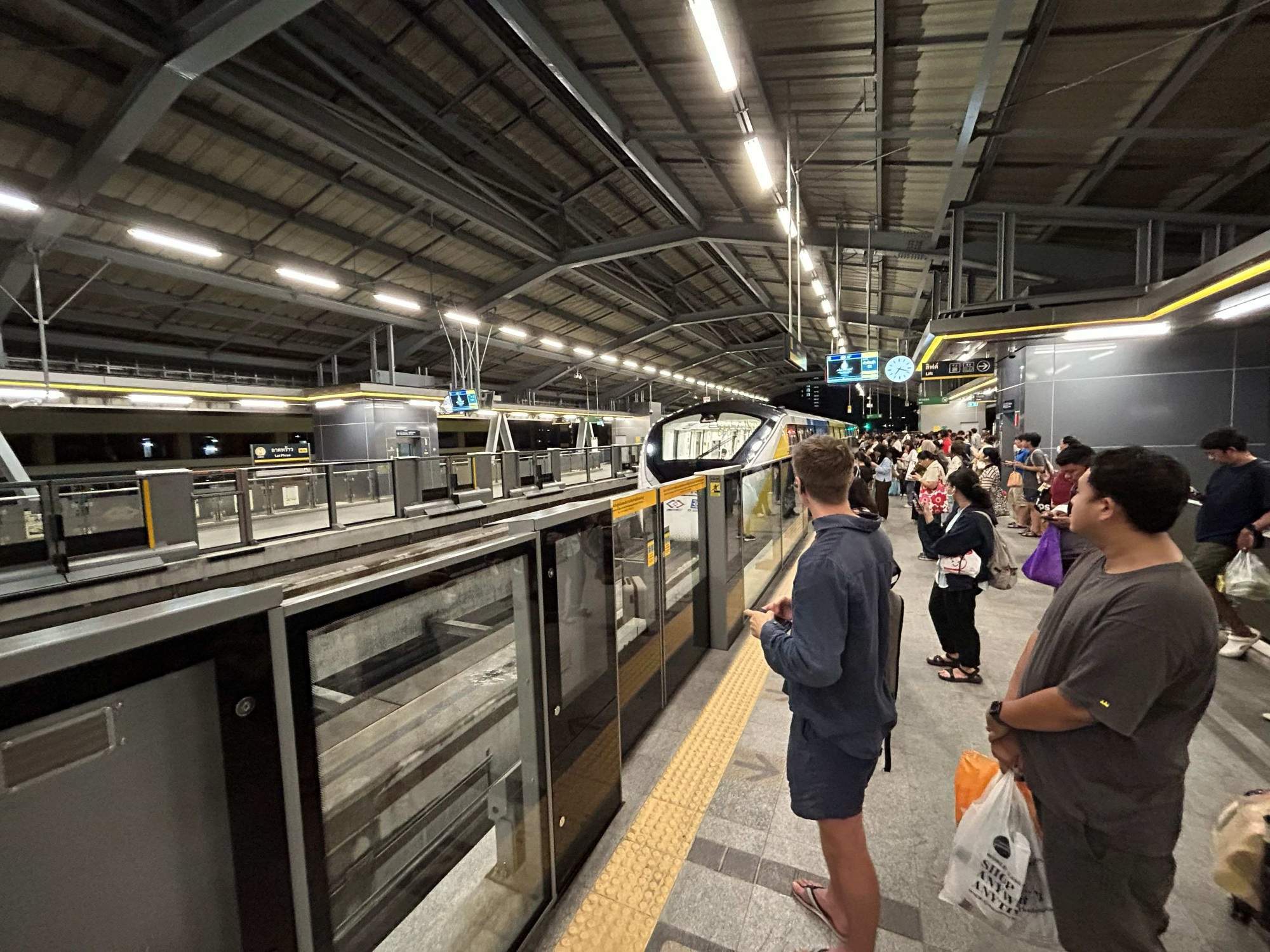
The Bangkok MRT Yellow Line is an elevated automated monorail system spanning approximately 30.4 kilometers across 23 stations, connecting eastern Bangkok to Samut Prakan Province between its terminal stations at Lat Phrao and Samrong. The Yellow Line train was packed. It was inspiring to see the elevated monorail functioning as a crucial lifeline, carrying people across severely flooded districts. We even met first-time riders carrying emergency supplies, asking for directions on which station to alight.
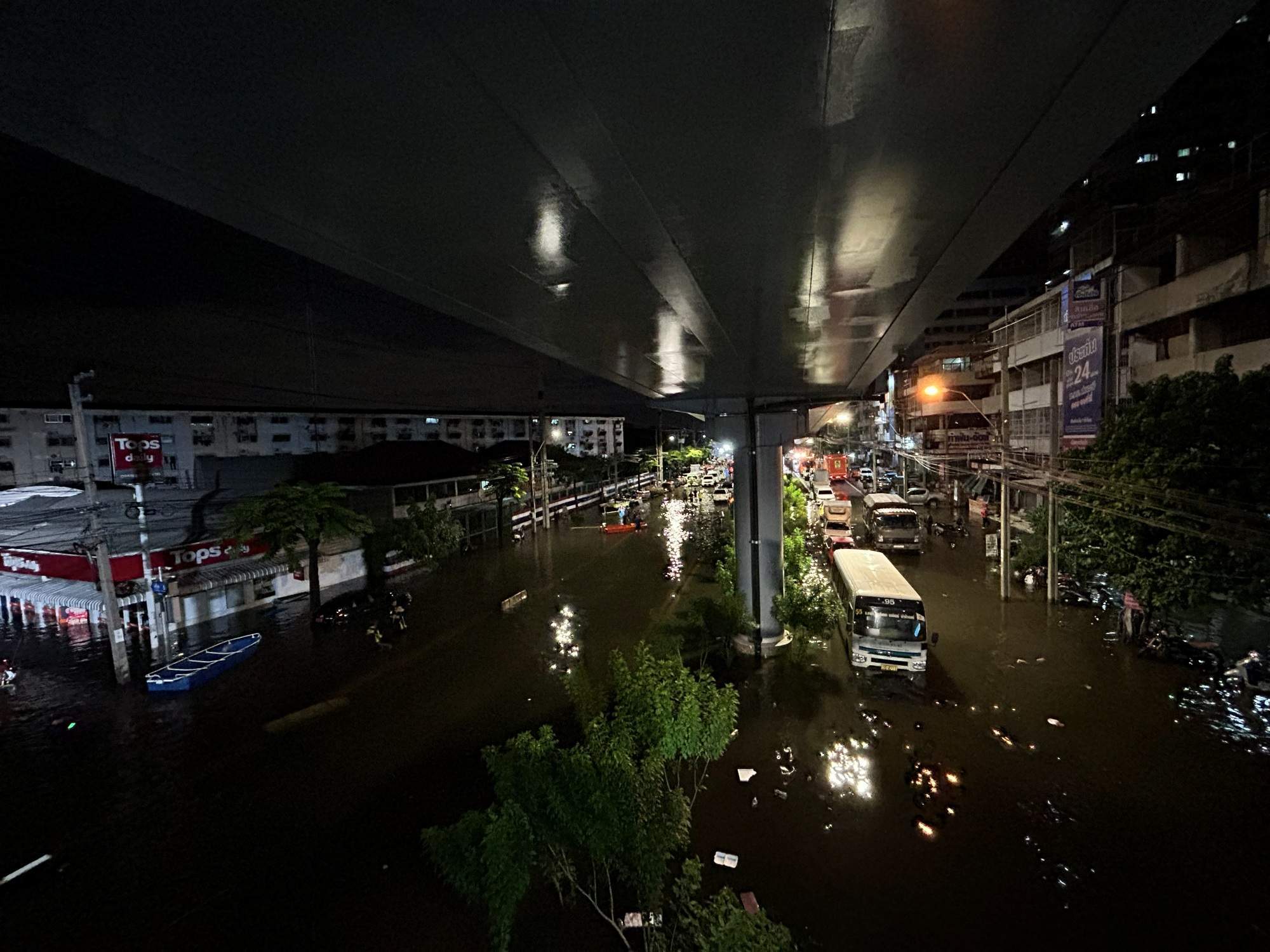
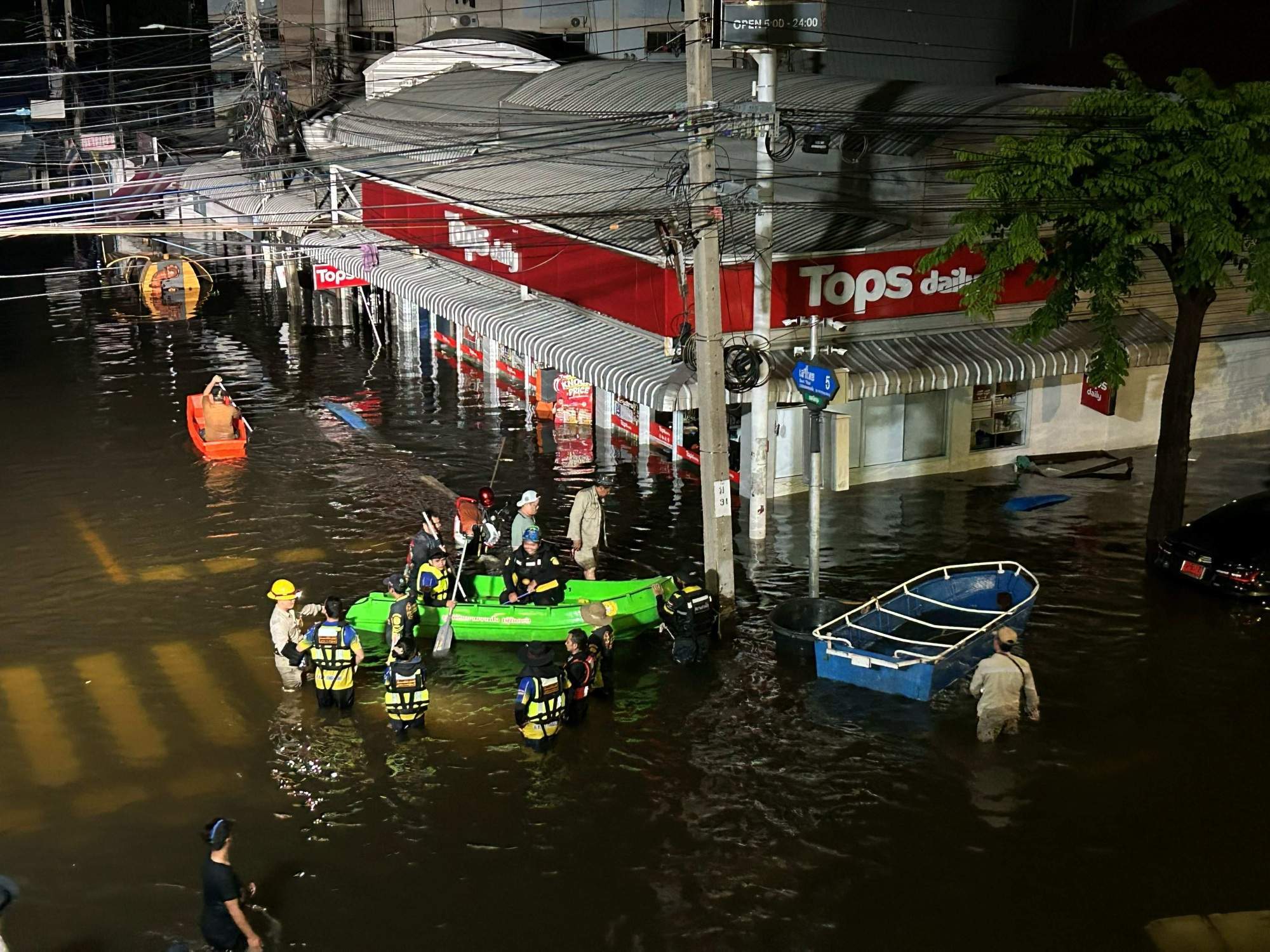
Arriving at Bangkapi Station, we walked along the elevated skywalk toward the Khlong Chan apartment complex direction; the skywalk ends near the Tops Daily supermarket. The Khlong Chan apartment is just 500 meters down the road from the family home featured on the flood news reports.
The Bangkapi Skywalk is a major elevated pedestrian network in eastern Bangkok stretching over 1.4 kilometers. It functions as a critical transit ribbon designed to shield commuters from street-level traffic and weather while seamlessly linking Bangkapi Station, The Mall Bangkapi, Makro, and Lotus Bangkapi—and it played a fundamental role as a bridge during this disaster.
Looking down from the skywalk was a deeply humbling experience:
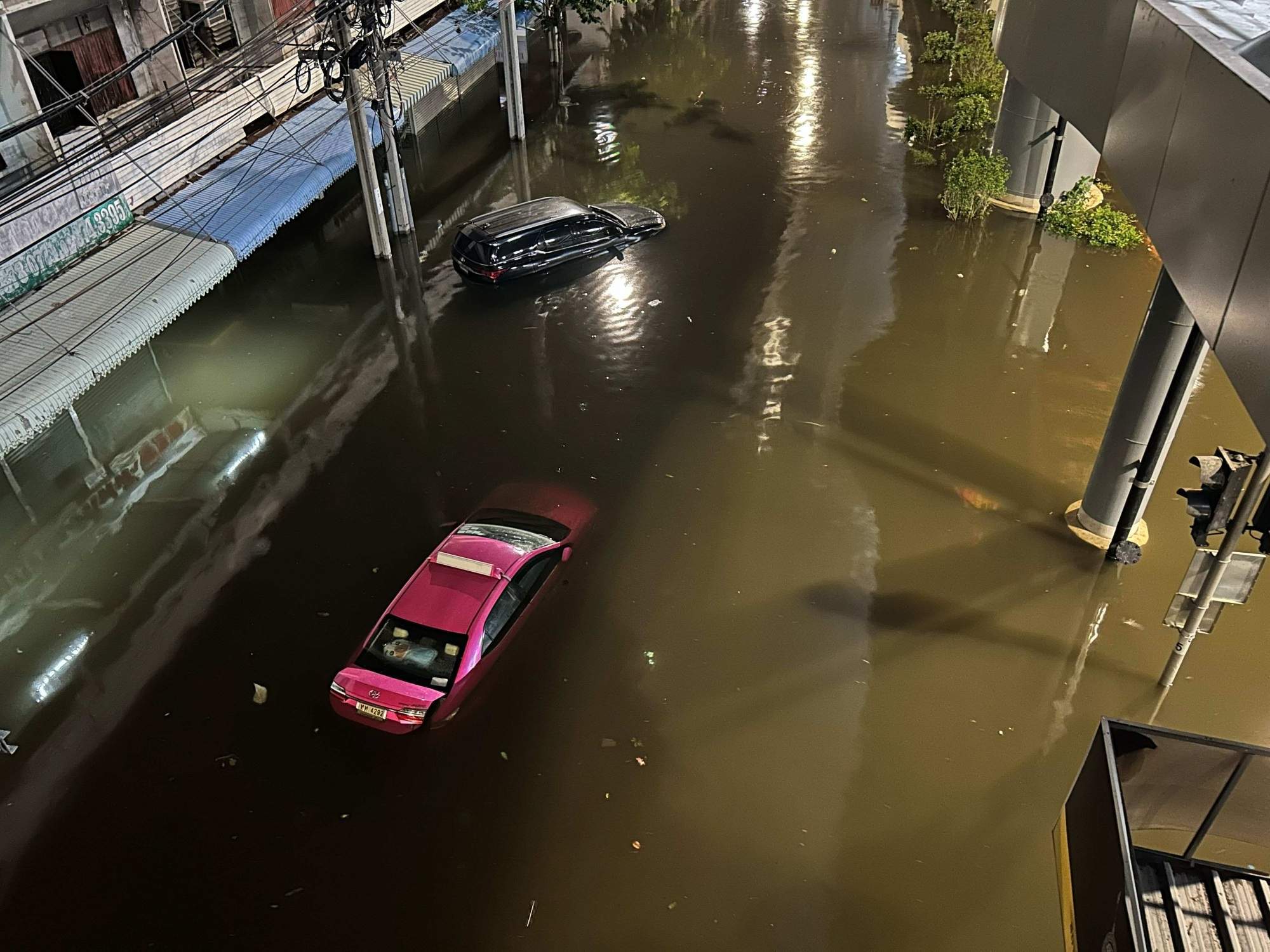
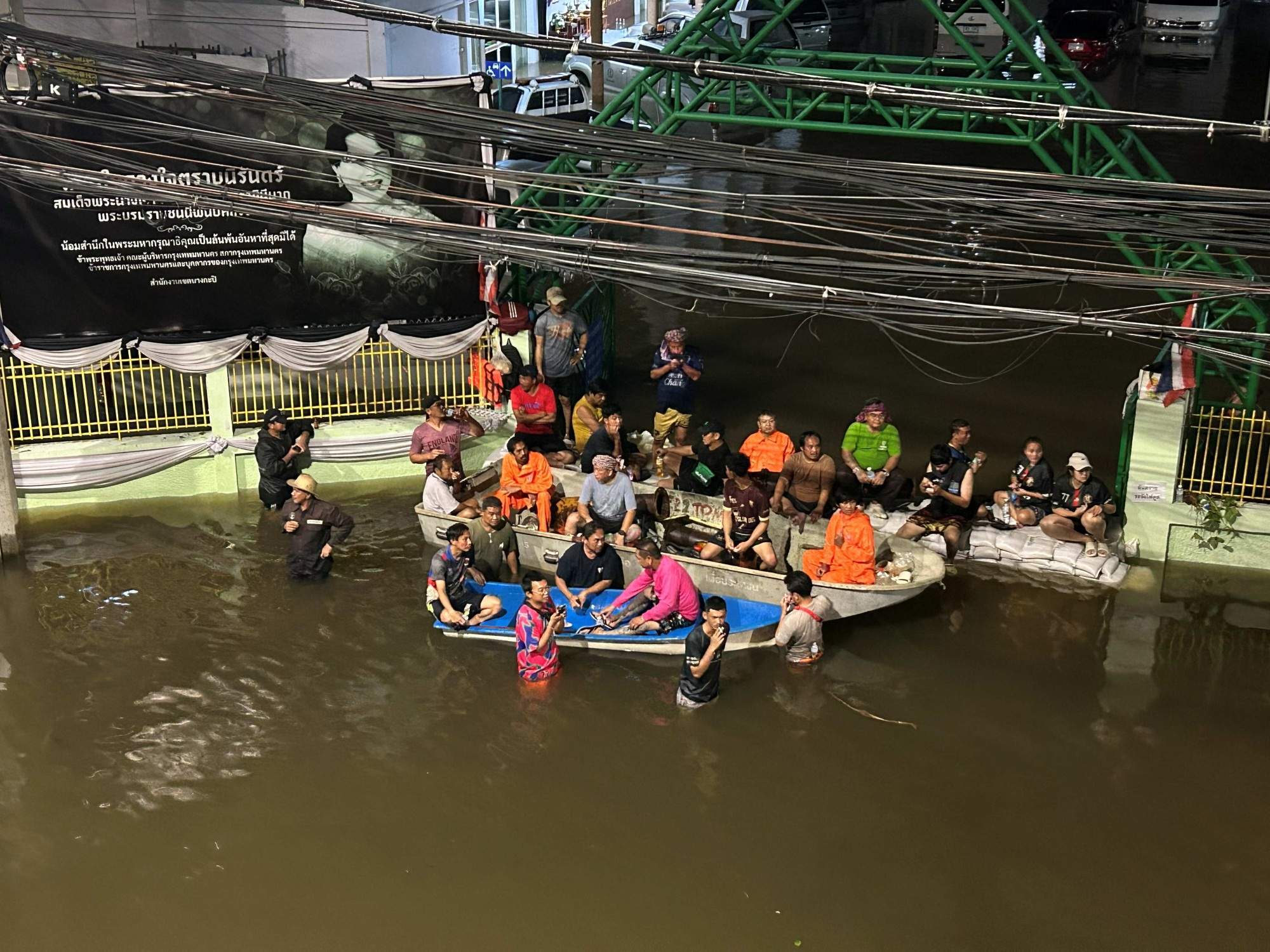
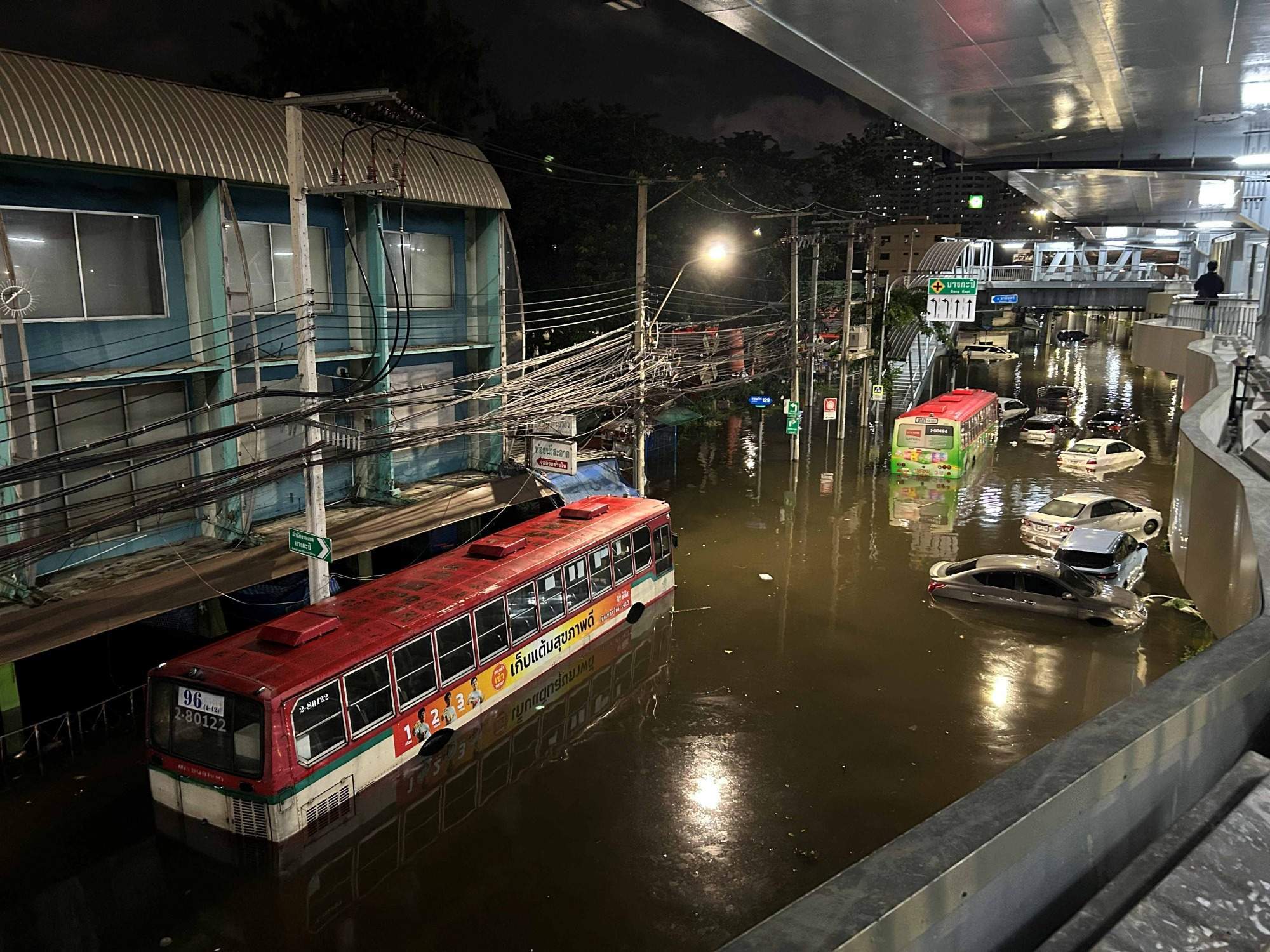
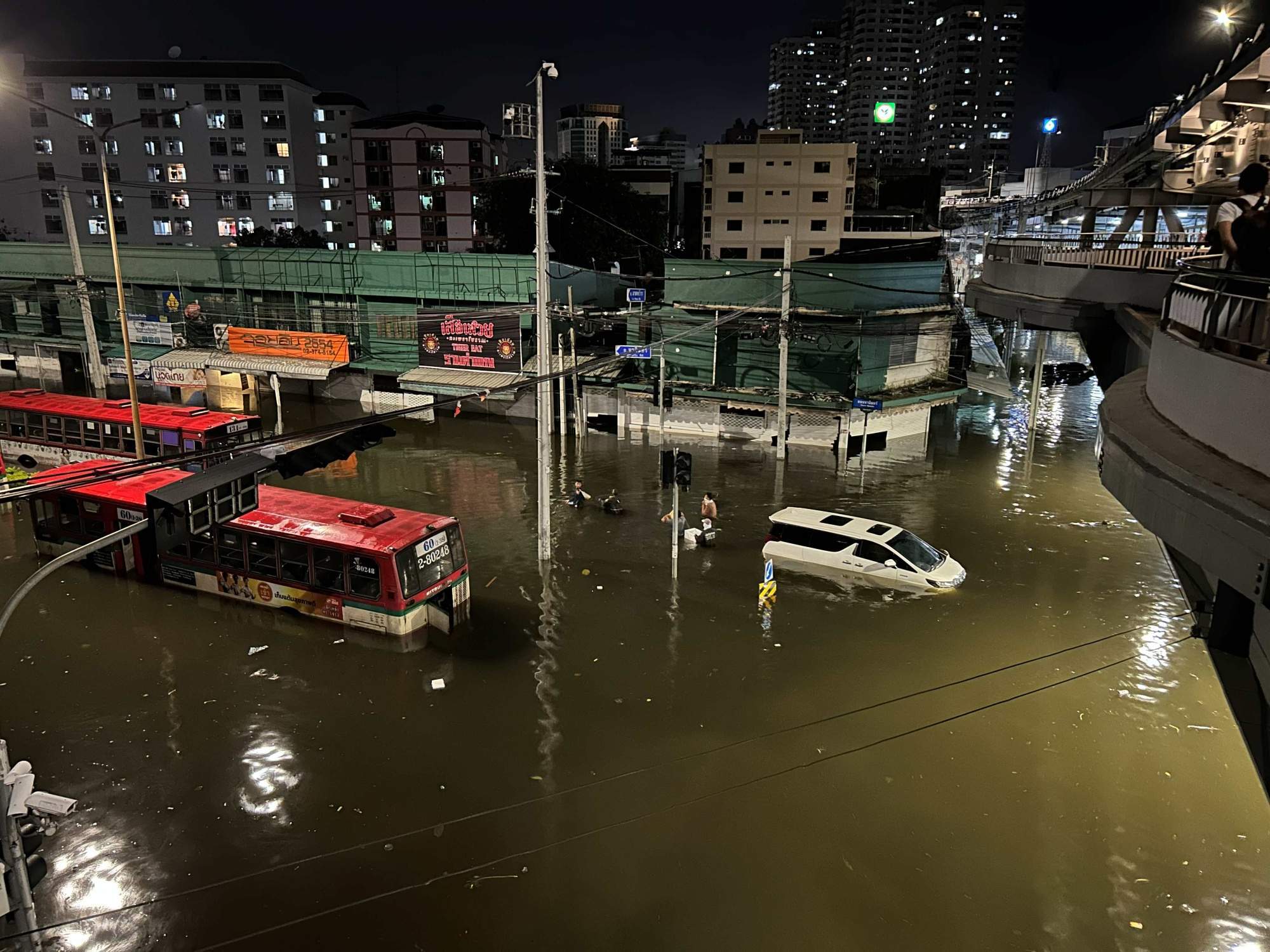
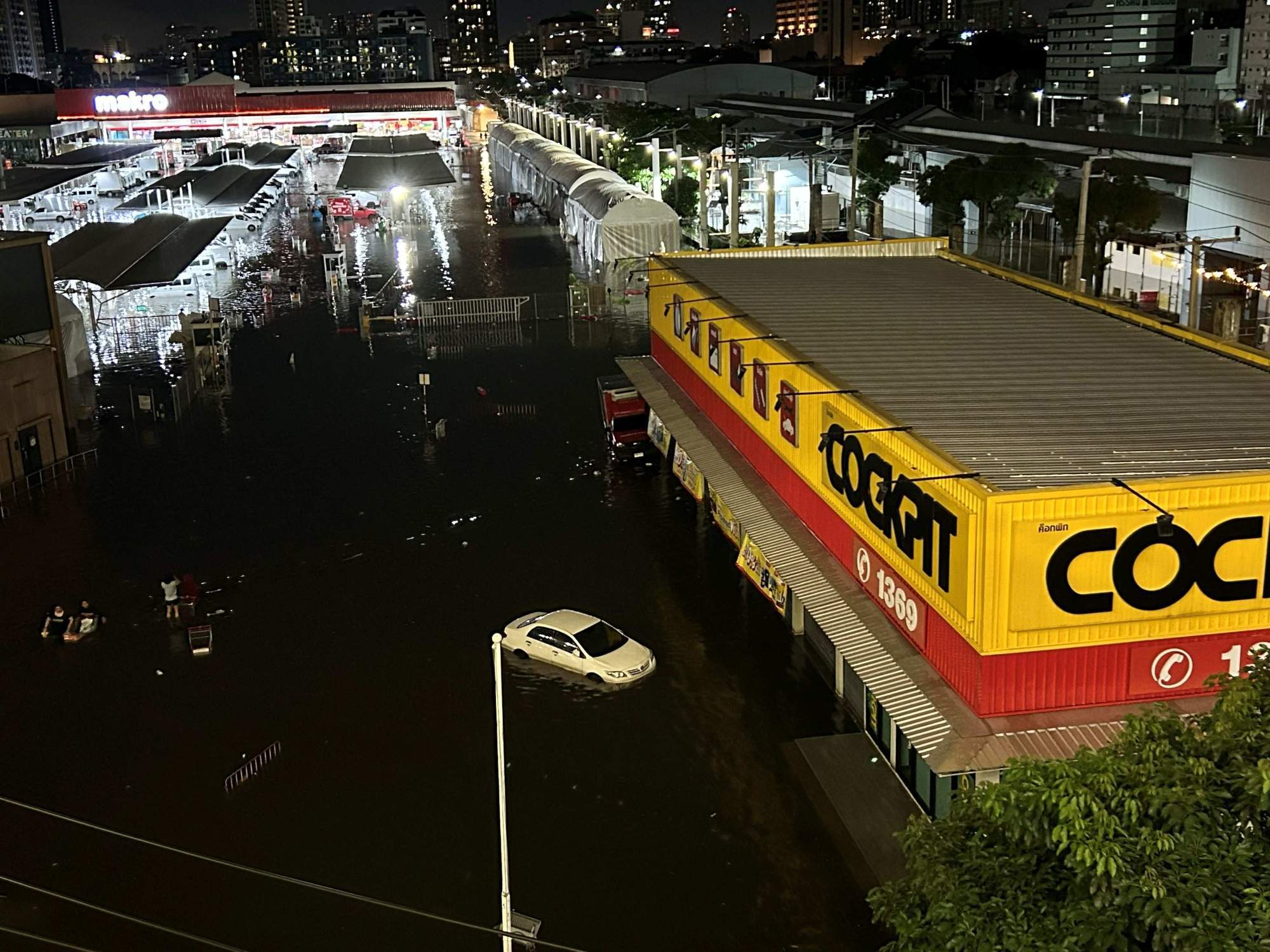
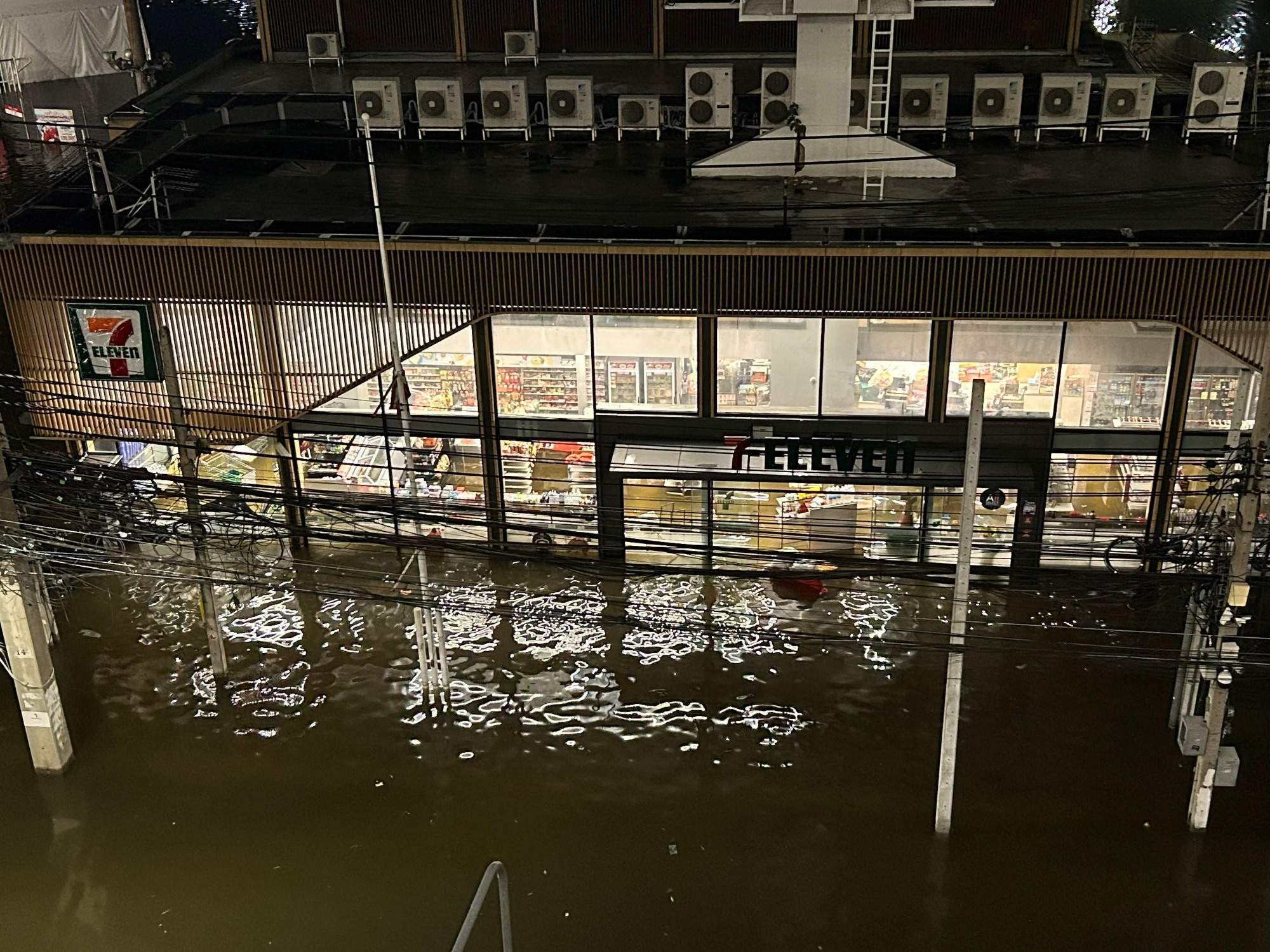
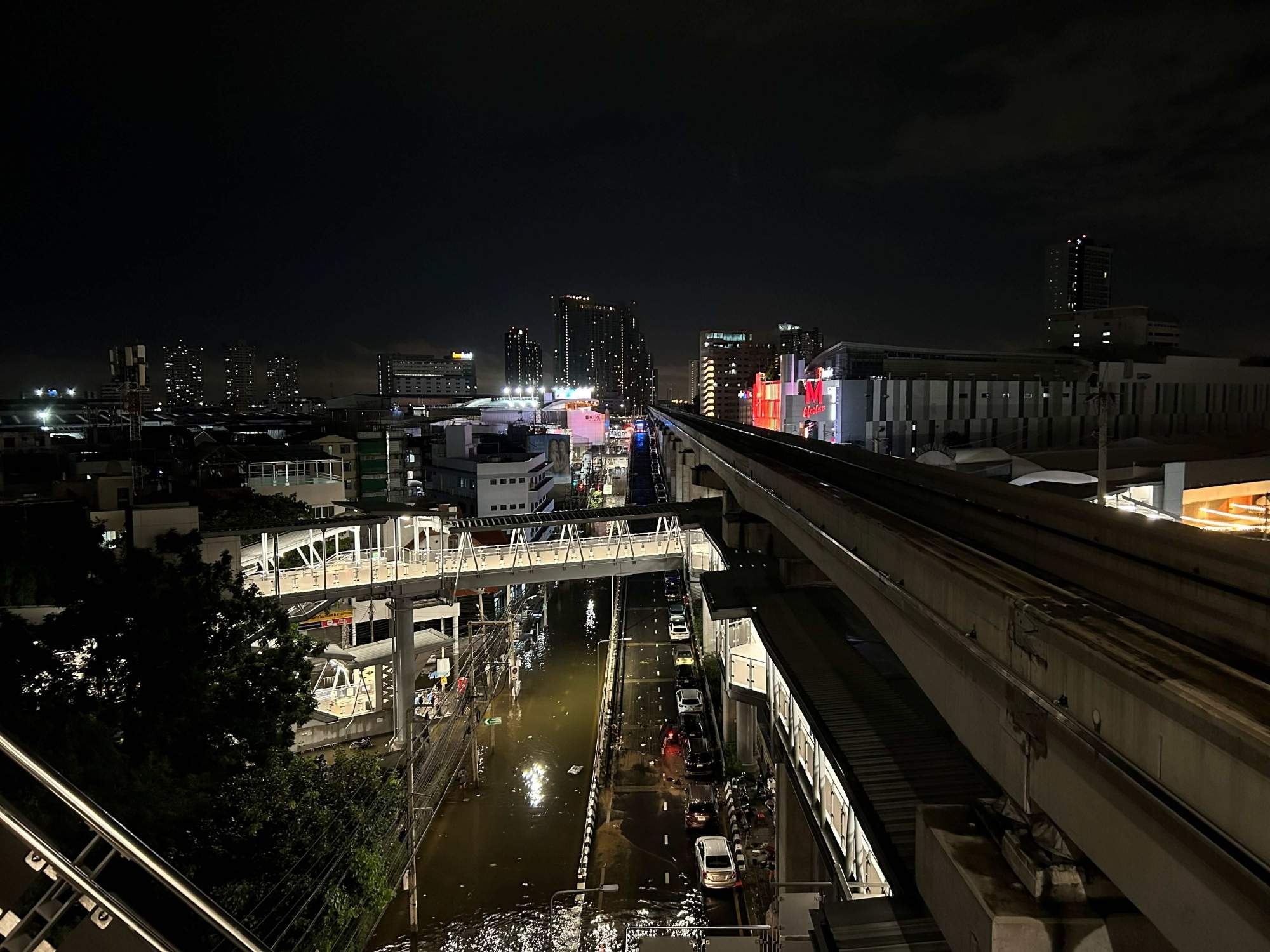
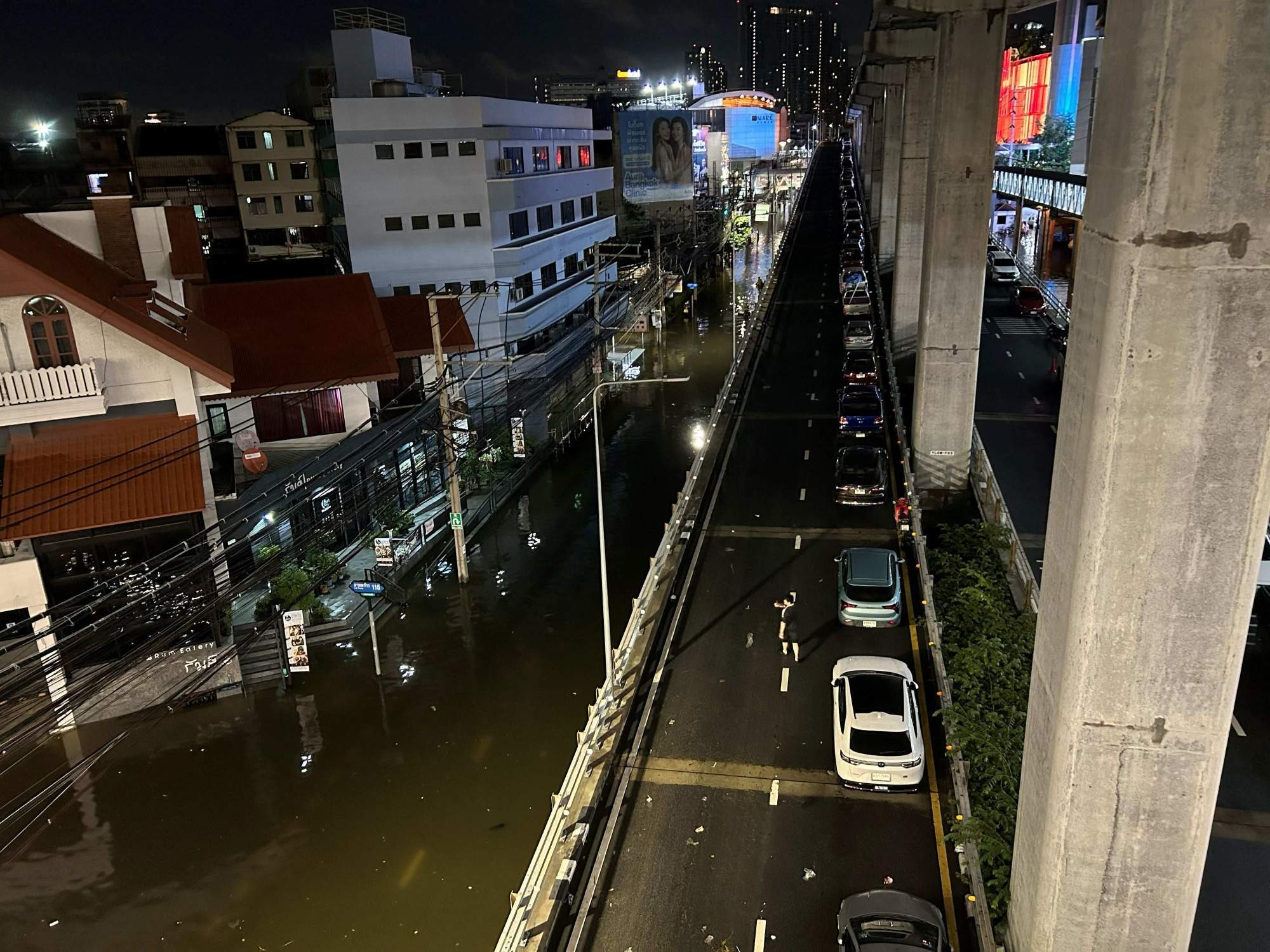
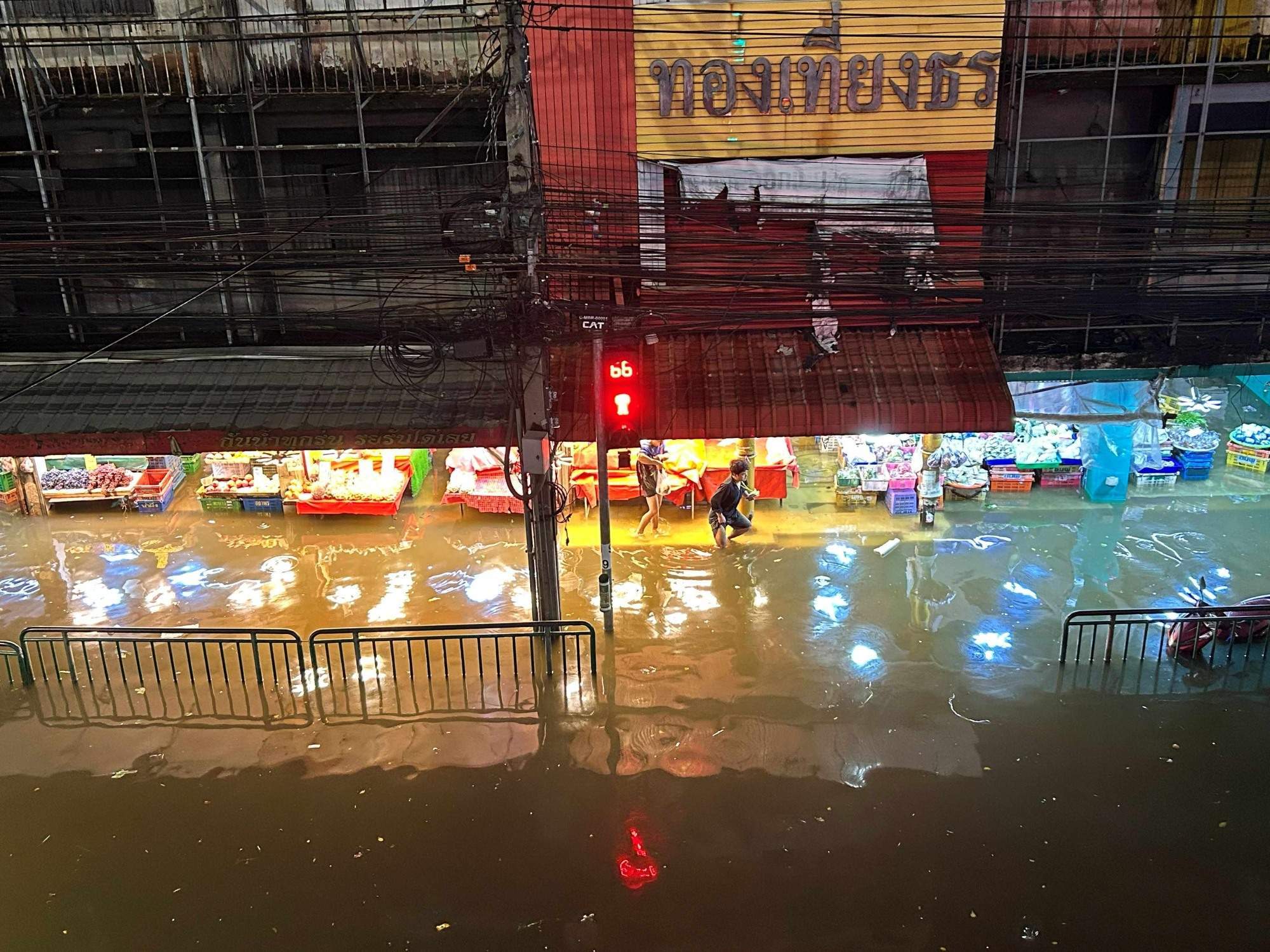
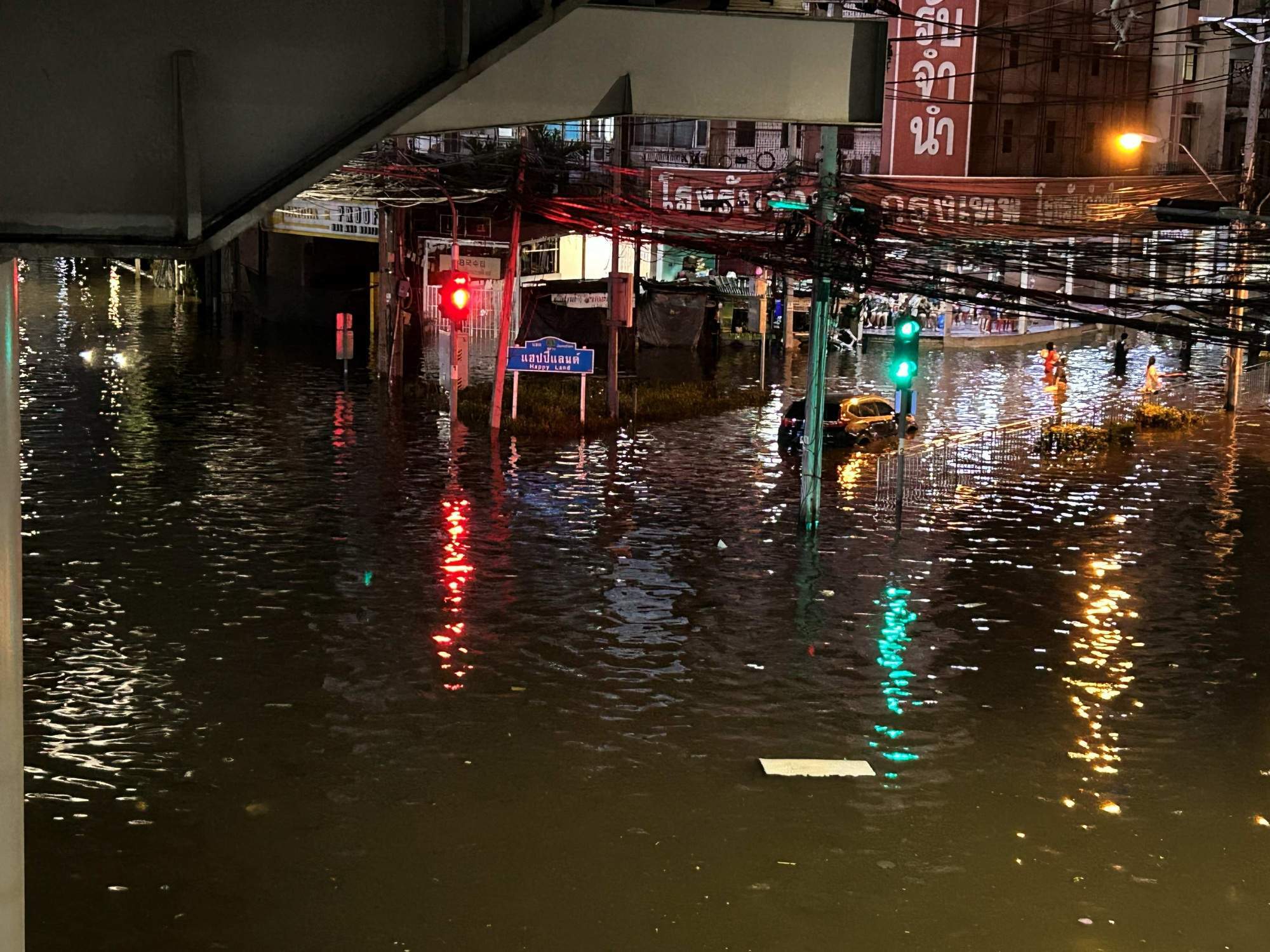
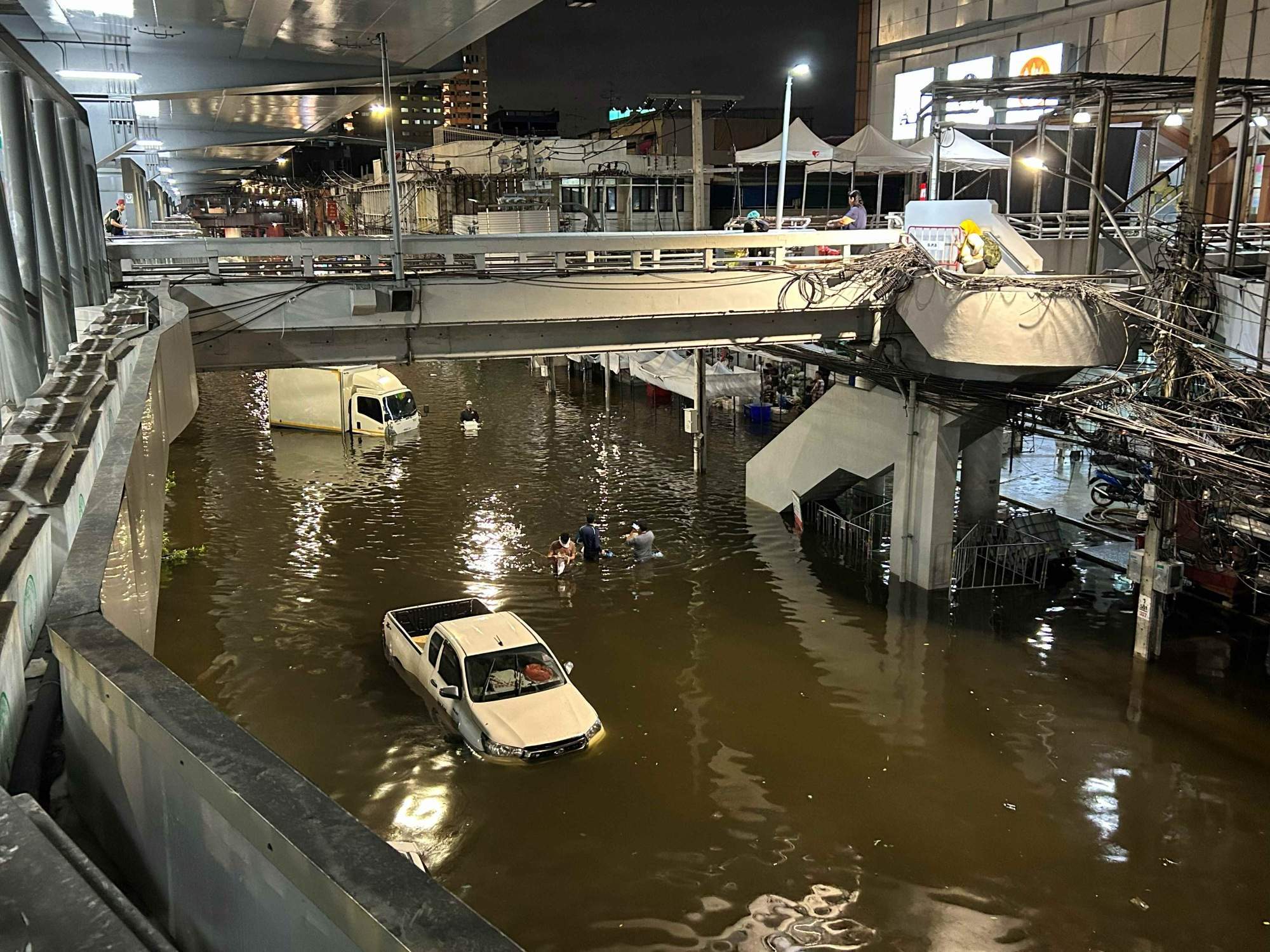
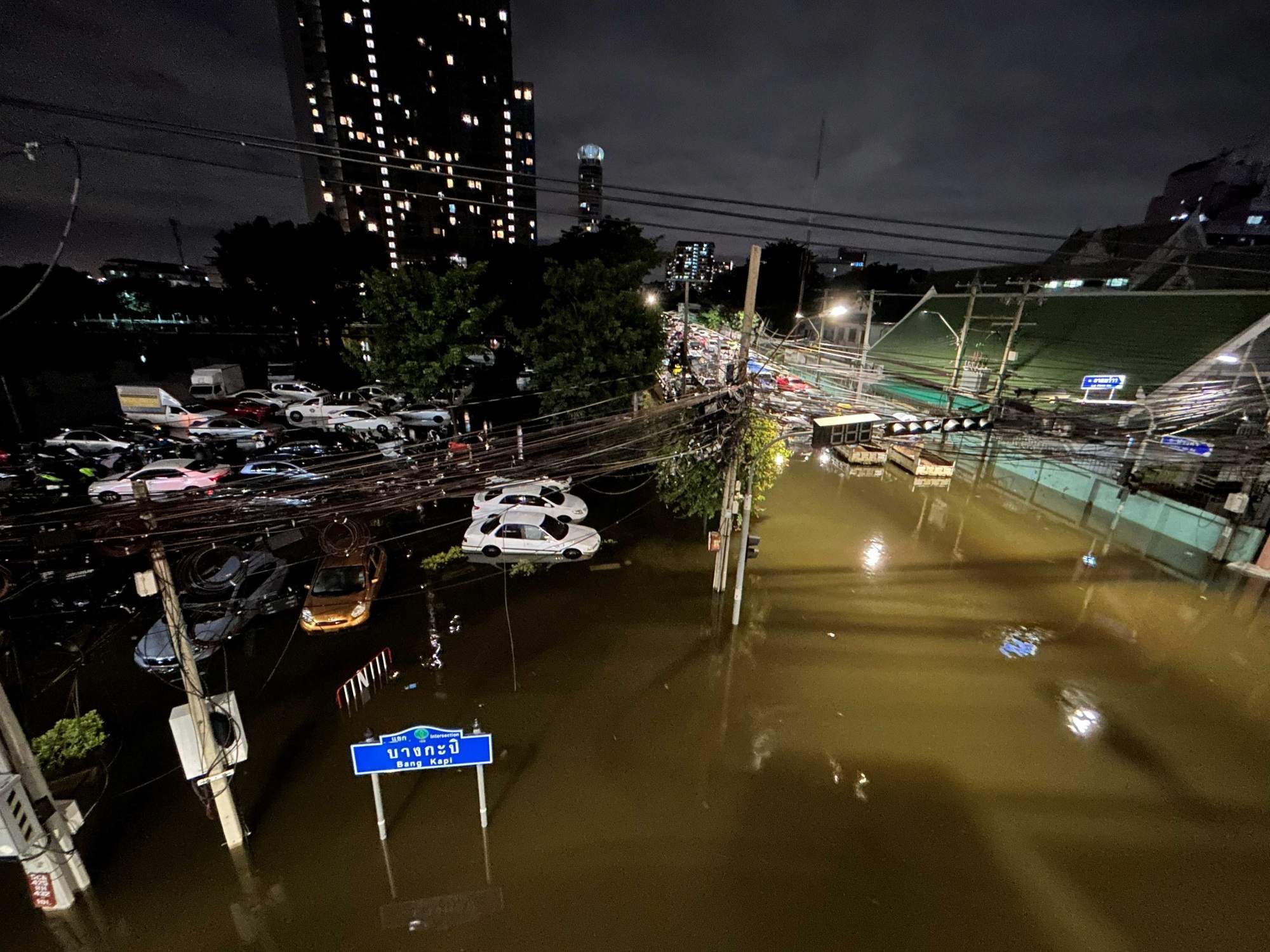
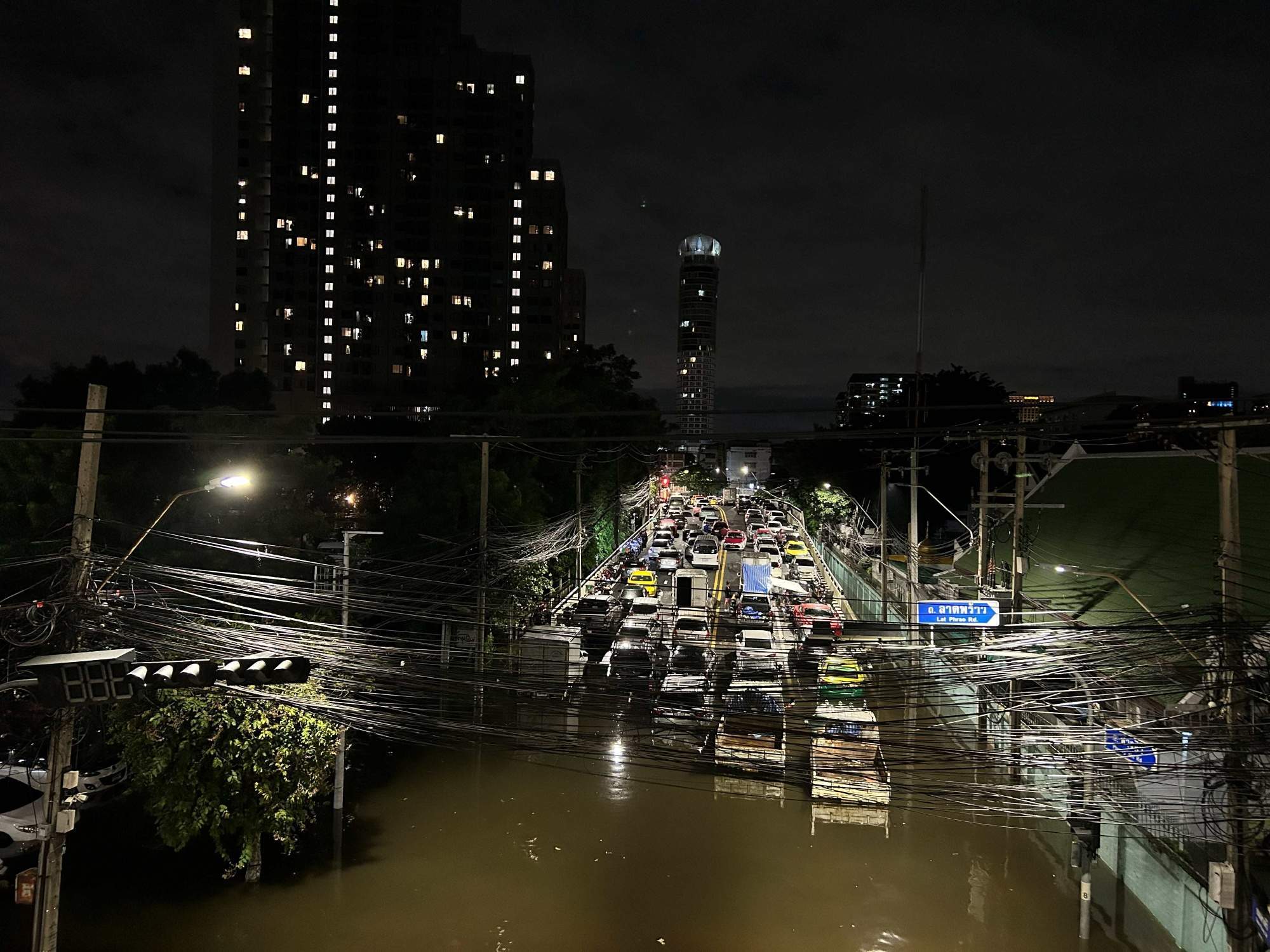
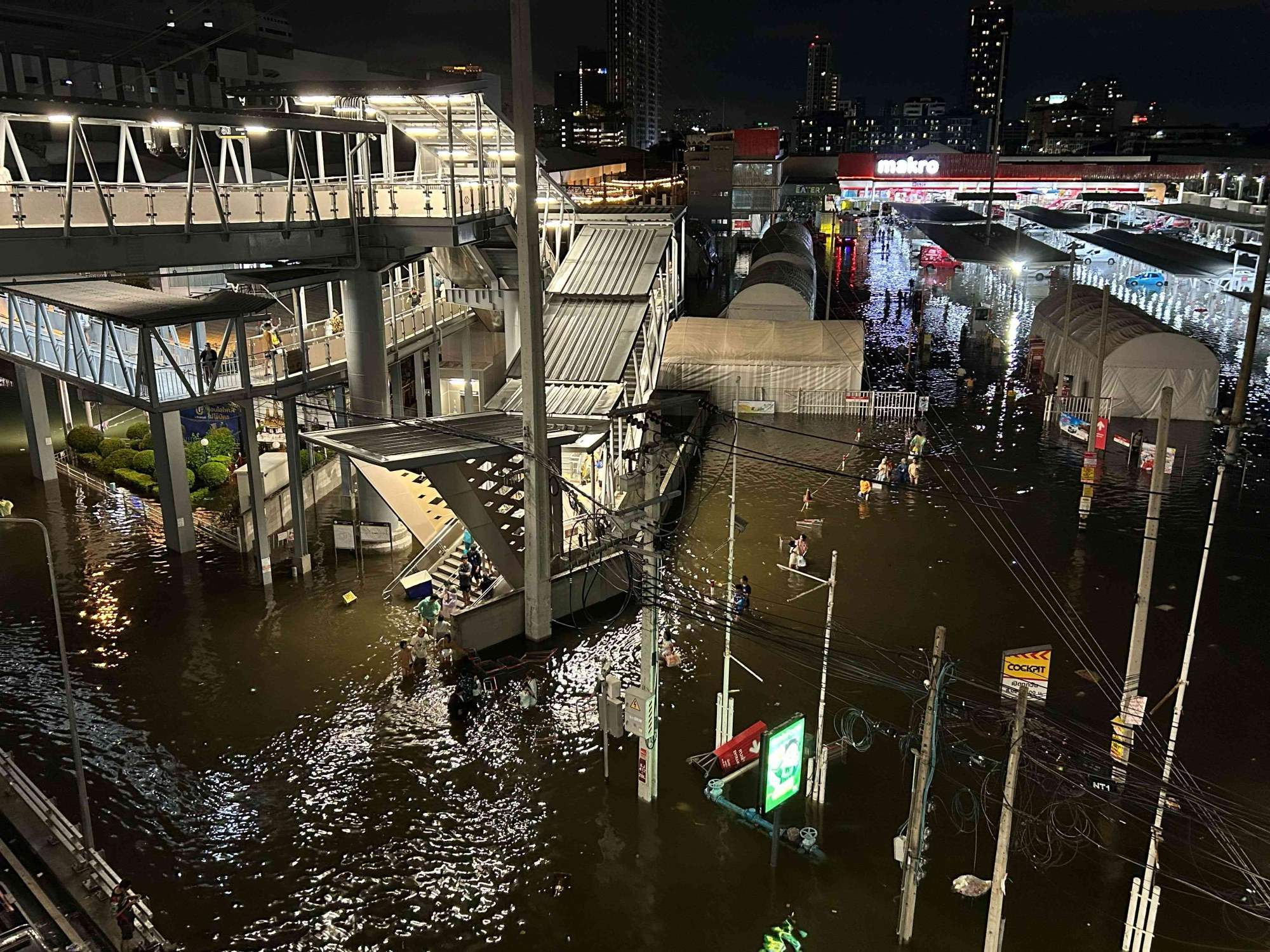
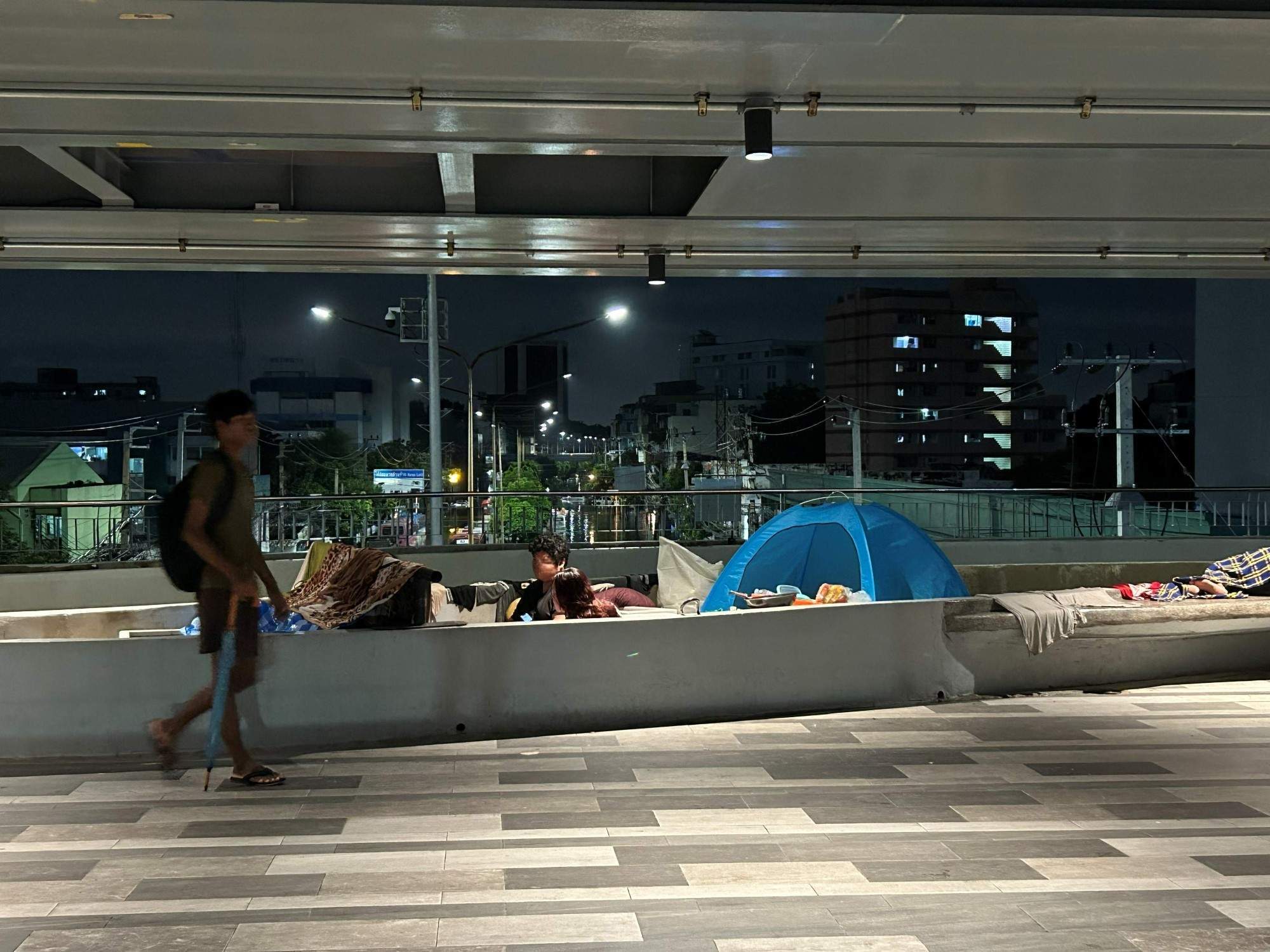
- Resilience & Everyday Humor: Below us, cars sat submerged, people navigated on small boats, and residents waded through waist-deep water carrying food and supplies through what locals were now humorously dubbing the “Bangkapi Floating Market.” Laughter echoed through the streets as people posed playfully on shopping trolley carts for photos whilst wading through water at Makro, while others livestreamed parked cars to help owners locate their vehicles and verify whether floodwaters had reached them. There was even one guy wading through the flooded water doing a live broadcast. Three boys on a boat, navigating the water alongside stranded cars, called out to my husband saying they were super stressed, yet still laughing—a memory that still rings vividly in my ear. Heartbreakingly, some displaced residents were forced to seek shelter and sleep along the skywalk, which offered a strategic, dry access point to food and basic amenities.
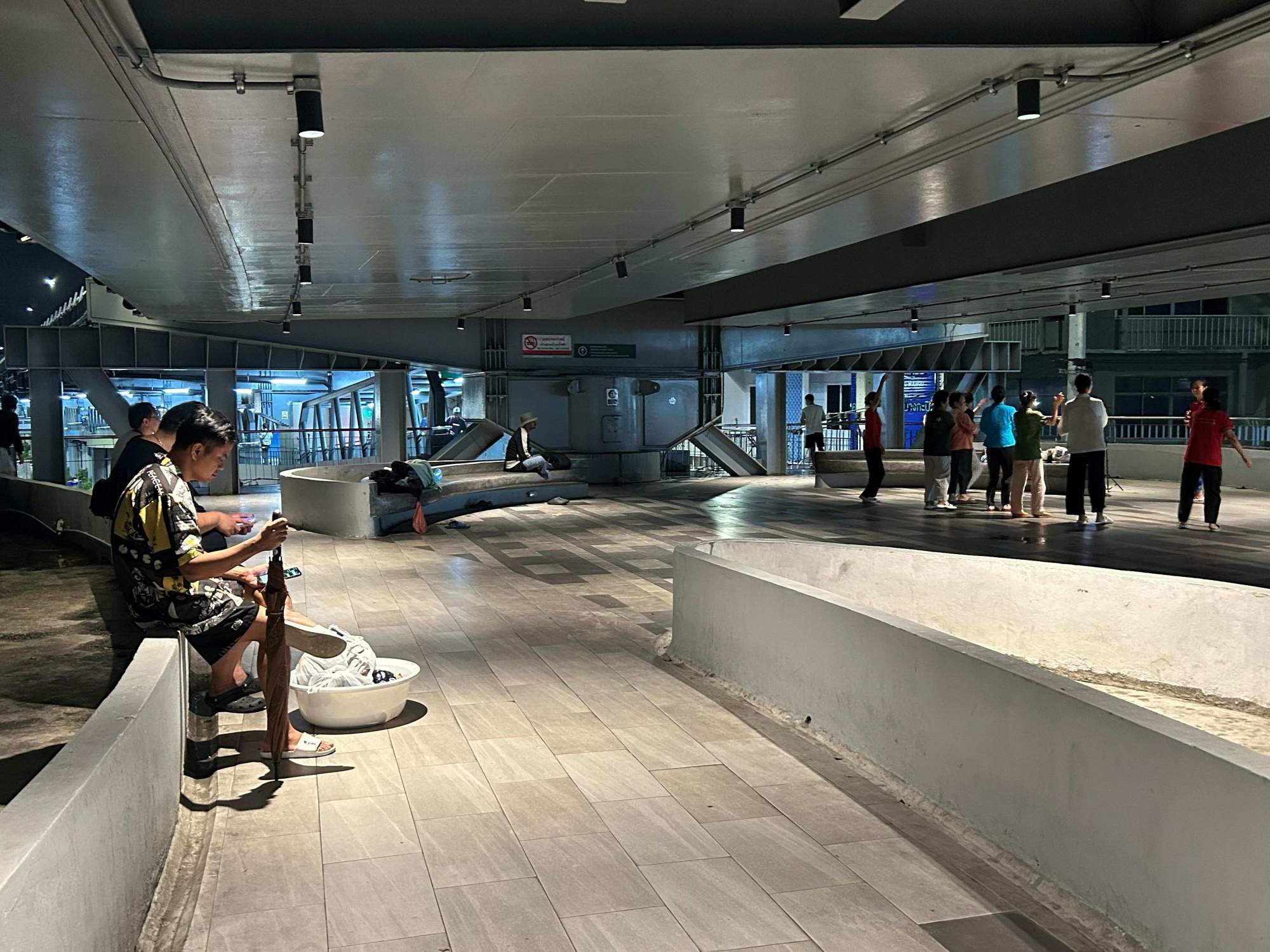
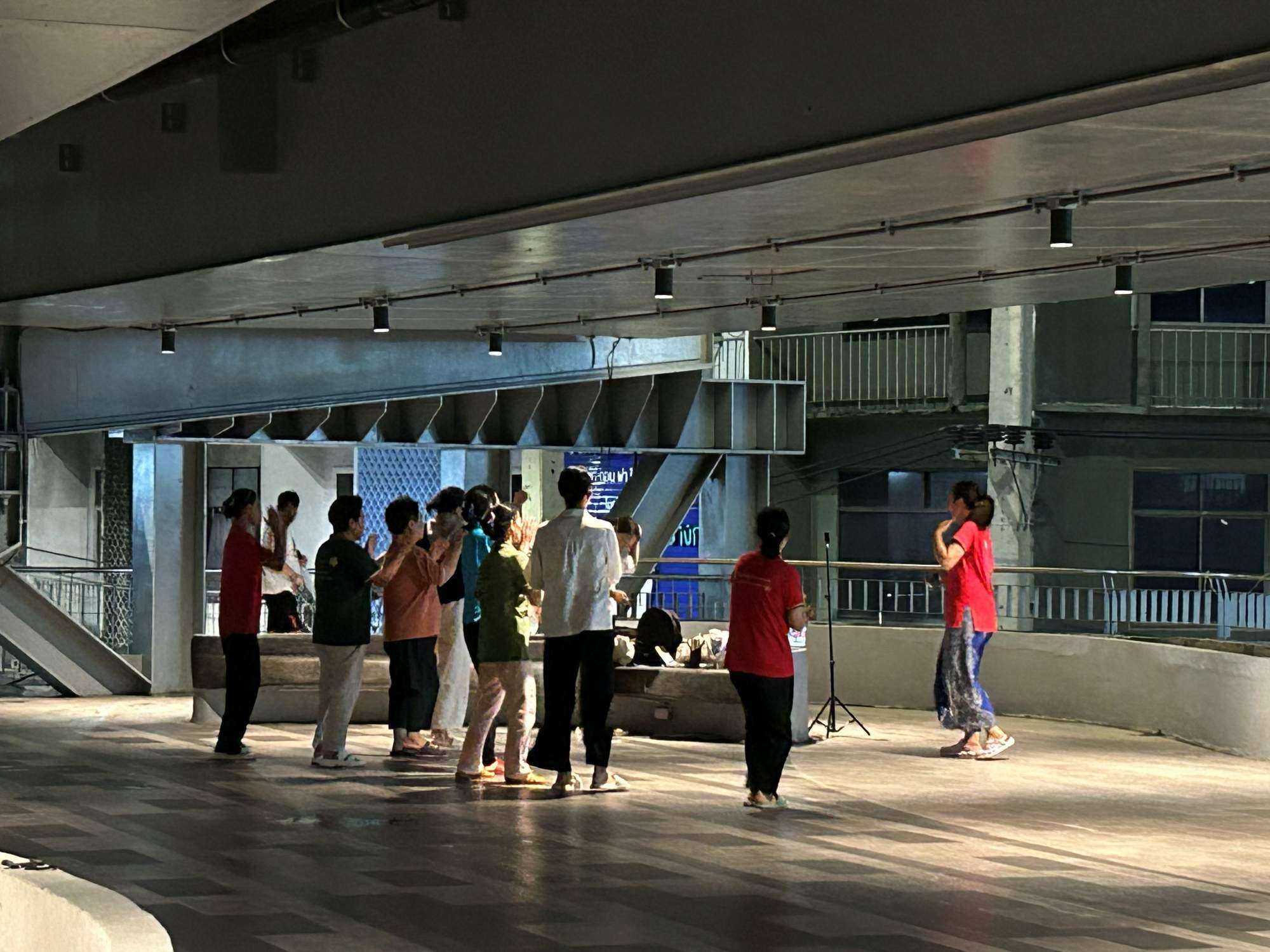
- Spreading Positivity: We came across a group of Chinese nationals singing and dancing on the elevated walkway. Giving them the benefit of the doubt, I approached them, and they confirmed they were performing to spread cheer and positive energy during a tough time. When I gently explained that some onlookers might misinterpret their performance, they asked me to help explain their good intentions to others and warmly invited me to join in, though I didn’t know the lyrics!
🆘 Emergency Plans, Family Care & The Aftermath
Sunday night brought worrisome news: my father-in-law’s glucose levels were dropping, raising the urgent need to send supplies or potentially evacuate.
By Monday, we drew up a strict shopping list and discussed emergency evacuation options. My husband struggled to find available hotel rooms on booking platforms, but I managed to locate a suitable apartment near our condo on Airbnb as a backup plan.
I prepared to cook some food to send over to the family. However, on Tuesday morning, my mother-in-law sent a welcome update: the floodwaters were finally receding, and they had sufficient supplies. By that afternoon, they were even able to send their flooded cars to the workshop.
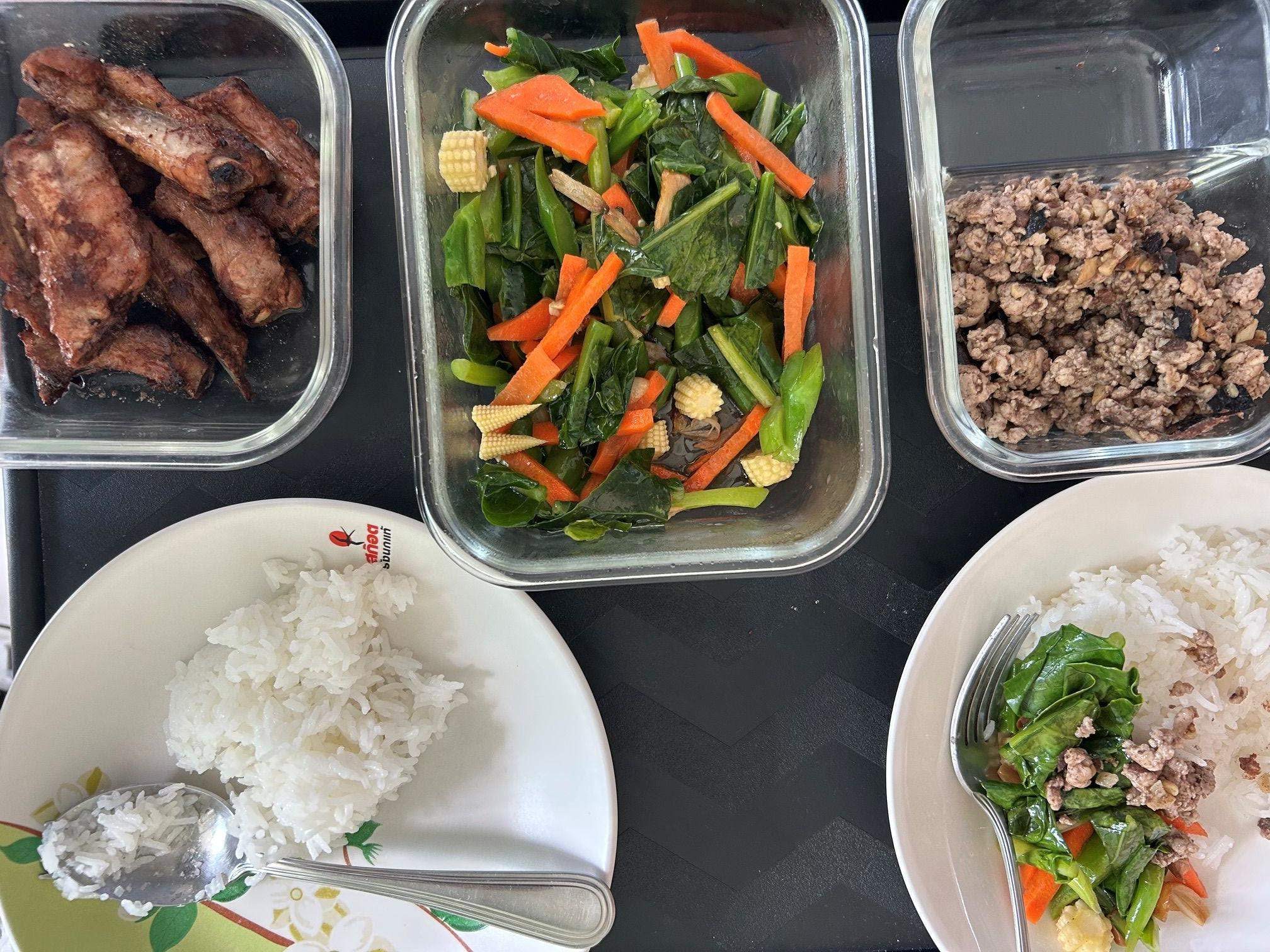
With the evacuation canceled, I found myself with a surplus of ingredients at home, which I began clearing through our daily meals—enjoying some rather fancy dishes after being on self-imposed rationing throughout the ordeal!
This whole experience leaves me deeply humbled. Having never lived through difficulty like this before, I was struck by the incredible resilience of the Thai people and their spirit of mutual support. My mother-in-law shared how she gave our extra tofu to the neighbors, while their family ended up using a neighbor’s refrigerator since their own was on the flooded lower floor, where electricity had been cut off for safety. My sisters-in-law were also distributing tofu when they waded out to collect supplies from their uncle. We also have an elderly aunt who lives alone, who reported that her neighbor had been bringing cooked meals to her every day.
Throughout this event, there was a stark contrast across the city—from friends in central Bangkok sharing photos of cafe outings to families managing flooded homes. It served as a reminder of how important it is to be considerate, especially for tourists who were affected in varying degrees. While future travelers may want to scrutinize hotel locations, a “rain bomb” flood like this is truly unprecedented. And if seasonal floodwater flows down from the north, even inner Bangkok may not be entirely spared, particularly low-lying communities outside flood embankments.
As the sun shone brightly across Bangkok, life began its steady return to normal—leaving us with a renewed sense of gratitude, family closeness, and unforgettable memories of my first major flood.
⚠️ Ongoing Watch: As of early October, Bangkok authorities have issued flood alerts for low-lying communities along the Chao Phraya River due to high seasonal tides combining with northern runoff, which might delay water clearing from the current disaster. While central and riverfront areas that avoided the initial “rain bomb” are now on high alert, our pantry remains well-stocked, and we are praying the waters do not hit our family home again.